

In the heart of the Senshu region of Osaka, just a short distance from the bustling gateway of Kansai International Airport, lies a testament to time that defies the rapid modernization of Japan. For over three centuries, a single sake brewery has stood as a guardian of tradition, upholding a philosophy of “crafting Japanese sake that truly satisfies the heart.” Founded in 1716, this institution is more than just a production facility; it is a living, breathing cultural heritage site where the Edo-period spirit of craftsmanship continues to thrive under the guidance of the 10th generation of the founding family.
The Foundation of Tradition: A Century-Spanning Philosophy
Japanese sake is often described as a living entity. Unlike many spirits that rely on static chemical processes, sake is born from the synergy of rice, koji mold, and yeast—living ingredients that respond to the slightest fluctuations in temperature, humidity, and the character of the water source.
The brewery’s longevity is rooted in its refusal to compromise on these fundamentals. Since its inception in 1716, the brewery has utilized the same pristine well water drawn from the depths of the Senshu earth. This water, filtered through the natural geology of the Izumi Mountains, serves as the lifeblood of their production. While modern technology has revolutionized many industries, this brewery maintains a “hands-on” approach, where master artisans rely on their five senses to monitor the fermentation process. It is this deep-seated respect for nature and a profound, reciprocal gratitude toward the local Hannan City community that has allowed the brewery to remain a pillar of the region for generations.
A Cultural Immersion: The Architectural Heritage
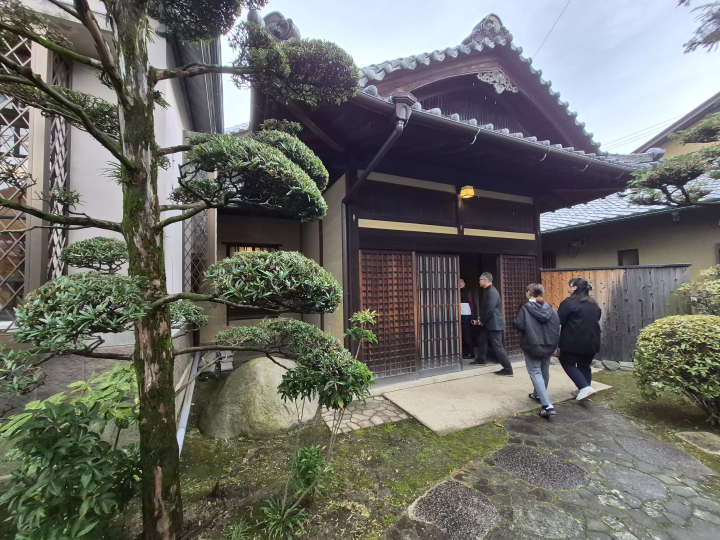
The experience of visiting this brewery begins long before one steps into the production floor. Guests are welcomed into the main residence, a sprawling complex that serves as a Registered Tangible Cultural Property of Japan. Built in 1916 during the Taisho era, the residence offers a rare, immersive glimpse into early 20th-century Japanese architecture.
The tour route is carefully curated to build a narrative of historical continuity:
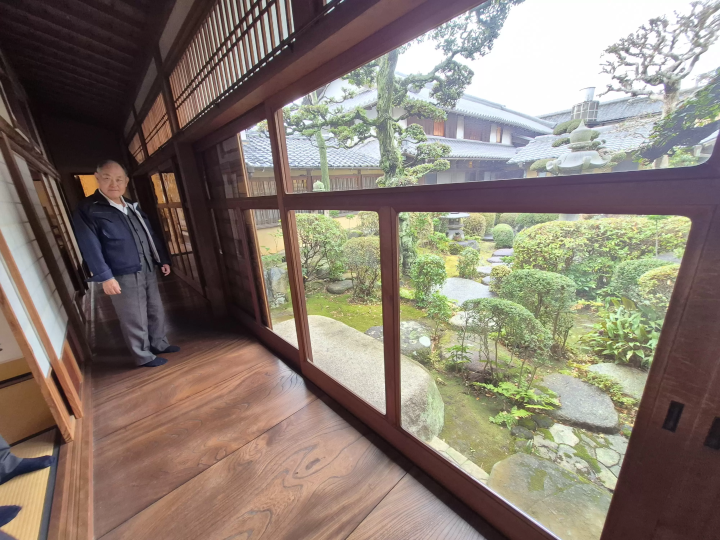
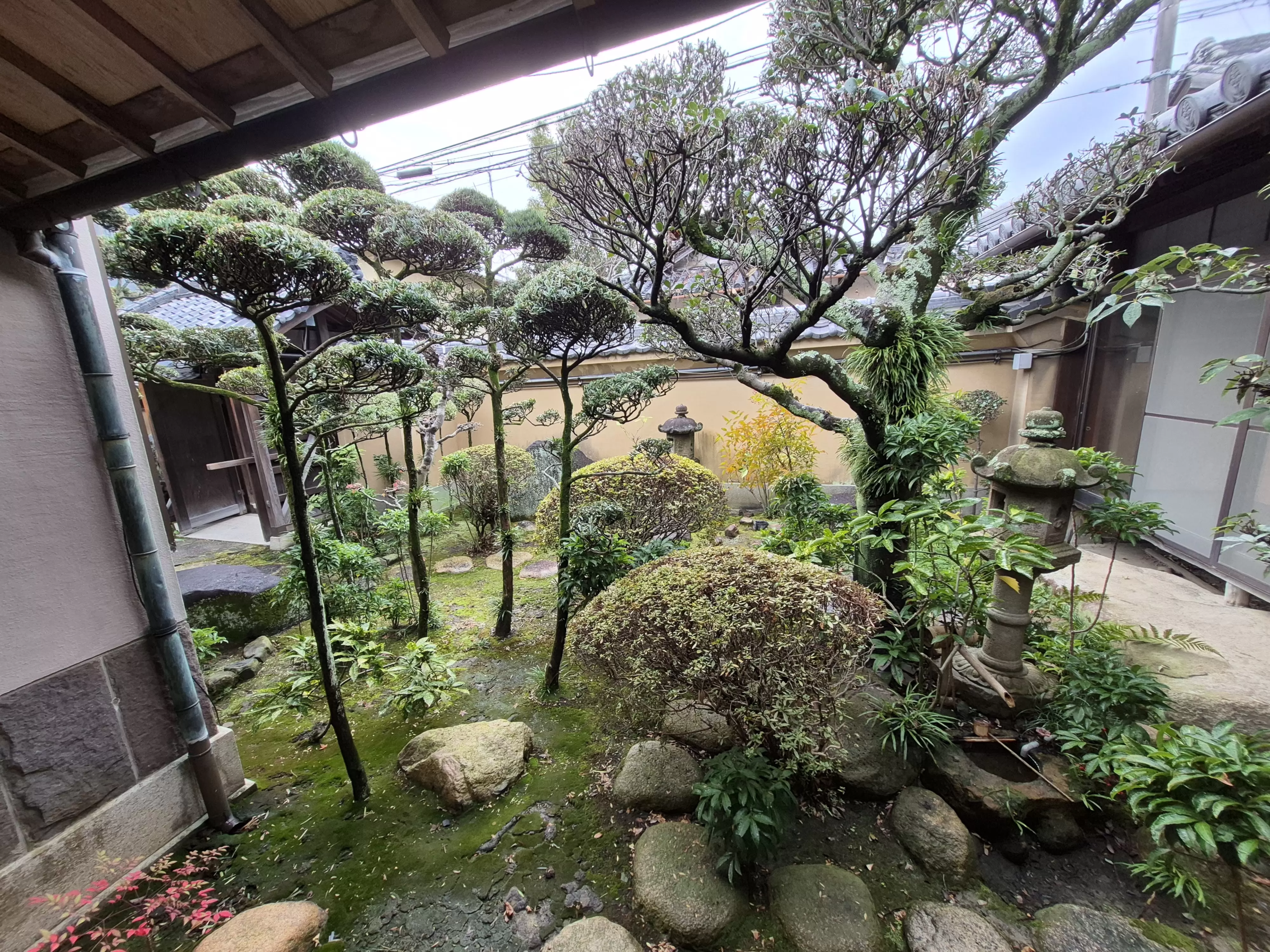
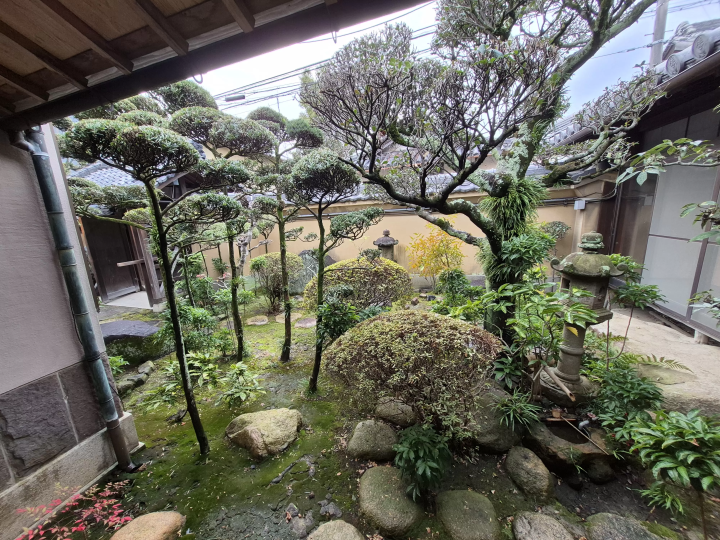
- The Main Residence: Visitors start in traditional tatami rooms, where they can gaze out upon a meticulously maintained Japanese garden. The garden, which transforms with the shifting colors of the seasons, serves as a serene backdrop for reflection.
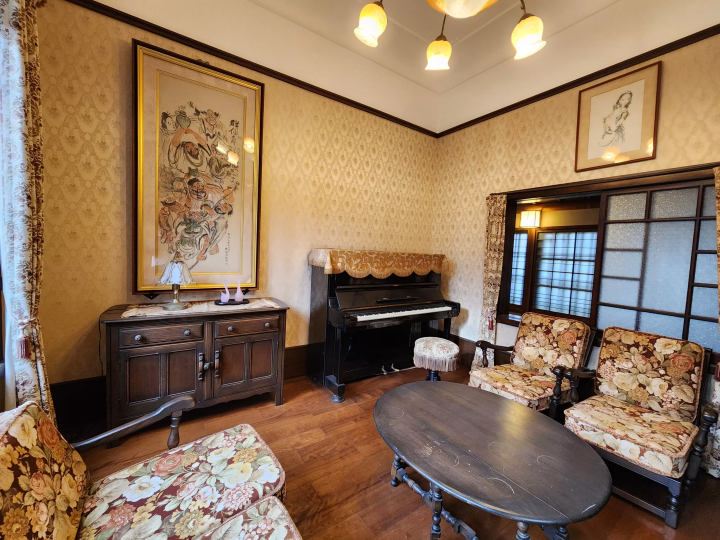
- The Taisho-Era Aesthetics: Guests are led through Western-style rooms and traditional tea rooms, highlighting the architectural fusion of the era. A notable feature is the original handmade flat glass, manufactured over 100 years ago. Its signature wavy texture diffuses natural light, bathing the rooms in a soft, ethereal glow that modern glass simply cannot replicate.
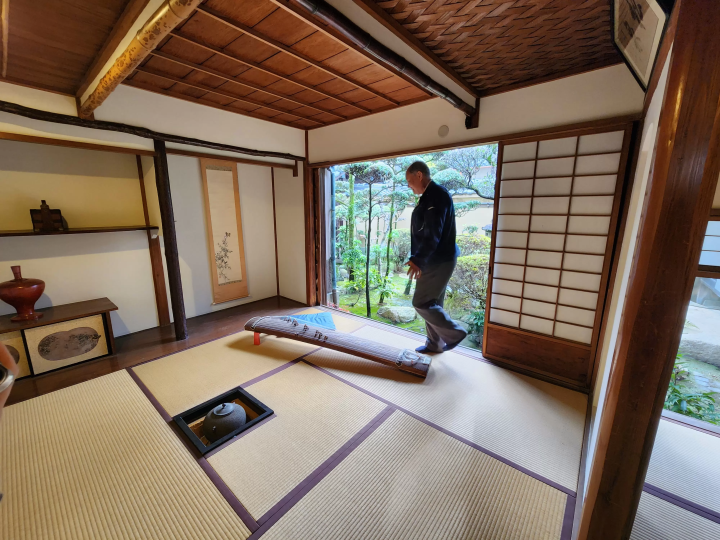
- The Koto Performance: Adding a personal touch to the history, the current chairman often performs a short piece on the koto—a traditional Japanese string instrument—that belonged to his grandmother. This performance bridges the gap between the past and the present, turning a simple tour into a personal, intimate encounter with the family’s legacy.
Chronology of Craft: The Seven Steps of Sake Brewing
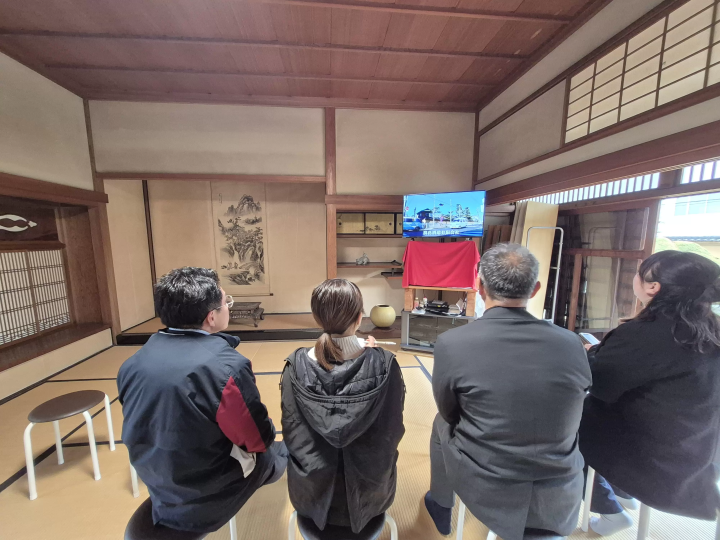
To ensure that every visitor—regardless of their prior knowledge of sake—can appreciate the complexity of the brewing process, the brewery provides a comprehensive, multi-language introductory video. Available in English, Korean, and both Simplified and Traditional Chinese, the video demystifies the role of koji mold and the fundamentals of fermentation before guests enter the production area.
1. Rice Polishing: Refining the Essence
The journey begins with the rice, which is meticulously milled to remove the outer layers. This polishing ratio is a critical decision that dictates the final aroma and flavor profile of the sake. It is the first step in a long process of purification.
2. Well Water Integration
The brewery’s reliance on its original well is a rarity in modern industrial Japan. Rice is washed with water that has been guarded and maintained for over 300 years. The control over water absorption is managed to the second, ensuring that the moisture content is perfect for the subsequent steaming process.
3. Steaming: The Precision of Heat
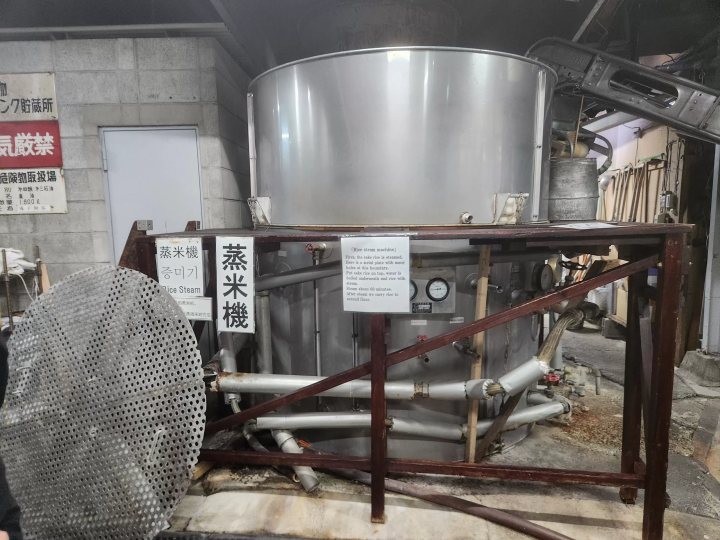
Steaming is not merely about cooking the rice; it is about creating the perfect texture for koji cultivation. By judging steam pressure and timing with the expertise of a master, the brewers ensure the rice is light and fluffy—an ideal canvas for the mold to work its magic.
4. Koji Cultivation: The Magical Moment
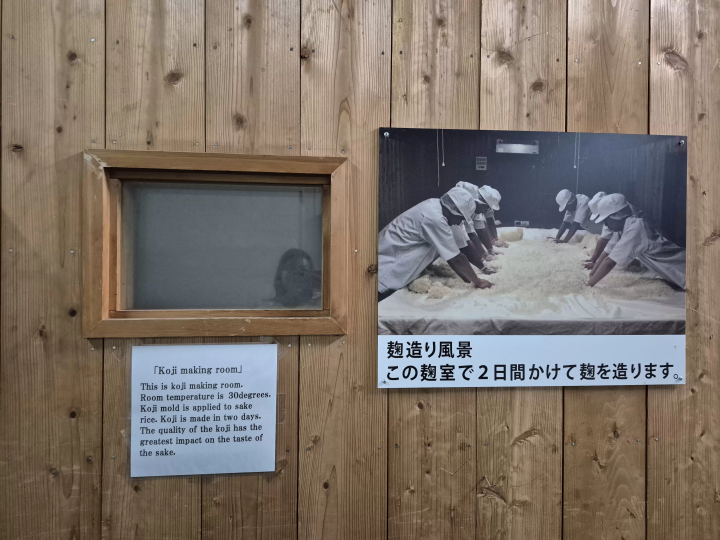
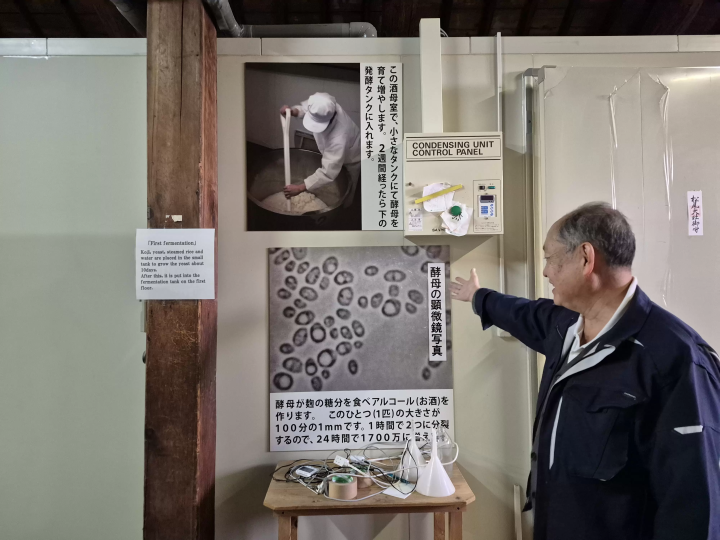
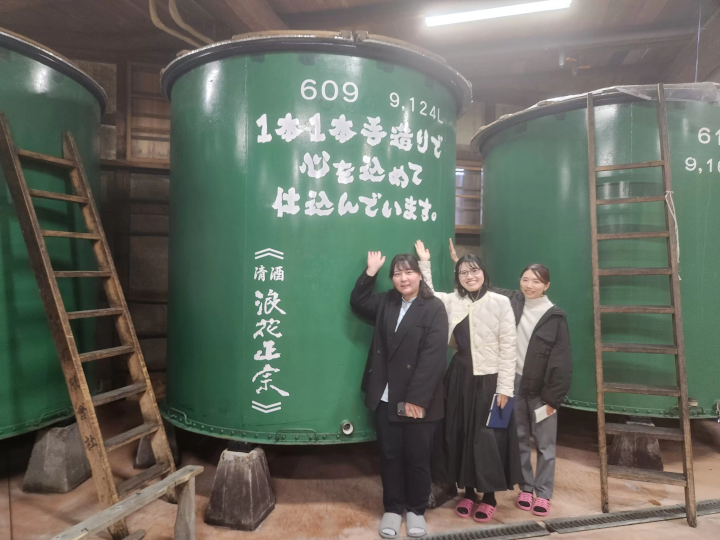
In the koji room, the steamed rice is inoculated with mold spores. Over the course of two days, temperature and humidity are adjusted with clinical precision. This is where the “character” of the sake is born. During this stage, guests are shown microscopic images of the yeast, offering a fascinating look at the invisible microorganisms that drive the entire process.
5. Fermentation (Moromi): The Heart of the Brewery
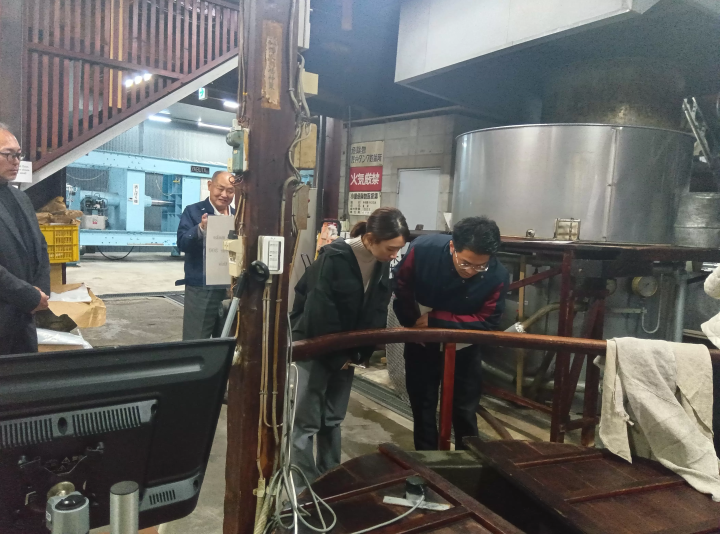
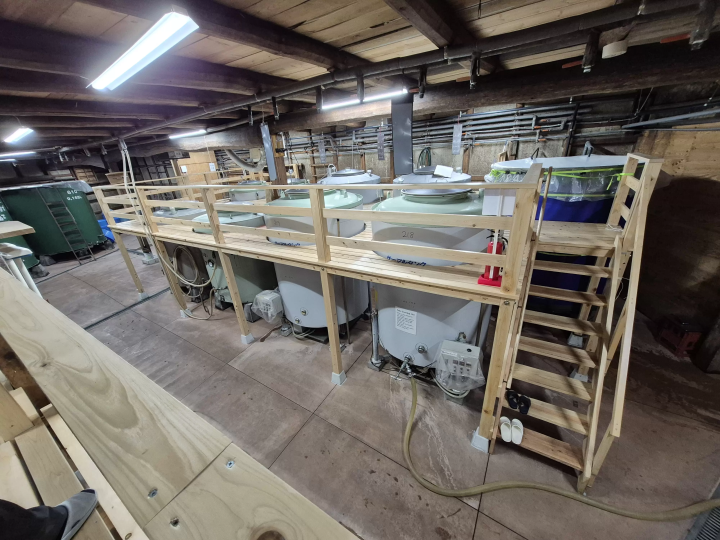
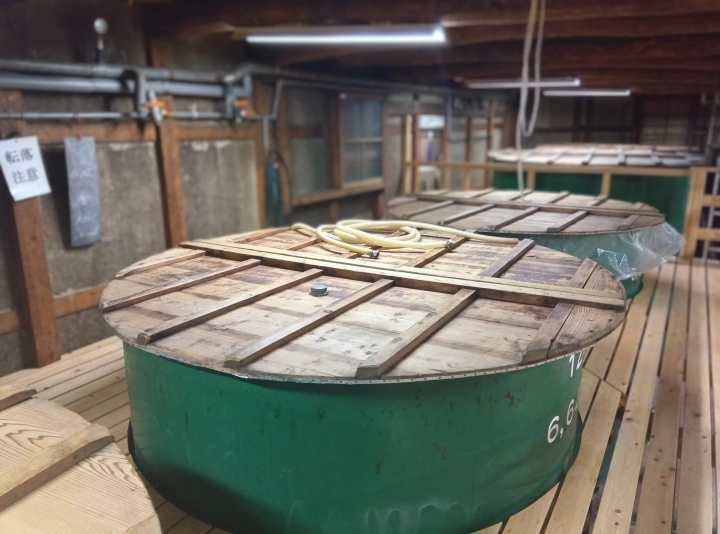
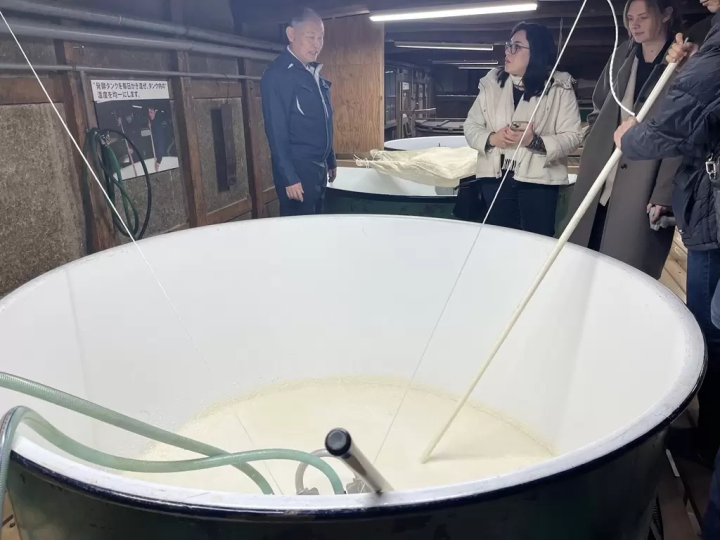
The ingredients are combined in a three-step method known as sandanjikomi. Over 20 to 40 days, the mash is stirred daily with wooden paddles. Visitors standing in the center of the brewery—the "heart" of the operation—can often hear the gentle, rhythmic bubbling of the fermentation. It is a sensory experience that defines the craft. During the brewing season, guests may even be invited to stir the mash, providing a tactile connection to the labor of the brewery.
6. Pressing: The Birth of Transparency
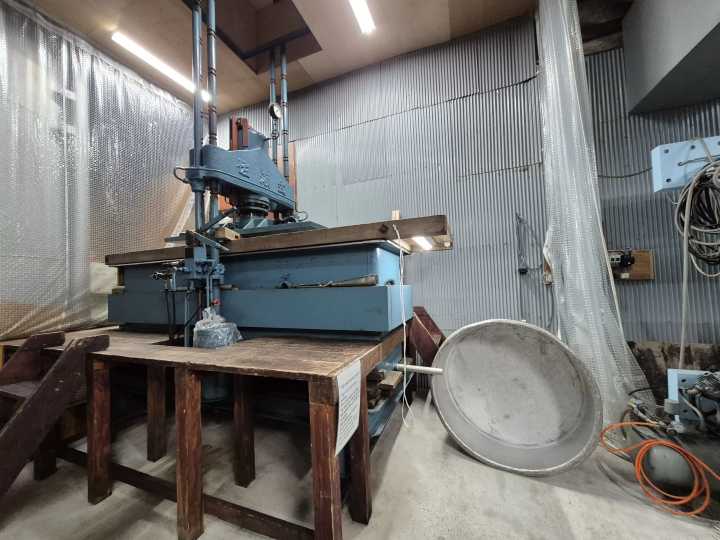
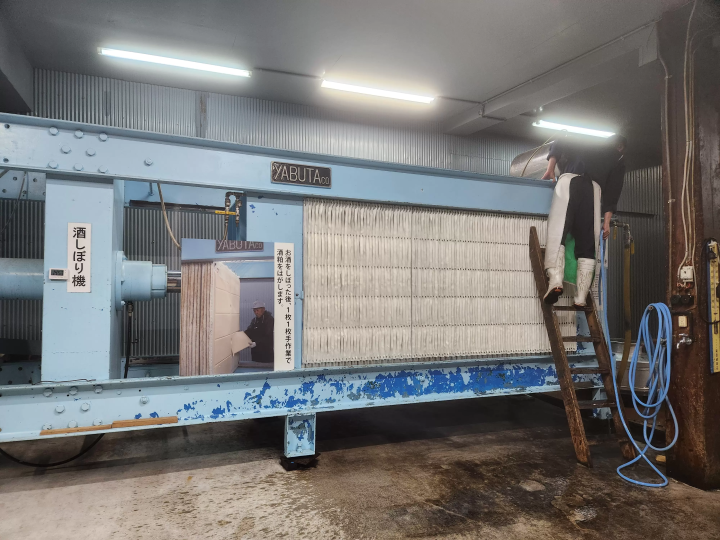
Once fermentation peaks, the thick, cloudy mash undergoes pressing. Unlike the vertical presses used in many modern facilities, this brewery utilizes a rare horizontal press. This method is significantly gentler, ensuring that only the most refined, clean, and transparent liquid is extracted, minimizing any harsh, unwanted flavors.
7. Bottling: Protecting the Fragile Product
Sake is sensitive to light and oxygen. The final stage involves a careful, controlled bottling process. By minimizing exposure to the elements, the brewery ensures that the quality achieved in the tank is preserved until it reaches the glass of the consumer.
Official Perspectives: The Value of Direct Engagement
What truly sets this tour apart from others in Japan is the leadership’s commitment to transparency. In a move that highlights the brewery’s dedication to education, tours are frequently guided by the president or chairman themselves.
"When our guests hear the stories of our philosophy and the untold episodes of our long history directly from those who lead the brewery, it transforms the tour into an exclusive, unforgettable cultural experience," a representative noted. This direct access provides an unfiltered look at the challenges and triumphs of maintaining a centuries-old business in the 21st century.
Implications for Cultural Tourism
The brewery’s proximity to Kansai International Airport positions it as an essential stop for international travelers seeking an authentic, off-the-beaten-path experience. The ability to witness a 300-year-old industry in active, daily operation is an rarity.
Key Tour Information
- Duration: Approximately 90 minutes.
- Pricing: ¥2,300 per person (tax included).
- Capacity: Accommodates groups from 1 to 40 participants, making it suitable for both individual travelers and larger tour groups.
- Booking Requirement: Due to the personalized nature of the tours and the necessity of strict health and safety protocols within the brewery, reservations must be made at least two weeks in advance.
A Lasting Legacy
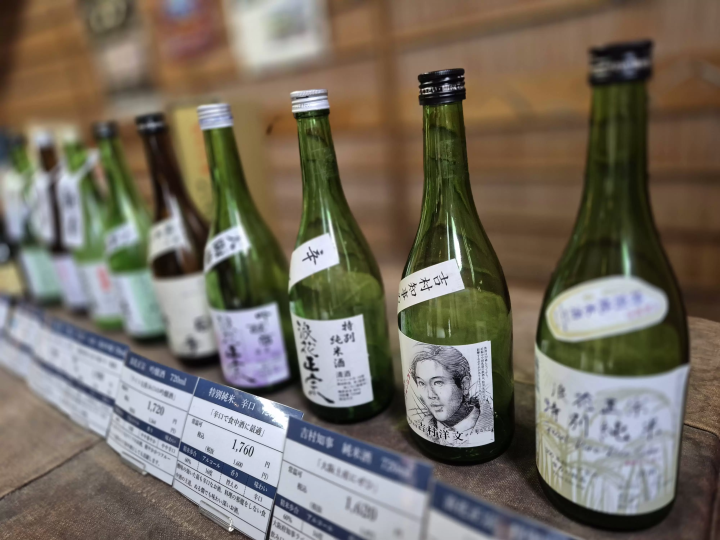
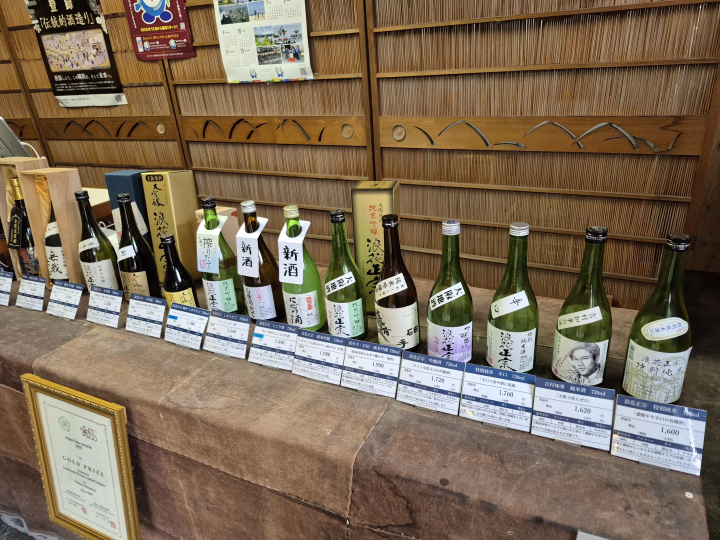
As the tour concludes, guests are invited to a tasting session—an opportunity to sample the fruits of the labor they have just witnessed. The direct sales shop, which stocks exclusive, limited-run seasonal releases and artisanal sake vessels, serves as the final stop, allowing visitors to bring a piece of the Senshu region home with them.
In an era where mass production is the norm, this 300-year-old brewery serves as a vital reminder of the value of patience, the importance of place, and the enduring power of human craftsmanship. It is an invitation to slow down, to observe the tiny bubbles of fermentation, and to understand that the best things in life—like a truly great cup of sake—cannot be rushed.
For those interested in exploring this intersection of history and culture, the brewery encourages inquiries via their official portal, where support is available in Japanese, English, and Chinese to ensure a seamless experience for all visitors.












No comments yet. Be the first to join the conversation!