


As inflationary pressures continue to reshape the Japanese economy, consumer habits are undergoing a subtle but distinct evolution. With the cost of living rising, the average worker is navigating a landscape where every yen counts. Yet, in the heart of this fiscal tightening, one culinary staple remains the undisputed champion of cost-efficiency: ramen. While premium ramen shops in Tokyo and beyond have famously breached the "1,000-yen wall," turning a simple bowl of noodles into a luxury experience, the convenience store—or combini—has stepped in to offer a different kind of value.
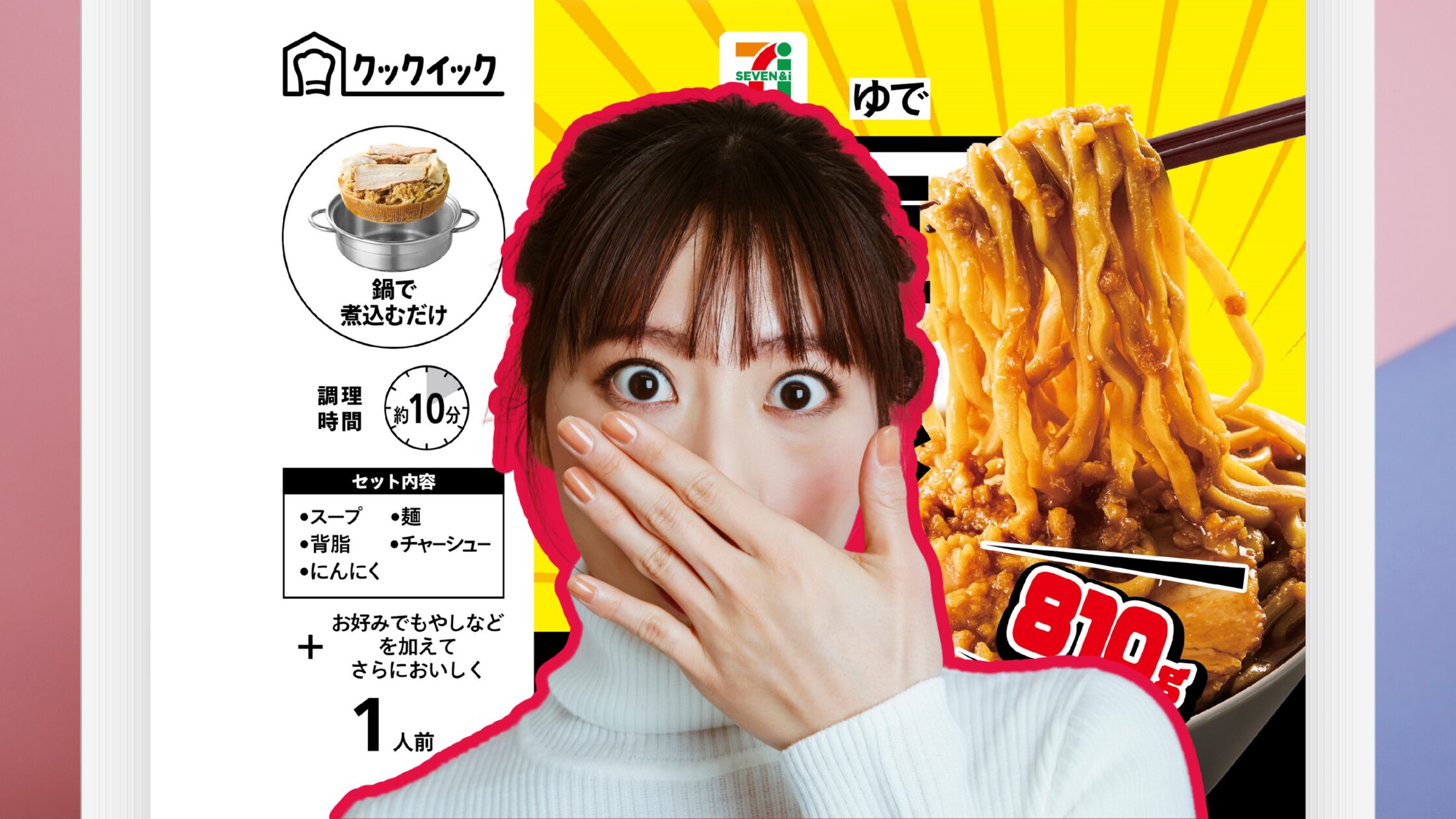
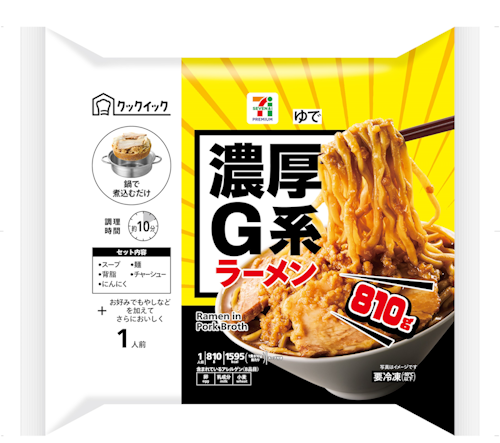
7-Eleven Japan, a titan of the retail sector, recently unveiled a product that has captured the attention of both budget-conscious diners and health-conscious observers: the "Rich G-kei" frozen ramen. Priced at a modest 862 yen ($5.40 USD) after tax, this offering is not merely a meal; it is a nutritional event, packing a staggering 1,595 calories and a sodium profile that challenges the very limits of recommended dietary guidelines.
The Anatomy of a Cultural Phenomenon: What is "G-Kei"?
To understand the buzz surrounding 7-Eleven’s new release, one must first understand the "G-kei" category. The term is a deliberate, winking nod to Ramen Jiro, the legendary Tokyo-based chain that spawned a cult-like following known as "Jirorians."
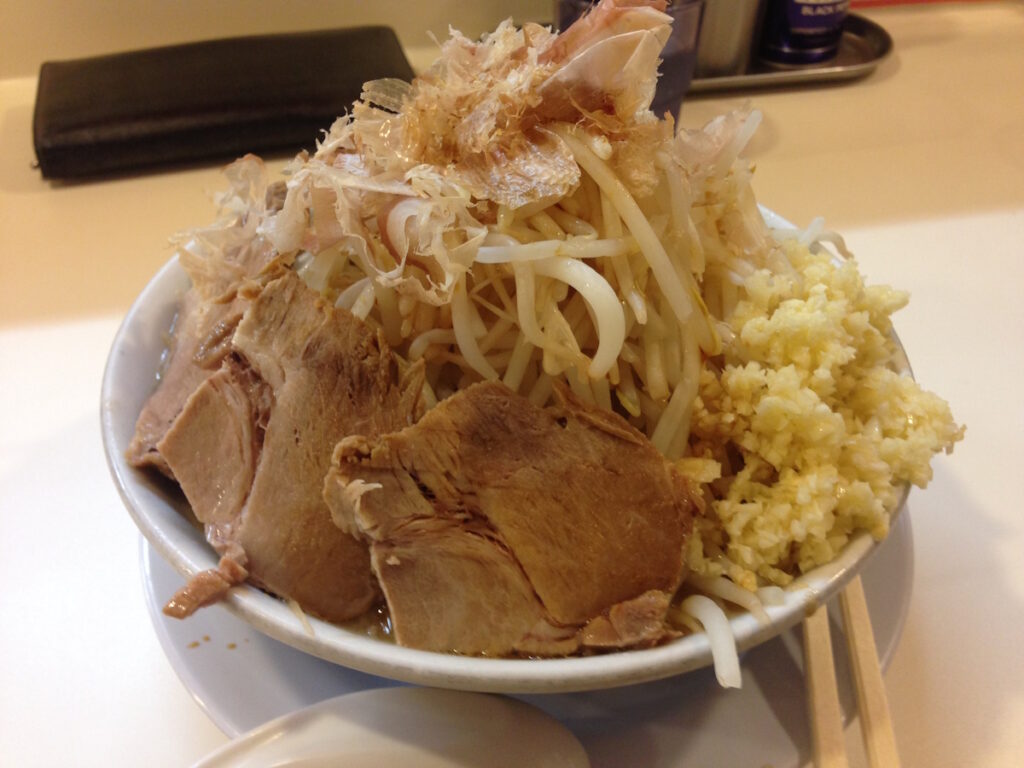
Founded in 1968 by Yamada Takumi in Mita, Tokyo, Ramen Jiro redefined the genre. A standard Jiro bowl is a study in excess: thick, chewy wheat noodles, a base of emulsified pork fat (abura), and a mountainous heap of boiled bean sprouts, topped with a generous dollop of minced garlic and thick, fatty slices of pork. The "G-kei" (G-style) tag is an homage to this specific, heavy-handed aesthetic.
By labeling their product "Rich G-kei," 7-Eleven effectively communicates the flavor profile and visual expectations to the consumer without infringing on the trademark of the original chain. It promises the diner a "Jiro-like" experience in the comfort of their own home—an experience that has been historically elusive due to the complex, multi-day preparation required to replicate the intense, fatty broth and specific noodle texture.
A Chronology of Excess: From "Stamina" to Convenience
The narrative of Japanese ramen has long been a tug-of-war between nutrition and hedonism. The "stamina" concept—the idea that a meal should provide overwhelming energy for manual labor or late-night study—gained traction in the 1970s. This was, in many ways, a defensive pivot.
In 1962, shortly before the Tokyo Olympics, a book titled The Book of Building Stamina famously castigated ramen as "all carbs, no nutrition." The industry’s response was to double down on the intensity, creating the "stamina" bowl: garlic-heavy, calorie-dense, and unapologetically rich.
Decades later, that spirit of excess has been successfully distilled into the frozen food aisle. This isn’t 7-Eleven’s first foray into this arena; the retailer previously collaborated with acclaimed ramen maker Tomita in 2019, and competitors like FamilyMart and Lawson have launched similar variations over the last several years. However, the current "Rich G-kei" release represents a peak in the "at-home" convenience trend, moving from restaurant collaborations to a standardized, high-calorie, store-brand product.
The Nutritional Reality: By the Numbers
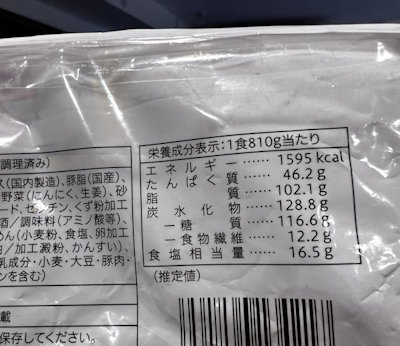
For the curious—and perhaps the reckless—a look at the nutritional label is a sobering exercise. The 7-Eleven G-kei ramen is a nutritional outlier, even by the standards of "junk food."
The Caloric Breakdown
At 1,595 calories per serving, this single bowl provides roughly two-thirds of the average adult’s daily caloric requirement. The sheer density of carbohydrates—116 grams—suggests a product designed for rapid energy release, while the 46.2 grams of protein offers a veneer of nutritional legitimacy that fans often cite as justification for the indulgence.
The Sodium Crisis
The most alarming metric, however, is the salt content. The package lists 16.5 grams of salt-equivalent. In the United States, where food labels measure sodium directly (where 1 gram of sodium equals approximately 2.5 grams of salt), this translates to roughly 6,600 milligrams of sodium.
To place this in context:
- The FDA Recommendation: 2,300 mg per day. The bowl contains nearly three times the daily recommended limit.
- The American Heart Association (AHA) Recommendation: 1,500 mg per day for those at risk of hypertension. The bowl represents over four days’ worth of sodium in one sitting.
- The Japanese Ministry of Health, Labour & Welfare: Recommends less than 7.5g per day for men and 6.5g for women. This single meal effectively blows past the daily intake ceiling for two people.
The Consumer Experience: A Trial by Fire
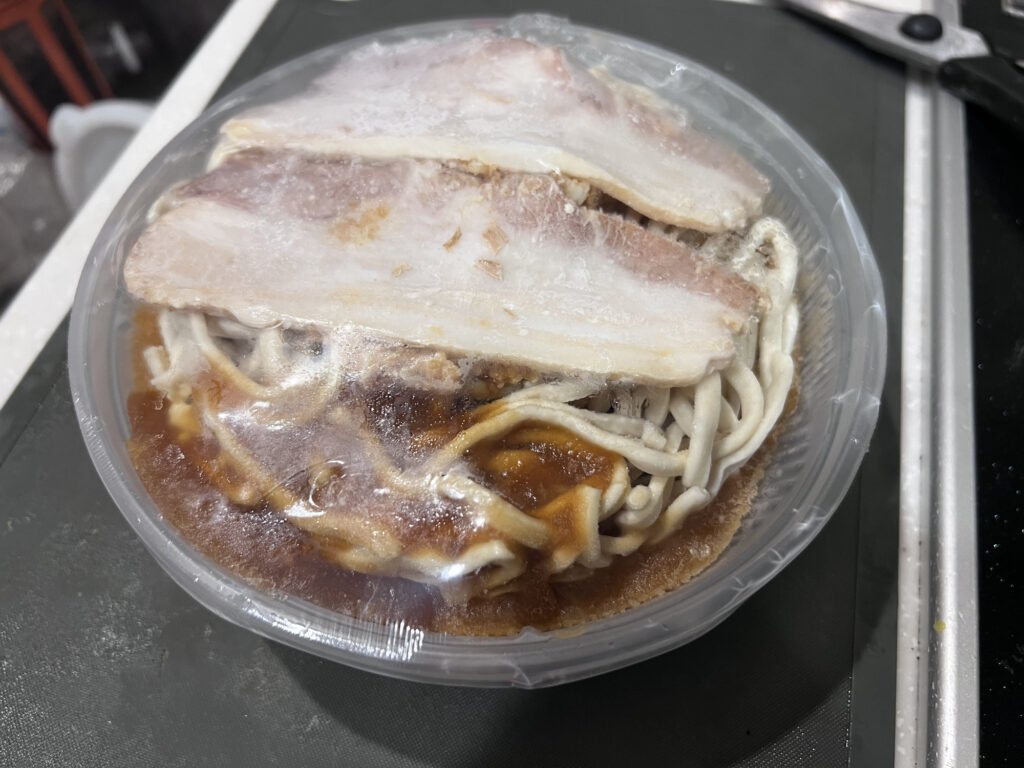
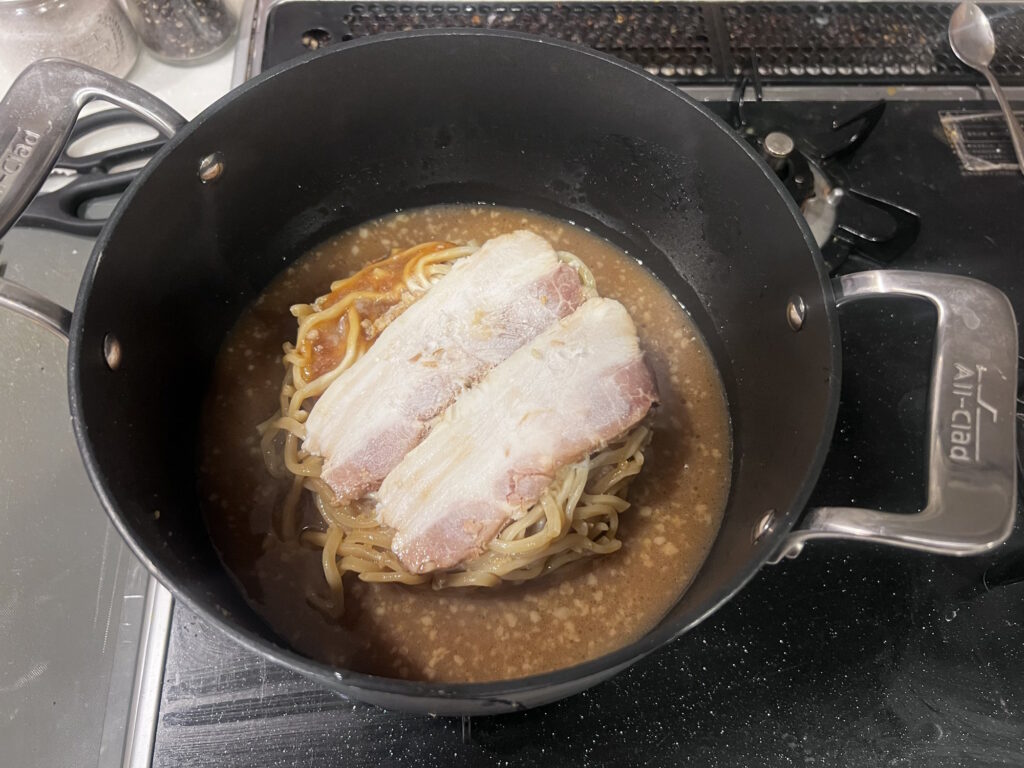
The preparation of the G-kei ramen is a departure from standard microwaveable meals. Because of the sheer mass of the frozen block, it requires roughly 10 to 15 minutes of stovetop simmering. This "hands-on" element adds a layer of anticipation to the meal.
Upon heating, the broth emulsifies, the pork belly slabs soften, and the kitchen is filled with the pungent, unmistakable aroma of garlic and pork fat. For the uninitiated, the lack of included bean sprouts might seem like a missing component, but those in the know will supplement the bowl with their own fresh vegetables—or, in the case of this reviewer, a dash of local shichimi (seven-spice) to cut through the richness.
The consumption itself is an exercise in sensory overload. The texture of the noodles—thick, firm, and designed to hold up under the heavy broth—is surprisingly authentic for a frozen product. The broth is salty, fatty, and deeply savory. It is not a subtle dish; it is a blunt instrument of flavor. Despite the knowledge of the salt content, the psychological and physical satisfaction provided by the bowl is undeniably high.
Implications for the Convenience Market
The existence of such a product highlights a fascinating paradox in the Japanese retail market. While the populace is becoming increasingly health-aware, there is an enduring, primal demand for "value" that is measured in volume and caloric satisfaction.
The G-kei ramen serves as a "treat" for the salaryman or the student on a budget. It is a meal that effectively "shuts down" the hunger response for the better part of a day. The financial value proposition is undeniable: for under $6, the consumer receives a restaurant-quality volume of food.
However, the proliferation of such products signals a broader trend where convenience stores are no longer just providers of quick snacks, but are effectively competing with specialized restaurants. By offering "pro-grade" frozen meals, they are capturing the market share of consumers who want the "Jirorian" experience without the long lines, the intimidating atmosphere, or the "unspoken rules" of the physical shops—such as the notorious time limits imposed on diners at traditional ramen counters.
Conclusion: A Culinary Paradox
Eating the 7-Eleven G-kei ramen is an experience that sits at the intersection of modern convenience and traditional excess. It is a triumph of food science—a frozen brick that, with enough heat, transforms into a meal that can rival the caloric and flavor intensity of a dedicated ramen shop.
Is it healthy? Absolutely not. Is it a culinary masterpiece? That depends entirely on your definition. But in a world where prices are climbing and the future feels increasingly uncertain, the ability to secure a massive, piping-hot, soul-satisfying bowl of noodles for the price of a coffee and a sandwich is a form of value that, for many, is simply too tempting to resist.
Whether this marks a permanent shift toward "at-home indulgence" remains to be seen, but one thing is certain: for the "Jirorians" of the world, 7-Eleven has provided a new, dangerous, and utterly delicious way to feed the beast—one 1,600-calorie bowl at a time.












No comments yet. Be the first to join the conversation!