

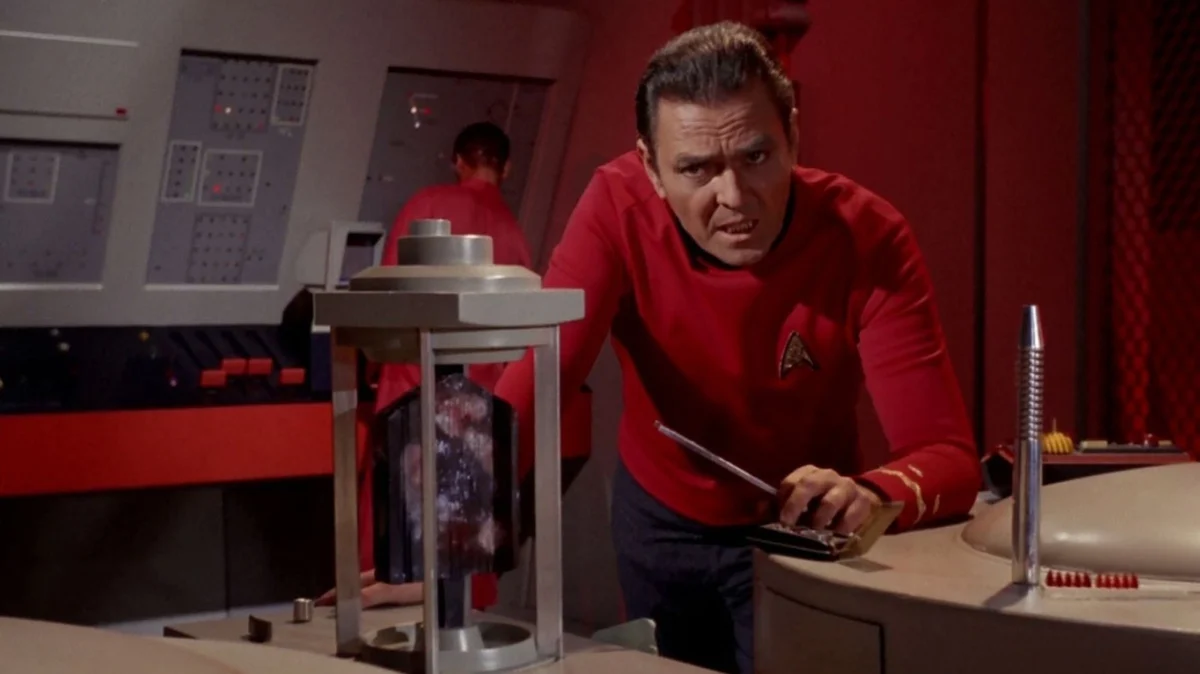
Welcome to the latest installment of Trekspertise, where we deconstruct the scientific underpinnings and technical lore that define the Star Trek universe. Today, we turn our attention to the most critical mineral in the galaxy: the dilithium crystal.
In the sprawling tapestry of science fiction, few franchises have balanced high-concept fantasy with the rigor of "hard" science as effectively as Star Trek. While the series is famous for its transporters, phasers, and holodecks, it relies on a consistent, internal logic to ground its vessels in a believable reality. At the center of this logic—literally and figuratively—is the dilithium crystal. Without it, the warp drive, the backbone of Starfleet exploration, would be nothing more than a theoretical pipe dream.
Main Facts: The Anatomy of a Warp Drive
To understand the Star Trek universe, one must understand how its ships move. Starfleet vessels utilize matter/antimatter reaction assemblies, a sophisticated engine system that serves as the heart of the ship. In a standard internal combustion engine, chemical fuel is burned to create kinetic energy. In a starship, the process is infinitely more volatile: matter and antimatter are brought together in a controlled environment to produce a colossal release of energy.

This is where dilithium crystals enter the equation. The crystals serve as the essential moderator for the matter/antimatter reaction. Without the unique atomic properties of dilithium, the contact between matter and antimatter would result in an uncontrollable, ship-vaporizing explosion. Dilithium is unique in its ability to be rendered "porous" to antihydrogen when subjected to a high-frequency electromagnetic field. This allows engineers to regulate the flow of antimatter into the reaction chamber, converting the raw, cataclysmic explosion into a steady, controlled stream of high-energy plasma that is then directed into the ship’s warp nacelles.
Chronology: The Evolution of Dilithium Lore
The concept of dilithium has evolved alongside the franchise, transitioning from a vague "power source" in the original 1960s series to a nuanced, well-documented component in the Technical Manuals of the 1990s.
- The Original Series Era: In the early days of Star Trek, dilithium was often treated as a rare, highly coveted fuel source. Plots frequently revolved around the scarcity of the mineral, establishing it as a strategic resource that defined the balance of power between the Federation, the Klingon Empire, and the Romulans.
- The TNG/DS9 Era: With the release of The Next Generation, the "lore" of the crystal was solidified. Technical advisors like Michael Okuda and Rick Sternbach worked to create a consistent framework for how the engine core functioned. This era introduced the visual language of the glowing, pulsing warp core and the necessity of "recrystallization," a process required to maintain the integrity of the mineral after prolonged exposure to radiation.
- The Modern Era: In Star Trek: Discovery, the importance of dilithium was elevated to a galactic crisis. The "Burn"—a cataclysmic event that rendered almost all dilithium in the galaxy inert—demonstrated just how dependent the entire interstellar civilization was on this single, finite resource. This narrative arc shifted the perspective on dilithium from a mere engine part to the primary bottleneck of galactic civilization.
Supporting Data: Technical Specifications and Maintenance
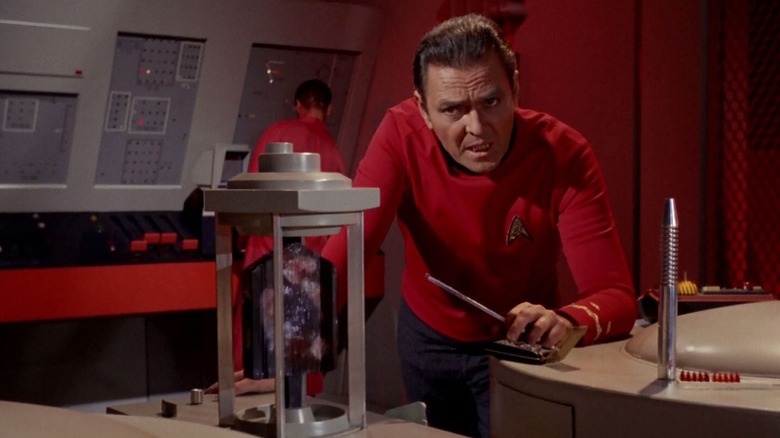
The logistical burden of maintaining a starship is immense, and the dilithium crystal is the most high-maintenance component of the entire vessel. According to established canon, the crystals are not merely "inserted" into the engine; they must be meticulously aligned.
The Physics of Alignment
Much like the prism on the cover of Pink Floyd’s Dark Side of the Moon, the orientation of a dilithium crystal determines the quality of the output. The plasma beam must cascade through the crystal’s facets at specific angles to ensure maximum efficiency. Because dilithium is a naturally occurring mineral, no two crystals are identical. Every sample possesses unique atomic lattice structures that require custom calibration. This is the source of many engineering debates, such as the famous friction between Geordi La Forge and the brilliant ship designer Dr. Leah Brahms regarding the safety of "on-the-fly" crystal adjustments.
Degradation and Recrystallization
The environment inside a warp core is arguably the most hostile place in the known galaxy. Constantly bombarded by electromagnetic fields and situated at the focal point of a matter/antimatter reaction, dilithium crystals inevitably degrade. If a crystal becomes fractured or "de-tuned," the resulting plasma stream becomes unstable. In extreme cases, this can lead to the "ejection" of the entire warp core—a standard emergency procedure to prevent the total destruction of the vessel. Periodically, engineers must perform a "recrystallization" process to restore the mineral’s lattice structure, extending the life of the crystal by several years.
Official Responses: The Scarcity Crisis
The Federation’s reliance on dilithium has often been a point of political contention. As established in Star Trek VI: The Undiscovered Country, the mining of dilithium is a grueling, often inhumane process. While the Federation prides itself on ethical labor practices, the demand for the mineral has historically led to the exploitation of planetary resources and labor, particularly within the Klingon Empire’s territories.
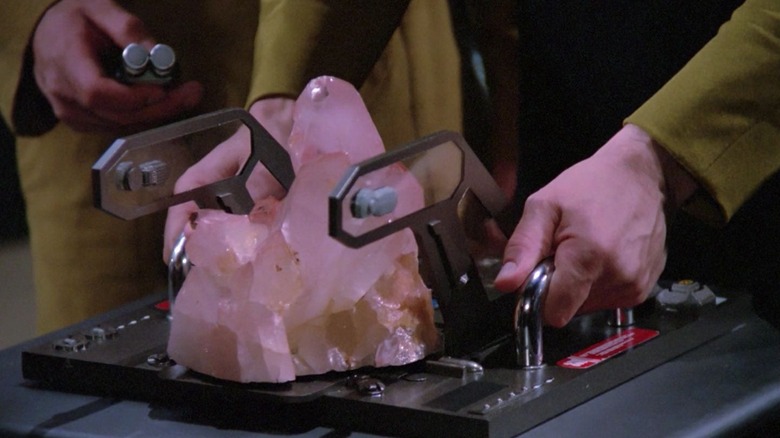
The rarity of the mineral cannot be overstated. Unlike other technologies that can be mass-produced in a laboratory, high-grade dilithium is a natural, finite resource. There is no known way to synthesize it artificially, creating a persistent "dilithium ceiling" for interstellar expansion. This has forced Starfleet engineers into a perpetual state of innovation, constantly seeking ways to increase engine efficiency or, more drastically, to find a replacement for the warp drive entirely.
Implications: The Future of Propulsion
The dependence on a finite, non-renewable mineral has massive implications for the future of the Star Trek universe. Throughout the timeline, we see a recurring theme: the vulnerability of a civilization built upon a single bottleneck.
- Strategic Vulnerability: As seen during the Burn, if a hostile force or a natural phenomenon renders dilithium useless, the entire interstellar community collapses. The inability to travel between star systems effectively turns a galactic superpower into a collection of isolated planets.
- The Quest for Alternatives: The persistent, underlying goal of Starfleet Research and Development is to move beyond the dependency on dilithium. We have seen glimpses of experimental drives—such as the spore drive or slipstream technology—that seek to bypass the traditional matter/antimatter injection method. However, these technologies remain volatile and largely experimental.
- Sustainability: The history of Star Trek is one of learning to do more with less. The evolution from the early, inefficient engines of the NX-01 Enterprise to the sophisticated, long-lasting cores of the Sovereign-class starships shows a clear trend toward sustainable energy management.
In conclusion, while dilithium crystals may be a "fantasy" element of the Star Trek mythos, they serve a vital narrative function. They represent the thin line between order and chaos, progress and stagnation. They remind us that even in a future of infinite possibility, humanity—and its allies—must still grapple with the limitations of the physical world and the precious, fragile resources required to reach for the stars. The next time you see a Starfleet engineer rushing into the engine room, remember: they aren’t just fixing a machine; they are keeping the flame of civilization burning against the cold, vast expanse of the void.











No comments yet. Be the first to join the conversation!