Ammar Sabilarrohman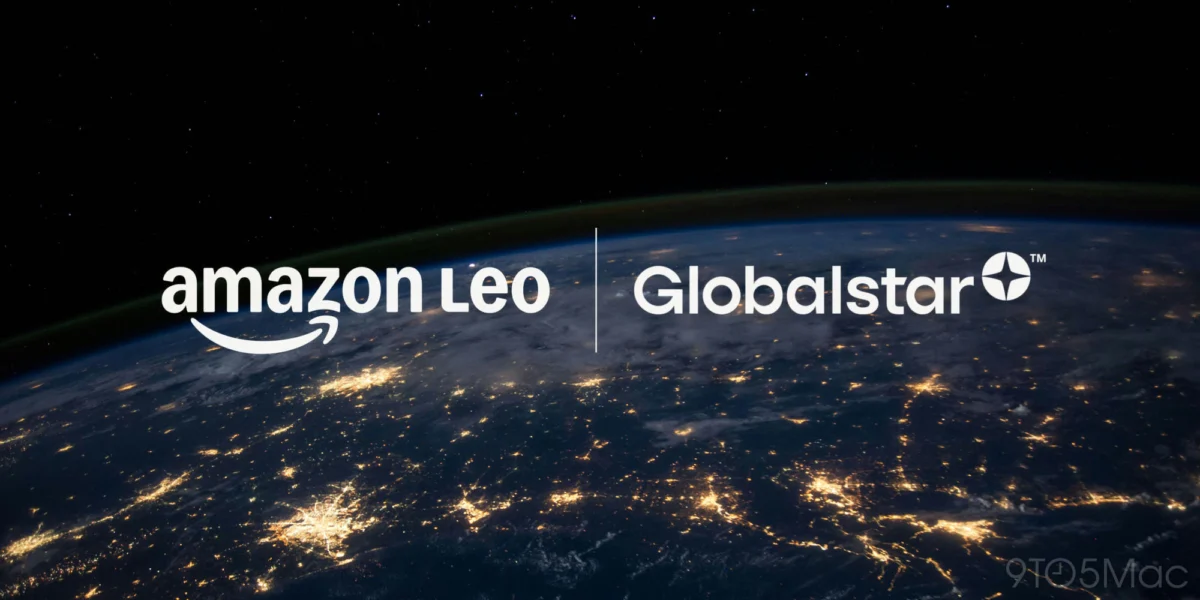
In a move that promises to reshape the landscape of global telecommunications, Amazon has formally notified the Federal Communications Commission (FCC) of its intent to assume control of Apple’s 20% equity stake in Globalstar. This development, which follows Amazon’s blockbuster $11.6 billion acquisition of the satellite operator, signals a major consolidation of infrastructure that powers one of the most critical safety features in modern consumer technology: Emergency SOS via satellite.
As Amazon integrates Globalstar into its broader Kuiper-based ambitions, the tech giant has moved to reassure stakeholders—specifically the millions of iPhone users who rely on Globalstar’s constellation—that service continuity remains a top priority.
The Core Transaction: Integrating Apple’s Infrastructure
The regulatory filing, titled an "Application for Consent to Assign and Transfer Control of Licenses and Authorizations," provides a clear roadmap of the corporate maneuvering taking place behind the scenes. According to the document, the transition will occur through a structured merger process. Amazon has established a subsidiary, "Grapefruit Acquisition Sub II, LLC," which will serve as the primary vehicle for the merger.
Once the initial stages of the acquisition are finalized, this entity will effectively step into the shoes of Apple Inc. regarding its equity and voting interests in Globalstar Licensee LLC. This transfer is not merely a legal formality; it represents a significant pivot in how satellite-to-mobile (D2D) technology will be managed in the coming decade.
A Chronology of Strategic Partnerships
To understand the gravity of this transition, one must look at the evolution of the partnership between Apple and Globalstar, which has transformed from a niche emergency service into a cornerstone of mobile connectivity.

- 2022: Apple introduces "Emergency SOS via satellite" with the iPhone 14, powered exclusively by the Globalstar network. At the time, this was a revolutionary leap in mobile safety, allowing users to send distress signals from areas without cellular or Wi-Fi coverage.
- Late 2024: Recognizing the long-term utility of the service, Apple significantly deepened its commitment to the partnership. An FTC filing revealed that Apple would invest $1.1 billion into Globalstar, a massive increase from the original $300 million investment.
- The 85% Commitment: As part of this $1.1 billion capital infusion, Globalstar agreed to dedicate 85% of its satellite capacity to Apple. In exchange, Apple secured a 20% equity stake in Globalstar through 400,000 Class B shares.
- April 2026: Amazon announces its intention to acquire Globalstar for $11.6 billion, triggering a ripple effect through the satellite industry.
- May 2026: The official FCC filing confirms that Amazon will absorb the 20% stake previously held by Apple, placing the destiny of the satellite constellation firmly under the Amazon umbrella.
Supporting Data: The Economics of Space
The financial underpinnings of this deal reflect a desperate scramble for dominance in the Low Earth Orbit (LEO) market. Amazon’s acquisition is not simply about acquiring hardware; it is about securing the spectrum and the orbital assets necessary to build a global Direct-to-Device (D2D) network.
Globalstar’s value proposition has always been its ability to bridge the "dead zones" of the world. By taking over the company, Amazon is gaining:
- Established Infrastructure: An existing, functional satellite constellation that is already integrated into the world’s most popular smartphone.
- Regulatory Hurdles Cleared: Globalstar possesses the necessary FCC licenses for satellite-to-ground communications, saving Amazon years of bureaucratic maneuvering.
- Revenue Stability: With 85% of capacity previously earmarked for Apple, there is a built-in revenue stream that provides immediate financial stability for the acquisition.
Official Responses and Strategic Intent
Amazon has been careful to frame this acquisition as a boon for the broader industry rather than a move toward monopolization. In its filings, the company stated:
"The proposed combination will enable Amazon to build a next-generation, global D2D network purpose-built for service to smartphones and other mobile devices across multiple carriers and vendors."
This language is telling. While Amazon is inheriting the Apple partnership, it clearly envisions a future where Globalstar’s technology is not limited to the iPhone ecosystem. By leveraging the Kuiper project’s expertise in LEO satellite design and combining it with Globalstar’s existing licensing, Amazon aims to offer satellite connectivity to virtually any mobile device, regardless of the carrier.

Apple, for its part, has remained largely silent on the specifics of the transition, but the legal framework of the deal suggests that the current level of service for iPhone users will be legally protected under the terms of the existing agreements. Amazon’s commitment to "keep the service working" is viewed by analysts as a necessary bridge to ensure that the transition does not result in a loss of functionality for millions of users during the integration period.
Implications for the Future of Connectivity
1. The Death of the "Dead Zone"
The ultimate goal of this merger is the total elimination of cellular black spots. As terrestrial networks struggle to reach rural or remote environments, satellite-to-device connectivity is becoming the "final frontier" for telecommunications companies. By controlling the infrastructure, Amazon is positioning itself to be the middleman for all global mobile connectivity, potentially challenging traditional cellular carriers.
2. Competition with Starlink
Amazon’s Project Kuiper has long been viewed as the primary rival to SpaceX’s Starlink. With the acquisition of Globalstar, Amazon now has a tangible, working asset that can compete directly with Starlink’s "Direct to Cell" initiative. This creates an environment where two of the world’s largest logistics and tech conglomerates are effectively racing to own the sky.
3. Regulatory Scrutiny
While the FCC is currently reviewing the application, the sheer scale of this acquisition—and the consolidation of satellite licenses—will undoubtedly invite intense scrutiny. Consumer advocacy groups are already questioning whether a single company, particularly one as dominant as Amazon, should control the fundamental infrastructure that provides emergency connectivity to the public.
4. Apple’s Next Move
If Apple is no longer a 20% stakeholder, it raises questions about the long-term nature of their relationship with the satellite network. Will Apple seek to build its own proprietary satellite constellation in the future? Or will it remain a "customer" of Amazon’s network, essentially renting bandwidth? Given Apple’s history of vertical integration, it is highly probable that the company is already exploring R&D avenues to reduce its reliance on third-party satellite operators.

Conclusion: A New Era for LEO
The integration of Globalstar into Amazon is a landmark event in the history of telecommunications. It highlights a shift in how we perceive connectivity: no longer as a service provided by towers on the ground, but as a utility beamed from the stars.
For the average user, the short-term impact will be negligible; your iPhone will continue to function as it always has. However, the long-term implications are profound. We are moving toward a future where "no signal" becomes an artifact of the past, and where the infrastructure of that future is held in the hands of a few dominant technology conglomerates.
As the FCC continues its review, the industry will be watching closely to see if Amazon can successfully balance its ambition to dominate the satellite market with the responsibility of maintaining a critical, life-saving service for millions of users worldwide. The acquisition of Globalstar is not just a business deal; it is the construction of a new global nervous system, and the world is waiting to see how Amazon will control its pulse.

 Jia Lissa
 Asro
Asro