

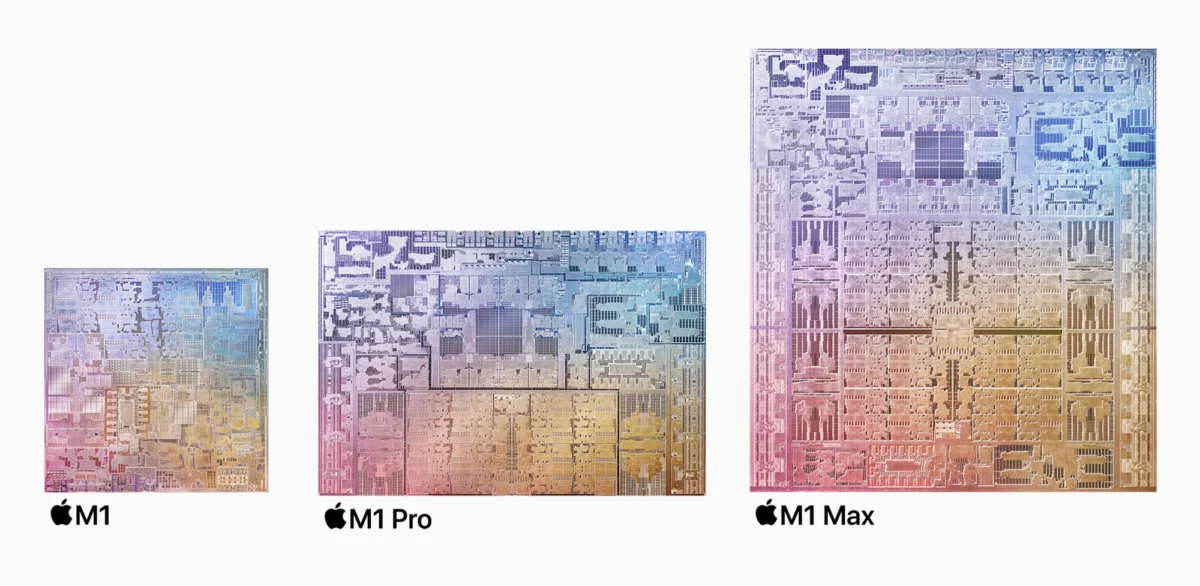
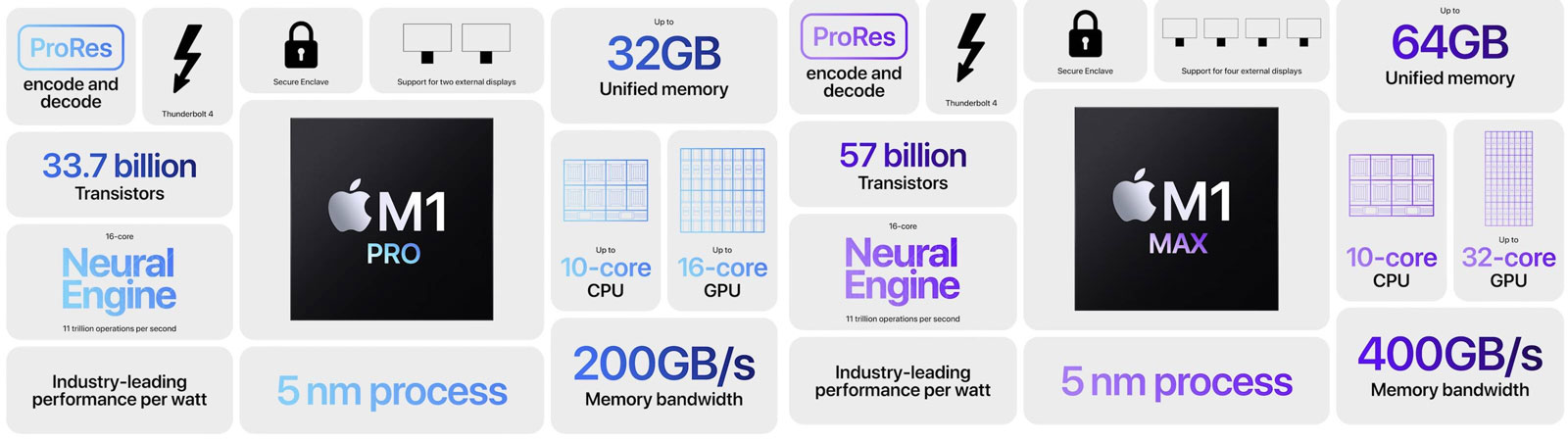
At its high-octane "Unleashed" event in Cupertino, Apple signaled a definitive shift in the landscape of high-performance computing. By introducing the M1 Pro and M1 Max, the company has effectively dismantled the perception that mobile workstations must sacrifice power efficiency for raw performance. These custom SoCs (System on a Chip), built on a cutting-edge 5nm process, represent the most ambitious hardware project in Apple’s history, housing up to 57 billion transistors and setting a new benchmark for what professional-grade portable computers can achieve.
The Dawn of a New Era: Main Facts and Technical Specifications
The M1 Pro and M1 Max are not merely incremental upgrades; they are architectural behemoths designed to tackle the most demanding creative workflows. Both chips are engineered for the revamped 14-inch and 16-inch MacBook Pro models, providing a scalable architecture that caters to a wide spectrum of power users.
The Powerhouse Architectures
At the heart of these SoCs lies a sophisticated configuration. The M1 Pro features a 10-core CPU (8 high-performance and 2 high-efficiency cores), complemented by a GPU that can be configured with up to 16 cores. The M1 Max takes this further, maintaining the same CPU foundation but expanding the GPU capabilities to a massive 32-core design.
The unified memory architecture (UMA) is perhaps the most impressive feat of engineering. The M1 Pro supports up to 32GB of unified RAM with a 200GB/s memory bandwidth, while the M1 Max pushes the envelope to 64GB of RAM with a staggering 400GB/s bandwidth. This integration allows the CPU and GPU to access the same pool of data without the latency typically associated with copying data between separate memory banks, a common bottleneck in traditional PC architectures.
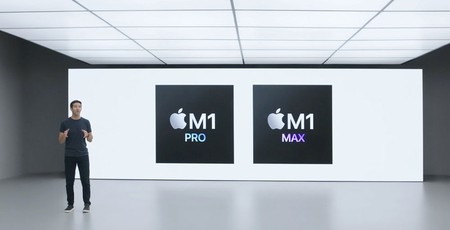
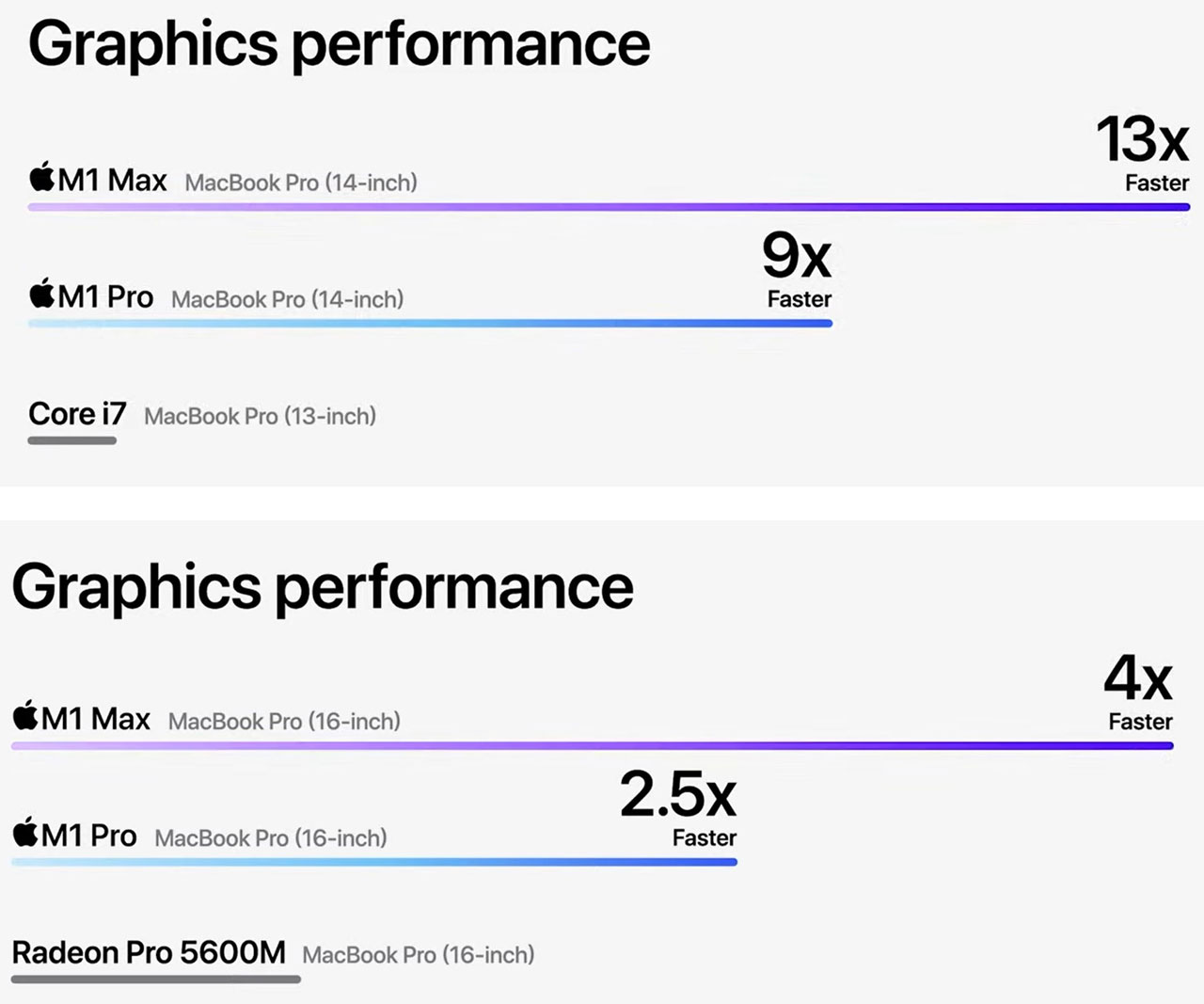
Rounding out the silicon is the 16-core Neural Engine, which accelerates AI and machine learning tasks, and a specialized media engine that provides hardware-level acceleration for the ProRes video codec. Apple’s bold claim—that these are the most powerful chips it has ever built—is backed by performance metrics suggesting up to 70% faster CPU performance and a 4x increase in GPU performance compared to the original M1.
A Chronological Shift: Apple’s Two-Year Transition
The "Unleashed" event served as a critical waypoint in Apple’s roadmap to migrate its entire Mac lineup away from Intel processors—a transition originally announced at WWDC 2020.
- June 2020: Apple announces the "Apple Silicon" transition, promising a two-year shift to its own custom-designed ARM-based chips.
- November 2020: The original M1 chip debuts in the MacBook Air, 13-inch MacBook Pro, and Mac mini, shocking the industry with its unprecedented performance-per-watt efficiency.
- April 2021: The M1 chip expands to the iPad Pro and the redesigned 24-inch iMac, proving the scalability of the architecture.
- October 2021: The Unleashed event introduces the M1 Pro and M1 Max, specifically targeting the professional market—the final stronghold of Intel in Apple’s ecosystem.
Apple is currently at the midpoint of this two-year window, and the introduction of these chips suggests that the company is moving ahead of schedule, with even more powerful desktop-class iterations expected to follow.
Data-Driven Performance: Analyzing the Claims
During the presentation, Apple’s SVP of Hardware Technologies, Johny Srouji, emphasized that these chips were built with a singular focus: performance efficiency. Apple’s internal testing suggests that the M1 Max can deliver significantly higher performance than competing integrated graphics solutions while consuming up to 70% less power.
Comparative Metrics
Apple’s charts against mobile competitors, such as the Intel iGPUs and the AMD Radeon RX 5600M, are ambitious. By utilizing the unified memory pool, the M1 Max achieves a bandwidth six times higher than the original M1. This is particularly relevant for 3D rendering, video editing, and complex simulations.
However, professional journalists and analysts remain cautious. While Apple’s internal benchmarks are compelling, the true measure of these chips will be in real-world, third-party stress tests. The tech community is eagerly awaiting head-to-head comparisons in professional suites like Adobe Creative Cloud, DaVinci Resolve, and Maxon Cinema 4D. If the chips perform as advertised, they could render traditional mobile workstations—which often rely on bulky cooling systems and power-hungry dedicated GPUs—obsolete in the eyes of creative professionals.
Official Responses and Industry Implications
The response from the creative industry has been one of cautious optimism bordering on excitement. Apple’s emphasis on the ProRes media engine is a direct nod to the film and video production industry. With the ability to playback multiple streams of 8K video without a stutter, the M1 Max is being marketed as a portable post-production studio.
Johny Srouji noted: "M1 Pro and M1 Max deliver massive gains in CPU and GPU performance, up to six times the memory bandwidth, a new media engine with ProRes accelerators, and other advanced technologies. These chips are a game-changer for the professional workflow."
The Efficiency Paradigm
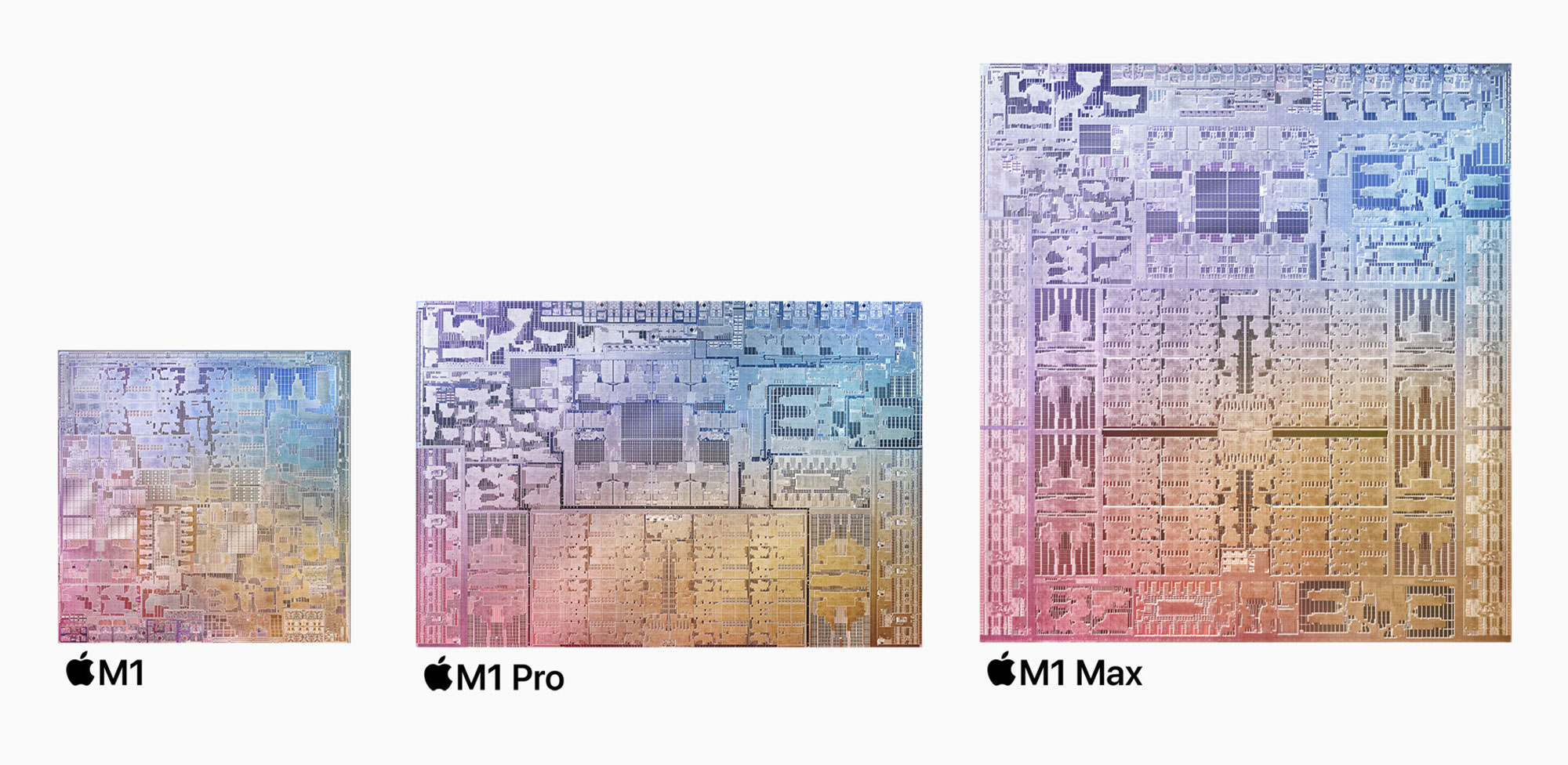
Beyond raw speed, the industry is closely watching the "industry-leading power efficiency" claims. The MacBook Pro 16, for instance, is advertised to offer up to 21 hours of video playback. This changes the calculus for mobile workers who are no longer tethered to power outlets, effectively bringing desktop-class editing to remote environments, from film sets to travel-heavy production schedules.
The Bigger Picture: Implications for the Market
The launch of the M1 Pro and M1 Max carries several long-term implications for the computing industry:
1. The Death of the "Thermal Throttling" Era
For years, high-performance laptops were synonymous with heat, fan noise, and rapid battery drain. Apple’s move to ARM-based, highly integrated silicon forces competitors to rethink their reliance on x86 architectures. If Apple can maintain this level of efficiency, the industry standard for what constitutes a "professional laptop" will shift toward cooler, quieter, and longer-lasting hardware.
2. Vertical Integration as a Moat
By controlling the hardware, the operating system (macOS), and the software optimizations (via APIs like Metal), Apple has created a "moat" that is difficult for competitors to cross. Developers are now optimizing for a known, consistent hardware architecture, which leads to better-performing software that is uniquely tailored to the Silicon, further cementing the MacBook Pro as the preferred tool for the creative class.
3. The Future of Gaming
While Apple did not specifically market these machines as "gaming laptops," the raw GPU power of the 32-core M1 Max is more than capable of handling modern, high-fidelity titles. The question remains whether Apple will invest in the gaming ecosystem to make the Mac a primary platform for gamers, or if these machines will remain relegated to professional productivity and creative content creation.
Conclusion: A New Standard
The 2021 MacBook Pro 14 and 16, powered by the M1 Pro and M1 Max, represent a masterclass in hardware integration. By shifting the focus from clock speeds to system-wide efficiency and specialized accelerators, Apple has effectively redefined the modern workstation.
As these machines land in the hands of users over the coming week, the focus will shift from the glossy charts presented at the "Unleashed" event to the harsh reality of real-world use cases. If the hardware can hold its ground against the heavy-duty demands of 8K editing, complex 3D modeling, and software compilation, the M1 Pro and M1 Max will be remembered not just as a successful product launch, but as the moment the personal computer market underwent its most significant paradigm shift in a decade.
For the professional creative, the message is clear: the future is not just faster—it is more efficient, more capable, and significantly more integrated than ever before. The wait for the next generation of mobile computing is officially over.











No comments yet. Be the first to join the conversation!