

By: Editorial Staff
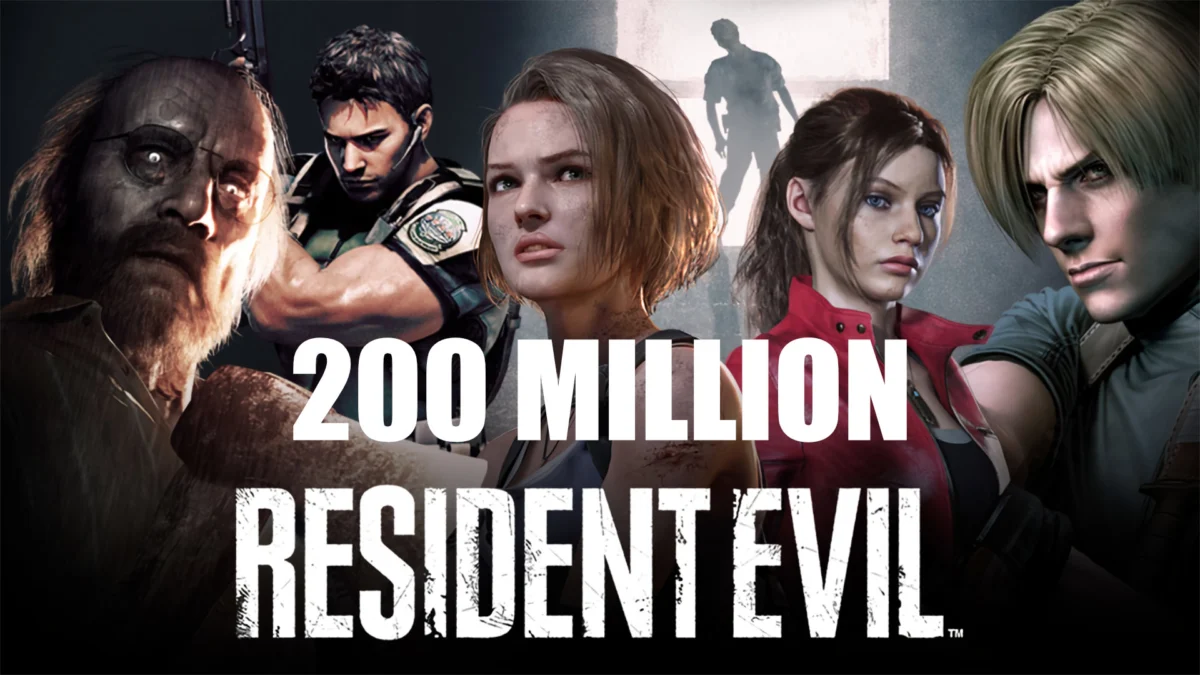
In the landscape of modern gaming, few franchises possess the longevity, cultural impact, and commercial resilience of Capcom’s Resident Evil. What began in 1996 as a modest experiment in "survival horror" has blossomed into a global media juggernaut. According to the latest financial disclosures from the Japanese publishing giant, the Resident Evil series has officially surpassed a monumental milestone: 200 million units sold worldwide. This achievement not only cements Resident Evil as Capcom’s most successful intellectual property but also underscores a paradigm shift in the company’s internal hierarchy, with the horror franchise now firmly established as its primary flagship.
The Milestone: A Historic Achievement
The announcement comes as Capcom continues to update its "Platinum Titles" list—a definitive index of the company’s games that have crossed the one-million-unit sales threshold. As of March 31, the latest entry, Resident Evil: Requiem, has proven to be a juggernaut in its own right, moving over 6.9 million copies in just over a month. This performance places Requiem as the 15th best-selling title in Capcom’s entire history, a staggering feat considering the game was released at the very end of February.
Given that these figures represent a snapshot taken at the end of the fiscal quarter, industry analysts expect the actual number of Requiem sales to be significantly higher today. The rapid adoption of the title suggests that the appetite for the Resident Evil brand remains at an all-time high, driven by consistent quality and a strategy that balances nostalgic remakes with bold, forward-thinking new entries.
A Chronology of Survival Horror
To understand the gravity of the 200-million-unit milestone, one must look back at the humble, pixelated origins of the series. When Shinji Mikami introduced the world to the Spencer Mansion in 1996, the term "survival horror" was barely a recognized genre. The original Resident Evil was a technical marvel for the PlayStation, utilizing pre-rendered backgrounds to create an oppressive atmosphere that defined a generation of console gaming.
The franchise evolved through various iterations:
- The Early Years (1996–2002): Defined by static camera angles and tank controls, these games established the lore of Umbrella Corporation and the T-Virus.
- The Action Pivot (2005–2012): Resident Evil 4 revolutionized the third-person shooter genre, moving the series toward a more cinematic, action-oriented experience.
- The Renaissance (2017–Present): The release of Resident Evil 7: Biohazard marked a return to the series’ horror roots through a first-person perspective, revitalizing the brand and setting the stage for the critically acclaimed string of remakes and sequels, including Requiem.
This trajectory demonstrates a rare ability to adapt to changing market trends while retaining the core identity that fans cherish. By alternating between new installments and high-budget remakes, Capcom has effectively insulated the franchise against the "fatigue" that often plagues long-running series.
Comparative Performance: Resident Evil vs. Monster Hunter
For years, the internal debate at Capcom centered on whether Monster Hunter or Resident Evil deserved the title of the company’s "premier" franchise. While Monster Hunter has been a cultural phenomenon, particularly in the Asian market, the recent data provides a clear victor in terms of sheer volume. With Resident Evil now sitting at over 200 million copies sold, it comfortably outpaces Monster Hunter, which currently stands at approximately 127 million units.
The disparity is particularly visible in the recent performance of Monster Hunter Wilds. Despite a highly anticipated launch, the title has seen a cooling-off period, with sales volume slowing to 400,000 units in the most recent quarter—matching the slow-burn performance of Monster Hunter Rise. While 11.4 million total units for Wilds is objectively successful by any standard, the rapid acceleration of Resident Evil suggests that the horror series is currently capturing a broader, more consistent global audience.
Official Data and Market Implications
The data provided by Capcom’s Investor Relations department paints a picture of a company operating at peak efficiency. The "Platinum Titles" list is not merely a scorecard; it is a testament to the longevity of Capcom’s back catalog. Titles released years ago continue to move units, often bolstered by seasonal sales and the "halo effect" created by new releases.
The implication here is clear: Capcom’s investment in the RE Engine has paid dividends. By standardizing their development tools, the company has managed to produce games that are not only visually striking but also scalable across multiple hardware platforms. This technical prowess allows them to maintain a frequent release cadence, ensuring that there is almost always a Resident Evil product in the public eye.
The Future: What Lies Ahead?
With the dust settling on the launch of Resident Evil: Requiem, the rumor mill regarding the future of the series is already in overdrive. Industry insiders have noted that development on further projects, including reports of a potential remake of the original 1996 Resident Evil (the "RE1 Remake Remake"), is already underway.
The path to 250 million units seems not just possible, but inevitable. As the series continues to explore new narratives and refine its mechanics, it remains the gold standard for survival horror. However, this success brings its own set of challenges. How does a publisher maintain the terror that defined the early entries when the brand is now a mainstream blockbuster? Can Capcom continue to balance the expectations of long-time purists with the demands of a new generation of players?
Strategic Analysis: Why Capcom Succeeds
Capcom’s recent performance is a masterclass in IP management. Unlike some competitors that abandon their heritage in favor of "live-service" models, Capcom has doubled down on high-quality, single-player experiences. They have successfully monetized their legacy, proving that players are willing to pay premium prices for well-executed remakes that respect the source material.
Furthermore, the company’s ability to pivot its business model—moving away from the reliance on a few marquee titles toward a diverse portfolio of million-sellers—has created a financial safety net. Even if a specific title like Monster Hunter Wilds sees a plateau in sales, the momentum of the Resident Evil machine provides enough fiscal stability to weather the fluctuation.
Concluding Thoughts
As the industry looks toward the next generation of hardware, Resident Evil stands as a beacon of what is possible when a studio trusts its creative vision. The 200-million-unit milestone is more than just a statistic; it is a narrative of endurance. Whether through the claustrophobic corridors of a Spencer Mansion or the expansive, high-stakes environments of Requiem, Capcom has managed to keep the fear fresh and the fans coming back for more.
As we look toward the horizon, the question is no longer whether Resident Evil will remain the king of Capcom’s lineup, but rather how much higher it can climb. With a massive, dedicated player base and a development cycle that shows no signs of slowing down, the franchise is poised to dominate the survival horror genre for decades to come.
What do you think?
The gaming industry is currently at a crossroads. As Resident Evil reaches new heights, one must wonder: is the current success sustainable, or are we approaching a point of oversaturation? Did the performance of Monster Hunter Wilds surprise you, or was it a predictable outcome given the current market climate? Share your thoughts in the comments section below.











No comments yet. Be the first to join the conversation!