

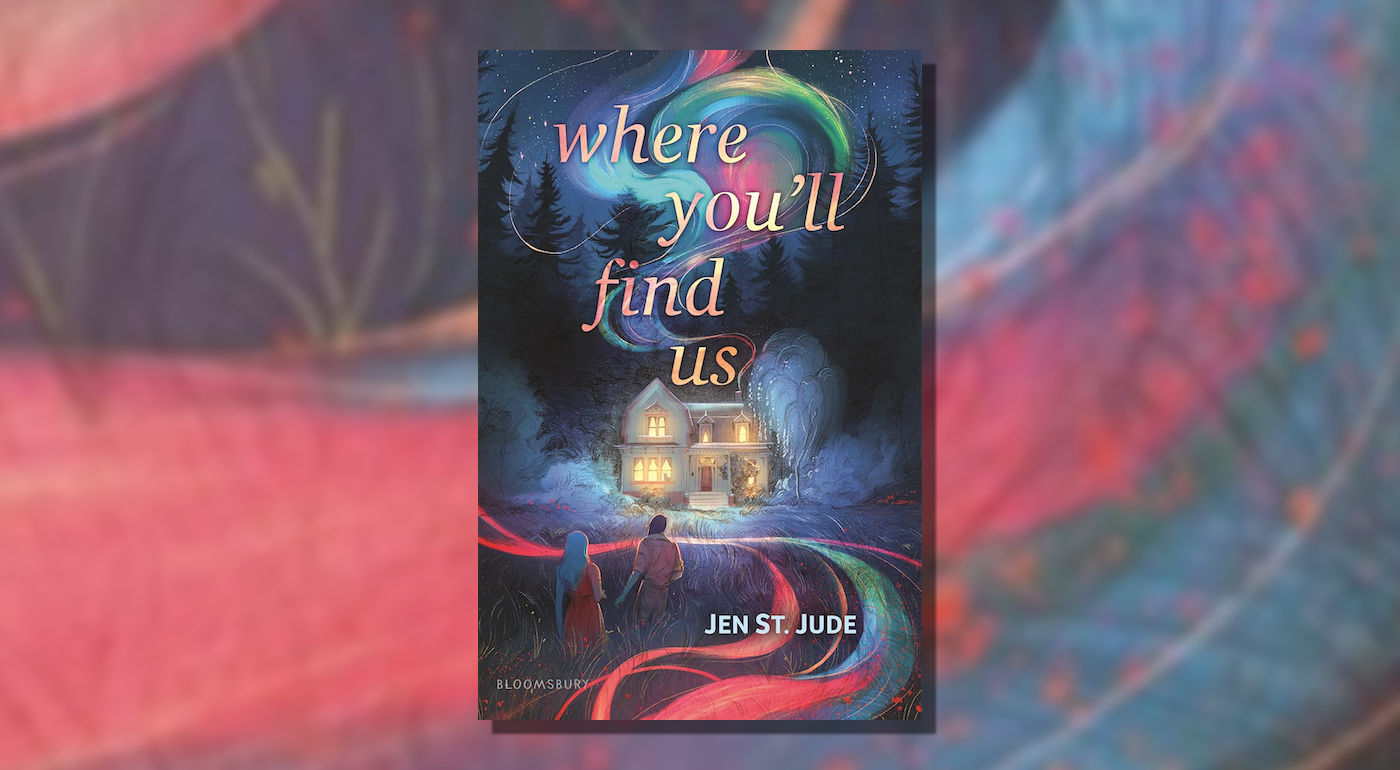
As the literary world turns its gaze toward the upcoming summer releases, one title is generating significant buzz for its poignant fusion of speculative fantasy and the raw, internal journey of queer identity. Where You’ll Find Us, the latest young adult novel by acclaimed author Jen St. Jude, is set for release on June 2nd from Bloomsbury YA. The novel arrives at a moment when readers are increasingly seeking narratives that offer both escapist wonder and authentic explorations of the human condition.
By centering its narrative on the concept of "Amaranth"—a timeless, ethereal refuge for queer youth—St. Jude invites readers into a high-stakes exploration of what it means to be seen, to be safe, and to navigate the precarious bridge between the identities we are assigned and the ones we truly inhabit.
The Core Narrative: A Future on Hold
The story follows Calla Quick, a teenager grappling with a life that feels increasingly suffocating. Following a devastating confrontation with their parents—who disowned Calla via text message after discovering their sexual orientation—Calla finds their future plans in shambles. The dream of attending an all-women’s college alongside their girlfriend, Ramona, is suddenly out of reach.
However, the inciting incident of the novel suggests that Calla’s internal struggles run deeper than the immediate fallout of their family’s rejection. While Calla has attributed their parents’ ire to their sexual identity, the narrative slowly peels back layers of a more fundamental crisis: Calla has begun to question their gender identity entirely. The name "Calla" feels like a placeholder, a mask they are tired of wearing, as they secretly yearn to be "Cal."
This internal tension is mirrored by the external setting. When Calla and Ramona stumble upon a mysterious, isolated farmhouse deep in the woods, they are thrust into a realm known as Amaranth. This is no ordinary house; it is a sanctuary that has played host to queer youth throughout history, a pocket of existence where hate and violence are non-existent, and where time itself remains perpetually suspended.
Chronology of Discovery: From Storm to Sanctuary
The narrative structure of Where You’ll Find Us expertly utilizes the "lost in the woods" trope to strip the protagonists of their modern dependencies. In a harrowing sequence, Calla and Ramona are caught in a violent storm, forced to abandon their connection to the modern world—and the safety of their cell phones—as they stumble into the clearing that houses the Amaranth farmhouse.
The Arrival
The transition from the brutal reality of the storm to the serene, otherworldly environment of the farmhouse serves as a sharp contrast. The farmhouse, with its crimson door and glowing windows, acts as a sensory sanctuary. Upon entering, the protagonists are greeted by a surreal atmosphere: music from a past era, the scent of maple sugar, and an oddly domestic scene involving a gray-muzzled German Shepherd and two teenagers, Ambrosia and Lionel.
The Revelation of Timelessness
The interaction between the newcomers and the residents of Amaranth forms the intellectual backbone of the book. As Ramona and Calla attempt to navigate the situation with the logic of 2026—asking for phones, Ubers, and news of the outside world—they are met with profound bewilderment by their hosts.

The residents, who appear to be teenagers, reveal that they have lived in the house for decades, existing outside the linear flow of time. According to the character Lionel, the house acts as a "docking station" for those who have stepped off the "stream" of time. This introduces a ticking-clock element to the narrative: when the house’s internal clock strikes twelve, the inhabitants face the threat of being pulled back into their "harsh realities" unless they can find a way to maintain the stasis.
Supporting Data: The Stakes of Lost History
What sets Where You’ll Find Us apart from standard YA fantasy is its philosophical inquiry into the cost of disappearing. As Cal begins to learn the stories of the other residents, the novel pivots to a broader cultural critique. If queer people are forced to flee to a "timeless" space to find safety, what happens to their history? What is lost when generations of queer youth are removed from the linear timeline of progress?
The book suggests that the "safe haven" of Amaranth is a double-edged sword. While it provides immediate relief from the violence of the world, it also risks erasing the presence of queer individuals from the historical record. The portraits lining the walls of the house—each depicting a youth from a different era—serve as a haunting reminder of the lives that have been "saved" but ultimately hidden away.
Official Perspectives and Thematic Intent
In discussions surrounding the book, St. Jude has emphasized the importance of creating spaces where queer characters can explore their gender and sexuality without the constant threat of external policing. The inclusion of characters like Ambrosia—who embraces a glamorous, non-conformist aesthetic—and Lionel, who provides the grounding, philosophical framework for the house, allows for a dynamic interplay between different facets of the queer experience.
The use of "gender envy" as a recurring motif for Cal is a notable narrative choice. As Cal observes the portraits of the former inhabitants, particularly an androgynous figure in a cowboy shirt, the reader is given a window into the protagonist’s dawning realization of their own gender. This is not merely a fantasy story about a magic house; it is an intimate study of the self-actualization that occurs when one is finally given the time to listen to their own voice.
Implications: A New Canon of Queer YA
The implications of Where You’ll Find Us are significant for the genre. By utilizing the framework of a "timeless" fantasy, St. Jude manages to bypass the traditional "coming-out" arc, moving instead toward a narrative of "coming-to-be."
Key Themes for Readers:
- The Fluidity of Identity: Cal’s journey from Calla to Cal represents a nuanced look at the non-binary and trans experience, focusing on the internal feeling of belonging rather than external validation.
- The Burden of History: The novel forces a dialogue between the comfort of safety and the necessity of being a visible part of history.
- The Generational Divide: Through the interaction between the 2026 protagonists and the "vintage" residents, St. Jude explores the evolution of queer culture and the commonalities that transcend decades.
As the release date approaches, Where You’ll Find Us appears poised to be more than just a seasonal hit. It is a work that challenges its readers to consider where they might find their own "Amaranth"—the place where they are free to exist without the pressure of the clock—while ultimately suggesting that the most vital work happens when we choose to step back into the stream and leave our mark on the world.
For those eager to enter the house, the journey begins on June 2nd. Whether you are a fan of high-concept fantasy or looking for a deeply resonant character study, St. Jude’s latest offering is a mandatory addition to the 2026 reading list. The question remains: when the clock strikes twelve, will the sanctuary hold, or will the characters be forced to confront a reality that is finally ready to see them?









No comments yet. Be the first to join the conversation!