Laily UPN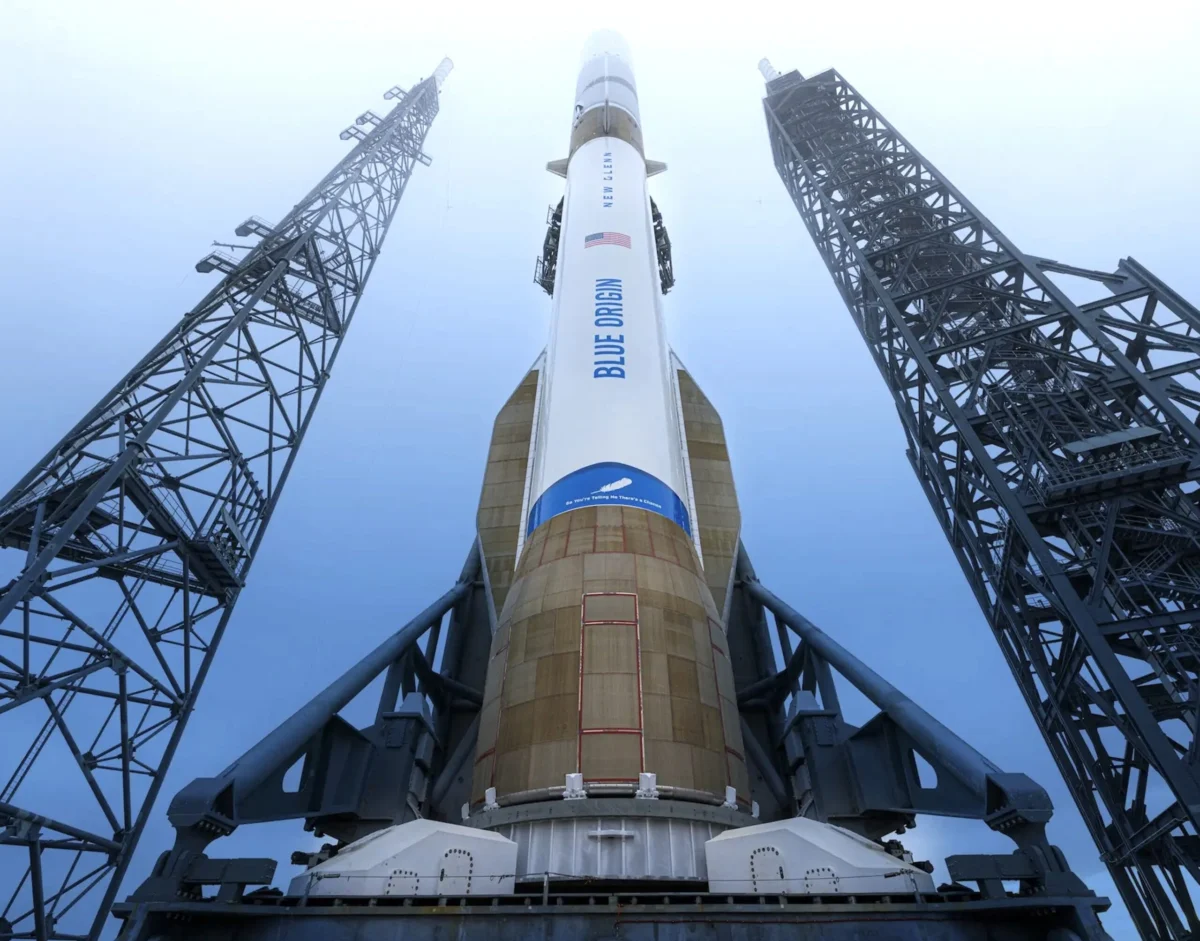
In a catastrophic blow to its ambitions in the commercial space race, Blue Origin’s New Glenn mega-rocket was destroyed in a massive explosion during a static fire test at Cape Canaveral, Florida, on Thursday evening. The incident, which was captured by multiple live streams from industry observers including NASASpaceFlight.com and SpaceFlight Now, represents the most significant failure in the company’s history and raises urgent questions regarding the reliability of the heavy-lift launch vehicle.
Blue Origin, the space firm founded by Jeff Bezos, confirmed the explosion shortly after the event. The rocket was undergoing a critical static fire test—a routine procedure where engines are ignited while the vehicle is held securely to the launch pad—in preparation for its fourth scheduled launch. Because the vehicle was reportedly fully fueled for the test, the resulting detonation was substantial, marking one of the largest rocket explosions ever recorded on U.S. soil.
A Chronology of the Incident
The test was intended to be a routine checkout of the vehicle’s flight readiness for an upcoming mission slated to carry Amazon’s "Leo" internet satellites into low-Earth orbit. According to eyewitness accounts and telemetry data broadcast by independent space-tracking outlets, the ignition sequence appeared to begin normally before an immediate and violent anomaly occurred.
Within seconds, the launch site was engulfed in a massive fireball. The sheer scale of the blast was visible from miles away across the Space Coast. Emergency protocols were activated instantly, and within hours, Blue Origin issued a statement via X (formerly Twitter) confirming that all personnel on-site had been accounted for and were safe. Jeff Bezos later addressed the situation personally, characterizing it as a "very rough day" for the company but affirming his commitment to the program.
"It’s too early to know the root cause but we’re already working to find it," Bezos wrote. "We’ll rebuild whatever needs rebuilding and get back to flying. It’s worth it."
The Weight of the Failure: Context and History
To understand the severity of this setback, one must look at the trajectory of the New Glenn program, which has been under development for nearly a decade. Designed to challenge the dominance of SpaceX, the New Glenn rocket represents Blue Origin’s primary vehicle for heavy-lift commercial and government payloads.
The Developmental Arc
For years, Blue Origin operated in the shadow of its sub-orbital New Shepard program, which gained fame for ferrying wealthy tourists and scientific payloads to the edge of space. While successful, New Shepard was never intended to reach orbit. The development of New Glenn was meant to pivot the company into the lucrative business of launching massive satellite constellations and deep-space hardware.
The maiden flight of New Glenn in January 2025 was a landmark moment, successfully reaching orbit, though the first-stage booster was lost during the recovery attempt. By November 2025, the company had found its footing, executing a second mission that saw twin spacecraft successfully launched toward Mars and the first-ever landing of a New Glenn booster. By April 2026, the company had achieved the technical feat of reusing a booster for a third mission—a cornerstone of the modern launch economy.
Recent Volatility
However, the road has not been smooth. The third mission in April 2026 ended in a partial failure when the rocket’s upper stage suffered a cryogenic failure, resulting in the loss of an AST SpaceMobile satellite. While the Federal Aviation Administration (FAA) had cleared the company to resume operations just last week following an internal investigation, this latest explosion suggests that the issues plaguing the vehicle’s upper stage or fueling systems may be more systemic than previously believed.
Official Responses and Regulatory Oversight
The response from the aerospace community was swift. NASA Administrator Jared Isaacman issued a formal statement late Thursday, emphasizing the agency’s commitment to safety and transparency. "We will work with our partners to support a thorough investigation of this anomaly, assess near-term mission impacts, and get back to launching rockets," Isaacman noted.
The FAA, which oversees commercial space flight safety in the United States, confirmed it was monitoring the situation. In a statement provided to the press, the agency stated there was "no impact to air traffic," and it is expected that the FAA will lead or oversee the mandatory mishap investigation that follows any launch vehicle failure.
Elon Musk, the CEO of SpaceX and Bezos’s primary rival in the private space sector, offered a brief but poignant sentiment on social media: "Most unfortunate. Rockets are hard. I hope you recover quickly."
Implications for the Industry
The explosion has immediate and long-term consequences for several major stakeholders, ranging from Amazon to the U.S. government.
The Amazon "Leo" Factor
The mission that was scrubbed by the explosion was intended to be the first of 24 launches contracted by Amazon to deploy its "Leo" satellite internet network. As Amazon aims to compete directly with SpaceX’s Starlink, the reliability of New Glenn is the linchpin of their deployment strategy. Amazon confirmed that no satellites were on the rocket at the time of the test, sparing the company from an immediate hardware loss, but the delay to their deployment timeline is now indefinite.
Artemis and National Security
Perhaps more critical is the impact on NASA’s Artemis program. Blue Origin has been selected as a key partner for future moon landings and base development. NASA is currently evaluating how this failure will affect its deep-space exploration timeline, with Administrator Isaacman promising updates as the investigation progresses. Furthermore, the U.S. Pentagon has been looking to Blue Origin to provide launch capacity for national security missions. A prolonged grounding of the fleet could force the Department of Defense to reconsider its reliance on a launch provider currently experiencing significant technical instability.
Looking Ahead: The Path to Recovery
The "rebuild" promised by Jeff Bezos will be both expensive and time-consuming. Beyond the physical reconstruction of the launch pad and the replacement of the rocket hardware, the company must now contend with a "stop-work" reality while investigators comb through the telemetry data.
For a company that has prided itself on the mantra Gradatim Ferociter—Latin for "Step by Step, Ferociously"—this represents a major hurdle. The technical community will be watching closely to see if the investigation reveals a specific flaw in the cryogenic propulsion system, which has been a recurring point of concern following the April 2026 failure.
Congressman Mike Haridopolos, representing the Florida district that hosts the Cape Canaveral site, emphasized the importance of the industry’s resilience. "I am grateful there were no reported injuries and thankful for the first responders, engineers, and launch crews who acted quickly," he said.
As the smoke clears at Cape Canaveral, the reality remains that rocket science is an unforgiving discipline. For Blue Origin, the immediate future will be defined by the rigorous, often painful process of failure analysis. Whether the company can return to its planned cadence of 12 launches a year will depend entirely on how quickly it can identify the root cause of this "anomaly" and prove to regulators that the next New Glenn is safe to return to the pad.
In the cutthroat world of private space exploration, today’s explosion serves as a stark reminder of the immense engineering challenges involved in orbital flight. For Jeff Bezos and his team, the dream of an interplanetary future is currently on hold, waiting for the results of an investigation that will decide the fate of their most ambitious project to date.


 Nana Muazin
 Lina Hope