Lina Hope
The global phenomenon that is One Piece is currently navigating through one of its most transformative eras. While Eiichiro Oda’s original manga enters its climactic Final Saga and Toei Animation’s long-running anime adaptation explores the futuristic landscapes of Egghead Island, a new vessel has appeared on the horizon. Netflix, in collaboration with the prestigious Wit Studio, has officially unveiled the roadmap for The One Piece, a high-budget anime reboot designed to reimagine the legendary pirate odyssey for a modern audience.
Following a period of strategic silence since its initial announcement at Jump Festa 2024, new details have emerged regarding the production’s scope, creative leadership, and release window. As the franchise expands its reach through live-action adaptations and cinematic events, The One Piece stands as a bold attempt to condense and elevate the sprawling narrative of Monkey D. Luffy’s journey to become the King of the Pirates.
Main Facts: The Blueprint for a New Era
The One Piece is not merely a remastering of existing footage; it is a ground-up reimagining of the manga’s foundational arcs. Produced by a powerhouse committee comprising Wit Studio, Shueisha, Fuji Television Network, and Toei Animation, the project aims to utilize contemporary animation techniques to bring Oda’s 1997 vision to life with unprecedented fluidity and visual fidelity.
The most striking revelation regarding the first season is its structure. Netflix and Wit Studio have confirmed that Season 1 will consist of seven episodes, with a total estimated runtime of approximately 300 minutes. This suggests an average episode length of roughly 42 to 43 minutes—nearly double the duration of a standard broadcast anime episode. This format allows for a more cinematic pacing, free from the constraints of weekly television slots.
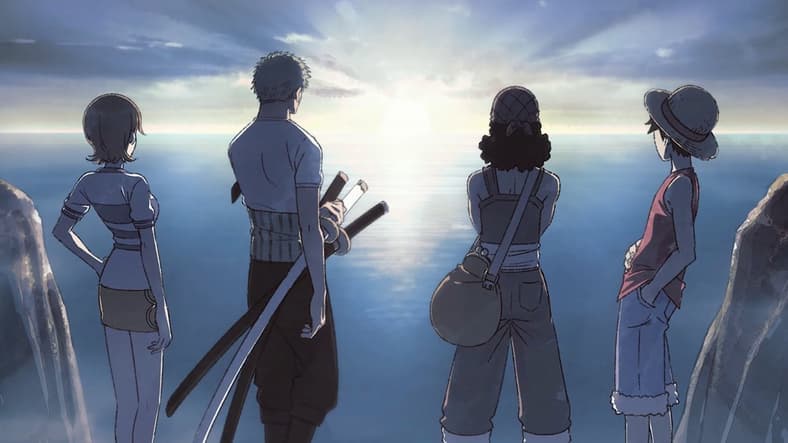
Season 1 is set to adapt the East Blue Saga, covering the first 50 chapters of the manga. This narrative window encompasses Luffy’s origins in Foosha Village, his recruitment of Roronoa Zoro and Nami, and the high-stakes conflict at the floating restaurant Baratie, where the crew encounters the gentleman-chef Sanji. The season will conclude just before the Arlong Park arc, setting the stage for future installments.
Chronology: From Jump Festa to 2027
The journey of The One Piece has been one of calculated reveals. The project was first announced in December 2023 during Jump Festa 2024, a major event for Shueisha’s Weekly Shonen Jump properties. The announcement sent shockwaves through the anime community, as it is rare for a series as successful and ongoing as One Piece to receive a parallel reboot while the original adaptation is still in production.
Following the initial reveal, the production entered a period of "radio silence" lasting nearly two years. This hiatus ended on May 5th—a date significant to fans as it marks the birthday of the series protagonist, Monkey D. Luffy. On this day, Netflix and Wit Studio released a flurry of information, including the first batch of concept art and the official staff roster.
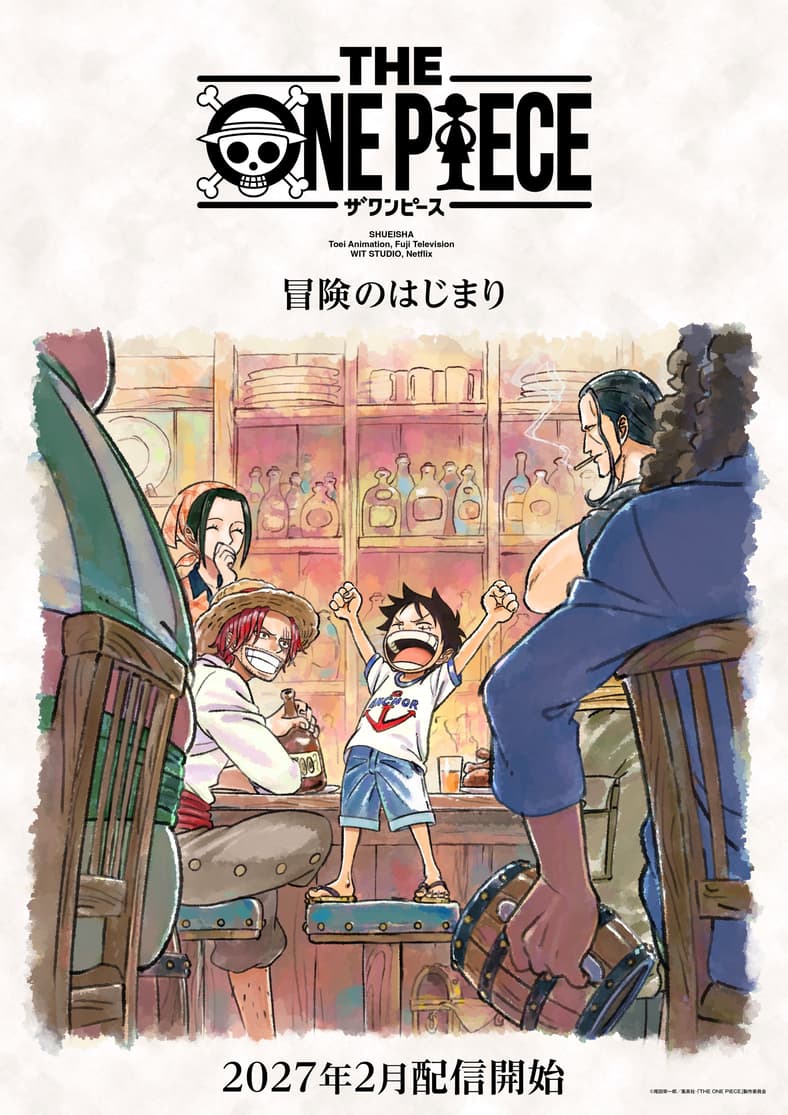
The timeline for the series’ debut has now been solidified. The One Piece is scheduled to premiere exclusively on Netflix in February 2027. This date aligns with the 30th anniversary of the manga’s debut, positioning the reboot as a centerpiece of the franchise’s three-decade celebration.
Supporting Data: The Creative Powerhouse Behind the Scenes
The pedigree of the creative team assigned to The One Piece indicates that Netflix and Shueisha are sparing no expense. The production is being led by individuals who have defined the "prestige anime" landscape over the last decade.
Directorial and Scripting Leadership
The series will be helmed by Masashi Koizuka, a director whose work on Attack on Titan (specifically Seasons 2 and 3) earned international acclaim for its dynamic camera work and emotional intensity. Joining him is scriptwriter Taku Kishimoto, known for his masterful handling of character-driven narratives in Haikyuu!!, Fruits Basket (2019), and the upcoming Sakamoto Days. Kishimoto’s involvement suggests a focus on tightening the narrative threads of the East Blue Saga, ensuring that the character beats resonate within the new condensed format.
Visual Identity and Animation
Character designs are being handled by a duo of industry titans: Kyoji Asano and Takatoshi Honda. Asano is a co-founder of Wit Studio and was the lead character designer for Attack on Titan and Psycho-Pass. His ability to translate complex manga art into animatable, high-detail designs is legendary. Honda, conversely, recently garnered praise for his work on The First Slam Dunk, a film lauded for its revolutionary blend of traditional and 3D animation styles.
Pacing Analysis
To understand the significance of the 300-minute runtime for 50 chapters, one must look at the original Toei Animation pacing. The original 1999 anime covered the first 50 chapters in approximately 30 episodes. At 20 minutes of content per episode, that totals 600 minutes. By cutting that time in half, The One Piece promises a lean, high-velocity experience that removes the "filler" and elongated reaction shots that have occasionally drawn criticism from the fan base in the original long-running series.
Official Responses: Quality Over Haste
The lack of a traditional teaser trailer has caused some trepidation among the "Nakama" (the One Piece fan base). However, leadership at Wit Studio has moved to reassure the public that the extended development cycle is a direct result of the meticulous attention to detail being applied to the project.
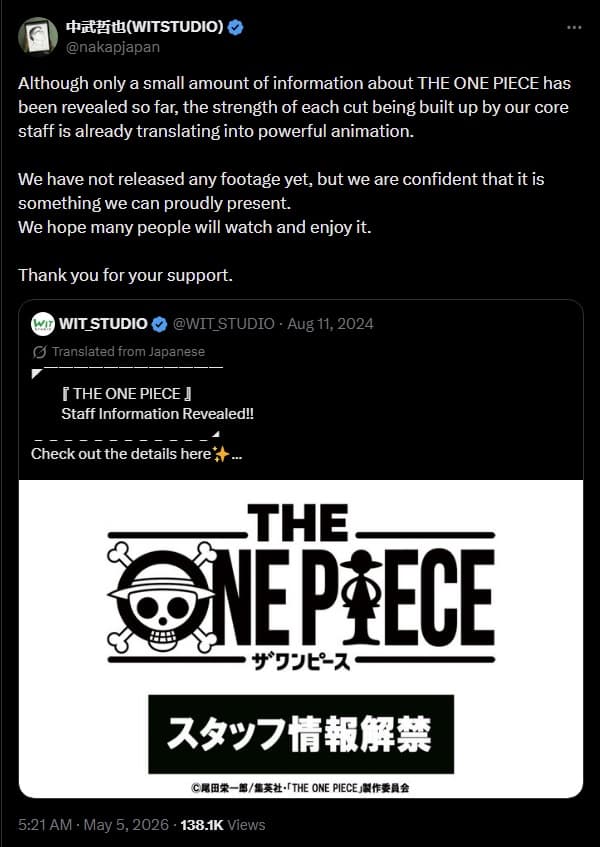
Tetsuya Nakatake, Co-Founder of Wit Studio, addressed these concerns via a statement on his personal social media. Translated from Japanese, Nakatake emphasized that the "core team" is currently "polishing every single scene." He asserted that the quality of the animation already produced is "incredibly powerful" and expressed a high degree of confidence in the final product.
Nakatake’s sentiment was echoed in the promotional materials released on Netflix’s Tudum platform. The messaging focuses on the concept of "The One Piece" as a definitive entry point for new fans who may be intimidated by the 1,100+ episode count of the original anime, while providing a "fresh visual experience" for veteran viewers.
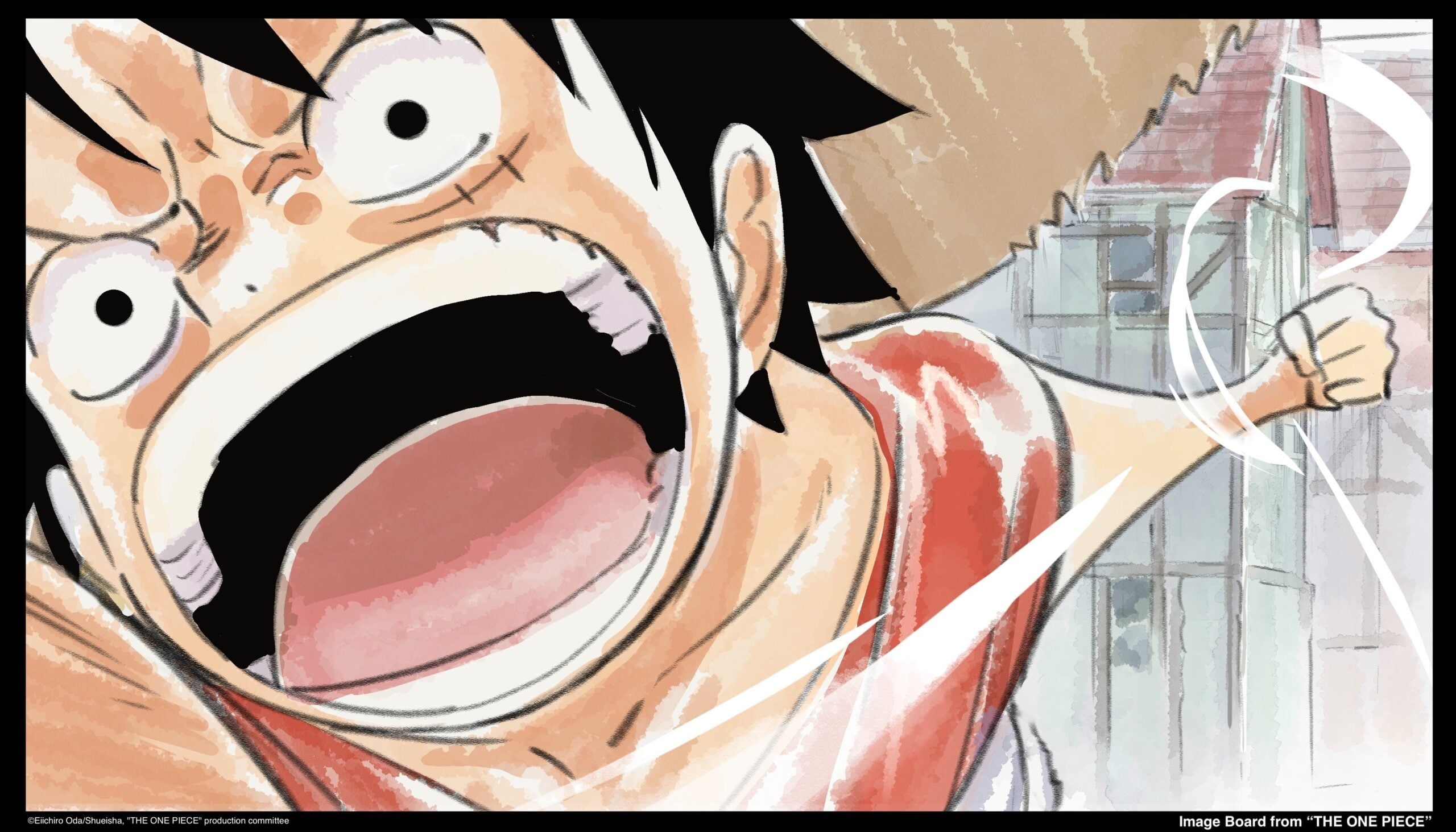
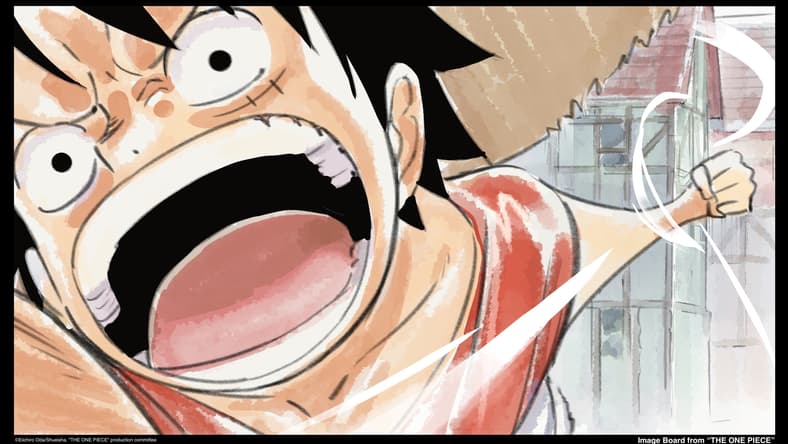
The concept art released alongside these statements—depicting a young Luffy with Shanks in Foosha Village and the early Straw Hat crew—showcases a softer, more painterly aesthetic than the original 1999 series, leaning into a style that feels both nostalgic and modern.
Implications: A Strategic Shift for the Franchise
The existence of The One Piece carries significant implications for the anime industry and the future of the franchise.
1. The "Netflix Effect" and Global Onboarding
Netflix has become a primary engine for One Piece’s global resurgence. Following the massive success of the One Piece live-action series in 2023, the streaming giant identified a "barrier to entry" problem. New fans attracted by the live-action show often find the prospect of catching up on 25 years of animation daunting. The One Piece serves as a modern, accessible "on-ramp," allowing Netflix to retain these viewers within its ecosystem.
2. Coexistence with Toei Animation
One of the most unique aspects of this reboot is that it will run concurrently with Toei Animation’s ongoing series. This suggests a shift in how "legacy" anime are handled. Rather than replacing the original, The One Piece acts as a "prestige" companion piece. Toei Animation’s involvement in the production committee for the reboot indicates a collaborative rather than competitive relationship, ensuring that the brand remains cohesive.
3. Setting a New Standard for Shonen Reboots
If The One Piece succeeds in its mission to condense 50 chapters into 300 minutes of high-fidelity animation, it could provide a blueprint for other long-running Shonen properties. Series like Bleach (with Thousand-Year Blood War) have already shown the appetite for high-budget, seasonal returns to classic stories. The One Piece takes this a step further by starting from the very beginning.
4. Technical Evolution
By 2027, the tools available to Wit Studio will far surpass what was available to animators in 1999. The reboot offers a chance to rectify early animation inconsistencies and apply modern lighting, compositing, and voice acting standards to iconic moments like Shanks giving Luffy the Straw Hat or the "Walk to Arlong Park" (should the series continue into Season 2).
Conclusion
The One Piece represents more than just a retelling of a familiar story; it is a testament to the enduring power of Eiichiro Oda’s world-building. By entrusting the East Blue Saga to the visionary creators at Wit Studio and the global platform of Netflix, the franchise is ensuring its relevance for the next generation of fans. While the wait until February 2027 may seem long, the promise of a "polished," "powerful," and "cinematic" reimagining of the Straw Hat Pirates’ humble beginnings suggests that the journey will be well worth the voyage. As Luffy often says, the sea is vast—and in 2027, it is set to become more vibrant than ever before.


 Asro
Asro
 Ammar Sabilarrohman