Introduction
The project space at Lyles & King, the venerable New York gallery known for its sharp, forward-thinking curatorial pulse, is currently hosting an exhibition that feels less like a static display and more like a visceral pulse. The artist in focus is Kate Meissner, a Los Angeles-based painter whose latest series of works invites viewers into an intimate, often unsettling, and deeply profound investigation of the human form. Running through April 4, the exhibition serves as a localized, high-definition look at a universal truth: the profound elasticity of the human body and its innate, often ignored, capacity for radical metamorphosis.
For Meissner, who received her MFA from Yale University, this body of work represents a departure into the territory of the "biological sublime." By focusing on the physiological transformations spurred by pregnancy and childbirth, Meissner transcends the typical tropes of motherhood art, opting instead for a raw, almost zoological study of the mammalian experience.
Main Facts: The Exhibition and the Artistic Thesis
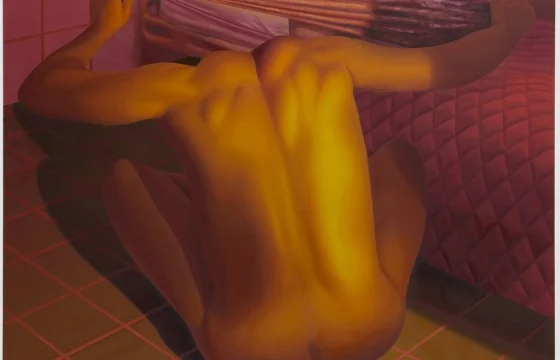
The core of the exhibition at Lyles & King comprises a suite of paintings that oscillate between the clinical and the ethereal. These are not sentimental depictions of maternal bliss; they are anatomical inquiries into how a singular human vessel can stretch, reshape, and sustain another life.
Meissner’s artist statement acts as the North Star for the exhibition, grounding the abstract brushwork in the grit of lived experience. She writes: "These works are an exploration of the human body’s elasticity and capacity to metamorphose. Informed by my own experience of pregnancy and the birth of my first child last year, these paintings are a meditation on physiological transformation and the body’s underlying animalistic and mammalian nature."
The paintings function as a dual narrative. On one hand, they celebrate the structural ingenuity of the body; on the other, they confront the loss of autonomy that accompanies the biological imperatives of reproduction. By highlighting the "animalistic" side of the experience, Meissner forces the viewer to reconcile the sanitized societal view of birth with the actual, biological reality of mammalian propagation.
Chronology: The Path to the Project Space
To understand the gravity of this exhibition, one must look at the trajectory of Meissner’s career. Born in 1995 in Sacramento, California, Meissner has spent the last decade navigating the rigorous landscape of contemporary American art.
- Formative Years: Following her undergraduate studies, Meissner moved toward the East Coast to pursue an MFA at Yale University. This period proved critical in refining her visual language, which blends figurative painting with a distinct, often jarring, materiality.
- Institutional Recognition: Her rise was swift. Her work began appearing in major permanent collections, including the Denver Art Museum (Denver, CO), the Xiao Museum of Contemporary Art (Rizhao, CN), The Mer Collection (Madrid, ES), and the Abroms-Engel Institute for the Visual Arts (Birmingham, US). These acquisitions solidified her status as a painter whose work is not merely topical but historically significant.
- The Catalyst: The year 2023 served as a watershed moment for the artist. The birth of her first child fundamentally altered her relationship with the canvas. The paintings currently on view at Lyles & King are the direct, distilled result of that transition—a bridge between the artist’s earlier interest in form and her newfound obsession with biological inevitability.
- The Current Exhibition: Since opening at Lyles & King in early 2024, the exhibition has garnered attention for its courage in tackling the "maternal body" with a stark, non-romanticized lens, placing it firmly within the conversation of contemporary figurative art.
Supporting Data: The Artist’s Pedigree and Influence
The weight of Meissner’s work is reflected in the institutional appetite for it. In the art market, where artists of her generation often struggle to maintain a balance between technical proficiency and conceptual depth, Meissner has achieved a rare equilibrium.
Her inclusion in the Xiao Museum of Contemporary Art in China, as well as The Mer Collection in Madrid, indicates that her inquiry into the human body has a resonance that transcends borders. The body, in its state of gestation or transformation, is a universal subject. By utilizing the language of painting—a medium as old as human civilization—to discuss the oldest biological process, Meissner taps into a lineage of art history that includes figures like Alice Neel and Mary Cassatt, albeit with a more contemporary, perhaps more unsettling, focus on the mechanics of the flesh.
At Yale, Meissner’s training provided her with the tools to deconstruct the figure. Her work often features warped perspectives and an almost tactile rendering of surface tension, mimicking the literal stretching of the skin and the internal pressure of a growing fetus. This technical rigor is what keeps her work from becoming anecdotal; it remains, above all else, an exploration of paint’s ability to capture the uncapturable.
Official Responses and Curatorial Context
Lyles & King has long positioned itself as a champion of artists who are not afraid to be difficult. By dedicating their project space to Meissner’s meditations on pregnancy, the gallery is making a statement about the validity of "maternal labor" as a subject for high art.
Curators who have worked with Meissner describe her process as one of "relentless observation." There is no attempt to idealize the physical changes she describes. Instead, there is a focus on the body as a site of production—an industrial, biological machine that is simultaneously fragile and indestructible.
The gallery’s decision to keep the exhibition on view through April 4 underscores the importance they place on the dialogue between the viewer and these specific, intimate works. In an art world that often prioritizes scale and spectacle, Meissner’s smaller, more concentrated paintings command a different kind of attention: the kind that requires one to lean in, to look closer, and to acknowledge the discomfort of one’s own mortality.
Implications: The Future of the "Maternal" in Contemporary Art
The implications of Meissner’s work reach beyond the four walls of the gallery. For years, the depiction of pregnancy in art was relegated to the margins—often either hyper-sanitized or ignored entirely. Meissner’s work, along with a small but growing cohort of contemporary painters, is reclaiming the narrative.
- The De-Stigmatization of the Body: By painting the "animalistic" aspects of birth, Meissner removes the shame often associated with the leaking, stretching, and changing maternal body. She presents these changes as facts of existence, not as flaws.
- The Intersection of Biology and Aesthetics: The work poses a question to the art world: Is the biological act of creation a form of art in itself? Meissner seems to suggest that the painterly act of capturing that process is an attempt to catch up to the sheer creative power of the body.
- Longevity and Legacy: As Meissner continues to build her practice, the "maternal series" will likely serve as a foundational moment in her career. It establishes her as an artist capable of synthesizing personal trauma and joy into a visual language that is accessible yet deeply complex.
Conclusion
As the exhibition at Lyles & King draws toward its conclusion on April 4, the discourse surrounding Kate Meissner’s work remains vibrant. She has managed to do something that many artists strive for but few achieve: she has turned a private, deeply personal experience into a public conversation that feels necessary.
Through her exploration of elasticity, metamorphosis, and the mammalian nature of the human animal, Meissner has provided a mirror for our own physical realities. Her paintings are not merely depictions of the body; they are maps of the terrain we all inhabit. Whether or not one has experienced the specific miracle of childbirth, the feeling of being "stretched" by life—of changing, shifting, and becoming something new—is a sensation that Meissner captures with startling, undeniable clarity.
For those in New York, the project space at Lyles & King offers a rare opportunity to witness this evolution firsthand. It is a quiet, intense, and profoundly human exhibition that reminds us, if we ever needed reminding, that the body is the ultimate masterpiece.