

There is a primal, undeniable catharsis found in the concept of total destruction. From the golden age of cinema featuring Toho’s legendary titans to modern pop culture icons like the Cloverfield monster or the rampaging apes of blockbuster fame, humanity has always been fascinated by the sheer, unstoppable power of the giant monster. It is a universal fantasy—the idea of shedding the constraints of daily life and becoming an apex force of nature capable of leveling a skyline with a single swipe of a claw.
This summer, that fantasy shifts from the silver screen to the player’s fingertips. You Are the Monster, an ambitious indie project developed by Joshua Hughes, promises to deliver exactly what its title suggests: a digital sandbox where the player is the primary agent of chaos. Set for a worldwide release on PC via Steam on June 19, 2026, the game is poised to redefine the "kaiju simulator" genre by focusing on the pure, unadulterated joy of demolition.
Main Facts: A Playground of Architectural Ruin
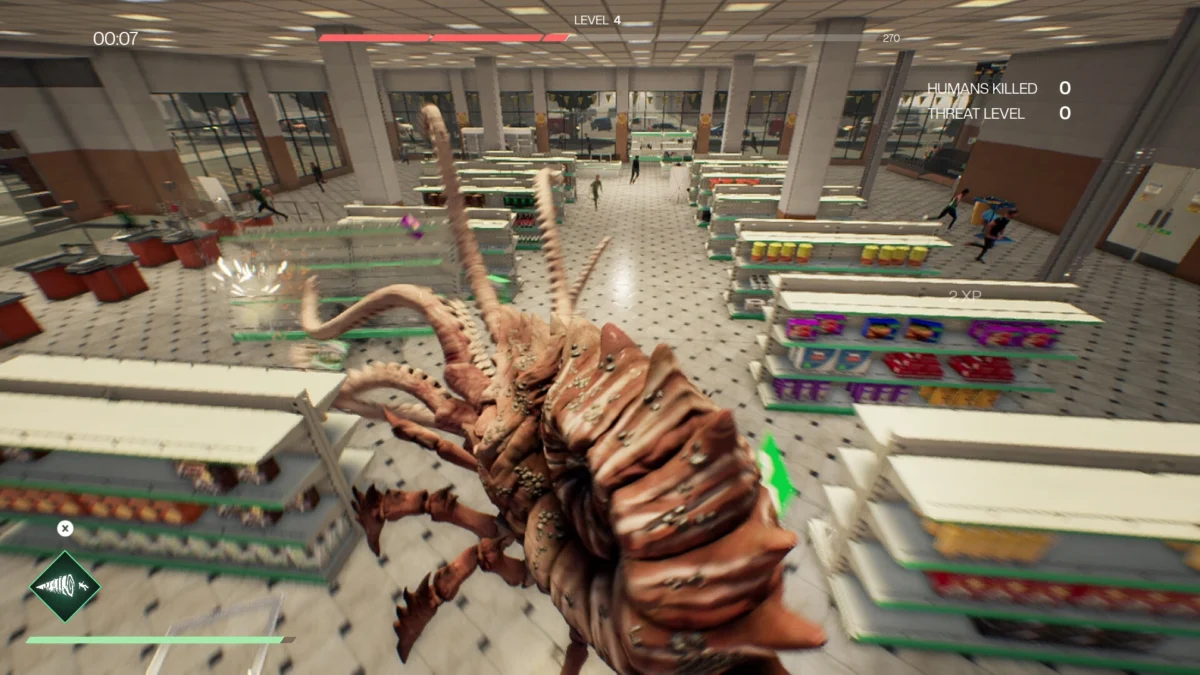
At its core, You Are the Monster is an exercise in mindless, high-fidelity carnage. Unlike many strategy or management games that require the player to build and protect, Hughes’ creation asks the player to do the exact opposite. You are dropped into densely populated, vibrant cityscapes with a singular objective: destroy everything in sight.
The gameplay loop is deceptively simple yet addictive. Players select from a roster of distinct giant creatures, each possessing unique physiological traits, combat styles, and destructive capabilities. As you dismantle skyscrapers, crush infrastructure, and scatter the local populace, you earn experience points. This progression system allows you to level up your chosen monster, unlocking new, more devastating abilities that turn minor inconveniences into total urban annihilation.
The game eschews complex political narratives or moral dilemmas. There is no "beating around the bush"—the goal is to facilitate a state of flow where the violence becomes a form of digital serenity. It is a game designed for those moments when a player wants to log in, shut off the analytical part of their brain, and simply watch the world crumble under the weight of their own destructive prowess.
Chronology: The Road to the Rampage
The development of You Are the Monster has been a focused, singular effort by Joshua Hughes. While many indie projects suffer from feature creep and endless delays, the development cycle for this title has been marked by a clear vision and a steady march toward its mid-2026 release.
- Initial Concept Phase (Late 2024): Hughes began prototyping the physics-based destruction engine, focusing on how buildings collapse in response to varying types of monster impacts.
- Alpha Testing (Q3 2025): The core "destruction loop" was solidified. Feedback from closed-circle playtesting indicated that players were most engaged when the transition from "monster movement" to "environmental interaction" felt fluid and tactile.
- Announcement and Trailer Reveal (May 2026): With the game nearing completion, the official reveal trailer was released, showcasing the variety of monsters and the sheer scale of the city destruction. This generated significant buzz within the indie gaming community, highlighting the hunger for a dedicated kaiju-themed power fantasy.
- The Final Stretch (June 2026): The developer finalized the optimization for PC hardware, ensuring that even with hundreds of debris objects on screen, the frame rate remains stable enough to maintain the immersion of the rampage.
Supporting Data: The Mechanics of Mayhem
What sets You Are the Monster apart in an increasingly crowded indie market is its commitment to the "feel" of destruction. The game utilizes a proprietary physics system designed to handle the structural integrity of every building, bridge, and vehicle in the environment.
The Monster Roster
While specific stats are being teased leading up to the launch, the developer has confirmed that the roster will cater to different playstyles:
- The Bruisers: High-mass creatures designed for direct structural impact. Best for head-butting skyscrapers and leveling city blocks.
- The Agile/Energy-Based: Faster creatures that utilize projectile attacks or high-speed traversal, ideal for dealing with military response units that arrive as the city’s alarm levels rise.
- The Apex Predators: Late-game unlocks that can manipulate the environment or utilize seismic abilities to cause mass damage over a wider area.
Progression Metrics
The game functions on a "Rampage Meter." As you destroy property, your notoriety increases, drawing the attention of local law enforcement and military forces. This acts as a soft difficulty curve: the more you destroy, the more resistance you face. Successfully overcoming this resistance through combat upgrades allows the player to evolve their monster, adding new limbs, biological armor, or elemental breath attacks.

Official Responses and Developer Insight
Joshua Hughes has maintained a transparent relationship with his audience, frequently engaging with the community via social media and developer blogs. In a recent statement regarding the game’s design philosophy, Hughes noted:
"The goal was never to tell a complex story about the origin of these creatures. The goal was to answer a question everyone has had since they first saw a film like Godzilla or Pacific Rim: ‘What would it actually feel like to be that big?’ We wanted to remove the barriers between the player and the city. If you see a skyscraper, you should be able to turn it into dust. The progression system is just there to ensure that your path of destruction stays interesting, rewarding you with new, flashier ways to express your power."
Hughes’ approach mirrors that of "toybox" developers—creators who prioritize player agency over scripted narrative experiences. By removing the "hero" narrative, the game positions the player as the ultimate antagonist, a role rarely explored in modern gaming with such directness.
Implications: The Return of the Kaiju Genre
The release of You Are the Monster comes at a time when gamers are increasingly seeking "low-stress" outlets for high-intensity gameplay. The industry has seen a resurgence in sandbox destruction titles, but few have leaned as heavily into the kaiju aesthetic as Hughes has.
Impact on Indie Development
If You Are the Monster succeeds, it could set a new benchmark for indie physics-based simulators. It demonstrates that a single developer, when focused on a specific, high-quality gameplay loop, can create a product that competes with the visual spectacle of much larger studios. It serves as a case study in "narrow-and-deep" design: rather than building an expansive open world with little to do, the game builds a tight, dense environment that is meant to be fully exploited and demolished.
The Future of Player Agency
There is also a broader implication regarding the types of roles players want to inhabit. The "power fantasy" has historically been limited to the hero—the soldier, the space marine, or the adventurer. You Are the Monster challenges this by inviting the player to revel in the role of the antagonist. It asks the player to find "serenity in violence," a bold thematic stance that leans into the cathartic, almost meditative aspects of repetitive, high-impact gameplay.
As the June 19th launch date approaches, the anticipation continues to grow. Whether you are a fan of classic monster movies or simply someone who appreciates the technical achievement of a well-simulated building collapse, You Are the Monster offers a unique proposition. It is a testament to the fact that sometimes, the most satisfying thing a player can do is tear it all down.
For those interested in joining the carnage, the game will be available on Steam. It represents a rare opportunity to experience the pure, unadulterated joy of being the biggest, baddest thing in the city. The question remains: how much of the skyline will be left standing when you’re done?












No comments yet. Be the first to join the conversation!