Jia Lissa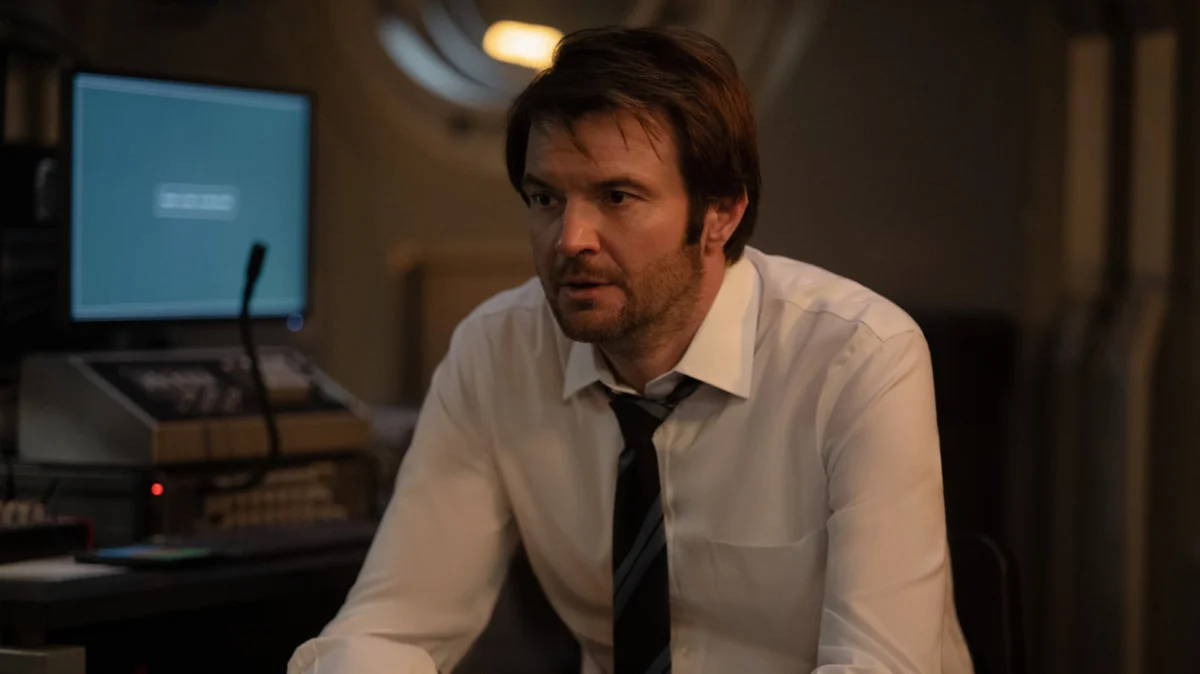
For five seasons, Apple TV+’s For All Mankind has served as a beacon of high-concept science fiction, presenting an alternate history where the space race never ended. By pivoting from the real-world trajectory of the 20th century, the showrunners have crafted a timeline defined by radical optimism, technological leaps, and a humanity that—despite its flaws—continually reaches for the stars. Yet, in its most recent Season 5 finale, the series took a jarring, visceral turn. Amidst the political machinations of a Martian revolution, the show delivered what is arguably the most harrowing, morally ambiguous, and darkest death sequence in its history.
Warning: This article contains major spoilers for the Season 5 finale of "For All Mankind."
The Context: A Revolution Pushed to the Brink
To understand the gravity of the finale’s events, one must consider the deteriorating state of the Mars-Earth relationship. For several seasons, Mars has evolved from a scientific outpost into a bustling, blue-collar colony. However, as the show progressed, the relationship between the two planets soured, fueled by resource scarcity, bureaucratic overreach, and a draconian embargo on essential supplies.
The Off-Planet Expeditionary Force (OPEF)—Earth’s military-adjacent solution to the Martian insurgency—was deployed with a mandate that mirrored the brutal tactics seen in high-stakes genre fiction like Dune. When the Martian revolution reached its boiling point, the OPEF command arrived on the Red Planet with a "kill-on-sight" policy. For the residents of Mars, including former worker-turned-revolutionary Miles Dale (played by Toby Kebbell), the survival of their society had moved beyond diplomacy. They were outgunned, outmaneuvered, and facing a systematic extinction of their way of life.
The Chronology of a Moral Abyss
The sequence in question unfolds as the OPEF command establishes its foothold on Mars. Miles Dale, working in tandem with the Martian governor Lenya Polivanov (Costa Ronin), realizes that conventional warfare is a losing game. The disparity in military strength makes a direct assault on the OPEF leadership impossible.
The decision-making process is rapid and desperate. Miles identifies the OPEF command’s vulnerability: their reliance on the colony’s environmental systems. In a calculated, chilling maneuver, Miles overrides the oxygen controls for the room where the OPEF leadership is gathered. By flooding the compartment with an excess of oxygen, he creates a volatile, high-pressure environment. A deliberate, singular short-circuit is then triggered, igniting the atmosphere.
The resulting inferno does not merely kill the OPEF leadership; it incinerates them. The camera lingers on the cold, calculated reaction of the revolutionaries as they watch the room burn, marking a departure from the show’s traditionally "clean" portrayals of space-based conflict. It is a moment of total war, stripping away the thin veneer of exploration and leaving behind the raw, ugly reality of revolution.
![For All Mankind Season 5 Just Gave Us The Show's Darkest Space Death [Exclusive]](https://www.slashfilm.com/img/gallery/for-all-mankind-season-5-just-gave-us-the-shows-darkest-space-death-exclusive/l-intro-1780074933.jpg)
Supporting Data: Why This Moment Matters
The death of the OPEF command serves as the definitive turning point for Miles Dale’s character arc. Since his introduction in Season 4, Miles has been an reluctant protagonist. Initially a man trying to secure a future for his family through illicit trade and labor union organizing, he was forced into the role of a leader by circumstance rather than ambition.
His journey from a desperate blue-collar worker to a revolutionary architect is the backbone of this season’s narrative. The fire is the culmination of that arc. By choosing to execute the OPEF command in such a gruesome fashion, Miles sheds the last remnants of his civilian identity.
The Psychological Toll
- The Burden of Command: Unlike the military commanders he killed, Miles lacks formal training in tactical warfare. The decision to commit mass murder is a personal choice that will weigh on him indefinitely.
- The "Lesser of Two Evils": The show posits that Miles’s actions were born of necessity. With the OPEF threatening to starve the Martian population, the sacrifice of the few was deemed, by the characters, as the only way to save the many.
- A Shift in Tone: This sequence signals to the audience that For All Mankind is no longer a story about scientific achievement or exploration. It has transitioned into a gritty, terrestrial-style political drama where the "hero" is capable of atrocity.
Official Responses: Insights from the Showrunners
In an exclusive discussion with showrunners Ben Nedivi and Matt Wolpert, the creators underscored the necessity of this scene for the show’s thematic evolution. For them, the scene was not merely for shock value; it was a character study in moral compromise.
"It was a very important scene for us, actually," Wolpert explained. "It felt like we’re telling the story of a revolution, and it would feel inauthentic if there weren’t real, difficult moral choices being made by people on both sides. Especially with Miles, this is a character who has confronted those kinds of questions of morality throughout his time on the show, and this is probably the most difficult he’s had to make."
The showrunners emphasized that Miles’s willingness to commit this act—and to shoulder the guilt alone—is what defines his growth. "He’s willing to do it because, for him, he’s fighting for his family, his home, the lives of the people around him," Wolpert noted. "And so, he’s willing to make that choice also so other people don’t have to be confronted with it."
According to the creative team, Toby Kebbell’s performance was crucial in grounding the scene. The aftermath of the fire is not depicted as a triumphant victory, but as a somber acknowledgment of a bridge burned. The showrunners wanted the audience to see that Miles understands the weight of what he has done, and that the "price of freedom" on Mars comes with a permanent stain on his soul.
The Broader Implications for the Series
The inclusion of such a dark event raises significant questions about the future of For All Mankind. If the show continues to lean into these darker, more violent themes, how does it maintain its core identity as a series about the hope of space exploration?
![For All Mankind Season 5 Just Gave Us The Show's Darkest Space Death [Exclusive]](https://www.slashfilm.com/img/gallery/for-all-mankind-season-5-just-gave-us-the-shows-darkest-space-death-exclusive/intro-1780074933.jpg)
1. The Death of Idealism
The series has spent five seasons building an alternate future where humanity overcomes its pettiness. By introducing a "Dune-esque" invasion and a horrific mass-casualty event, the writers are suggesting that human nature remains unchanged, regardless of how far we travel from Earth. This implies that the series is moving toward a more cynical critique of power and governance.
2. The Legacy of the Revolution
The Martian revolution will now be defined by this event. History books in the For All Mankind universe will likely view the burning of the OPEF command as either a heroic act of defiance or a terrorist atrocity. This complexity allows the writers to explore how narratives are constructed, a fitting theme for a show that is itself a work of alternative history.
3. Structural Shifts
Some critics have pointed out that the resolution of the Mars revolution story felt somewhat rushed. While the "darkest death" scene provided a memorable climax, the show must now grapple with the power vacuum it created. If the OPEF is gone, who governs Mars? Does this lead to a new era of stability, or does it trigger an even more aggressive response from Earth?
Conclusion
The dark turn in the For All Mankind Season 5 finale is a testament to the show’s willingness to evolve. By forcing its characters to confront the "ugly choices" inherent in any rebellion, the showrunners have successfully raised the stakes. Miles Dale’s transformation from a struggling worker to a man who would burn his enemies alive is a chilling narrative choice, but one that feels earned given the relentless pressure applied by the Earth-based forces.
As the series looks toward a potential sixth season, the memory of that burning room will undoubtedly loom large. For All Mankind has proven that it is not afraid to venture into the shadows of the human experience, even when those shadows are cast against the stark, cold backdrop of the Red Planet. Whether this pivot will lead to a brighter future for the colony or descend further into the darkness of total war remains to be seen, but one thing is certain: the era of naive exploration is officially over.


 Reynand Wu
 Sagoh
Sagoh