

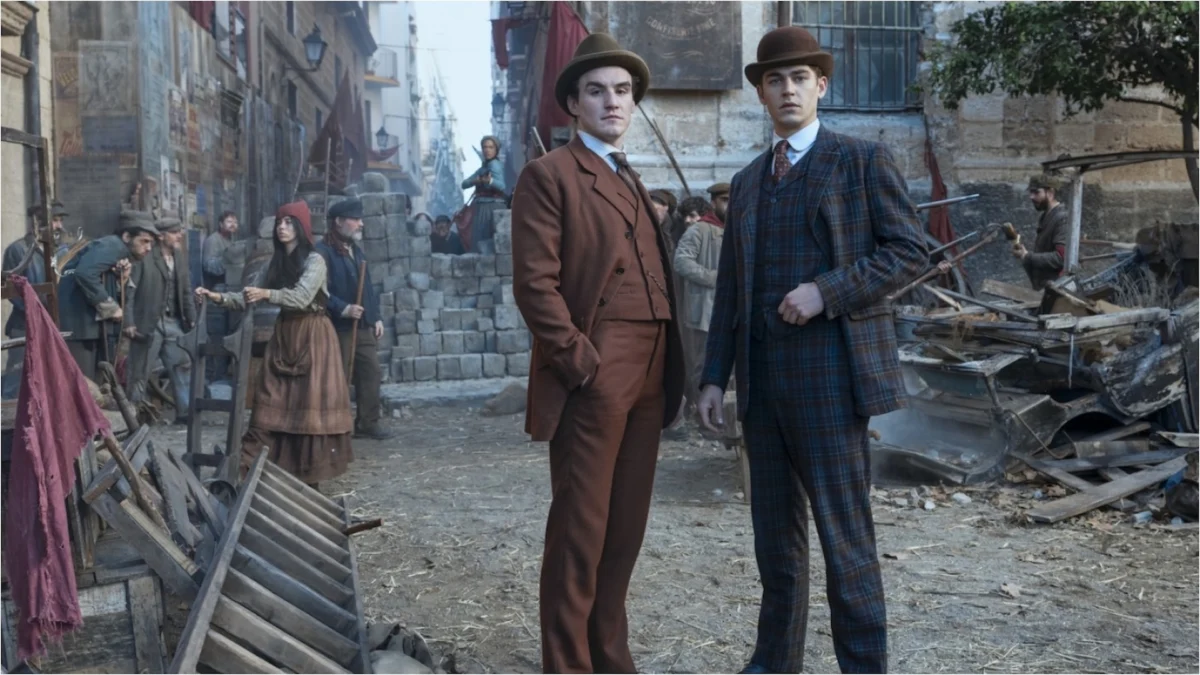
By Nyla Gilbert | May 28, 2026
For over a century, the shadows of Victorian London have been defined by a singular, titanic rivalry: the brilliance of Sherlock Holmes pitted against the calculated malevolence of Professor James Moriarty. While Arthur Conan Doyle’s “Napoleon of Crime” has served as the ultimate foil to the world’s greatest detective, his role has historically been relegated to the periphery—a puppet master pulling strings from the darkness. However, a major shift in the Sherlockian landscape is currently underway.
Fremantle, the production powerhouse behind the Oscar-winning Poor Things, and Archery Productions, the team responsible for Operation Mincemeat, have officially announced the development of a modern-day Moriarty series. This project promises to dismantle the traditional hero-villain dichotomy by placing the Professor at the heart of the narrative.
The Premise: A Mastermind in the Modern Age
According to early reports, this new iteration of James Moriarty will be transplanted into the contemporary setting of Northern England. No longer just a criminal mastermind lurking in the fog, this Moriarty is a distinguished professor at Durham University. By day, he navigates the halls of academia; by night, he commands an intricate criminal empire.
The central tension of the series is sparked by a classic "enemy of my enemy" scenario. When a rival criminal mastermind threatens to dismantle his operations, Moriarty is forced into an uneasy alliance with the law. By embedding himself as a police consultant—a subversion of the Holmes-Watson dynamic—Moriarty must navigate the high-stakes world of Northern English policing while partnered with detective Imogen Burrows. The series is set to explore the precarious tightrope he walks: maintaining his cover, eliminating a threat that potentially eclipses his own wickedness, and concealing the truth from those sworn to bring him to justice.
The series will be helmed by an accomplished creative team, with writing duties shared by Chris Cornwell (A Discovery of Witches) and Oliver Lansley (Where’s Wanda?). Their combined track record for blending supernatural intrigue and complex character studies suggests that this version of Moriarty will be far more nuanced than the one-dimensional villains of the past.
A Historical Chronology of the Napoleon of Crime
To understand the weight of this new series, one must look at the evolution of the character. Sir Arthur Conan Doyle first introduced the world to Professor Moriarty in the 1893 short story, The Adventure of the Final Problem. It was a narrative gamble that nearly destroyed the franchise; Doyle, exhausted by his own creation, intended to kill off Sherlock Holmes by having him plunge into the Reichenbach Falls during a struggle with the Professor.
The character was famously inspired by Adam Worth, a real-life German-American crime boss whom Scotland Yard investigators dubbed the “Napoleon of Crime.” Worth’s criminal exploits were legendary, including the 1876 theft of Thomas Gainsborough’s portrait of Georgiana, the Duchess of Devonshire. Interestingly, the Duchess is an ancestor of the late Princess Diana, weaving a strange thread between the fictional criminal underworld and real-world British aristocracy.
Throughout the 20th and early 21st centuries, the mantle of Moriarty has been assumed by a rotating cast of formidable actors:
- The Traditionalists: From early stage portrayals to cinema staples, the character was often depicted as an elderly, cold-hearted academic.
- The Modern Reinterpretations: Andrew Scott’s portrayal in the BBC’s Sherlock (2010–2017) redefined the character as a chaotic, high-functioning sociopath, earning Scott a BAFTA for Best Supporting Actor.
- The Cinematic Spectacle: Jared Harris brought a more grounded, industrial menace to Guy Ritchie’s Sherlock Holmes: A Game of Shadows (2011), standing toe-to-toe with Robert Downey Jr.
- The Gender-Bent Evolution: The character has also proven to be a flexible archetype. Natalie Dormer famously played the mastermind "Jamie" Moriarty in Elementary, while Sharon Duncan-Brewster portrayed a modernized, tech-savvy Mira Troy (Moriarty) in Enola Holmes 2.
Shifting the Perspective: From Villain to Protagonist
The most significant implication of this new series is the move toward a "villain-centric" narrative. While we have seen origin stories for heroes, rarely has the franchise dared to treat the antagonist as the lens through which we view morality.
The only notable precedent in recent years is the 2020 anime Moriarty the Patriot. That series provided an exhaustive look at the Professor’s motivations, reframing his criminal behaviors as a radicalized attempt to dismantle a corrupt, class-stratified society. It transformed him from a mere thief into a "killer radical"—a man who believes that extreme violence is the only surgical tool capable of excising the cancer of crime.
By centering the new Fremantle project on Moriarty’s perspective, the producers are signaling a departure from the "good vs. evil" binary. Much like the success of Joker or Cruella, this series intends to humanize—or perhaps rationalize—the monster. When the protagonist is a criminal mastermind, the audience is forced to question their own moral compass. Are we rooting for him to succeed in his crimes, or are we rooting for him to defeat the "even worse" rival he faces?
Supporting Data: The Oversaturation of the Sherlock Brand
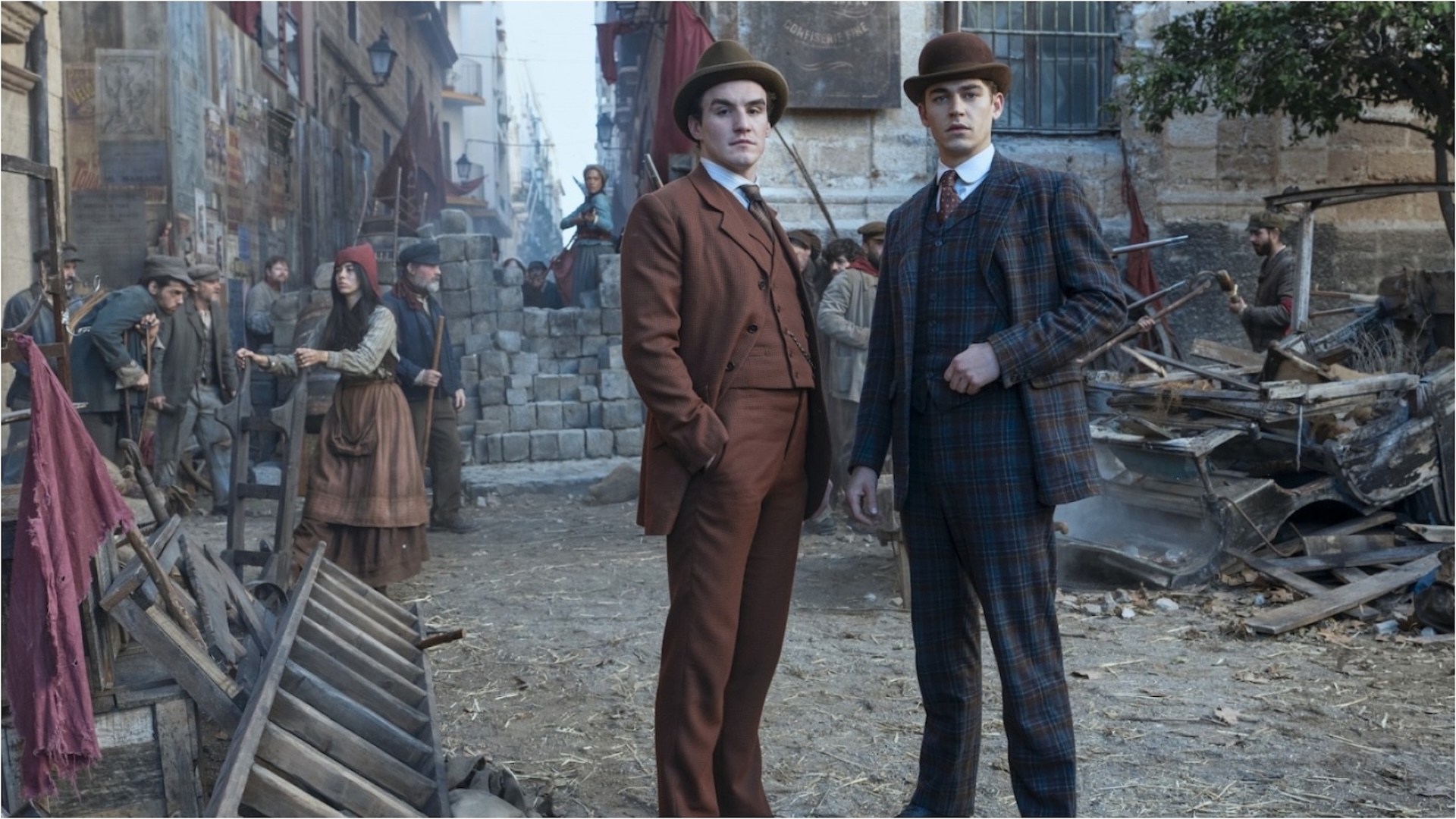
The timing of this announcement is particularly curious given the recent, heavy rotation of Sherlock Holmes content. Prime Video’s Young Sherlock, released earlier this year, starring Dónal Finn as an edgy, younger version of the detective, attempted to capture the "YA-thriller" demographic.
Critics have noted that the franchise is currently suffering from a degree of "Sherlock fatigue." By shifting the focus to Moriarty, Fremantle is essentially attempting to "hack" the brand. Instead of telling the story of the detective once again, they are pivoting to the most compelling element of the lore. By deconstructing the villain, the studio hopes to reinvigorate the franchise with a darker, grittier, and more morally ambiguous tone that aligns with current television trends.
Implications for the Future of the Franchise
What does this mean for the future of Arthur Conan Doyle’s legacy? Firstly, it confirms that the "Sherlock Holmes" brand is no longer just about the detective. It has become a shared universe—an intellectual property playground where characters can be extracted, reimagined, and given their own spin-offs.
If this series succeeds, we can expect a wave of "villain-led" content. Could we see an Irene Adler series? A story focusing on the early days of Mycroft Holmes’s intelligence network? The potential is vast. However, there is a risk: by stripping away the mystery that surrounds Moriarty, the showrunners run the risk of demystifying the character too much. Part of the Professor’s appeal has always been his enigma.
Furthermore, the choice of setting—Northern England—suggests a move away from the traditional, foggy cobblestone streets of London. This indicates a desire to ground the character in a modern, gritty reality that feels distinct from the BBC or Guy Ritchie adaptations.
Conclusion: A New Game is Afoot
As of now, casting for the lead role remains a mystery, leading to rampant speculation across the industry. Who has the gravitas to carry a series as a criminal mastermind while maintaining the intellectual charm of a university professor?
The announcement of this series marks a turning point. We are moving away from the era of the detective as the sole arbiter of truth and entering an era where the antagonist’s voice is finally being heard. For the fans of Sherlock Holmes, the “game” has been irrevocably changed. Whether this will lead to a revitalization of the brand or a dilution of its core identity remains to be seen. But one thing is certain: in the world of Sherlock Holmes, the villain is no longer content to stay in the shadows. Moriarty has stepped into the light, and he is ready to tell his side of the story.











No comments yet. Be the first to join the conversation!