Layla Zulfa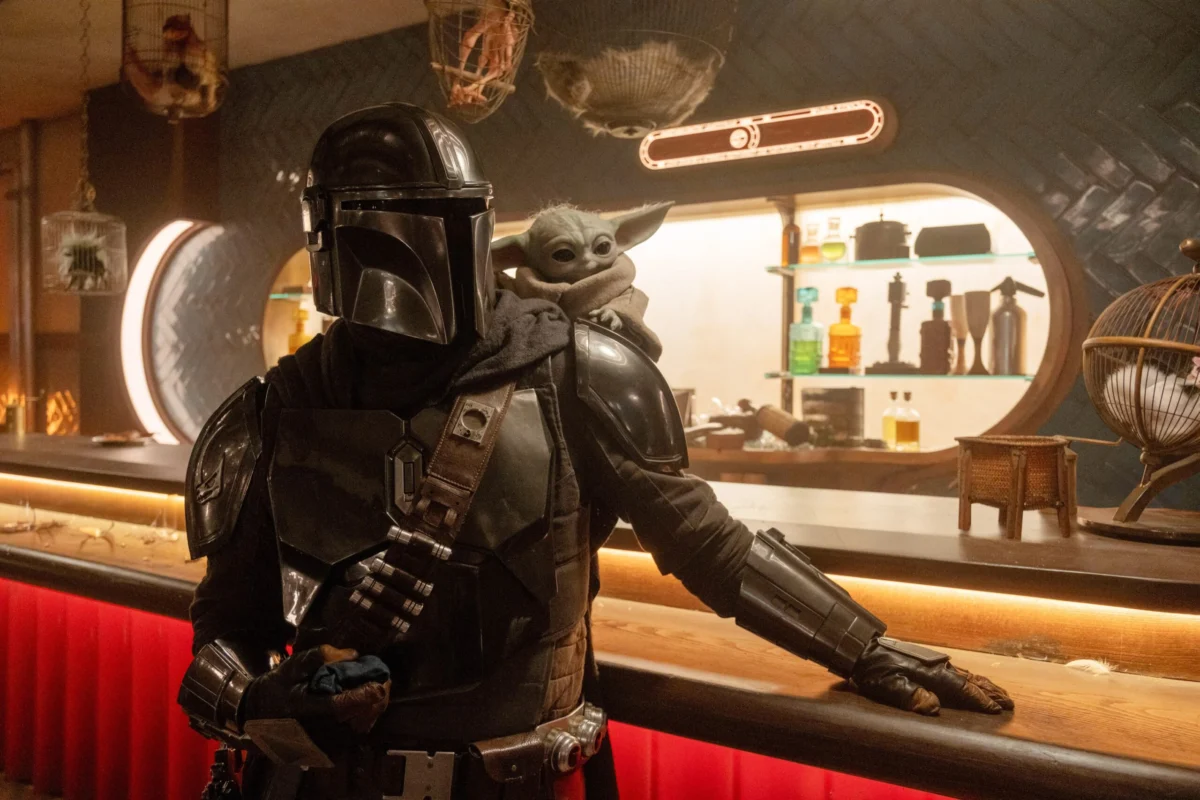
In an era defined by the seamless, sometimes sterile perfection of artificial intelligence and digital rendering, the latest entry in the Star Wars franchise, The Mandalorian and Grogu, stands as a defiant love letter to the history of cinema. Director Jon Favreau, returning to the helm of the iconic bounty hunter’s journey, has crafted a feature film that—while technologically advanced—prioritizes the tactile charm of old-school Hollywood craftsmanship.
Visual Effects Supervisor John Knoll, a veteran of the franchise whose tenure stretches back to the painstaking practical effects of The Phantom Menace, characterizes the film’s visual philosophy as a “best tool for the job” approach. Yet, this iteration carries a distinct mandate: a deliberate, “handcrafted look” that embraces the imperfections of puppetry, masks, and miniatures. As the film continues its impressive global box office run—having already grossed $176 million—it serves as a masterclass in how modern blockbusters can balance state-of-the-art virtual production with the rugged, physical soul of traditional filmmaking.
The Evolution of the LED Volume
For audiences and critics alike, the Mandalorian series became synonymous with the "Volume"—a massive, 110-foot-wide ellipsoid LED stage in Manhattan Beach that projects high-resolution digital environments in real-time. This technology, which earned Knoll an Emmy, allows actors to perform within a photorealistic space, providing natural lighting and reflections that traditional green screens often lack.

For the feature film, however, Knoll and Favreau sought to push these boundaries further. Recognizing that a one-size-fits-all approach to virtual production could lead to visual fatigue, the team pivoted to more localized, specialized setups. "From the beginning of the series, I’d wanted to have an LED volume for shooting miniatures in," Knoll explained. For the movie, they engineered an 8-foot-by-8-foot LED cube, left open on one side to facilitate precise lighting. By placing a 48-inch detailed model of the Razor Crest within this cube, the team could capture authentic reflections—clouds, light, and motion—directly onto the ship’s hull. This commitment to in-camera reality extends to the protagonist himself; Pedro Pascal’s polished beskar armor now captures the environment of the LED screens with a fidelity that renders post-production color-grading almost unnecessary.
A Chronology of Craft: From Mount Waddington to Downtown LA
The film’s production design is a testament to the blend of geography and ingenuity. In the opening sequences, Mando and Grogu traverse snow-capped, pine-dense mountains that feel distinctly terrestrial. This wasn’t an accident of digital generation, but a result of a four-day helicopter scout led by co-supervisor Justin van der Lek. By capturing thousands of high-resolution stills of the Mount Waddington region north of Vancouver, the production team created a digital asset base that grounded the alien landscape in tangible, real-world texture.
This hybrid approach continued in the creation of Shakari, the film’s central cityscape. Eschewing a purely digital build, the production utilized an industrial warehouse in downtown Los Angeles to construct a physical “main drag.” To extend the set, they didn’t rely solely on digital matte paintings; they installed LED screens at both ends of the street. This allowed for real-time motion-tracked extensions that blended seamlessly with the practical, physical set pieces, creating a depth and scope that feels far more expansive than a traditional, limited-diameter LED stage.

The Human Element: Casting the Synthetic
Perhaps the most intriguing revelation regarding the film’s production is the process behind Hugo, the four-armed food truck vendor. Despite the character being a fully computer-generated entity, the creative team insisted on a "performance-first" mentality.
"When you’re doing synthetic characters, Hal [Hickel, production animation supervisor] and I strongly believe you should cast an actor to play that role on set," Knoll stated. The role was initially performed by Misty Rojas, a little person whose physical movements provided the skeletal animation for the digital Hugo. The surprise addition of Martin Scorsese as the voice of the character added a final layer of performance. By filming Scorsese during his recording sessions, the VFX team was able to map his iconic mannerisms—his specific "hemming and hawing"—directly onto the character’s face, proving that even a digital alien is only as good as the human heart behind it.
Supporting Data: Practicality in a Digital Age
The film’s commitment to the tactile extends to its action sequences. In a high-octane chase across dunes inspired by Nova Scotia’s Magdalen Islands, the "speeder" chase was anchored by a practical, full-size prop. Knoll notes that the vehicle was mounted on an "inner tube rig," a low-tech, springy mechanism that allowed grips to manually shake the craft, creating an authentic, kinetic "bounciness" that is nearly impossible to replicate perfectly through digital keyframing alone.

The most ambitious practical undertaking, however, came from the legendary Phil Tippett. Tasked with creating the climactic battle against two towering droids, the production returned to the roots of stop-motion animation. Tippett’s team crafted 12-to-14-inch tall puppets, each featuring complex articulation points and moving armor plates. According to the veterans at the Tippett studio, this was among the most complex stop-motion sequences they have ever attempted, bridging the gap between 1933’s King Kong and the high-definition requirements of 2026.
Official Responses and the Philosophy of "Charm"
Favreau’s directorial philosophy is a clear departure from the "everything is possible" ethos of modern blockbusters. He argues that the audience’s awareness of a puppet or a mask is not a failure of technology, but a feature of the experience. "Jon’s philosophy is that it’s OK when you see a puppet, that you can tell it’s a puppet," Knoll explained. This embrace of the "handmade" aesthetic is designed to evoke the spirit of pulp adventures like Flash Gordon and Tarzan.
Knoll’s own perspective has been shaped by his long history with the Star Wars archives. When he attempted to revive the original Stormtrooper designs for Rogue One, he was struck by the reality of the original costumes. "When you see the Stormtrooper helmets in person, it’s a little shocking because they look like high school craft projects," he admitted. While he chose to polish the designs for the sake of modern high-definition clarity, he remains acutely aware that the "grit" of the original trilogy is exactly what fans find most appealing.

Implications: The Future of the Franchise
The success of The Mandalorian and Grogu suggests a shift in the blockbuster landscape. As the industry grapples with the ethical and aesthetic implications of AI-generated imagery, the film demonstrates that there is still a massive, hungry audience for "old-fashioned" storytelling.
The film succeeds not because it hides its VFX, but because it invites the audience to appreciate the effort behind them. By avoiding the requirement of "40 hours of homework" to understand the plot, and by prioritizing the tangible, physical reality of its worlds, the film has managed to capture a sense of wonder that has been missing from many recent genre entries.
In a landscape where digital cameras are so sensitive that every flaw is magnified, Knoll acknowledges that the pressure to be perfect is higher than ever. Yet, by choosing to use LED volumes as a supplement rather than a crutch, and by leaning into the expertise of legends like Tippett, the production has created something that feels both new and comfortingly familiar. The Mandalorian and Grogu is not just a film; it is a declaration that even in a galaxy far, far away, the human touch remains the most powerful special effect of all.


 Jia Lissa
 Iffa Jayyana