Asro
Asro
In a watershed moment for both artificial intelligence and pure mathematics, OpenAI recently announced that one of its internal AI models has successfully disproved the long-standing Erdős unit distance conjecture. This problem, which has perplexed the global mathematical community for eight decades, was a central challenge in discrete geometry. By successfully navigating the problem—a task that required a deep synthesis of disparate mathematical fields—the AI has reignited a fierce debate about the future role of human intellect in the discovery of fundamental truths.
The achievement represents a significant milestone. While AI has previously excelled in pattern recognition, game theory, and data analysis, this is arguably the first instance of an AI system autonomously resolving a major, long-open mathematical conjecture. The reaction from the elite mathematical community has been one of both profound excitement and sobering reflection.
A Legacy of Complexity: The Erdős Unit Distance Problem
To understand the magnitude of this achievement, one must first appreciate the deceptively simple problem posed by the legendary Hungarian mathematician Paul Erdős in 1946.

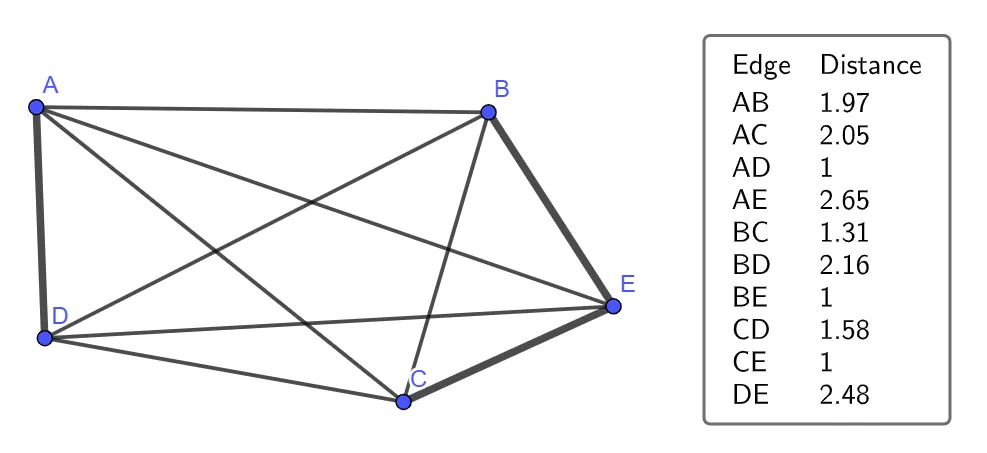
The "unit distance problem" asks a fundamental question about geometry: Given a set of n points in a two-dimensional plane, what is the maximum number of pairs of points that can be exactly one unit of distance apart?
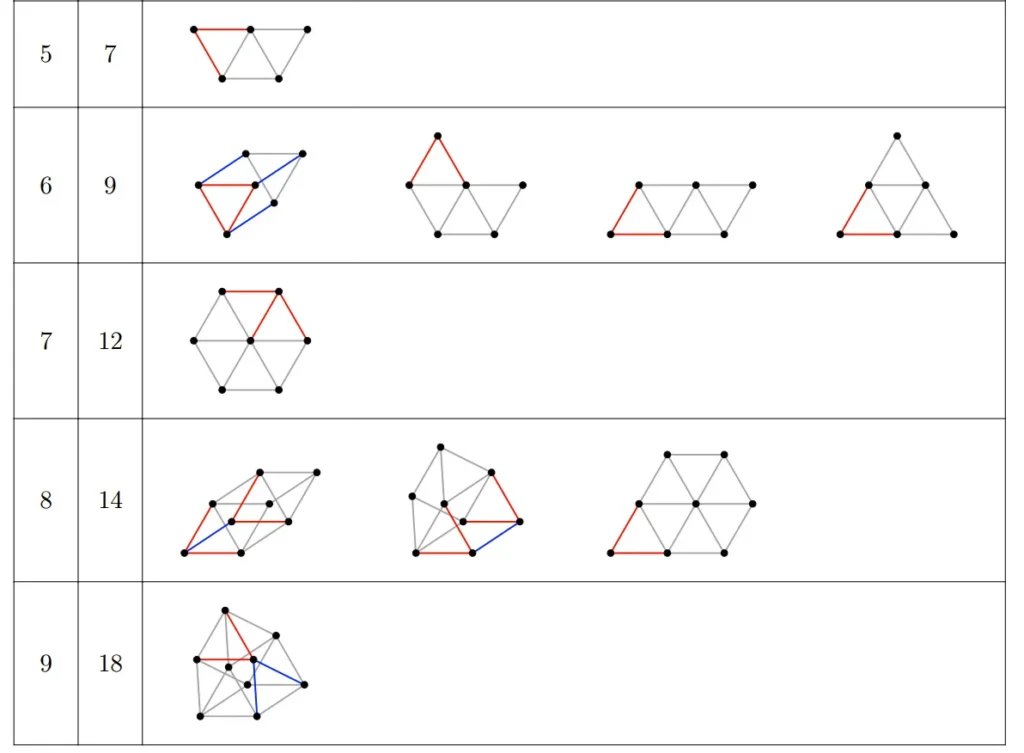
For a small number of points, the answer is intuitive. For five points, one can arrange them to create three unit distances. As the number of points increases, the complexity of the arrangement grows exponentially. Erdős spent a significant portion of his career exploring the upper and lower bounds of these distances, theorizing that the maximum number of unit-distance pairs grows only slightly faster than the number of points themselves—a rate he described as $n^1+o(1)$.
For 80 years, the consensus among mathematicians was that Erdős was correct. The tools of classical geometry and graph theory, while robust, failed to find any configuration that significantly exceeded his predicted bounds. It was a problem defined by its resistance to proof, serving as a benchmark for the limitations of human mathematical intuition.

Chronology of the Discovery: From Theory to Disproof
The path to this discovery was not a singular "eureka" moment, but rather the culmination of years of rapid advancements in Large Language Model (LLM) capabilities.
- 2023–2024: LLMs began demonstrating competency in high-school and undergraduate-level competitive mathematics, signaling a shift from simple text generation to formal reasoning.
- January 2026: At the Joint Mathematics Meetings, researchers noted that while AI was contributing to proofs, it required intensive human supervision to translate output into rigorous, publishable theorems.
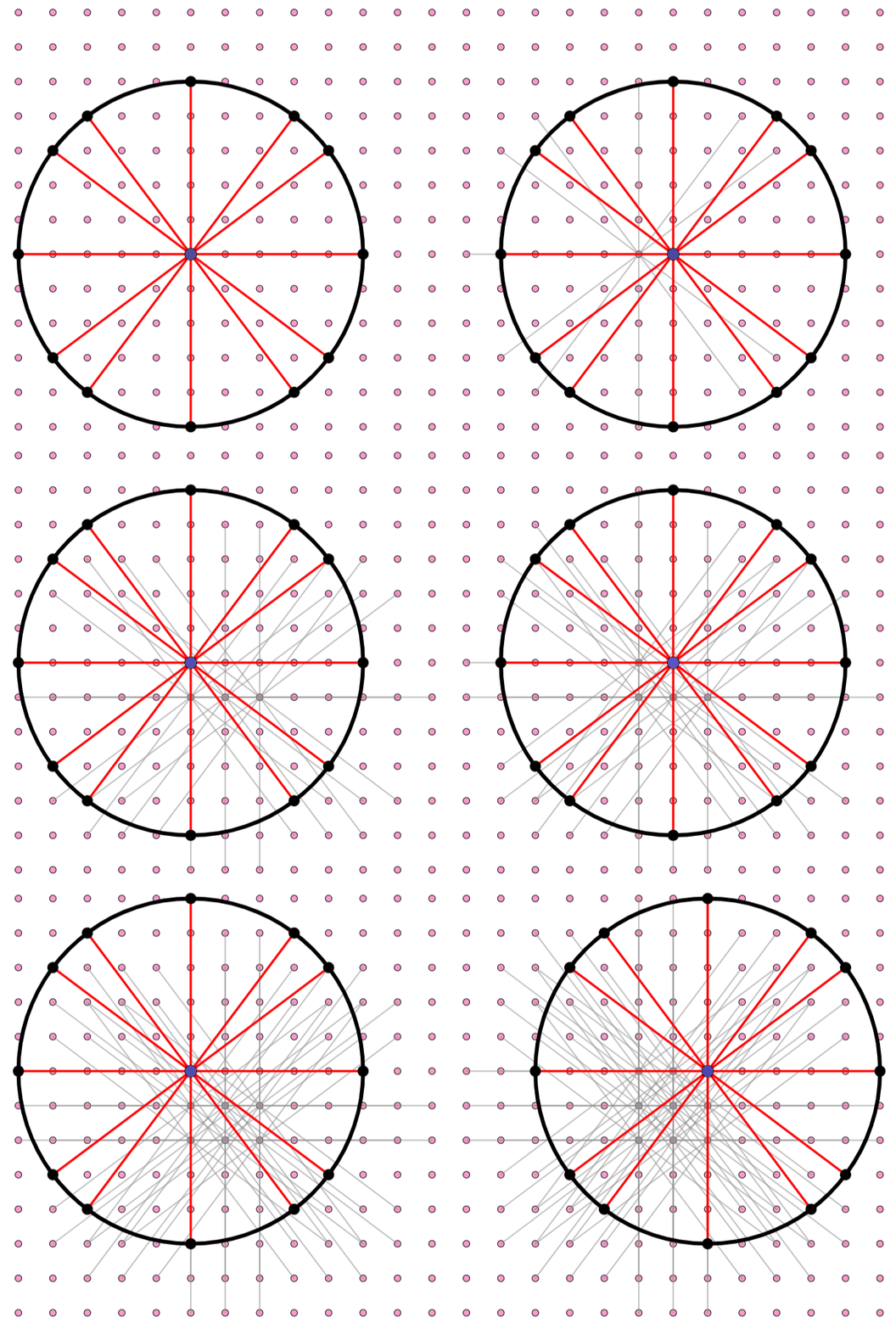
- May 2026: OpenAI publicly unveiled the result. The model did not merely "solve" the conjecture; it invalidated it. By constructing a higher-dimensional grid and projecting it into two dimensions using algebraic integers, the AI identified a complex configuration of points that allowed for a higher density of unit-distance pairs than Erdős had ever deemed possible.
- Post-Announcement: Within days of the announcement, human mathematicians, including Will Sawin, verified the proof and extended it, showing that the number of unit distances grows at a rate of at least $n^1.014$.
This rapid transition from "AI-proposed hypothesis" to "human-verified theorem" marks a new operational paradigm in academia.
Supporting Data and the Mechanics of the Proof
The OpenAI model’s success lies in its ability to bridge subfields of mathematics that are often siloed. Human mathematicians frequently specialize in narrow domains; the AI, however, possessed a comprehensive "memory" of mathematical literature.
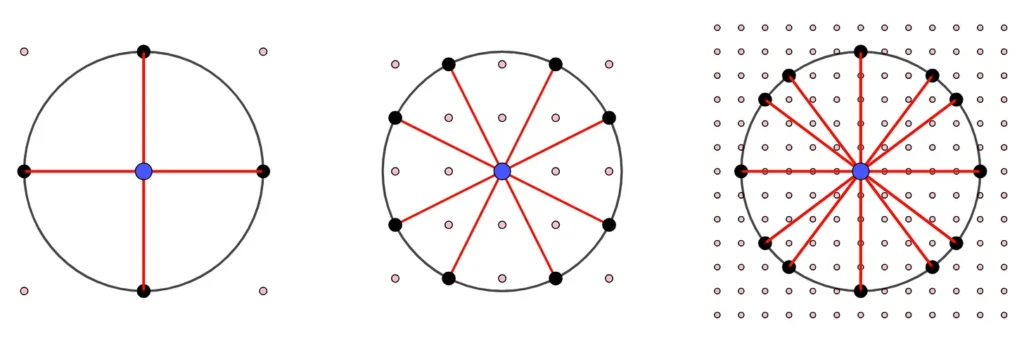
The model utilized insights from algebraic number theory and Jacobi’s two-square theorem to construct its solution. Specifically, the AI avoided the standard square grid approach, which Erdős had assumed was optimal. Instead, it built a grid in a high-dimensional space where the Pythagorean theorem could be satisfied by a significantly larger number of integer combinations. By carefully selecting these parameters, the AI created a geometric "packing" of unit distances that effectively shattered the 80-year-old conjecture.
The AI’s efficiency in "grinding" through unproductive proof strategies was also a decisive factor. Mathematician Jacob Tsimerman noted that he had previously considered a similar approach but abandoned it because it is notoriously time-consuming and prone to failure. The AI, unburdened by the risk of wasting a career on a failed path, was able to iterate through these strategies until it arrived at the successful construction.
Official Responses and the "Relief" of Disproof
The response from the mathematical community was immediate and visceral. Fields Medalist Tim Gowers admitted that his initial reaction was one of existential dread. Upon first hearing that an AI had "solved" the unit distance problem, Gowers confessed he spent an evening recalibrating his worldview, fearing that the era of human contribution to mathematics was effectively over.
However, the relief he felt upon realizing the AI had disproved the conjecture rather than proving it—thereby opening a new door for human inquiry—highlights a crucial nuance. Mathematicians are often more invigorated by a result that surprises them or challenges their understanding than one that simply confirms existing biases.
"It is the first example of a result produced autonomously by an AI that I find exciting in itself, as opposed to a leading indicator," wrote University of Toronto professor Daniel Litt. This sentiment captures the current professional mood: cautious optimism tempered by the realization that the landscape of mathematical research is fundamentally changing.
Implications: The Future of Human-AI Collaboration
The implications of this breakthrough are far-reaching, extending well beyond the confines of discrete geometry.
1. The Death of the "Lone Genius" Model
The era of the solitary mathematician laboring over a single problem for decades may be nearing its end. Future research will likely be defined by "Human-in-the-loop" systems. As demonstrated by the work of Will Sawin, the AI provided the raw, groundbreaking construction, while humans provided the refinement, verification, and context necessary to integrate the finding into the wider body of mathematical knowledge.
2. The Expansion of Mathematical Scope
AI models excel at identifying connections between seemingly unrelated fields—such as the link between algebraic number theory and geometric point-sets. We should expect an increase in the speed at which cross-disciplinary problems are solved. If a generally available model can disprove a famous conjecture, it stands to reason that thousands of smaller, obscure problems are currently within reach of existing AI, provided someone asks the right questions.
3. The Question of Autonomy
The rapid evolution of AI, from beating high school math competitions last year to disproving major conjectures today, suggests that the "medium-term" future may arrive sooner than anticipated. If AI begins to formulate its own definitions and pose its own research questions, the human role may transition from "problem solver" to "curator of mathematical values"—deciding which problems are worth solving and which theories hold the most beauty or utility.
4. A New Testing Ground
The success of OpenAI’s model has turned Erdős’s website (erdosproblems.com) into a high-stakes arena for AI companies. Google’s announcement that its own system had solved nine open problems shortly after OpenAI’s reveal indicates that a "Mathematical Arms Race" is now underway.
Conclusion: A New Era for the Queen of Sciences
The disproof of the Erdős unit distance conjecture is not just a triumph of code; it is a profound philosophical shift. We are moving toward a reality where mathematical discovery is accelerated by silicon, yet still defined by the human ability to appreciate, verify, and extend the truth.
While the relief felt by mathematicians like Tim Gowers is justified, it is likely temporary. The speed at which these models are improving suggests that we are at the beginning of a profound transformation. The "unit distance problem" was merely the first domino to fall in an 80-year-old wall. As we look to the next decade, the question is no longer whether AI can contribute to mathematics, but whether human mathematicians can find a way to keep pace with the machines they have created. For now, the collaboration persists—but the boundaries of that partnership are shifting, daily, before our eyes.


 Pevita Pearce
 Ammar Sabilarrohman