

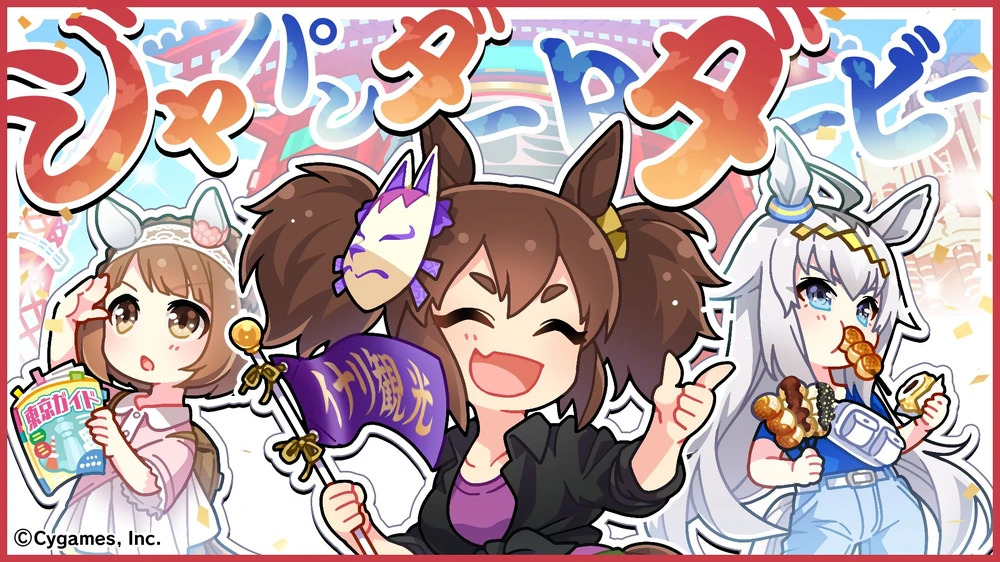
The digital tracks of Umamusume: Pretty Derby have received a significant shake-up this week with the arrival of the latest trainee scout banner. At the center of this update is Inari One, a racer who has long been anticipated for her mechanical flexibility. As trainers weigh the cost of their hard-earned Carats against the potential benefits of adding a new horse girl to their stables, the debate over whether this banner represents a "must-pull" or a "trap" has intensified across community forums and competitive circles.
While Inari One arrives with a reputation for being one of the most versatile racers in the current meta, her utility is tied to a complex unique skill set that demands precise tactical positioning. This analysis breaks down the mechanics, the strategic implications, and the long-term value of the Inari One banner.
The Versatility Factor: Breaking the Surface Barrier
In the high-stakes environment of Umamusume, most racers are categorized by rigid constraints. A specialist on Turf often struggles on Dirt, and a sprinter rarely finds success in long-distance endurance trials. Inari One disrupts this paradigm.
Unlike many of her peers who are effectively "locked" into specific race conditions, Inari One offers a rare degree of freedom. She is capable of competing effectively on both Turf and Dirt surfaces. Furthermore, her aptitude range covers Mile, Medium, and Long distances. For players who frequently find themselves scrambling to fill roster gaps during Championship Meetings (CMs), this level of coverage is an attractive proposition.
The primary advantage here is efficiency in team building. Dirt specialists are historically rare in the game’s rotation, and the few that do exist often require heavy investment in inheritance factors to remain competitive. By providing a base character who can swap between environments without significant penalization, the developers have positioned Inari One as a "Swiss Army knife" for the modern trainer.
Chronology and Context: The Evolution of the Meta
To understand the weight of the current Inari One banner, it is necessary to look at the historical trajectory of Umamusume’s character releases. In the early stages of the game, specialized racers dominated the leaderboards. A dedicated sprinter or a master of the Long distance was essential for progression.
However, as the game has matured, the developers have shifted toward characters who offer "crossover" potential. The introduction of Inari One follows a series of releases that prioritized specific, niche abilities—such as "Late Surgers" or "Pace Chasers." By contrast, Inari One arrives as an "End Closer," a role that requires a patient, calculated approach to the final stretch of a race.

The community reaction to her arrival has been mixed. While casual players appreciate her ease of use, competitive players are scrutinizing her unique skill activation requirements. Historically, characters who rely on specific triggers—such as the "Duel" mechanic—have faced volatility in their win rates, leading to a cautious reception from the hardcore player base.
Decoding the Mechanics: How Inari One Operates
At her core, Inari One is designed as an End Closer. Her tactical efficacy is defined by her ability to surge through the pack in the final moments of a race. However, the efficacy of her unique skill is binary: it either creates a massive performance spike, or it fails to trigger entirely.
The Duel Requirement
The core mechanic of Inari One’s unique skill is the "Duel." For the skill to activate, the racer must satisfy two conditions:
- Positioning: She must remain toward the back of the pack during the first half of the race.
- Engagement: She must successfully trigger a "Duel" with an opponent during the final straight.
When these conditions are met, the resulting speed boost is among the most potent in the game, allowing her to bypass opponents with ease. However, the reliance on the "Duel" mechanic creates a strategic bottleneck. On shorter tracks, the window to initiate a duel is significantly smaller, reducing the likelihood of activation. Conversely, in longer races where the pack stays tighter for a longer duration, her unique skill becomes much more reliable.
Implications for Competitive Play
The implications of this banner for the current competitive meta are significant. Players looking to optimize their performance in upcoming Championship Meetings must ask themselves if they have an existing roster capable of handling Dirt races.
If your stable is currently lacking in Dirt-capable units, Inari One moves from being a "nice-to-have" to a "high-priority" asset. Dirt CMs are infrequent, but when they do appear, the lack of specialist characters can result in a catastrophic drop in ranking. Having a character that can pivot between Turf and Dirt provides a safety net that is difficult to replicate with other units.
However, for players who already have a robust collection of Dirt specialists, the utility of Inari One diminishes. The game’s meta is shifting toward specialized, high-ceiling characters, and the "jack-of-all-trades" approach may not be enough to secure top-tier placements in the most competitive brackets.

Official Stance and Community Feedback
While the developers rarely comment on the "meta" value of specific characters, the design philosophy behind Inari One indicates a push toward user-friendly, flexible mechanics. By creating a character that bridges the gap between different race types, the developers are likely attempting to lower the barrier of entry for newer players who do not yet have a diverse roster.
On social platforms and dedicated Umamusume strategy hubs, the consensus remains divided. "Pull if you love the character, save if you love the meta," has become the prevailing mantra. Many long-term players are advising their peers to hoard their Carats, citing rumors of upcoming meta-defining banners that are expected to arrive in the coming months.
Strategic Decision-Making: Pull or Skip?
For the average trainer, the decision to pull for Inari One should be based on three primary factors:
When to Pull:
- The Dirt Deficit: If your account is chronically underperforming in Dirt races and you find yourself struggling to build competitive units for those specific events.
- Ease of Training: If you are a player who values characters that are easy to build and versatile enough to slot into multiple team compositions without requiring extensive research or complex inheritance strategies.
- Fandom: If you are a fan of Inari One’s character design or story, the inherent value of the character outweighs the cold, hard mathematics of the meta.
When to Skip:
- Meta Optimization: If your goal is to dominate the highest tiers of competitive play, you are likely better off saving your Carats for characters with more specialized, game-breaking skills that don’t rely on the volatility of a "Duel" trigger.
- Resource Management: If you are a F2P (Free-to-Play) player, the long-term cost of pulling for a versatile-but-not-mandatory character can be prohibitive. With potentially stronger banners on the horizon, patience is often the most rewarded strategy.
Conclusion: The Long-Term Play
Inari One is undoubtedly a well-rounded racer. Her ability to navigate both Turf and Dirt, coupled with her competency across multiple distances, makes her an exceptionally useful tool in the right hands. She is a character who rewards tactical awareness and provides a level of stability that is rare in the high-variance world of horse racing simulation.
However, flexibility alone does not make a banner mandatory. In the high-stakes environment of Umamusume: Pretty Derby, the most powerful units are often those that specialize in a specific role and do it better than anyone else. While Inari One is a valuable addition to any stable, she represents a "comfortable" choice rather than an "essential" one.
As the meta continues to evolve and new characters are introduced, trainers should remain focused on their long-term goals. For most, skipping this banner and waiting for more specialized units will likely prove to be the smarter play. But for those who value versatility and the ability to adapt to any race, Inari One remains a compelling, if slightly niche, addition to your collection.
Before committing your resources, take a moment to assess your current team’s weaknesses. If you have the gaps she fills, she may be the missing piece you need. If your team is already prepared for the rigors of the track, keep your Carats in your pocket—the meta is always changing, and the next big shift is likely just around the corner.










No comments yet. Be the first to join the conversation!