Laily UPN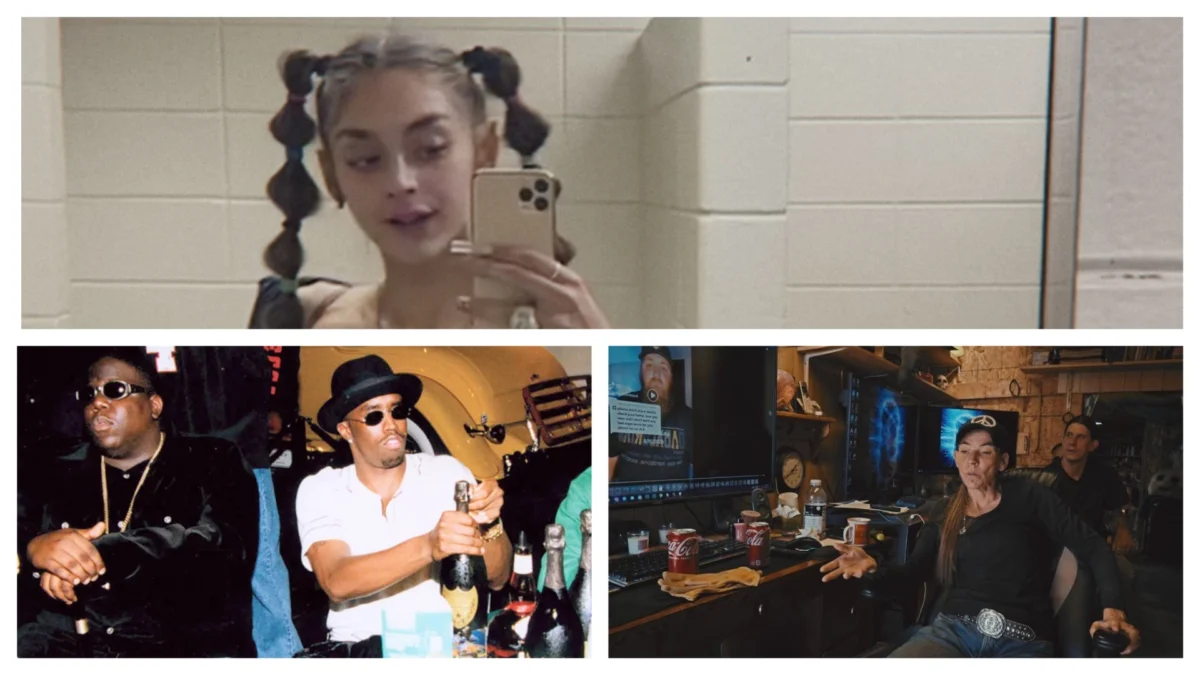
In the traditional landscape of documentary filmmaking, the “fly-on-the-wall” approach—known as cinéma vérité—was defined by the filmmaker’s ability to remain an invisible observer, capturing subjects in their most unguarded, natural states. However, in an era defined by ubiquitous smartphone usage, constant social media curation, and the performative nature of digital life, that "pure" version of reality is rapidly becoming a relic of the past.
Contemporary filmmakers are no longer attempting to hide the camera; instead, they are leaning into a new, collaborative form of non-fiction storytelling that embraces the "self-documented" subject. By integrating GoPro footage, Ring camera feeds, and TikTok self-portraits into their narratives, directors are creating a meta-textual language that challenges how we define authenticity on screen.
The Shift Toward "Subject-Collaborative" Storytelling
Dylan Redford, co-creator of the HBO series Neighbors, recently highlighted this paradigm shift while discussing his show’s Emmy-contending run. Neighbors, which captures the escalating tensions of residential disputes across the United States, was born out of the very viral videos the subjects themselves were uploading to the internet.

"I’m not saying that vérité is dead per se," Redford told IndieWire. "But the idea of a ‘pure subject,’ heedless of how they are perceived on film, might be. Given the world that we live in now, and everyone’s documenting themselves and each other, we can’t really ever totally compete with that level of intimacy that a subject has with their phone."
For Redford and his creative partner, Harrison Fishman, the goal is not to fight the subject’s awareness of the camera, but to utilize it. "They’re not naive to what it means to craft a story," Redford notes. "It’s a more collaborative approach than a classic vérité film used to be, because I just don’t think you can access that kind of total purity anymore."
Chronology of a Trend: From Surveillance to Subjectivity
The integration of personal, subject-shot footage has evolved from a niche stylistic choice into a primary narrative device. The trend is perhaps most starkly visible in the true-crime genre, where the line between "evidence" and "narrative" has blurred.

- The Rise of Surveillance: Shows like Neighbors utilize doorbell security footage and 360-degree cameras not just for plot, but to mirror the hyper-surveilled nature of modern suburban life.
- The TikTok Trial: In the Netflix documentary The Crash, directed by Gareth Johnson and produced by Angharad Scott, the filmmakers explore the tragic case of Mackenzie Shirilla. Here, the subject’s own social media footprint—specifically a TikTok video set to Marina and the Diamonds’ "Bubblegum Bitch"—becomes a focal point of the legal proceedings, effectively serving as an unintentional confession in the eyes of the court.
- The Professionalization of the Personal: With Sean Combs: The Reckoning, director Alex Stapleton faced a sudden influx of raw, behind-the-scenes footage of the music mogul during his final week of freedom. This "landed in her lap" footage provided an unvarnished look at a man who spent his life manufacturing his public image.
Supporting Data: The Power of the "In-Between"
The use of this footage forces a new level of media literacy upon the audience. In The Crash, the filmmakers chose to include an interview with Shirilla that serves as a desperate attempt to influence public perception during her appeals process.
Johnson and Scott argue that this "meta" layer is essential. By placing the subject’s TikToks—recorded before she was a public figure—alongside her current, calculated interview footage, the film creates a contrast that allows the viewer to judge the authenticity of both.
Similarly, Alex Stapleton describes the "magic" of working with footage that subjects have commissioned of themselves. "You’re being let in on him and his process of manufacturing reality," she says. "There are things that go down in it that are crazy, but a lot of the power is in the in-between—in what’s not said, or what you wouldn’t get if you didn’t understand that time period specifically."

Official Responses and Filmmaker Perspectives
The consensus among these directors is that the "authentic" moment is not necessarily the one captured by a professional crew, nor is it the one captured by a phone. Rather, it is the synthesis of both.
"It would be a mistake to consider someone’s confessional that they film on their phone for their TikTok as any more real or authentic than a ‘documentary’ interview," says Redford. "They do different things."
For producers like Angharad Scott, the importance lies in transparency. "She didn’t have approval over what was put in the documentary, but she did provide material to us to help tell her side of the story. As a filmmaker, it’s so important that people do that, so that we can make these stories in this way."

This collaborative friction—where the subject tries to spin their own narrative while the director attempts to provide objective context—is where the "truth" of the modern documentary now resides.
Implications: The Ethics of Context
The most significant implication of this shift is the burden placed on the filmmaker to provide accurate context. If a subject provides their own footage, they are essentially providing their own propaganda. It is the director’s responsibility to "braid" that footage into a broader historical or factual timeline.
As Stapleton notes, "Context is a really big part of the documentary process. And I think it’s always a tragedy when you don’t build that out. You should never underestimate your audience, and you should never think that an audience won’t be able to comprehend the nuance."

In The Crash, this manifests in a scene where Shirilla checks with her lawyer for feedback after answering a question. By leaving this moment in the final cut, the filmmakers expose the "manufacturing" of the interview itself. It forces the audience to confront the reality that, in the age of personal branding and constant surveillance, no one is ever truly "off-camera."
Conclusion: A New Language for Truth
The death of "pure" vérité is not a loss of truth, but rather an evolution in how we capture it. By acknowledging that subjects are aware of their own image, and by using their self-curated footage as a narrative tool, filmmakers are providing a more honest reflection of our current cultural moment.
We live in a world where everyone is their own director, producer, and editor. Documentaries that ignore this reality risk feeling dated and disconnected. Conversely, those that lean into the "gratuitous" nature of modern surveillance and self-documentation—like Neighbors, The Crash, and Sean Combs: The Reckoning—are managing to capture the complex, performative, and deeply American nature of our digital existence. The camera is no longer a neutral observer; it is a participant in the ongoing construction of the self.

 Jia Lissa
 Iffa Jayyana