Basiran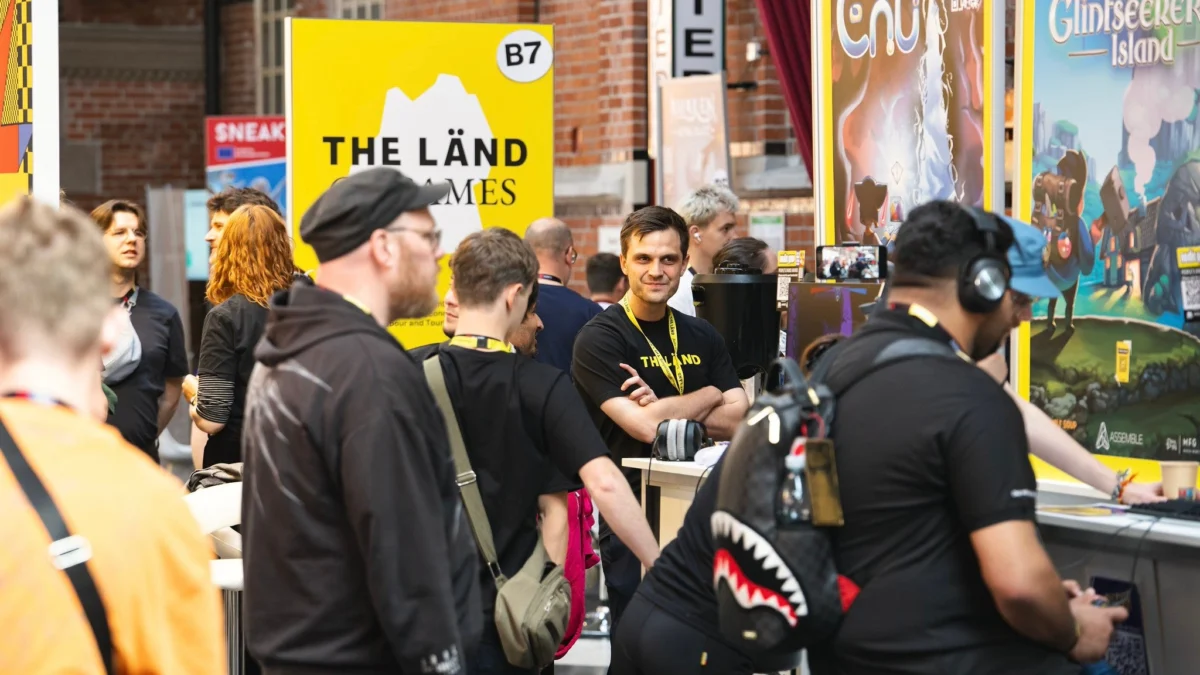
The international gaming industry descended upon Malmö, Sweden, this past week for the annual Nordic Game conference—a gathering that has evolved from a regional trade show into a critical barometer for the global games sector. Amidst a period of significant economic volatility and structural shifts within the gaming landscape, Nordic Game 2026 served as a vital nexus for developers, publishers, and creative visionaries to navigate the "new normal" of game development.
Organizers confirmed that the 2026 iteration saw a 6% increase in total attendance compared to the previous year, with more than 1,100 companies representing 59 countries congregating to share expertise, foster partnerships, and debate the future of the medium.
The Pillars of the 2026 Program
The event’s success was underpinned by a massive expansion in its intellectual offerings. With 179 speakers spread across five dedicated stages, the conference provided a platform for both established industry titans and rising independent stars.
Keynotes and panels featured high-profile industry veterans, including Liquid Swords CEO Christofer Sundberg and Embark Studios design director Gerardo Basurto. The program also highlighted the creative prowess of smaller teams, featuring insights from Adam Stjärnljus and Klas Eriksson of Wishfully, as well as Jennifer Svedberg-Yen from Sandfall Interactive.
The reach of the conference extended far beyond the physical venue in Malmö. By leveraging digital distribution channels, organizers streamed main-stage sessions live across YouTube, Twitch, and Stream, capturing a global audience of over 150,000 viewers. This hybrid approach solidified what attendees and organizers have begun calling "the Nordic Game week"—a multi-day, city-wide phenomenon that integrates official conference programming with a sprawling ecosystem of independent side events.
A Chronology of Collaboration and Celebration
The week-long event began with a focus on networking and technical exchange, setting the stage for the Nordic Game Awards. The awards ceremony served as a centerpiece of the week, celebrating the best in regional craftsmanship.
- The Accolades: Arc Raiders emerged as the definitive winner of the night, securing the prestigious "Nordic Game of the Year" award. In addition to the top honor, the title was recognized for "Best Technology" and "Best Audio," underscoring the high production values currently emerging from the Nordic region.
- The Knowledge Exchange: Mid-week was dominated by technical deep dives and market analysis, where the conversation shifted from development tools to the harsh realities of the current publishing landscape.
- The Future Horizon: The event concluded with the official announcement that Nordic Game 2027 is scheduled to take place from May 25 to May 28, once again returning to its Malmö home.
Supporting Data: By the Numbers
The metrics behind Nordic Game 2026 tell a story of a resilient, if cautious, industry. The 6% growth in attendance is particularly noteworthy given the broader industry trends of budget tightening and studio consolidations that have defined the last 24 months.
| Category | Data Point |
|---|---|
| Total Participating Companies | 1,100+ |
| Countries Represented | 59 |
| Number of Speakers | 179 |
| Number of Stages | 5 |
| Digital Reach | 150,000+ viewers |
| Event Dates (2027) | May 25 – May 28, 2027 |
The data reflects a shift in focus toward high-quality, sustainable development. While the sheer volume of titles being released globally has created a crowded marketplace, the attendance figures suggest that the hunger for in-person collaboration remains undiminished.
Official Responses: The "Indie" Philosophy
Perhaps the most significant takeaway from the conference was the philosophical pivot voiced by the event’s leadership. Program director Jacob Riis, reflecting on the atmosphere of the week, characterized the 2026 event as a pivotal moment for independent developers.
"What we live on right now as an industry is the indies and the new way of thinking," Riis stated during his post-event remarks. He explicitly distanced the current creative momentum from the industry’s recent fixation on aggressive monetization models. "It’s not so much about profiting and making money and being greedy about monetisation, but more about the art of games… wanting to do something that moves you as a gamer. It’s not about how much time you can spend on a product, it’s more like what kind of stamp it inflicted on your soul."
Riis noted that the strength of the conference lies in the human element—the "thousands of passionate people" who turn the conference into a community-led experience. "It was an incredible week," Riis added. "The community has grown so much, and it’s fantastic to see the global industry showing such strong interest in joining us in Malmö."
Implications: Navigating the Era of Transition
While the prevailing sentiment in Malmö was one of communal growth and creative optimism, the reality of the industry remains complex. The conference did not shy away from the darker clouds hanging over the sector.
Features editor Lewis Packwood, who attended the event on behalf of GamesIndustry.biz, provided a more nuanced perspective on the proceedings. He described the conference as an environment defined by the "negotiation of a difficult transition." For many developers, the excitement of the event served as a necessary counterbalance to a grim reality: the market is currently saturated with competing titles, and venture capital for new projects is becoming increasingly difficult to secure.
The Challenge of Saturation
The "indie-first" ethos championed by Riis is not merely an artistic preference; it is, for many, a survival strategy. As the AAA sector undergoes painful restructuring, the industry is looking toward smaller, more agile teams to innovate and capture player interest. However, this shift places a heavy burden on indie developers to stand out in a marketplace where the "discoverability" crisis is at an all-time high.
The Economic Reality
The discourse in Malmö highlighted that while the "soul" of gaming is vibrant, the economic infrastructure supporting it is undergoing a structural overhaul. The focus on "games that move you" is a direct response to a fatigue among players toward "live service" titles and exploitative mechanics. The implication for the next twelve months is clear: developers who prioritize authentic, high-impact experiences are more likely to find success in a market that is increasingly allergic to generic or overly-monetized content.
Conclusion: Looking Ahead to 2027
Nordic Game 2026 will be remembered as the year the industry chose to reaffirm its creative roots. By providing a stage for those prioritizing the "art of games" over the "greed of monetization," the organizers have provided a roadmap for what a sustainable future might look like.
As the industry looks toward the 2027 conference, the lessons of Malmö remain clear: success in the coming years will not be defined by the scale of the production or the complexity of the monetization, but by the ability to connect with players on a fundamental, emotional level. For the attendees who gathered in Sweden, the challenge for the next year is to take the collaborative spirit of "Nordic Game week" and translate it into the next generation of experiences that can define—and heal—the industry.

 Asep Darmawan
 Lina Hope