Rifan Muazin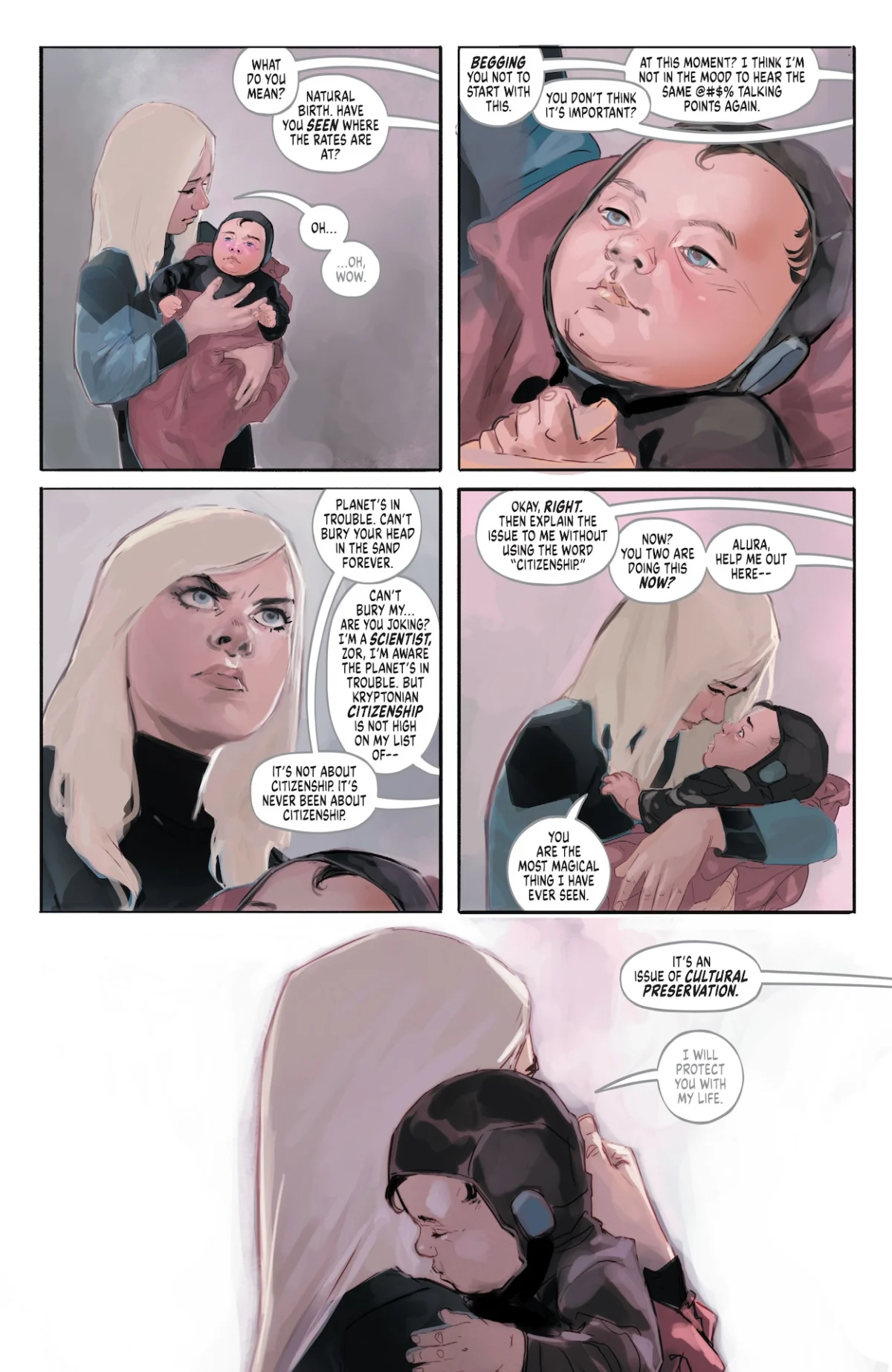
The landscape of modern superhero comics is often defined by grand, sweeping epics, but occasionally, a creative team dares to strip away the capes, the invulnerability, and the god-like status of our icons to find the human heart—or in this case, the Kryptonian heart—beating underneath. With the release of Supergirl: Survive #1, writers Ethan Parker and Griffin Sheridan, accompanied by the visionary artistry of Rod Reis, attempt to do exactly that.
While the timing of this release inevitably invites speculation regarding its proximity to the upcoming Supergirl feature film, Supergirl: Survive presents itself as a distinct Elseworlds narrative. It is a story not of cosmic power, but of survival, loss, and the heavy burden of guardianship placed upon a teenager who has no way to mitigate the destruction of her world.
The Core Premise: A Powerless Hero
The most compelling hook of Supergirl: Survive is the inversion of the traditional Super-mythos. We are accustomed to seeing Kara Zor-El as a beacon of immense power, often rivaling or exceeding her cousin. Here, the creative team presents a Kara who is profoundly, uncomfortably ordinary. By placing the narrative on Krypton just one day before its cataclysmic demise, the writers ensure that Kara’s inherent biological advantages remain dormant under a red sun.
This structural choice creates a "ticking clock" narrative. The tension is not derived from who Kara can punch, but from how she will manage to keep an infant Kal-El alive when the very ground beneath their feet is destined to shatter. It is a high-concept survival story that relies on the "everyman" archetype to ground the sci-fi spectacle, a gamble that oscillates between effective character study and, at times, pacing frustration.
Chronology of the Narrative: From Classroom to Cataclysm
The narrative structure of the first issue is bifurcated, split between the mundane reality of Kryptonian adolescence and the impending political collapse of the planet.
The Mundane Life of Kara Zor-El
The first two-thirds of the issue focus heavily on the domestic and social life of a teenager on Krypton. Parker and Sheridan introduce us to a world that feels strangely familiar—a mirror of Earth’s own societal structures. We see Kara navigating the pressures of high school, dealing with social anxieties, and enduring the meddling of friends.
This section is clearly designed to establish empathy. By showing Kara worrying about a dance or the awkwardness of a crush, the creative team aims to make her eventual heroism feel more earned. However, this is also where the narrative faces its steepest hurdle. The transition from the high-stakes political intrigue of Zod’s rise to power to the "locker-room" drama of a teenage romance feels jarring. The dialogue in these scenes—specifically an exchange regarding "para-dimensional sliding"—often lands with a thud, leaving the reader confused rather than charmed by the attempt at adolescent vernacular.
The Final Hours of Krypton
As the issue progresses, the focus shifts to the inevitable: the final hours of Krypton. It is here that the book finds its footing. The depiction of Zod as a desperate, radicalizing political figure provides the necessary weight to the catastrophe. When the shift from the mundane to the macro-level disaster occurs, the pacing finally finds the urgency it lacked in the opening chapters. The issue culminates on a Kryptonian moon, with Kara, armed only with a standard-issue blaster, tasked with the impossible: shielding the infant Kal-El from a hostile, dying galaxy.
Supporting Data: Visual Storytelling by Rod Reis
If the script is the skeleton of Supergirl: Survive, Rod Reis is the nervous system. His work here serves as a necessary anchor for the narrative, particularly during the scenes where the script falters.

Reis’s color palette is deliberate; he renders the Kryptonian school scenes with a soft, slightly muted tone that emphasizes the "ordinariness" of Kara’s life. Conversely, when the narrative turns toward the destruction of Krypton, his lines become sharper, and his colors more volatile.
A specific highlight of the art is the recurring use of circular call-out panels. While some critics might argue that these panels, which detail items in Kara’s locker, do not advance the plot, they serve a vital world-building purpose. They remind the reader that this is a fully realized civilization, one with its own trinkets, technology, and culture, all of which are about to be erased. The final page, in particular, is a masterclass in visual storytelling, effectively summarizing the entire premise of the series in a single, haunting image.
Official Context and Industry Implications
While DC Comics has historically avoided overt "synergy" between its publishing line and its film division, the proximity of this release to the upcoming Supergirl film cannot be ignored by market analysts. Elseworlds titles have long served as a sandbox for creators to experiment with characters without the constraints of continuity.
However, Supergirl: Survive functions as more than just a tie-in or an experiment. It is a calculated attempt to test the viability of "grounded" stories within the DC brand. If this series finds success, it could signal a shift in how DC approaches its legacy characters, prioritizing character-driven, self-contained arcs over the sprawling, interconnected events that have dominated the market for the last decade.
Critical Assessment: The Pacing Problem
The primary criticism leveled against the debut issue is its pacing. A common frustration among readers is that the "interesting" part of the story—the survival aspect—is relegated to the final pages. By spending so much time on the school-life elements, the book risks losing the reader before the inciting incident truly takes hold.
The dialogue in the early scenes, as noted previously, contributes to this sense of stagnation. When the protagonist is struggling with social cues that feel out of place in a society on the brink of total annihilation, the contrast is less "interesting" and more "confusing." There is a fine line between making a character relatable and making them trivial; at times, Supergirl: Survive #1 wanders onto the wrong side of that line.
Future Implications: What to Expect
Despite the slow start, the foundation laid in the final act of this issue provides a strong roadmap for the future. The series now moves away from the "padding" of the high school setting and into the "sci-fi pulp" action that the premise promises.
- The Burden of Responsibility: We can expect future issues to explore the psychological toll on Kara as she realizes she is the only person standing between her cousin and death.
- The Politics of the Moon: How will the factions of the surviving Kryptonians (if any) react to the presence of the infant Kal-El?
- The Loss of Home: With the planet gone, the series will likely evolve into a journey of grief and discovery, forcing Kara to mature rapidly in a vacuum of authority.
Final Verdict
Supergirl: Survive #1 is a book of two halves. The first is a slow-burn attempt at character establishment that occasionally struggles with tone and pacing. The second is a gripping, visually stunning promise of a high-stakes adventure.
For fans of the Elseworlds format, this title offers a refreshing, if slightly uneven, take on a well-worn origin story. It successfully strips away the god-like veneer of the Kryptonians, forcing us to look at them as people, not icons. While the debut chapter may be criticized for its lack of urgency, it succeeds in one critical area: it leaves the reader wanting to see how the story continues. The "Supergirl" of this tale is not the hero who flies, but the one who refuses to give up—and that is a compelling enough reason to keep reading.

 Sagoh
Sagoh
 Ammar Sabilarrohman