Asep Darmawan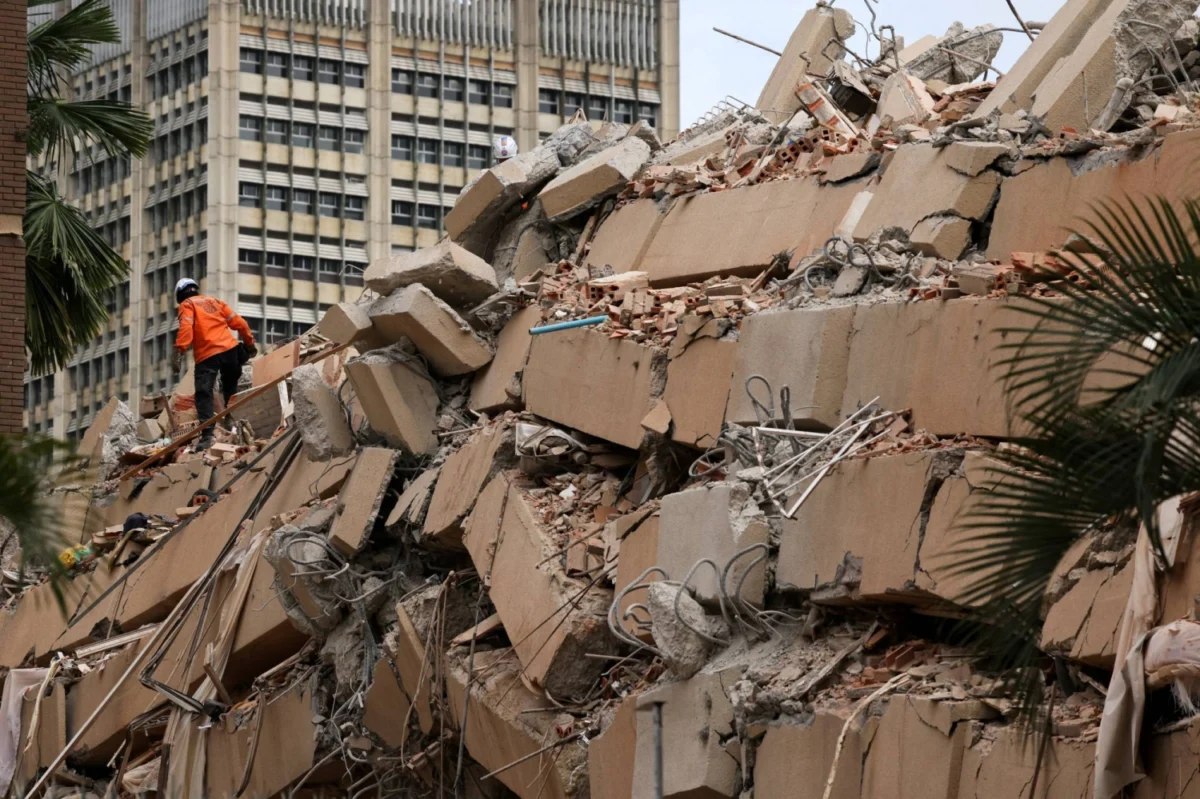
By International News Desk
Nearly 24 hours after a pair of powerful earthquakes struck the heart of Venezuela, the nation remains gripped by a humanitarian catastrophe. In the coastal city of La Guaira, as well as the capital, Caracas, the landscape has been transformed into a harrowing mosaic of twisted rebar, pulverized concrete, and shattered lives. With the window for finding survivors rapidly closing, the sound of heavy machinery is replaced by the desperate scratching of human hands against debris as ordinary citizens lead the race against time.
The Tragedy Unfolds: A Chronology of the Disaster
The seismic activity began in the early hours of Wednesday, catching a population largely unprepared for a disaster of this magnitude.
- Wednesday, 04:15 AM: The first tremor, measured at a high magnitude, struck off the northern coast, sending shockwaves through the densely populated metropolitan areas. The geological instability was centered near the Vargas State region, causing immediate structural failure in older, high-density residential complexes.
- Wednesday, 09:30 AM: As emergency services struggled to mobilize, a second, equally powerful quake struck, causing further collapse in buildings already compromised by the initial shock. This "double-tap" effect proved fatal for many, as individuals who had evacuated their homes returned to collect belongings or check on neighbors.
- Thursday, Dawn: The realization set in that official state response was inadequate. By sunrise, thousands of volunteers had joined the search effort. In La Guaira, the scene remained chaotic as the sheer volume of rubble outpaced the availability of specialized urban search and rescue (USAR) equipment.
A Race Against Time: The Struggle on the Ground
For many survivors, the primary challenge has not been the absence of hope, but the absence of resources. Carlos Borges, a local resident turned first responder, stood amidst the ruins of a collapsed high-rise apartment block in La Guaira on Thursday morning. His hands, caked in white dust and dried blood, spoke to the intensity of the manual labor required to reach those trapped beneath the concrete.
"We are trying to help with what we can, but there is a profound lack of equipment," Borges stated, his voice tight with exhaustion and frustration. "We are digging with our bare hands, pieces of metal, and shovels. We need backhoes. We need hydraulic jacks. We need the tools to move these slabs before the people beneath them run out of air."
His team managed to extract three survivors from the wreckage, a feat that served as a rare beacon of hope in a city mourning the loss of dozens. Yet, for every person saved, dozens more remain missing. Among those waiting at the site was a single mother, her eyes fixed on the pile of rubble that was once her home, waiting for word on her teenage son. Her silent vigil has become the defining image of this tragedy—a testament to the agony of the "missing" status that currently blankets thousands of Venezuelan families.
Supporting Data: The Scope of the Destruction
While geological surveys are still calculating the exact epicenter and depth of the quakes, the humanitarian footprint is already vast. Preliminary reports from the National Seismological Service indicate that the quakes were shallow, which significantly increased the intensity of the shaking felt on the surface.
- Structural Impact: Early assessments suggest that over 200 high-rise residential buildings have sustained "critical damage," rendering them uninhabitable. The concentration of these buildings in the narrow coastal strip of La Guaira has amplified the impact, as debris has blocked the primary transit arteries, further slowing the arrival of aid.
- Infrastructure Collapse: Power grids across the northern corridor remain largely offline. This has paralyzed communication networks, making it difficult for families to coordinate rescue efforts or confirm the status of loved ones. Water supply lines have also been severed in several sectors, raising the specter of a secondary health crisis as temperatures in the region begin to climb.
- The "Double-Hit" Phenomenon: Seismologists note that the secondary quake was not merely an aftershock but a distinct rupture along a previously identified, yet dormant, fault line. This complexity caught emergency planning systems off-guard, as they were calibrated for singular, lower-magnitude events.
Official Responses and the Challenge of Governance
The government’s response to the disaster has been met with both gratitude and sharp criticism. President Nicolás Maduro declared a state of emergency early Thursday, deploying the Bolivarian National Armed Forces to assist in debris removal.

"We are mobilizing all available assets," the administration stated in a brief press release. "Our priority is to preserve life and provide medical support to those in need."
However, local leaders and international aid monitors have pointed to systemic deficiencies. Critics argue that years of economic instability and a lack of investment in disaster preparedness have left the country’s civil defense infrastructure in a state of decay. Reports of "shortages of heavy machinery" mentioned by residents like Borges are corroborated by the slow deployment of state-owned construction vehicles, many of which are reportedly out of commission due to a lack of spare parts or fuel.
International aid offers from neighboring nations and regional blocs have begun to trickle in, but logistical bottlenecks—caused by the damage to port facilities in La Guaira—are hampering the delivery of specialized medical supplies and search-and-rescue teams.
Implications for a Nation in Flux
The earthquakes strike at a particularly fragile moment for Venezuela. Beyond the immediate death toll and physical destruction, the long-term implications are profound:
- Economic Strain: The cost of rebuilding will be astronomical. With the country already struggling with fiscal constraints, the reconstruction of high-density housing and critical utility infrastructure will likely require significant international intervention or long-term debt restructuring.
- Social Unrest: The delay in rescue operations has sparked pockets of tension. In areas where aid has been slow to arrive, residents have begun to express their frustration through public protests, further complicating the work of emergency crews and military personnel tasked with maintaining order.
- Migration and Displacement: With thousands left homeless, the risk of a new wave of internal displacement is high. Many families, having lost their livelihoods and their homes, may seek refuge in already overcrowded urban centers, or attempt to cross borders in search of safety and stability.
- Urban Resilience: This disaster serves as a grim case study on the dangers of urban density in seismically active zones without modern building codes. As the recovery begins, there will be an urgent, if not overdue, national conversation about seismic retrofitting and the enforcement of construction standards.
Looking Forward: The Crucial Hours Ahead
As night falls on the second day of the disaster, the focus shifts to the use of thermal imaging and listening devices to detect signs of life. The next 24 to 48 hours are widely considered the "golden period" for search and rescue.
For the people of Venezuela, the coming days will be defined by endurance. Whether it is the mother waiting for her son, the volunteer digging with bloodied hands, or the displaced family huddled in a makeshift shelter, the collective resolve of the citizenry is currently the only thing holding the country together.
As the international community watches, the tragedy in La Guaira serves as a stark reminder of the unpredictable power of nature and the vulnerability of urban infrastructure. In the aftermath of the dust and the tremors, the question remains whether the response will be sufficient to mitigate a disaster that has already claimed too much.
For those seeking to assist or track the latest updates, official channels are currently directing citizens to local civil protection centers. International relief agencies are in the process of establishing a coordination hub to bypass blocked transit routes and ensure that aid reaches the most isolated sectors of the affected coast.


 Neng Nana
 Asro
Asro