Raul Delapena Setiawan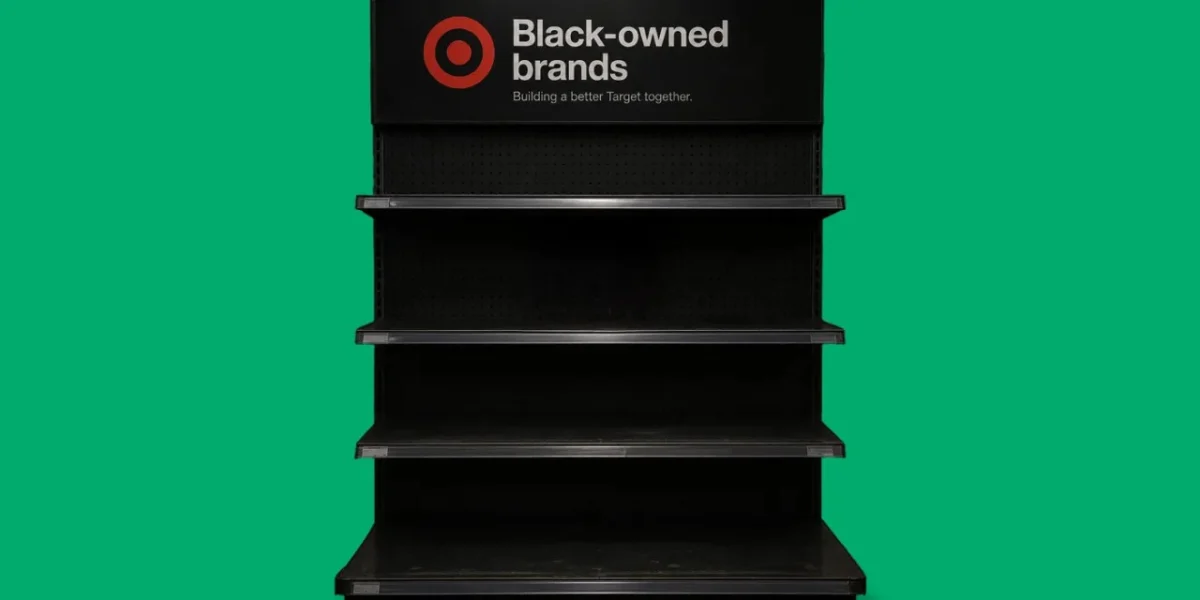
In the landscape of American retail, shelf space is more than just inventory placement—it is a symbol of legitimacy, reach, and the promise of the American Dream. For Black entrepreneurs, securing a spot on the shelves of a retail titan like Target has long been viewed as the ultimate "big break." However, the path to mass-market success has become increasingly treacherous. As Target recalibrates its business strategy amidst a shifting political and social climate, a growing number of Black-owned brands find themselves unceremoniously dropped, left in a state of operational limbo, or facing significant financial losses.
The Dream and the Departure: The Case of Afro Unicorn
For April Showers, 2022 marked a career-defining milestone. Her brand, Afro Unicorn—a licensed-character enterprise featuring books, apparel, and hair-care products designed to celebrate Black beauty—secured placement in Target and Walmart. For Showers, the move was never merely about profit; it was a mission of normalization.
"It wasn’t to help normalize it for us," Showers explained. "It was there to normalize it for everyone else, so that when a little white girl walks into the room and sees a Black girl, she doesn’t look at her any differently."
Yet, less than four years later, that dream has soured. Following Target’s strategic pivot away from many of its Diversity, Equity, and Inclusion (DEI) initiatives, Showers observed a marked decline in brand performance. Faced with what she perceived as a lack of corporate accountability from the retailer, Showers decided to cease advertising the brand’s presence at Target. By the end of 2025, Afro Unicorn products had been largely cleared from Target’s physical shelves. While some items remain available via Target’s website, the physical partnership has effectively dissolved, leaving Showers to navigate the financial fallout of a $600,000 revenue loss between 2024 and 2025.
A Chronology of Retraction
The friction between Black-owned brands and major retailers is not a new phenomenon, but it has intensified since 2024. The timeline of this strained relationship reveals a systemic breakdown in communication and commitment.
- 2020–2022: In the wake of nationwide social justice movements, Target and other retailers aggressively expanded their supplier diversity programs, pledging billions in investment toward Black-owned businesses.
- 2023: Early warning signs emerged as founders began reporting "back-of-house" issues, where products were received by stores but never placed on sales floors.
- 2024: Target began the process of sunsetting several DEI-focused programs, renaming its "supplier diversity" team to "supplier engagement," and pulling back on external surveys like the Corporate Equality Index.
- 2025: A wave of Black-owned brands—including Afro Unicorn, WNDR LN, and others—saw their agreements terminated or their shelf space reclaimed.
- 2026: Target has positioned this as a "comeback year," reporting its first quarter of sales growth in over a year, while simultaneously facing pressure from activist investors and ongoing boycotts.
The Operational Nightmare: Transparency and Communication
Beyond the ideological divide of DEI, many entrepreneurs describe a harrowing logistical experience. Trey Brown, co-founder of the air freshener brand Ride FRSH, describes his experience with Target as a "nightmare." After landing a national deal in 2023, Brown found that his products were consistently held in stockrooms rather than being displayed for customers.
"Why do I have to talk to the diversity initiatives guy to get an answer when I’m not even in a DEI program?" Brown asked. The lack of accountability from retail buyers has left many founders in the dark, unable to access basic sales data. This data vacuum is particularly damaging for small businesses, as it prevents them from proving their viability to other potential retail partners.
The financial burden of these "partnerships" is significant. One founder, who wished to remain anonymous, detailed how they were encouraged by Target to warehouse products domestically to ensure supply chain agility, only to be dropped shortly after. The resulting costs—warehouse fees, logistics, and the inability to sell through stock—have forced some brands into a precarious financial state. Many also pointed to the "hidden costs" of retail, such as being required to pay for promotional spots within the retailer’s own media networks, which often negated the profit margins of being in a big-box store.
Official Responses and Corporate Strategy
Target representatives have maintained a consistent stance, emphasizing that assortment decisions are driven by performance and market demand. A spokesperson for the company stated: "Style, design and value are at the heart of our differentiated assortment, and emerging brands play an important role alongside national brands and owned brands. We’re proud of our long-term record of helping small businesses grow and reach new customers at Target, and will continue to create opportunities for new brands."
The retailer points to its ongoing expansion of Black-owned brands, noting that it currently carries hundreds of such labels—double the number compared to 2020. They cite recent successes like the launch of "KBB by Kahlana" as evidence of their commitment to emerging talent. However, this quantitative growth does little to soothe the qualitative pain of those who feel they were used for "performative" marketing during the height of the DEI era, only to be discarded when the political winds shifted.
The Ripple Effects: Implications for the Ecosystem
The fallout extends beyond the individual brands to the broader retail ecosystem. As activist investors, including SOC Investment Group, push for accountability, the question of "brand integrity" has taken center stage. Emma Bayes, deputy director of SOC, notes that Target’s retreat from DEI has undermined its credibility with a core consumer base. "Target’s brand has eroded, and it’s not from taking a stance, but from appearing disingenuous on social issues," Bayes observed.
For founders like Showers and Brown, the damage is both personal and professional. The capital tied up in unsold inventory, the loss of direct-to-consumer focus, and the lack of reliable sales metrics have forced many to reconsider the necessity of the "big-box" model entirely.
The "Collateral Damage" of Political Shifts
Perhaps the most striking theme in the current climate is the sense of helplessness felt by entrepreneurs caught between a retail giant and a volatile political environment. Showers explicitly linked her losses to the broader political pressure retailers face regarding DEI. "We were collateral damage because of this administration’s policies," she remarked.
As Target attempts to navigate its 2026 "comeback," the tension remains palpable. While some leaders, such as Pastor Jamal Bryant, have signaled an end to boycotts following closed-door talks with Target’s leadership, others—including prominent civil rights advocates—continue to protest.
For the Black founder, the path forward is increasingly uncertain. The promise of an "even playing field" feels, to many, like a receding horizon. As brands like Curls Dynasty shutter their operations and others struggle to pivot back to direct-to-consumer models, the retail industry faces a reckoning. The future of retail may well depend on whether these giants can move beyond the performative nature of their past diversity initiatives and build the transparent, equitable, and stable partnerships that small, innovative brands require to survive.
Until that trust is rebuilt, the "big break" at a major retailer will continue to carry a cautionary label: proceed with extreme caution.

 Jia Lissa