

In a strategic maneuver aimed at fortifying its position in the rapidly evolving landscape of augmented reality (AR) and artificial intelligence (AI), Snap Inc. has officially acquired Illumix, a pioneer in spatial AI and digital mapping technology. This acquisition represents a pivotal step for the parent company of Snapchat as it prepares to launch its next-generation AR Spectacles in 2026. By integrating Illumix’s proprietary spatial mapping stack, Snap is signaling its intent to transition from a social media platform dominated by mobile filters to a hardware-forward company capable of blending the physical and digital worlds.
The Core of the Acquisition: Why Illumix?
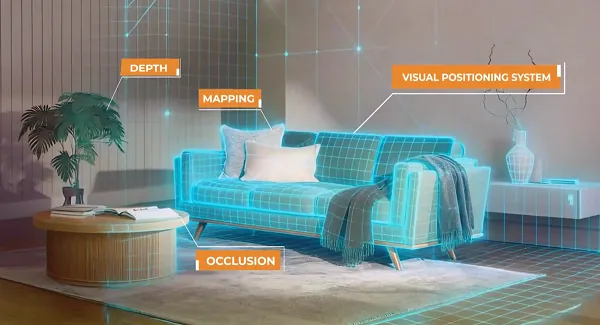
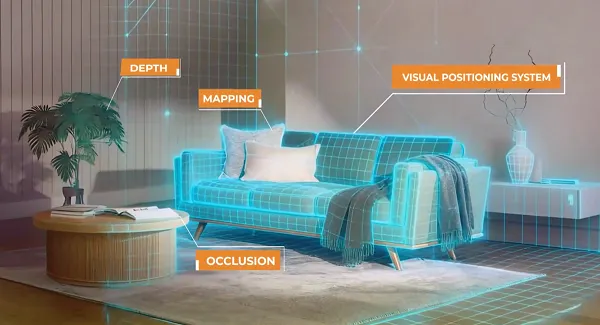
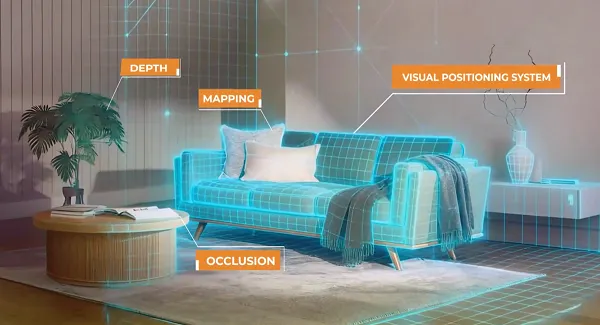
Illumix has spent the last eight years refining the intersection of the physical environment and digital computation. At its core, the company specializes in "spatial understanding"—the ability for software to recognize, map, and anchor digital objects to specific, real-world locations with high precision.
For Snap, this technology is the missing piece of the puzzle. While Snapchat has long been a leader in AR software—pioneering the viral "Lens" culture—its hardware ambitions have historically been hampered by the difficulty of making AR experiences feel "persistent." Illumix changes this by providing a "spatial stack" that includes:
- Real-time 3D Mapping: The ability for devices to scan and understand the geometry of a room in an instant.
- Centimeter-Accurate Localization: Ensuring that digital content doesn’t just "float" but stays locked to a physical object or space.
- Persistent World Anchoring: Allowing a digital experience to remain in the same spot for different users at different times, effectively creating a "digital twin" layer over reality.
According to Illumix’s own documentation, their technology is specifically engineered for the next wave of wearables. "For AR glasses, we unlock the complete spatial stack," the company stated in a release. "For AI glasses, we provide long-term memory and user profiles that understand your specific context."
A Chronology of Snap’s Hardware Ambitions
To understand the significance of this acquisition, one must look at the timeline of Snap’s hardware evolution, which has been a decade-long journey of trial and error.
- 2016: The Spectacles Launch. Snap released its first-generation Spectacles, simple camera-equipped glasses. While they captured cultural attention, they were fundamentally cameras, not AR devices.
- 2018–2020: Incremental Hardware Iterations. Snap continued to release updated versions of Spectacles, focusing on improved camera quality and connectivity, but the AR functionality remained limited to what was seen through a phone screen.
- 2021: The First AR Spectacles. Snap introduced a developer-focused version of its AR Spectacles. These devices featured displays that could overlay digital objects onto the real world, though they were bulky and tethered to a limited battery life.
- 2024: The Strategic Pivot. Recognizing that it was falling behind Meta’s Ray-Ban smart glasses in terms of consumer adoption, Snap began consolidating its R&D efforts, doubling down on AI-integrated software.
- 2025: The Acquisition of Illumix. By acquiring Illumix, Snap is positioning its upcoming 2026 consumer glasses to be more than just a camera or a notification center; they are aiming for a fully contextual, spatial computing experience.
Supporting Data: The Competitive Landscape
The wearable technology market is currently a three-horse race between Meta, Apple, and Snap. While Apple dominates the high-end "spatial computing" space with the Vision Pro, and Meta dominates the "AI-first" lightweight wearable space with its Ray-Ban collaboration, Snap is currently caught in the middle.
Current industry data suggests that Meta’s Ray-Ban smart glasses have successfully captured a segment of the market by focusing on simplicity, voice-activated AI, and sleek, traditional aesthetics. Conversely, Snap’s upcoming AR Spectacles are rumored to be significantly bulkier. The integration of Illumix technology is a direct attempt to provide a "value-add" that justifies a heavier, more complex device. If Snap can offer a superior, more stable, and more context-aware AR overlay than Meta, they may be able to capture the developer community and tech-savvy early adopters who demand more than just voice commands.
However, the hurdle remains high. Industry analysts point to two critical metrics where Snap trails: battery efficiency and hardware form factor. Meta’s reliance on multimodal AI (which processes information in the cloud) allows their glasses to remain lightweight. Snap’s push into heavy spatial mapping requires more localized, on-device processing, which historically consumes significantly more power.
Official Perspectives: Aligning Visions
The acquisition was confirmed via social media and company statements from both parties. Illumix CEO Kirin Sinha expressed a deep philosophical alignment with Snap’s trajectory.
"We started Illumix with an ambitious belief: that digital experiences would eventually become part of the physical world around us," Sinha stated. "Snap’s bold vision for AR and AI strongly aligns with what we have always believed: that the future of computing will be more immersive, more intuitive, and ultimately more human."
For Snap, the acquisition is framed as a talent and IP infusion. By absorbing the Illumix team, Snap is not just buying a piece of software; they are acquiring a group of engineers who have spent nearly a decade solving the exact "drift" and "mapping" problems that currently plague the AR industry.
Implications for the Future of AR
The implications of this deal are twofold: they affect both the consumer experience and the developer ecosystem.
For the Consumer
If successful, this acquisition could lead to "persistent AR." Imagine walking into a friend’s house, and your AR glasses remember where you left a digital note, or being able to interact with a digital pet that "lives" on your physical desk. This is the promise of Illumix’s anchoring technology. It moves the needle from "looking at digital stuff" to "living in a world where digital and physical are indistinguishable."
For the Developer Platform
Perhaps most importantly, Snap may be building a "Spatial OS." Even if their own hardware struggles against the dominance of Meta, the technology developed by the merged Illumix-Snap entity could become a foundational platform for other developers. If Snap can offer a superior SDK (Software Development Kit) that handles complex spatial mapping better than competitors, they could become the "engine" behind other AR devices, similar to how Unity became the standard for 3D gaming.
Conclusion: A High-Stakes Gamble
The acquisition of Illumix is a clear acknowledgment by Snap that its existing software stack is insufficient to compete in the next era of computing. While Snap remains the dominant force in AR software, the transition to wearable hardware is an unforgiving endeavor.
The market is skeptical, and for good reason. Meta’s current offerings are already proving that consumers prefer lightweight, functional wearables over clunky, experimental headsets. Whether Illumix’s advanced spatial mapping can be compressed into a wearable form factor that doesn’t sacrifice battery life or aesthetics remains the billion-dollar question.
As Snap moves into this next phase, the pressure to deliver a breakthrough device in 2026 is immense. If the company fails to differentiate its hardware, it risks being relegated to a secondary player in the wearable race, regardless of how advanced its spatial intelligence technology becomes. Conversely, if they succeed, they could rewrite the rules of human-computer interaction, turning the "Snapchat generation" into the first true "Spatial generation." For now, the tech world waits to see if this acquisition will be the catalyst for Snap’s renaissance or a footnote in a larger, losing battle against the tech giants of Silicon Valley.












No comments yet. Be the first to join the conversation!