Jia Lissa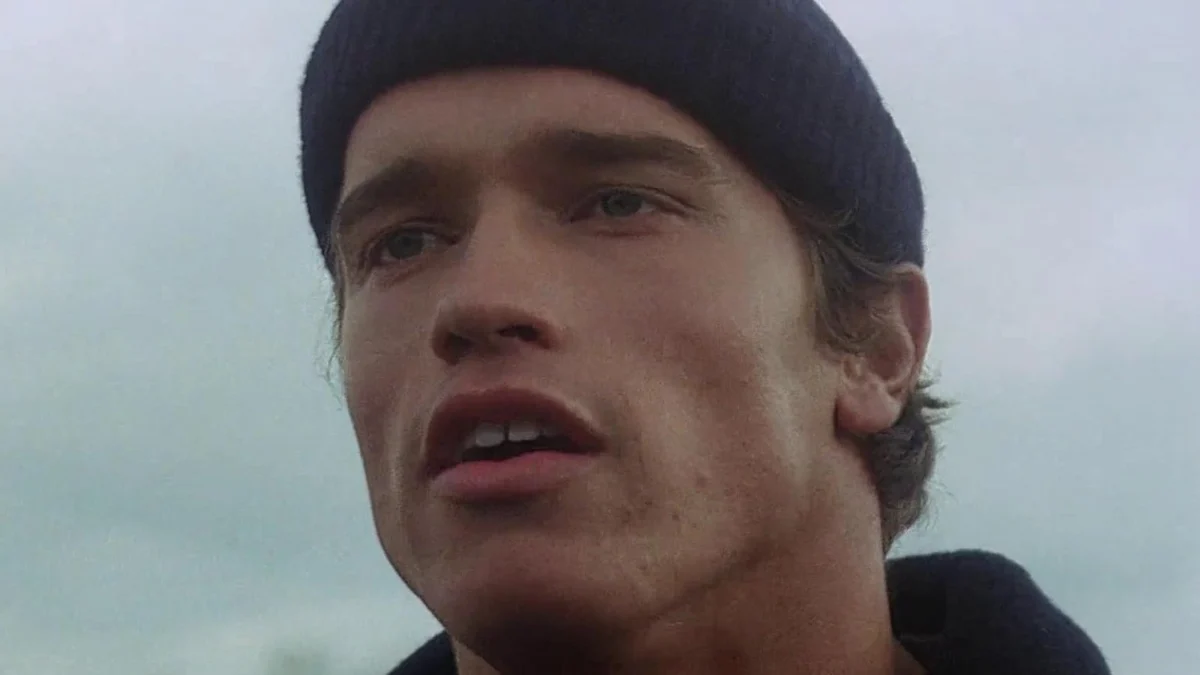
Before he was the "Governator," the T-800, or the action icon who defined the 1980s and 90s, Arnold Schwarzenegger was simply a mountain of muscle from Thal, Austria, looking to break into the American entertainment industry. His journey began in 1970 with a project so profoundly bizarre that it remains a fascinating footnote in film history: Hercules in New York. Directed by Arthur Allen Seidelman, this low-budget, high-camp fantasy comedy serves as the definitive origin story for one of Hollywood’s most successful careers—even if the man on screen barely resembles the legend he would eventually become.
The Main Facts: "Arnold Strong, Mr. Universe"
When Hercules in New York hit theaters in 1970, audiences were not introduced to the household name of Arnold Schwarzenegger. Instead, the credits featured a moniker clearly designed to capitalize on his professional bodybuilding physique: "Arnold Strong, Mr. Universe."
For the producers, "Schwarzenegger" was deemed a linguistic hurdle for the American public. By rebranding him as "Strong," they hoped to pivot toward the then-popular "peplum" film genre—Italian-made sword-and-sandal epics that relied heavily on physically imposing leads. However, the film was anything but a standard epic. It was a fish-out-of-water comedy that placed the Greek demigod in the grimy, bustling streets of 1970s New York City. The result was a chaotic blend of mythology, urban grit, and Borscht-Belt-style humor that left critics baffled and audiences largely indifferent at the time of release.
A Chronology of the Production
The production of Hercules in New York is a masterclass in "guerrilla filmmaking." Shot on a shoestring budget of roughly $300,000, the film lacks the polished sheen of studio productions. Historical accounts and anecdotal evidence suggest that the production operated with little regard for standard industry permits, capturing a raw, authentic—and often disheveled—version of New York City that no longer exists.
The Dubbing Controversy
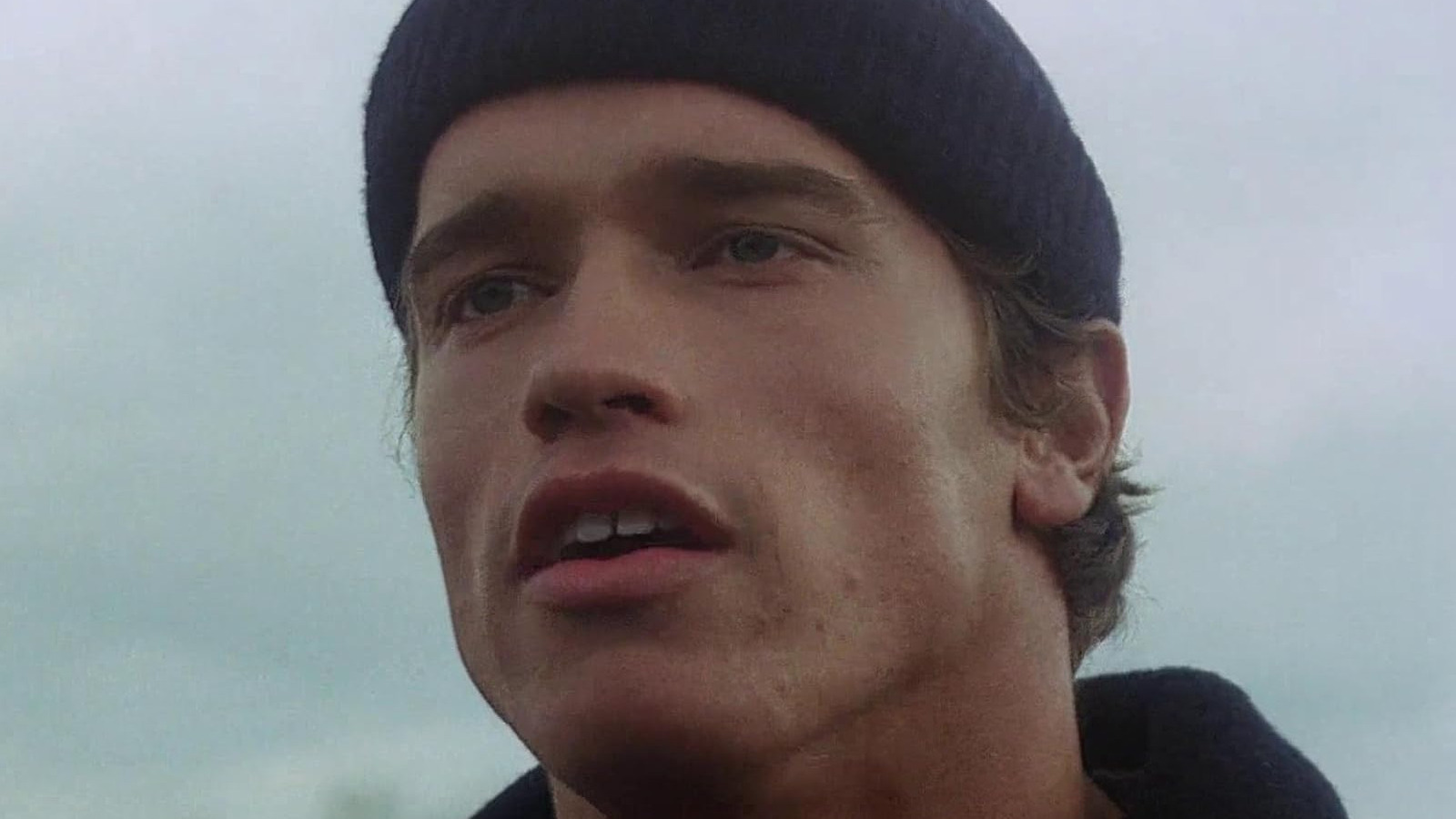
The most significant obstacle during post-production was Schwarzenegger’s thick, impenetrable Austrian accent. At the time, the producers felt his speech patterns would distract from the narrative. Consequently, every line of dialogue spoken by Schwarzenegger was dubbed by an American voice actor. The identity of this performer remains one of the great mysteries of 1970s cinema. It was not until the film’s eventual home video releases—decades after Schwarzenegger had become a global superstar—that the original audio was restored, allowing audiences to hear the young bodybuilder’s natural voice for the first time.
The Evolution of the Title
As Schwarzenegger’s star power skyrocketed, the film’s distributors attempted to milk his fame through various re-releases. The film was eventually retitled Hercules Goes Bananas in some markets, hoping to lean into the absurdity of the plot. It was only after his career was fully cemented that he was properly credited as Arnold Schwarzenegger on the cover art, transforming the film from a forgotten flop into a sought-after cult curiosity.
Supporting Data and Narrative Arc
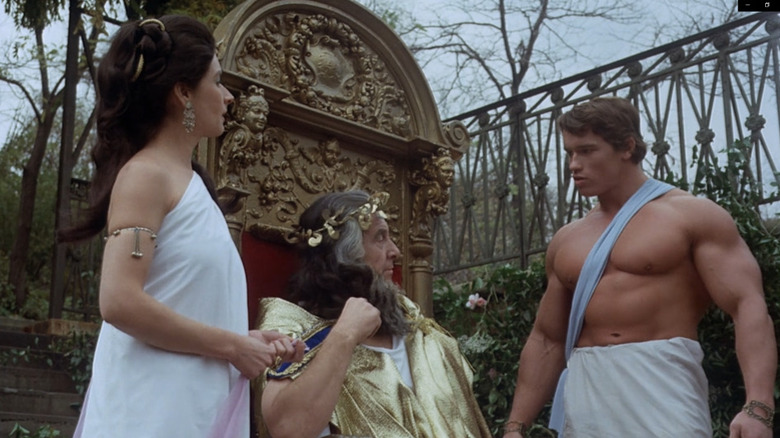
The plot of Hercules in New York is a whimsical, if nonsensical, endeavor. It begins on Mount Olympus, where Hercules (Schwarzenegger) expresses a desire to visit Earth. After pleading with his father, Zeus (played by Ernest Graves), he is granted passage to New York City.
Upon arrival, he crosses paths with "Pretzie" (comedian Arnold Stang), a nebbish pretzel vendor who serves as the comic foil to Hercules’s brawn. The film follows a predictable yet bizarre trajectory:
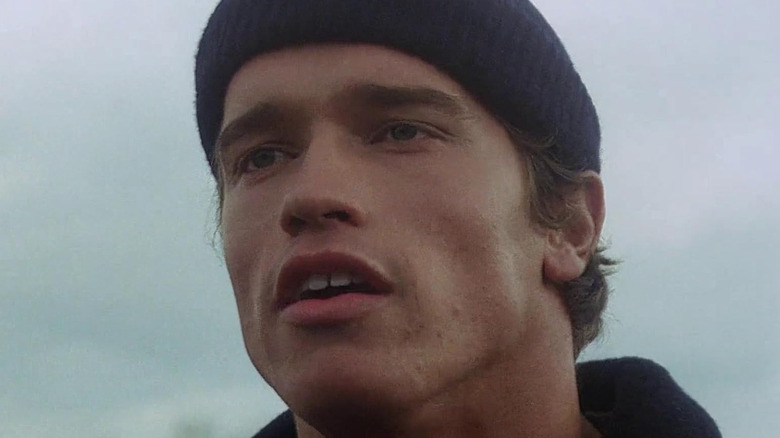
- The Fish-Out-of-Water Trope: Hercules attempts to navigate human customs, leading to a legendary and hilariously low-budget scene in Central Park where he grapples with a man in a blatantly fake bear suit.
- The Professional Wrestling Arc: Finding his niche in human society, Hercules becomes a professional wrestler, a role that played perfectly into Schwarzenegger’s actual life as a competitive athlete.
- The Divine Conflict: Zeus, displeased with his son’s mundane career path, sends the assassin Nemesis (Taina Elg) to bring him back. Through a series of mythological interventions—involving Juno and a drug that renders Hercules mortal—the film descends into a plot involving local gangsters and gambling rings.
The film concludes with Hercules reclaiming his divinity and returning to Olympus. In one of the most infamously strange moments in cinema, Hercules bids farewell to his friend Pretzie via a car radio, with the dubbed voice still emanating from the device, highlighting the disconnect between the star and his performance.
The Cultural Context: No Wave and Street-Level Cinema
While Hercules in New York is ostensibly a comedy, its aesthetic unintentionally places it in conversation with the radical shifts occurring in the New York film scene of the 1970s. The city was undergoing a transformation, and a movement known as "No Wave Cinema" was brewing.
No Wave filmmakers rejected the polished aesthetics of Hollywood, choosing instead to focus on the grit, grime, and unadulterated reality of the city. While Hercules in New York does not technically qualify as a No Wave film—it is too earnest in its pursuit of mainstream comedy—it shares a common lineage of low-fi tenacity. The film features appearances by other notable figures of the era, including professional bodybuilder Dennis Tinerino as Atlas and famed pro wrestler Mark Tendler as Samson.
This intersection of bodybuilders, wrestlers, and the urban landscape gives the film a "street cred" that defies its critical failure. It stands as a document of a pre-gentrified New York, where a man in a toga could drive a chariot through Times Square with minimal interference from the authorities.
Official Responses and Legacy
Arnold Schwarzenegger has been characteristically candid about his debut in his autobiography, Total Recall: My Unbelievably True Life Story. He acknowledges the absurdity of the project but views it as a necessary step in his evolution. He was not a trained actor when he arrived on set, and the film served as a harsh, high-pressure classroom for the young immigrant.
Critics, however, have been far less forgiving. Hercules in New York is frequently cited on "Worst of All Time" lists. Yet, there is a specific brand of joy to be found in the film. It is a work of pure, unrefined ambition. Its inclusion on platforms like Kanopy and availability for digital rent on major services highlights its status as a "cult sensation."
Implications for Future Filmmakers
What can we learn from the failure—and subsequent cult success—of Hercules in New York?
- Authenticity Beats Perfection: The film’s "chintziness" is exactly why people watch it today. If it had been a high-budget, well-produced, and perfectly dubbed film, it would likely be forgotten. Because it is a failure of epic proportions, it has gained immortality.
- The Persistence of the Icon: It serves as a reminder that every great career begins with a stumble. Schwarzenegger did not let the embarrassment of this role define him; he used it as a catalyst to seek out better roles, eventually moving from Hercules to Conan the Barbarian and ultimately to the heights of the Terminator franchise.
- The Value of the "Bad" Movie: In an era of polished, CGI-heavy superhero films, the absurdity of Hercules in New York offers a stark, refreshing contrast. It is a reminder that cinema, at its core, is about spectacle, and sometimes, a man in a bear suit is all the spectacle you need.
In retrospect, Hercules in New York is not just a forgotten piece of 70s trash; it is the genesis point of a cinematic force. It remains a mandatory watch for any fan of Schwarzenegger, not because it is a "good" movie, but because it is a essential piece of the puzzle that explains how a bodybuilder from Austria became the most recognizable face on the planet. Whether you watch it for the unintentional comedy, the strange, low-budget thrills, or the sheer curiosity of seeing a legend in his infancy, the film continues to demand our attention—and perhaps, that is the most Herculean feat of all.

 Neng Nana
 Rifan Muazin