Nila Kartika Wati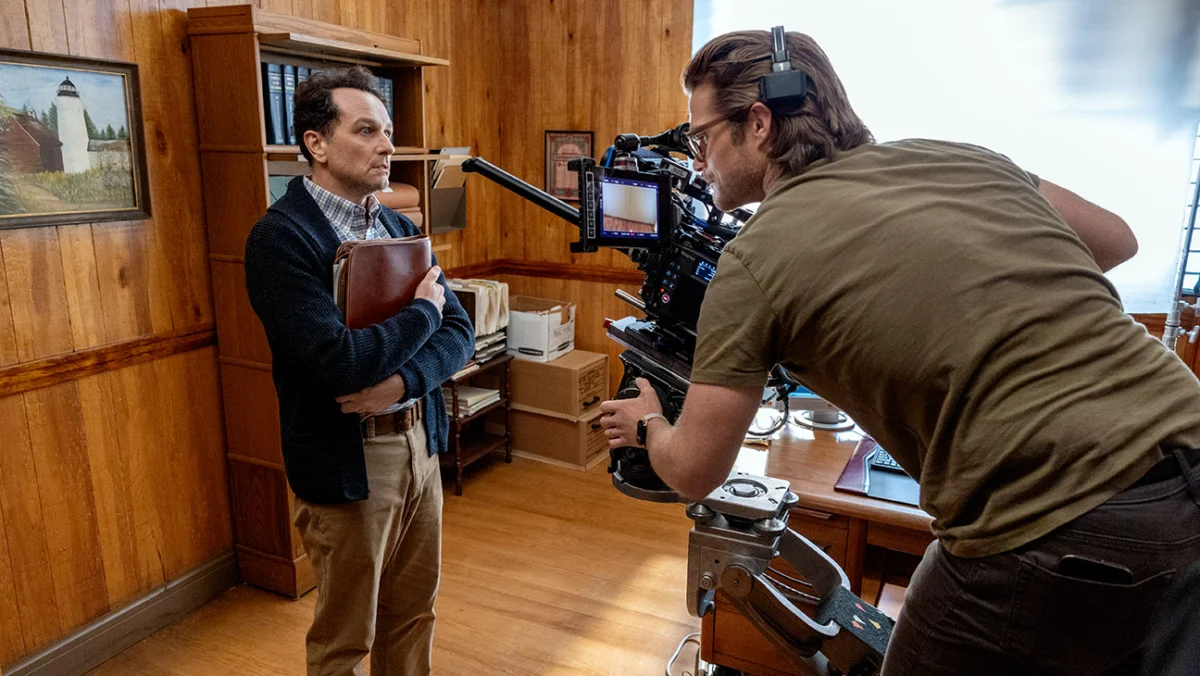
In the landscape of modern television, horror and psychological thriller series often rely on visual spectacle to convey the uncanny. From morphing monsters to distorted, reality-bending CGI, the screen is frequently cluttered with imagery meant to unsettle the viewer. However, in the recent episode of Widow’s Bay, titled "What to Expect on Your Trip," the creative team took a daringly different approach. By pivoting away from the expected visual tropes of a psychedelic trip, they created a sequence that remains one of the most discussed moments of the season: Mayor Tom Loftis’s harrowing, hallucinogenic encounter with the island’s ancient, unseen heart.
The Sequence: A Descent Into the Unconscious
The scene unfolds in the final minutes of the episode. Mayor Tom Loftis, portrayed by Matthew Rhys, finds himself in a state of profound vulnerability. Having ingested a ritualistic mushroom concoction referred to as "true sight," Loftis is thrust into a state of sensory overload. He is discovered hunched over a toilet, his hands clasped in a desperate, frantic prayer.
As the drugs take hold, his reality fractures. Images of his wife—pregnant and ethereal—flash before his eyes, blurring the lines between memory and hallucination. But the true power of the scene lies not in these visuals, but in the auditory landscape. A deep, subterranean, and unmistakably demonic sound begins to vibrate through the audio mix. It is not merely a background noise; it is a presence, a voice that speaks to the core of Loftis’s character. For the audience, this sound serves as the definitive introduction to the series’ primary antagonist: the island itself.
Chronology: Building the Auditory Architecture
The development of this sequence was not an afterthought; it was the result of a rigorous, months-long process of sound design. According to the production team, the "voice" of the island—the centerpiece of the sequence—was the single most time-consuming element of the show’s entire post-production cycle.
The Planning Phase
Before the cameras even rolled, showrunner Katie Dippold, director Andrew DeYoung, and cinematographer Christian Sprenger met to discuss the philosophy of the "true sight" sequence. They were adamant about rejecting the "psychedelic standard"—the swirling colors and warped lenses often used to represent drug-induced states. Instead, they decided that the soundscape would dictate the pacing and intensity of the experience.
The Sound Engineering Process
Once filming was completed, supervising sound editor Matt Yocum and his team began the arduous task of "world-building" through audio. They started by isolating natural, mundane sounds—the creak of a chair, the rhythmic drip of a faucet, the inhalation of a cigarette—and processing them to sound alien. By distorting these familiar frequencies, the team created a sense of "psychological distortion" that felt grounded yet terrifyingly wrong.
The Final Polish
The final mix, overseen by rerecording mixer Larry Benjamin, was the last piece of the puzzle. The goal was to ensure that the demonic, subterranean voice felt like it was emanating from the very ground beneath Loftis’s feet. By balancing the intimate, fragile sound of Rhys’s desperate prayer against the overwhelming, low-frequency roar of the island, the team created a juxtaposition that anchored the scene’s emotional weight.
Supporting Data: The Craft Behind the Fear
The success of the sequence rests on the technical precision of the sound team. Unlike visual effects, which are often blatant, sound design operates on a subconscious level, bypassing the viewer’s critical filter to trigger a visceral, physiological response.
The Art of Exaggeration
Rerecording mixer Larry Benjamin noted that the decision to amplify mundane noises served a dual purpose: it heightened the tension while simultaneously injecting a "comedic effect." For instance, a long drag on a cigarette was manipulated to sound like a gale-force wind whistling through a canyon. This distortion of scale—making the small sound massive—disoriented the viewer, mirroring Loftis’s own loss of spatial awareness.
Defining the "Big Bad"
Matt Yocum describes the island’s voice as the "big bad of the whole show." In narrative terms, a physical monster is often limited by its design; once it is seen, the mystery is stripped away. By keeping the island’s antagonist purely auditory, the team ensured that the threat remains infinite and unknowable. "We don’t know exactly what it’s saying," Yocum explained, "but it speaks to him, and you haven’t heard anything like that in the show up to this point." This intentional ambiguity allows the audience to project their own fears onto the sound, making the threat feel personal and inescapable.
Official Responses and Creative Intent
The collaboration between the showrunner and the sound department was characterized by a shared commitment to narrative-driven audio. Katie Dippold, known for her ability to blend dark comedy with genuine drama, sought to maintain the show’s grounded atmosphere even as it leaned into the supernatural.
"Audio was the focus of our character’s world-building," Yocum noted in a recent interview. "We wanted to put the audience in the head of what [Loftis] was experiencing."
This alignment between the character’s internal arc and the external soundscape was crucial. As Loftis unravels, the audio unravels with him. The sound design acts as a mirror to his psychological state—beginning as a mere distortion of his environment and eventually evolving into a narrative device that drives the plot forward. The team spent weeks layering vocal samples, subterranean tectonic rumbles, and synthesized tones to create a sound that felt ancient, sentient, and hostile.
Implications: A New Standard for Genre Television
The success of the "What to Expect on Your Trip" episode carries significant implications for the future of horror and mystery television.
The Shift from Visual to Auditory
As viewers become increasingly desensitized to high-budget CGI, there is a growing appetite for "low-fi" psychological horror that relies on sound design and atmosphere. Widow’s Bay proves that a show can achieve higher levels of immersion through clever engineering than through expensive digital effects. This sequence serves as a case study for future productions: focus on the sensory experience of the protagonist, and the audience will naturally follow.
Narrative Integration
Moreover, the episode demonstrates the importance of integrating post-production teams into the early stages of development. Because the sound design for Widow’s Bay was treated as a fundamental element of the storytelling—rather than an additive layer applied in post-production—the show feels more cohesive. The sound is not just an effect; it is a character.
The Longevity of Mystery
Finally, by keeping the "voice" of the island an enigma, the showrunners have successfully maintained the central mystery of Widow’s Bay. In an era where audiences often demand immediate answers, the commitment to keeping the antagonist hidden—relying on sound to maintain the dread—keeps the mystery alive. As the season continues, the audience is left with a haunting, lingering question: what is the island saying, and what will it demand of Tom Loftis next?
Conclusion
The sequence in Widow’s Bay stands as a testament to the power of sound as a storytelling medium. Through the meticulous work of Matt Yocum, Larry Benjamin, and the creative leadership of Katie Dippold and Andrew DeYoung, the show has managed to transform a simple bathroom prayer into a scene of cosmic horror. By choosing to prioritize the auditory over the visual, the production team has not only set a new bar for their own series but has provided a blueprint for how to craft true, lingering fear in an age of visual saturation. The "big bad" of the island may be unseen, but after this episode, it is impossible to ignore.

 Ammar Sabilarrohman
 Lina Hope