Asep Darmawan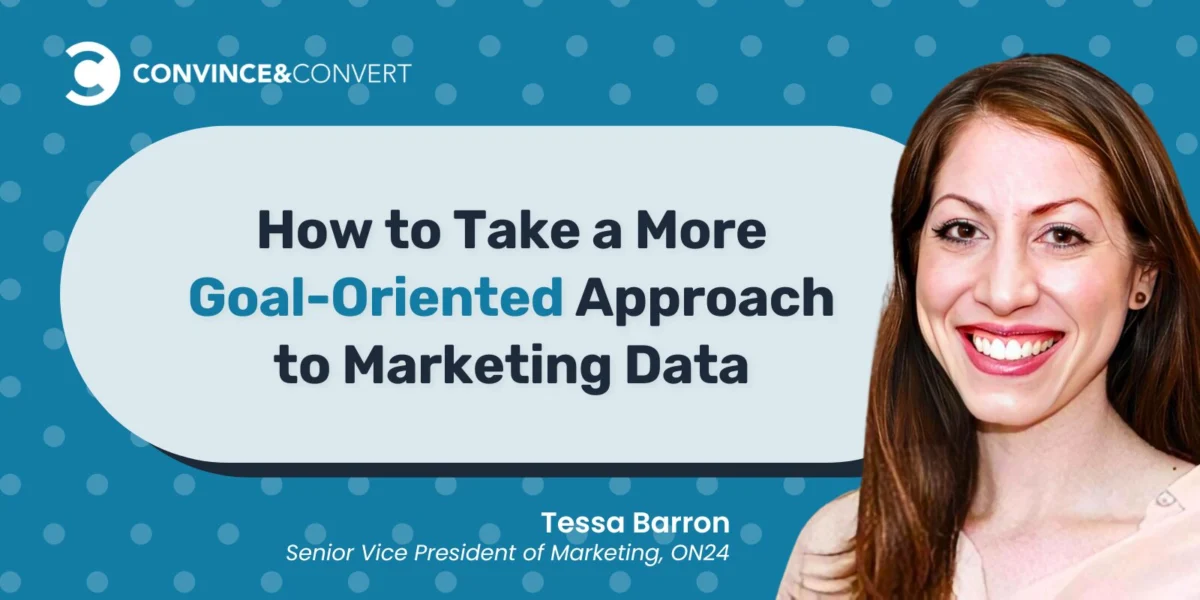
For modern marketing teams, the mantra "do more with less" has become an exhausting, paradoxical baseline. As economic headwinds tighten budgets and shrink resources, the pressure to hit increasingly aggressive pipeline targets has never been higher. Yet, for many organizations, the traditional response—simply running faster on the same treadmill—is failing to yield results.
The solution, according to industry expert Tessa Barron, former Senior Vice President of Marketing at ON24, is not to increase output, but to fundamentally redefine the relationship between data, marketing strategy, and sales alignment. In a recent appearance on the Data-Driven Decisions podcast, Barron argued that the era of "tactic-first" marketing is over. To survive and thrive in a volatile market, organizations must transition toward a goal-oriented framework that prioritizes actionable signals over vanity metrics.
The Paradigm Shift: From Tactic-Obsessed to Goal-Oriented
The primary obstacle facing many marketing departments today is "habitual execution." Many leaders, having spent years refining the same playbook of webinars, whitepapers, and blog posts, continue to deploy these assets out of muscle memory. However, the post-pandemic digital landscape has fundamentally altered consumer behavior.
"We as marketers have to check in with ourselves and ask: ‘Have we changed? Are we still doing what we were doing three years ago?’" Barron notes. If the answer is yes, then expecting a different outcome is a recipe for diminishing returns.
The shift requires moving away from output-based KPIs—such as "we must produce four webinars in Q1"—to outcome-based objectives, such as "we must achieve a 10% uplift in pipeline target." By leading with the goal, the marketing team forces itself to work backward. If the objective is to increase conversion rates for first-time meetings, the marketing team must then analyze which specific content formats or educational insights actually catalyze that decision-making process for the prospect.
Chronology of a Data-Driven Strategy
To effectively transition from tactic-focused to goal-focused, organizations should follow a structured, iterative process:
- Objective Definition: Start by identifying the business-critical gap (e.g., "We need to penetrate X number of new accounts").
- Sales Alignment: Consult the sales team to understand the specific hurdles and pain points preventing a lead from converting into a qualified opportunity.
- Signal Mapping: Determine what specific data point serves as a "signal" of intent or qualification.
- Tactical Execution: Select the delivery vehicle (webinar, whitepaper, etc.) specifically designed to capture that signal.
- Optimization: Use the captured data to refine the messaging for subsequent touchpoints in the buyer’s journey.
Uncovering the ‘Signal’ in the Noise
In the current marketing environment, data is abundant, but clarity is scarce. The term "data-driven" is frequently misused, resulting in dashboards cluttered with "noisy" information that looks impressive but provides no guidance on how to influence a buyer.
Barron advocates for the focus on "signals"—the specific behaviors or data points that correlate strongly with a buyer’s propensity to convert. Once these signals are identified, marketers can design "traps" or interactive elements within their content to capture this intelligence.
Case Studies in Signal Capture
The effectiveness of this strategy is best illustrated through real-world applications within the ON24 ecosystem:
- The Technology Sector Strategy: A technology firm aiming to reclaim market share hypothesized that customers using a specific cloud infrastructure were ten times more likely to convert. Instead of sending generic content, they embedded a direct poll within their webinars asking, "Which cloud provider are you currently using?" By identifying these high-intent users in real-time, the sales team could prioritize outreach to prospects who were statistically more likely to close.
- The Pharmaceutical Precision Model: A healthcare organization needed to reach physicians with patients in critical need of specific therapies. Rather than broad-spectrum awareness campaigns, they hosted specialized webinars for physicians. By asking, "How would you rate the risk of your patient base?" they created a direct signal. Those who selected "high risk" provided an immediate, actionable qualification for the sales team, turning a broad educational session into a highly targeted lead-generation event.
The Crucial Link: Sales and Marketing Alignment
A recurring theme in modern demand generation is the disconnect between marketing output and sales reality. Marketing teams often pride themselves on the quality of their creative assets, but if those assets do not address the specific barriers identified by the sales team, they are effectively wasting their budget.
Barron stresses that marketers should not operate in a vacuum. Salespeople are the only employees who occupy the front lines of the customer experience, observing the "reasons for hesitation, the doubt, and the expectations" of the prospect in real-time.
"Marketers are creating a net to catch people who might turn into a pipeline," Barron explains. "But it’s the salespeople who actually create the pipeline." Therefore, the marketer’s primary responsibility is to provide the sales team with the most detailed, accurate portrait of the prospect before the first discovery call. When marketing content is designed to answer the questions that sales teams typically have to spend their first 15 minutes of a call answering, the overall velocity of the pipeline increases significantly.
Implications for Organizational Messaging
Once the signal-capture framework is established, the final step is translating that data into relevant, personalized messaging. A common failure point is the "one-size-fits-all" approach to lead nurturing. By leveraging the data captured during webinars or site interactions, organizations can automate the delivery of specific messaging that resonates with the prospect’s unique stage in the buying cycle.
This requires auditing the "in-between" steps of the pipeline. Often, businesses lose momentum not because of a bad product, but because of friction-filled processes: overly long lead forms, disjointed cross-departmental messaging, or a failure to follow up on identified signals. By shortening forms and tailoring the narrative based on identified needs, companies can turn small, incremental improvements into substantial gains in overall conversion.
Reporting: Simplifying for Stakeholders
Finally, the ability to communicate these successes to the wider organization is a skill in itself. Stakeholders—whether they are in finance, product, or executive leadership—are often overwhelmed by the same "noisy" data that plagues the marketing team.
Barron advises that reporting should be kept simple and visually focused. If the goal is to drive pipeline, the report should not focus on "number of likes" or "webinar attendance rates," but rather on how specific strategies are impacting the bottom line. By presenting a clear, upward trajectory in metrics that correlate with revenue, marketers can build a compelling case for their budget and foster a culture of data-backed decision-making across the entire company.
Conclusion
The directive to "do more with less" should not be interpreted as a mandate to work harder; it is an invitation to work smarter. By abandoning the comfort of legacy tactics and embracing a rigorous, goal-oriented approach to data, marketers can stop being producers of content and start being architects of revenue.
As companies continue to navigate an era of economic scrutiny, those who can distinguish between "vanity noise" and "actionable signal" will find themselves not only surviving the budget cuts but building a more resilient, efficient, and effective pipeline.
For further insights into data-driven strategies and building a more effective marketing framework, listen to the full episode of the Data-Driven Decisions podcast here.


 Nana Wu
 Nana
Nana