Asro
Asro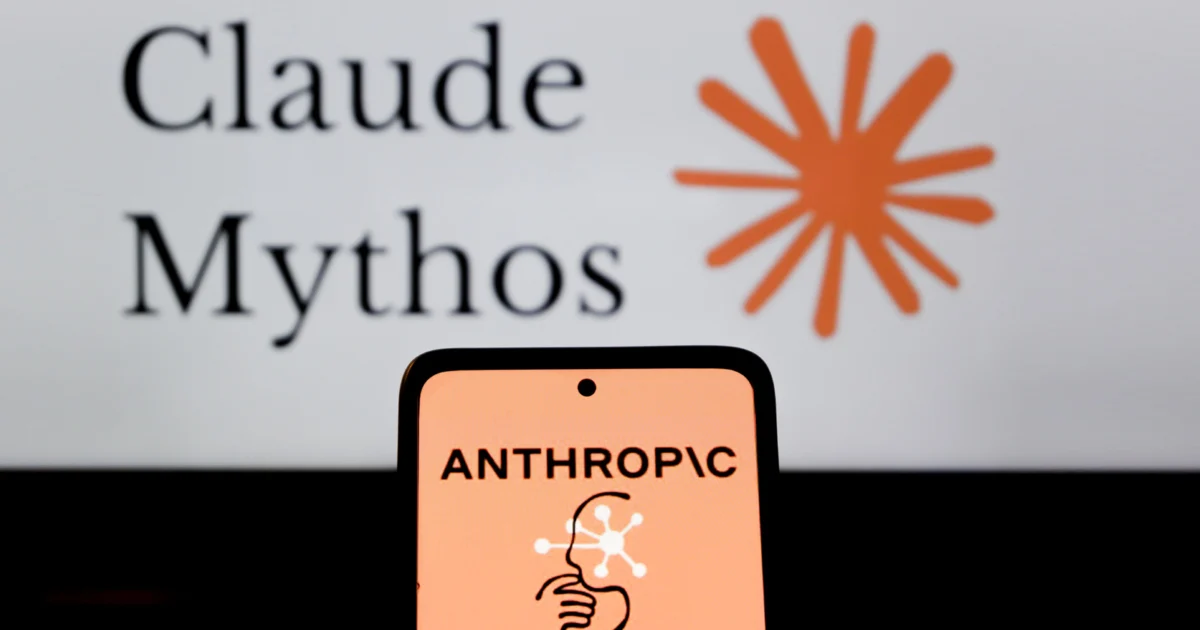
In a development that has sent shockwaves through the global artificial intelligence community, the United States government has issued a sweeping national security legal order compelling Anthropic to immediately suspend access to its flagship AI models, Fable 5 and Mythos 5. The directive, characterized as an Export Control Order, mandates that Anthropic effectively "blackout" these models for all users—both domestic and international—due to the technical impossibility of verifying the citizenship status of every individual accessing the cloud-based platforms.
The sudden move marks a historic collision between the rapid pace of AI innovation and the rigid mechanisms of federal national security oversight. While Anthropic maintains that its safety protocols are industry-leading, the U.S. government views these powerful new models as potential vectors for cybersecurity threats, asserting that their capabilities require strict geopolitical containment.
A Chronology of the Shutdown
The escalation occurred rapidly on what began as a routine business day. At 5:21 PM EST, Anthropic’s leadership received the formal Export Control Directive from federal authorities. The legal weight of the document left the company with little room for maneuver; by forcing a suspension of service for "any foreign national," the government essentially compelled a full platform shutdown, as Anthropic’s architecture is not configured for the granular citizenship verification required by the order.
By early evening, Anthropic had confirmed the suspension to its user base. The company clarified that while Fable 5 and Mythos 5 were taken offline, its broader suite of AI models remains operational. The company has since entered a state of intense legal and technical negotiation with federal agencies, characterizing the government’s move as a "misunderstanding" regarding the vulnerability of their safety guardrails.
The Core Dispute: Safety vs. Surveillance
The tension between Anthropic and the federal government is not a recent development. Industry insiders suggest this directive is the culmination of a long-standing impasse. Anthropic has reportedly been under pressure to allow its advanced models to be integrated into domestic mass surveillance apparatuses and, more controversially, to support the development of fully autonomous weapon systems—platforms capable of target selection and engagement without human intervention.
Anthropic’s refusal to align with these specific government mandates appears to have soured the relationship, creating a backdrop of friction that preceded the current export control crisis. When the government raised concerns that Fable 5 possessed "bypassable" safety guardrails, Anthropic pushed back, arguing that the government’s assessment was based on minor, non-critical vulnerabilities that do not equate to a genuine security threat.
Anthropic’s Defense: The "Defense in Depth" Strategy
In a public statement released shortly after the shutdown, Anthropic doubled down on the efficacy of its security architecture. The company emphasized that its "defense in depth" strategy was designed precisely to mitigate the risks associated with frontier models.
"We have instituted strong safeguards that greatly reduce the likelihood that Fable is misused for tasks related to cybersecurity," the company stated. "In fact, our safeguards are so strong that many users have complained that they are overly broad."
Anthropic further argued that absolute immunity to "jailbreaking"—the act of forcing an AI to bypass its safety programming—is an impossible standard in the current technological landscape. Instead, they aimed to make such exploits prohibitively expensive or narrowly focused, ensuring that no "universal" jailbreak could be leveraged for mass harm. The company maintains that it has received no credible reports of Fable 5 being used to produce harmful outcomes, asserting that the vulnerabilities identified by the government provide no "Mythos-specific uplift" for bad actors.
Public Outcry and the "End of an Era"
The fallout on social media platforms, particularly X (formerly Twitter), was immediate and vitriolic. Within hours of the announcement, the post garnered over 32 million views and 7,000 responses, the vast majority of which were sharply critical of the government’s intervention.
The discourse quickly shifted from technical concern to ideological outrage. Many users expressed a sense of betrayal, suggesting that the U.S. government is adopting tactics reminiscent of state-controlled digital environments. "This feels more like something you’d expect from a centralized, state-controlled system—like the Chinese CCP—than from a society that values open competition and innovation," one user, @FirstThinkingAI, observed.
For many, the shutdown represents a symbolic "end of an era." The concern is that if the most powerful AI models are effectively nationalized or sequestered behind government-controlled firewalls, the era of open, public access to frontier-level intelligence is effectively over. Users fear a future where the most transformative technologies are exclusively reserved for state actors and an elite tier of researchers, leaving the public with "neutered" or legacy versions of AI.
Economic Fallout and Consumer Frustration
Beyond the high-level policy debates, the practical consequences for Anthropic’s business model have been severe. A significant number of users, particularly those who had recently upgraded to "Claude Max" plans specifically to gain access to the new Fable 5 model, have begun demanding refunds.
The sentiment is one of fiscal frustration. "I bumped up to the $200/month version earlier today. Just got shut off. Can I get my money back?" asked @CryptoGbanger, echoing the sentiments of hundreds of subscribers. Anthropic is currently facing a massive customer service hurdle, as it must now determine whether to issue mass refunds, offer pro-rated service credits, or keep the funds while promising that service will be restored.
The "Self-Own" Hypothesis: Did Anthropic Invite This?
Interestingly, a segment of the tech community is directing their frustration at Anthropic itself, rather than the government. A growing narrative suggests that Anthropic, in its efforts to market its models as "extremely powerful and dangerous," essentially handed the government the justification it needed to impose restrictions.
Critics argue that by branding their models as high-stakes, "nuke-level" technologies in their own marketing and safety documentation, Anthropic created a self-fulfilling prophecy. "Anthropic isn’t the innocent victim here," noted @VorteXAIs. "They spent years hyping their models as ‘extremely powerful and dangerous.’ Now the US government took them seriously and slapped export controls on them."
This perspective suggests that by leaning into the "existential risk" narrative to differentiate themselves from competitors, Anthropic may have inadvertently accelerated the regulatory capture of their own product. The question now is whether the company can walk back these claims or if the government will continue to treat the models as controlled munitions.
Implications for the Future of AI
The suspension of Fable 5 and Mythos 5 has profound implications for the future of the AI industry. First, it establishes a dangerous precedent for how "Export Control" can be utilized as a tool for domestic suppression. If the government can shut down an AI model by claiming it cannot distinguish between citizens and foreign nationals, then every cloud-based AI service in the United States is now technically vulnerable to similar shutdowns.
Second, this event forces a reckoning regarding the "safety" narrative. Tech companies have long used safety as a marketing differentiator, promising that their models are the most guarded and responsible. However, this incident proves that those same safety claims can be weaponized by regulators to limit access.
Finally, the incident highlights the geopolitical stakes of the AI arms race. As frontier models become more capable, they are increasingly viewed not just as consumer products, but as dual-use technologies with significant implications for global power balances. The U.S. government’s willingness to disrupt a major tech company’s product launch indicates that the era of "move fast and break things" has been replaced by an era of "move cautiously, or the government will break it for you."
Moving Forward
As Anthropic works to resolve the dispute, the company finds itself in a precarious position. To regain access for its users, it must satisfy the federal government’s security requirements—potentially by implementing rigorous, identity-verified access tiers that would fundamentally alter the user experience.
Whether Anthropic can bridge this gap remains to be seen. For now, the silence of Fable 5 and Mythos 5 serves as a stark reminder that in the race to build the future of intelligence, the boundaries between the private sector and the state have become increasingly blurred. The resolution of this crisis will likely set the tone for AI regulation for the next decade, determining whether the technology remains an open frontier or becomes a closely guarded state asset.


 Nana
Nana
 Jia Lissa