Nila Kartika Wati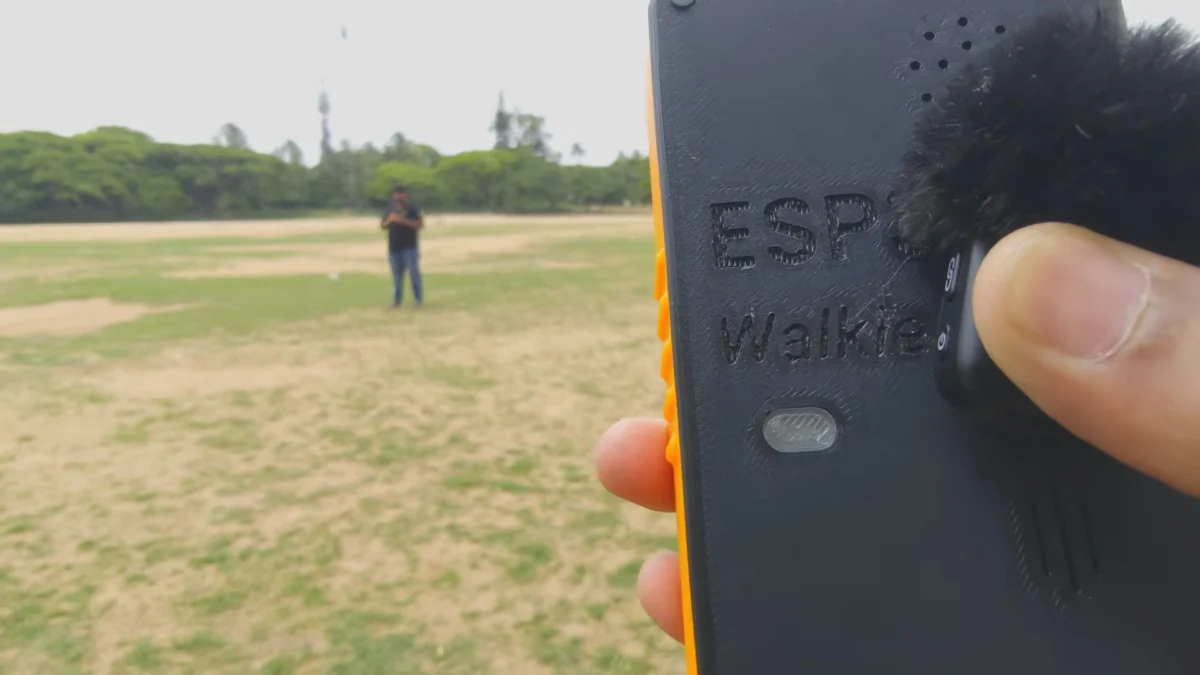
In an era dominated by high-speed cellular networks, encrypted messaging apps, and global connectivity, the humble walkie-talkie might seem like a relic of the mid-20th century. Yet, the appeal of direct, peer-to-peer, localized communication remains undiminished. For DIY electronics enthusiasts, the challenge has always been the legal barrier to entry: traditional radio communication often necessitates specific hardware licensing and adherence to strict frequency regulations. However, a clever new project from the YouTube channel "Tech Talkies" has sidestepped these bureaucratic hurdles, proving that you don’t need a radio license to build a robust, handheld communication device—you just need Wi-Fi.
Main Facts: Redefining the Walkie-Talkie
The project centers on the use of the Seeed Studio XIAO ESP32S3 Sense board. By leveraging the internal capabilities of the ESP32 microcontroller, the creators have developed a device that functions identically to a traditional walkie-talkie while operating entirely on standard Wi-Fi protocols.
Unlike conventional walkie-talkies that broadcast over FM or GMRS bands—which are heavily regulated by government bodies like the FCC in the United States—this device creates a private, ad-hoc wireless network. Because the data packets are transmitted via Wi-Fi rather than traditional analog radio waves, the device avoids the need for radio frequency (RF) licensing. This makes it an accessible entry point for makers, students, and hobbyists who want to explore digital signal processing and embedded systems without navigating the complex landscape of spectrum management.
The Chronology of Development
The evolution of this project follows the broader trend of "democratizing hardware" that has defined the last decade of maker culture.
- Initial Concept: The team at Tech Talkies recognized that while many DIY communication projects rely on LoRa (Long Range) modules, those modules often struggle with high-fidelity audio transmission and bandwidth limitations.
- Prototyping Phase: The selection of the XIAO ESP32S3 was a strategic choice. The S3 variant provides enough processing power to handle real-time audio encoding and decoding, a task that would overwhelm standard 8-bit microcontrollers.
- The Audio Chain: The integration of the MAX98357A I2S amplifier was the turning point. By coupling this amplifier with a compact speaker, the team successfully transformed a raw development board into a functional audio output device.
- Optimization: Early tests revealed that internal antennas were insufficient for any real-world distance. The final iteration incorporated external antennas, which drastically improved signal penetration through walls and allowed for consistent performance in outdoor environments.
- Public Release: With the software stable, the team released the firmware and schematics on GitHub in mid-2026, allowing the global maker community to replicate the build.
Supporting Data and Technical Architecture
At its core, the project utilizes the ESP32’s ability to act as both an Access Point and a Station. The architecture is surprisingly elegant:
1. The Processing Core
The XIAO ESP32S3 features a dual-core Xtensa processor. One core is dedicated to managing the Wi-Fi stack and network packet management, while the second core handles the I2S audio stream. This dual-core approach is essential to prevent audio stuttering or latency spikes that occur when the network load fluctuates.
2. Audio Quality and Latency
Using a digital I2S interface, the system digitizes the microphone input, compresses it into a lightweight format, and shoots it across the 2.4GHz Wi-Fi band. The latency is impressively low, sitting well within the range required for natural conversational flow.
3. The Range Factor
The most significant hurdle in Wi-Fi-based projects is signal attenuation.
- Internal Antenna Performance: When using the onboard PCB antenna, the units struggled to maintain a stable link through more than two interior walls.
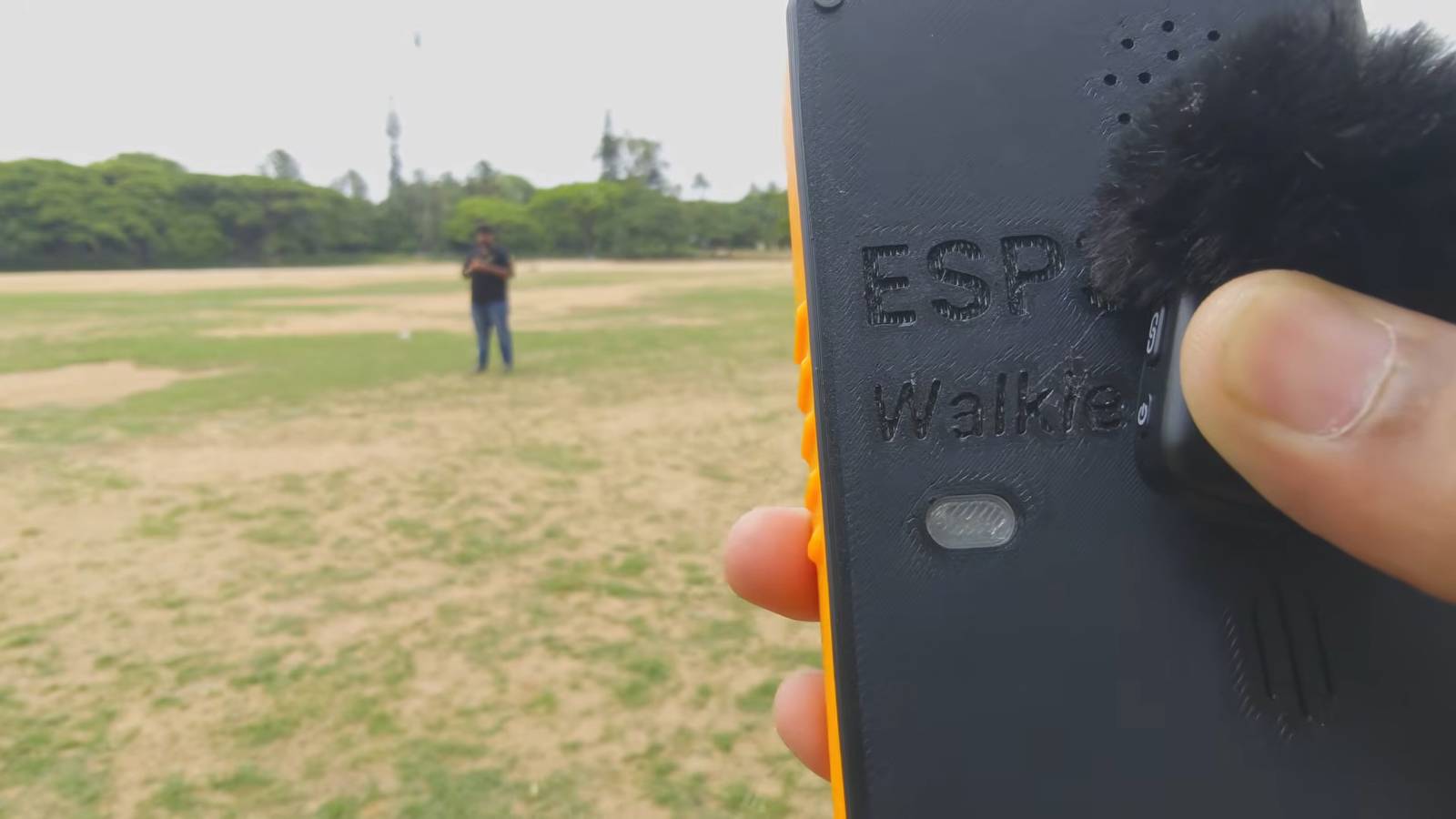
- External Antenna Performance: The addition of a high-gain external antenna transformed the unit. In line-of-sight outdoor testing, the devices maintained a clear audio stream up to 200 meters. While this is not the kilometer-plus range of professional-grade walkie-talkies, it is more than sufficient for localized site management, camping, or neighborhood communication.
Official Responses and Industry Context
While there has been no "official" regulatory statement regarding this specific DIY device, experts in the field of hobbyist electronics have praised the project for its ingenuity. Engineers point out that by moving communication from regulated radio bands to unlicensed Wi-Fi bands (2.4GHz/5GHz), the project effectively circumvents the legal "grey areas" that often deter beginners.
"This is the democratization of the airwaves," says an anonymous contributor to the XDA DIY electronics forum. "By using the standard 802.11 protocol, you aren’t interfering with emergency services or commercial aviation, which is the primary concern of the FCC. You are simply creating a private ‘local area network’ between two handheld devices."
The industry reaction has been largely positive, with major component suppliers like Seeed Studio highlighting the project as a prime example of the versatility of the ESP32 ecosystem. It demonstrates that the ESP32 is no longer just for IoT smart-home sensors; it is a capable platform for real-time media streaming.
Implications for the Future of DIY Communication
The success of the Tech Talkies walkie-talkie project has far-reaching implications for several sectors.
A. The Future of Emergency Mesh Networks
The most promising implication is the potential for "off-grid" communication. In scenarios where cellular networks fail (due to natural disasters or infrastructure damage), these Wi-Fi-based walkie-talkies could serve as a vital link. Because the devices are open-source and easily programmable, they could theoretically be daisy-chained into a mesh network, allowing messages to hop from one device to another, extending the range significantly beyond the 200-meter limit.
B. Educational Impact
For students of computer science and electrical engineering, this project is a masterclass in protocol implementation. It forces the builder to grapple with real-time data streaming, network topology, and hardware-software integration. It turns abstract concepts—like packet loss and latency—into tangible, audible results.
C. Privacy and Decentralization
In an age where our digital communications are constantly routed through centralized servers owned by massive corporations, there is a growing movement toward decentralized communication. This project represents a "return to basics." By establishing a direct, peer-to-peer connection that requires no internet service provider and no central hub, the user gains a level of privacy that modern smartphones simply cannot provide.
D. Hardware Modularity
The use of the Seeed Studio XIAO form factor is notable. Because the board is so small, it allows for highly portable, modular designs. Future iterations of this project could see the integration of lithium-ion battery management, OLED displays for channel switching, or even encrypted transmission layers, all within a device that fits in the palm of one’s hand.
Conclusion: The Path Forward
The DIY ESP32 walkie-talkie is more than just a fun weekend project; it is a proof-of-concept for how we can reclaim local communication in an increasingly centralized world. By leveraging the ubiquity of Wi-Fi and the power of modern microcontrollers, the project provides a blueprint for accessible, license-free, and private communication.
For those interested in embarking on this project, the comprehensive documentation provided by Tech Talkies on their GitHub repository offers a roadmap. It includes the necessary libraries for the ESP32, the configuration for the I2S amplifier, and the code required to bridge the audio stream. As the maker community continues to refine the hardware and optimize the software, we can expect to see even more capable versions of these devices—perhaps with even better range, higher fidelity audio, and perhaps even secure, end-to-end encryption.
The walkie-talkie is dead; long live the Wi-Fi-talkie. In the hands of a skilled maker, the airwaves are once again open for business, free from the constraints of licensing and the reach of centralized networks.

 Suro Senen
 Jia Lissa