Nana Muazin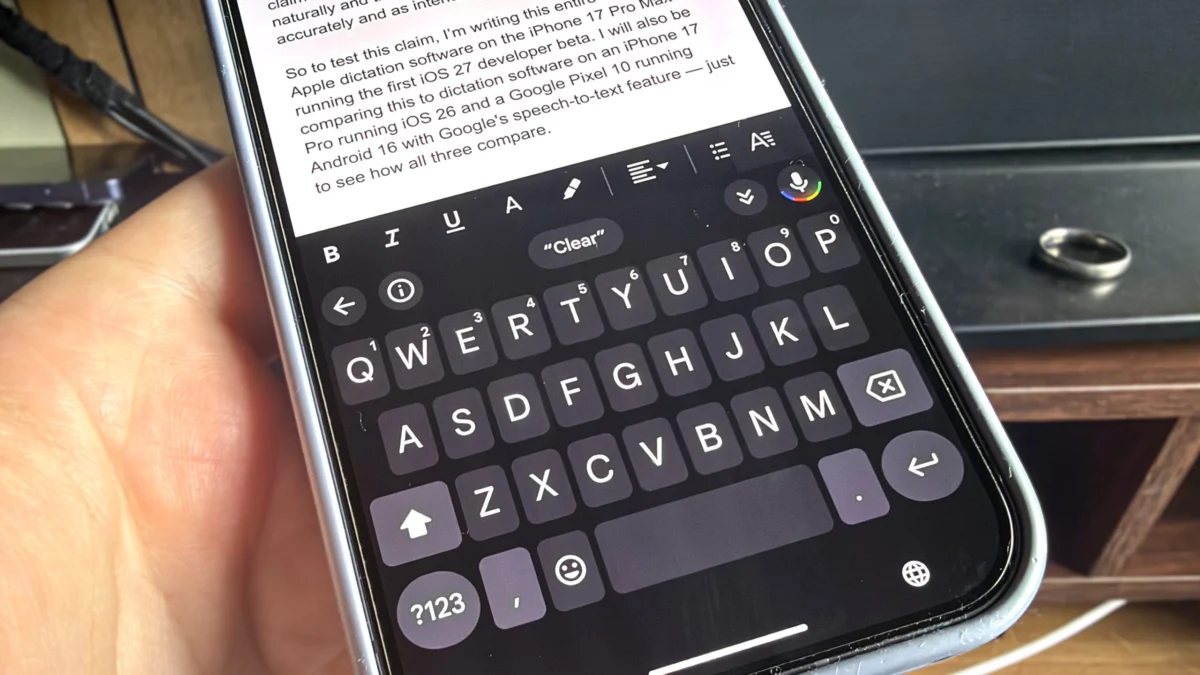
For many, the dream of a hands-free digital workflow has long been hampered by the clunky reality of speech-to-text software. As a parent to a remarkably clingy seven-month-old, the struggle is not just theoretical; it is a daily, frantic reality. When you are tethered to a child, typing becomes an awkward, one-handed exercise in frustration. For me, voice dictation is no longer a luxury—it is a survival mechanism for maintaining productivity during "dad time."
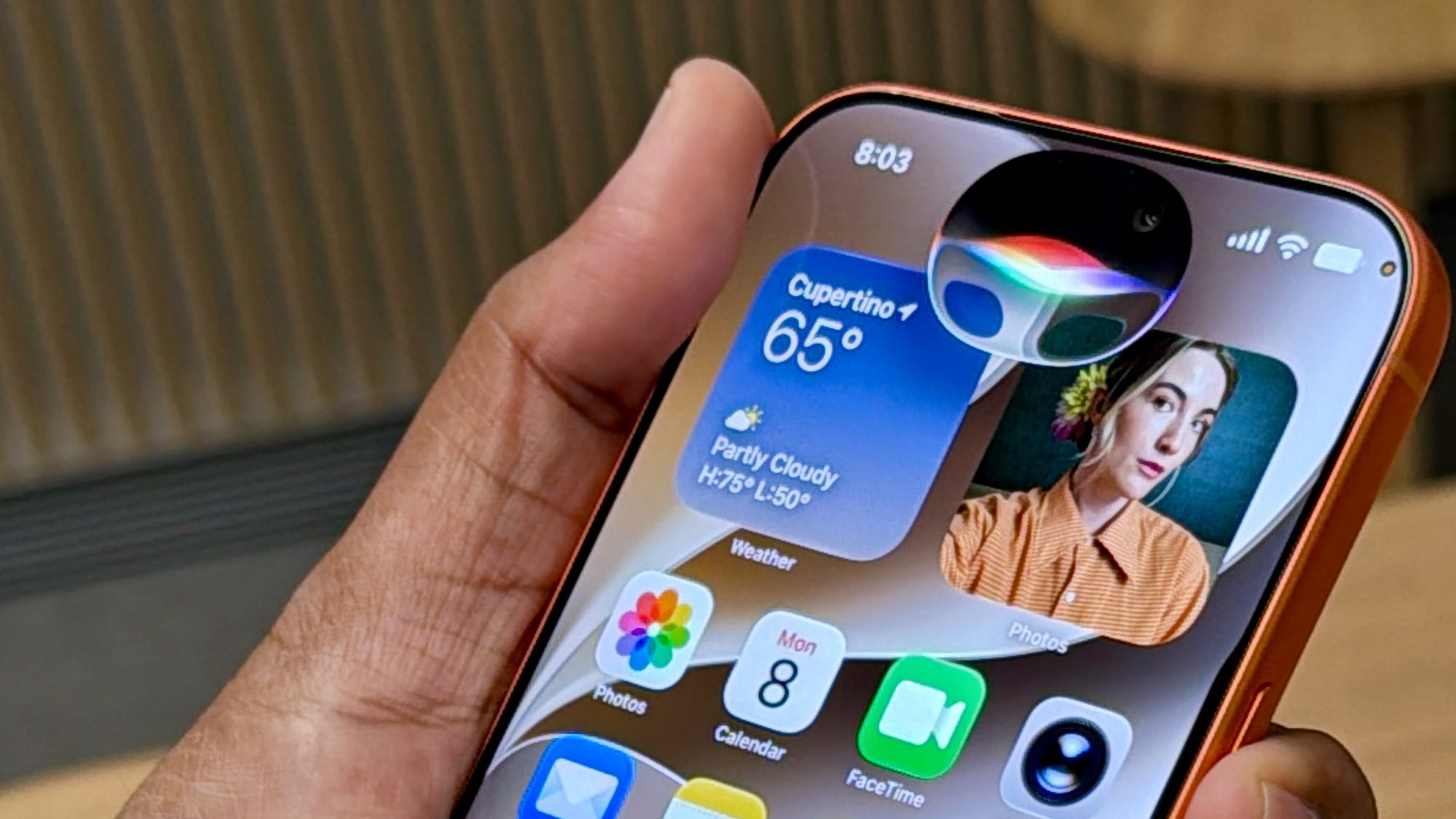
However, traditional dictation often results in a jumbled mess of phonetics that requires more time to edit than it would have taken to type in the first place. Apple claims it is changing that narrative with the release of iOS 27 and the next iteration of Apple Intelligence. With exclusive features baked into the iPhone 17 Pro and iPhone Air, Apple promises a system where you can "speak naturally and trust the words will appear clearly, accurately and as intended."
To put these claims to the test, I spent the week putting the iOS 27 developer beta through its paces, comparing it against the current standard of iOS 26 and the latest Gemini-powered dictation on the Google Pixel 10 Pro.
The Promise vs. The Reality: iOS 27 Dictation
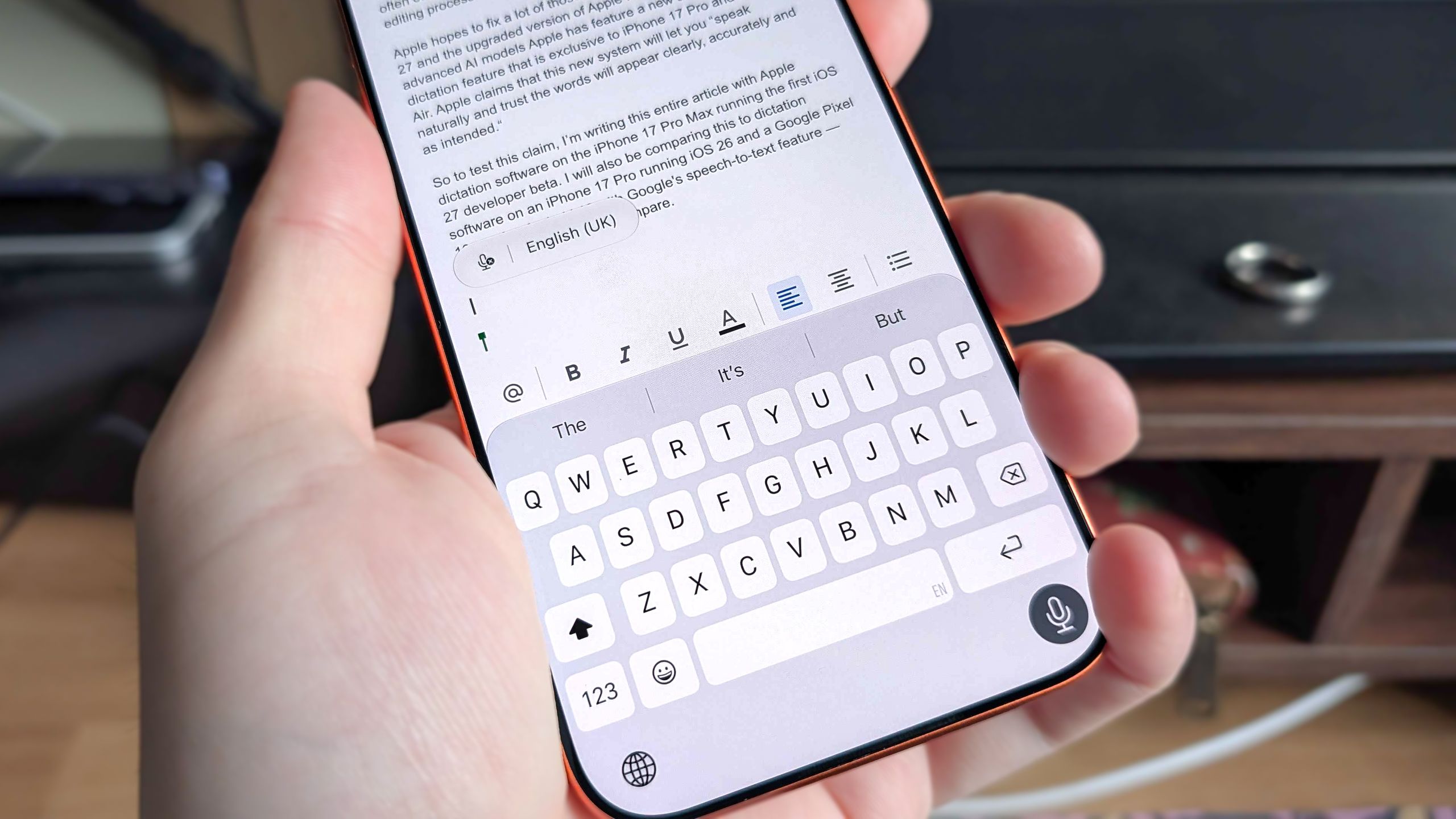
The core of Apple’s pitch for iOS 27 is a deeper integration of its most advanced AI models directly into the system’s speech processing layer. By moving this power on-device, Apple suggests that users can achieve near-instantaneous transcription with a level of grammatical awareness that was previously impossible.
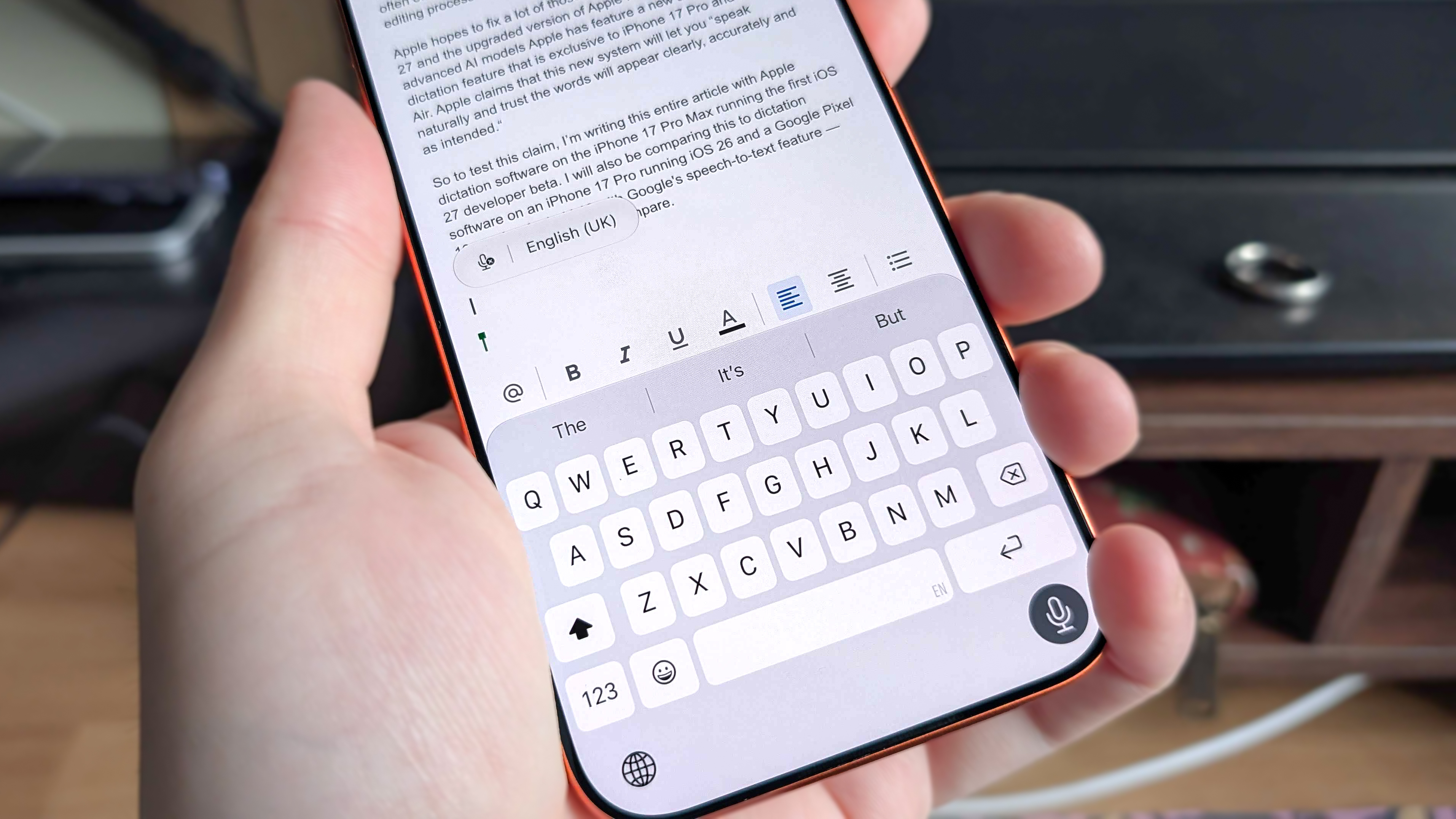
Initiating the feature remains straightforward: once enabled in the keyboard settings, a single tap of the microphone icon in any app—whether Word, Notes, or Messages—activates the engine. My initial testing, however, revealed a significant gap between marketing promise and beta-stage performance. While the transcription speed is noticeably snappier than previous iterations, the "natural" flow is frequently interrupted by the software’s inability to handle complex formatting.
For instance, despite Apple’s marketing materials touting automatic punctuation and capitalization, the results were inconsistent. When dictating long-form thoughts, the software often failed to recognize natural pauses, resulting in monolithic blocks of text that required manual intervention to break into paragraphs. Even basic commands like "new paragraph" or "page break" often resulted in the literal words being typed onto the screen rather than executing the formatting action.
A Comparative Chronology: Testing Three Generations of Tech
To truly understand the evolution, I conducted a side-by-side assessment across three distinct environments: the iOS 27 developer beta, the current public iOS 26, and the Android 16 platform running Google’s latest Gemini-integrated speech tools.
The iOS 26 Experience
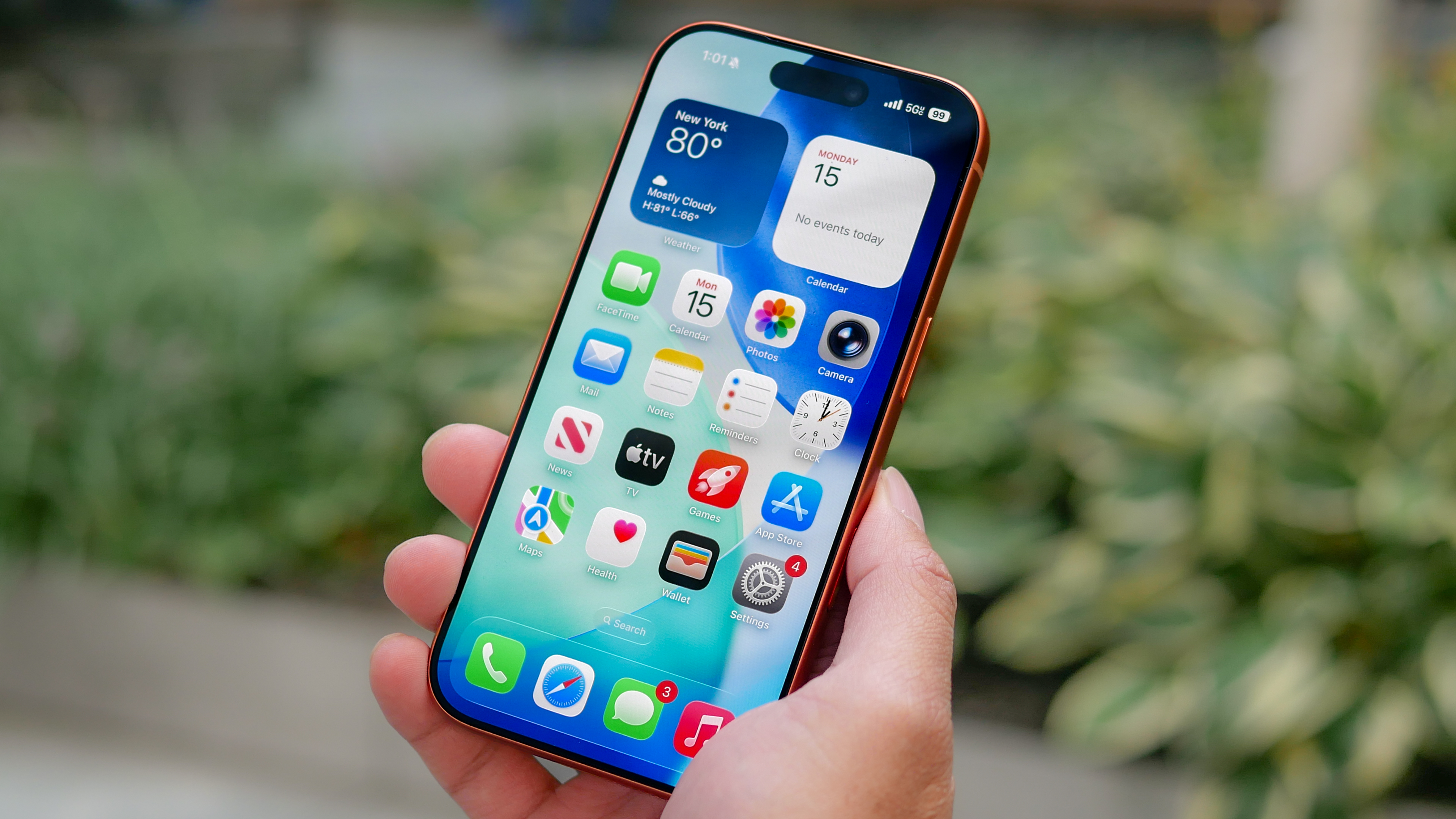
Writing on an iPhone 17 Pro running iOS 26.5.1 served as a baseline. The differences were stark. iOS 26 is undeniably slower; there is a perceptible "jerkiness" as text populates the field, and the software is prone to misinterpreting technical jargon. During my testing, it famously rendered "iOS 27’s AI" as "iOS 20 7AI." It also struggles with homophones and filler words, often transcribing "er" or "um" as actual words, which forces the user to stop and curate the text constantly.
The Google Pixel 10 Pro (Android 16)
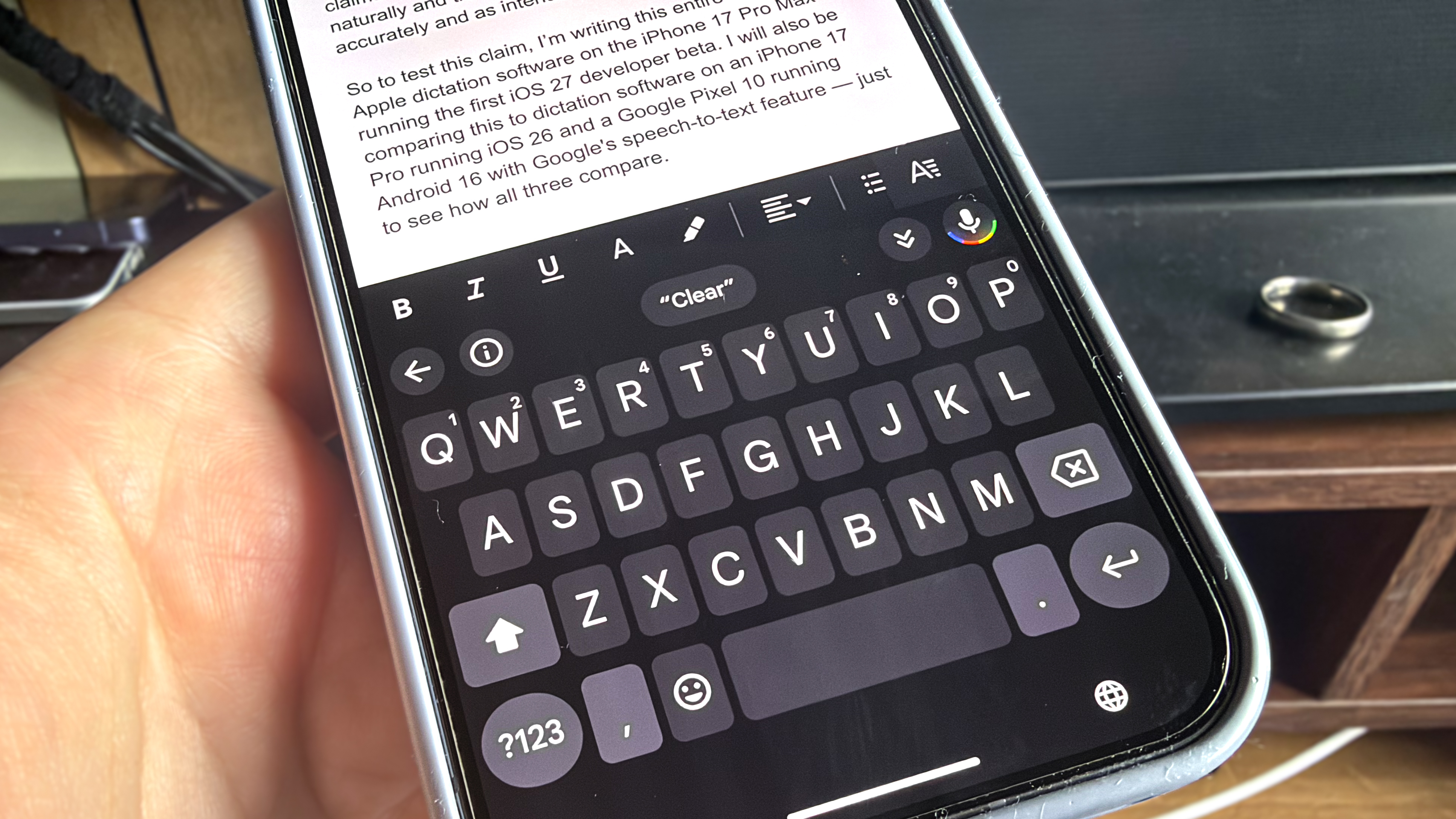
Google’s recent update integrating Gemini support has brought a polished edge to the Pixel 10 Pro. The automatic formatting—specifically the removal of filler words—is superior to iOS 26 and, at times, more consistent than the iOS 27 beta. Google’s system adapts well to mid-sentence corrections, allowing a user to "self-correct" by simply stating the right word. However, the system is aggressive in its punctuation; it frequently forces periods into the middle of a sentence, creating disjointed fragments that ruin the flow of an article.
The iOS 27 Beta
The iOS 27 beta represents a middle ground. While it lacks the final polish of Google’s public release, it excels in raw recognition accuracy. It handles my accent better than its predecessors, though it still suffers from occasional hallucinations—such as transcribing "one-handed" as "100." The most promising aspect of the iOS 27 beta is the latency; it feels more like a direct extension of thought than previous versions, even if the grammatical formatting still requires a human editor to sign off on the final result.
Supporting Data and Technical Nuances
The hardware exclusivity of these features is a crucial point of contention. Apple has confirmed that the most advanced, on-device AI dictation will be restricted to the iPhone 17 Pro, Pro Max, and the new iPhone Air. This suggests that the processing requirements for these nuanced, context-aware transcriptions are substantial.
From a performance standpoint, the data indicates that while raw transcription accuracy has plateaued, the "intelligence" layer—the part of the software that interprets intent rather than just sound—is where the current battle is being fought. In my testing, I found that both platforms (iOS 27 and Android 16) struggle with the same core problem: they are trained on conversational speech, not professional editorial prose. Consequently, they are excellent at drafting text messages but struggle with the nuanced syntax required for professional journalism or long-form creative writing.
Official Responses and Strategic Implications
Apple’s official stance, detailed in its recent press release, emphasizes that the new Siri AI is designed to be "profoundly more capable and personal." The company is banking on the idea that as the AI learns the user’s specific vocabulary and speech patterns, the need for manual editing will decrease over time.
However, industry analysts suggest that the "final mile" of dictation—formatting, document structure, and tonal consistency—remains a significant hurdle for large language models. The implication for users is clear: we are entering an era where speech-to-text is no longer just a "transcription" tool, but an "authoring" tool. Yet, for this to be viable for professional use, Apple and Google must solve the "formatting wall." If a user cannot dictate a properly structured paragraph with a single command, the efficiency gains of not typing are immediately lost to the efficiency costs of cleaning up the text.
The Human Element: Can We Ever Truly Stop Typing?
After spending a week attempting to dictate my entire workflow, the conclusion is bittersweet. I am undoubtedly faster at generating ideas, but I am no faster at producing a finished, publishable article.
The process has revealed that my internal monologue is not a perfect draft. When I speak, I repeat myself, I stutter, and I use colloquialisms that translate poorly to the page. Typing, by contrast, forces a level of cognitive filtering that results in cleaner, more thoughtful prose.
For the casual user, the improvements in iOS 27 are a massive quality-of-life upgrade. The ability to quickly fire off a text or a short email without looking at a screen is a genuine boon for accessibility and convenience. But for those of us hoping to ditch the keyboard entirely? We are not there yet.
The technology has moved from "mostly broken" to "highly functional," but the gap between "functional" and "professional" remains wide. As iOS 27 moves through its beta phases, I am hopeful that the integration of smarter formatting commands will bridge that distance. But until the software can understand the difference between a thought and a draft, I’ll be keeping my keyboard close—and my seven-month-old even closer.
For those interested in the raw output of these tests, I have made the unedited transcripts available for review, highlighting the specific errors and formatting hurdles encountered during this week of testing.

 Jia Lissa
 Asro
Asro