Evan Lee Salim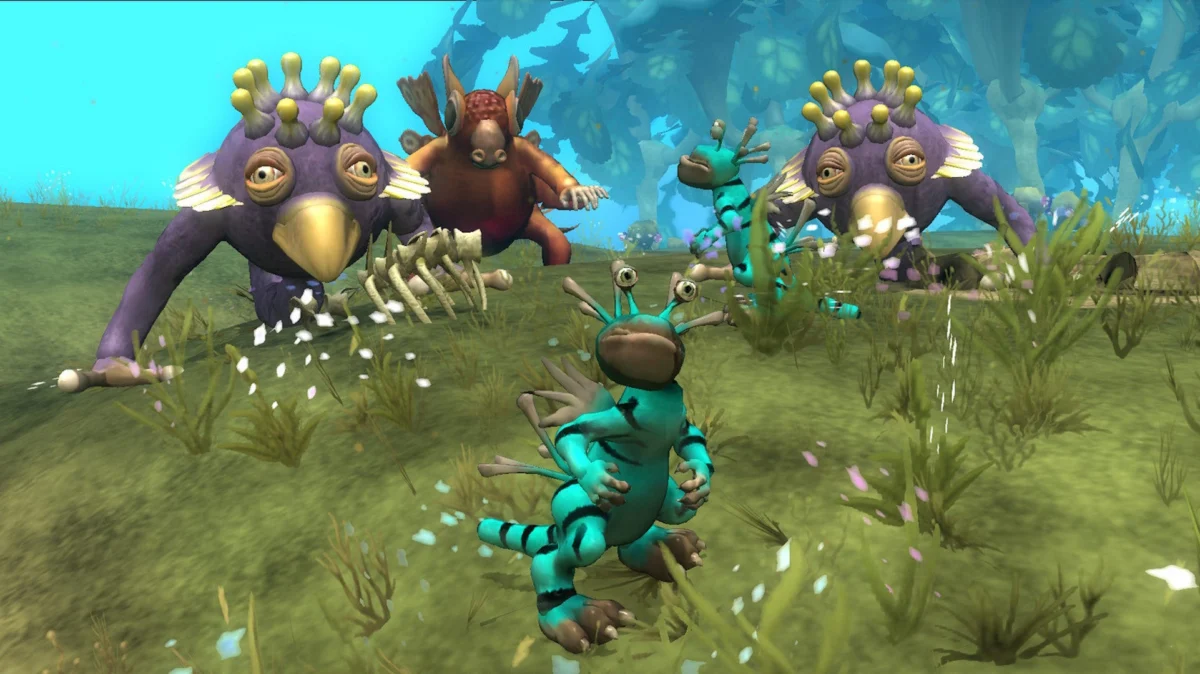
London, UK – More than a decade after its release, Maxis’ ambitious creature simulation game, Spore, continues to fascinate and divide the gaming community. A recent retrospective from The Design Room has cast a revealing light on the complex nine-year development cycle that ultimately shaped the game’s unique, yet often criticized, structure. Key figures involved in its creation, including Maxis founder Will Wright, have openly discussed the operational challenges, unchecked creative freedom, and internal dynamics that led to Spore being described as "five separate games that were kind of stuck together."
The article delves into the paradox of Spore: a game lauded for its groundbreaking procedural generation and boundless creativity, yet simultaneously faulted for its lack of cohesion and perceived shallowness across its diverse evolutionary stages. It highlights the intricate interplay of a burgeoning team, an iconic designer’s unconventional leadership, and a hands-off publisher relationship that, while fostering unprecedented innovation, ultimately contributed to a product that struggled to fully realize its grand vision.
Main Facts
At the heart of the recent revelations is the candid admission from Spore‘s creators that the game, for all its revolutionary potential, suffered from fundamental design and organizational flaws. Will Wright, the visionary behind SimCity and The Sims, directly addressed the primary critique, stating, "Probably the biggest criticism of Spore, which I totally accept, is that it felt like five separate games that were kind of stuck together. Which it pretty much was." This sentiment is echoed by art director Ocean Quigley, who lamented the absence of a "core repeating mechanic" that would have woven the disparate stages into a unified experience, placing the responsibility squarely on Wright’s shoulders.
The retrospective paints a picture of a development environment marked by both unparalleled creative freedom and a distinct lack of structured decision-making. Wright’s "luminary" status, earned through the immense commercial success of The Sims, granted the Spore team an almost unprecedented leash from publisher Electronic Arts. While this allowed for bold experimentation, it also resulted in a decentralized design process that struggled to bring together the ideas of a rapidly expanding team. Lead gameplay designer Alex Hutchinson observed the difficulty in making definitive choices when Wright, the project’s figurehead, was often present only part-time.
Furthermore, the exponential growth of the development team, eventually exceeding 100 individuals spread across multiple buildings, exacerbated communication challenges and fostered an environment where individual brilliance clashed with the need for collective coherence. Chris Trottier, a gameplay designer, articulated the challenge: "Eventually we had a team of 100 people, where everyone has always been the smartest person in any room they’ve ever been in. And so, [the issue of] ‘How can I be brilliant in parallel with 100 other brilliant people and have it somehow cohere?’ became the operational problem with Spore."
Despite these acknowledged shortcomings, there is a consensus among the developers that Spore possessed a unique "magic" that transcended its imperfections. Chris Hecker, design and lead engineer of procedural generation, summarized this sentiment perfectly: "I think Spore was overall a failed game design, but it had more magic in it than most games did." This paradoxical legacy underscores Spore‘s position as a landmark title—a bold experiment that, while perhaps not a complete success in conventional terms, pushed boundaries and left an indelible mark on game design and technology.
Chronology
The Genesis of an Idea: From Sim Everything to Evolutionary Epic (Early 2000s)
The seeds of Spore were sown in the fertile mind of Will Wright, a designer known for creating "god games" that empowered players to build and manage complex systems. Following the phenomenal success of The Sims, which transcended traditional gaming demographics, Wright embarked on an even more ambitious project. Initially conceived under the working title SimEverything, the idea was to create a simulation that encompassed the entire evolutionary journey of a species, from a single-celled organism to a spacefaring civilization. This grand vision was first publicly unveiled in a legendary tech demo at the Game Developers Conference (GDC) in 2005, showcasing the revolutionary creature creator and sparking immense hype across the industry. The demo, featuring an alien creature waddling, dancing, and interacting, was a masterclass in showcasing the game’s procedural generation capabilities and the promise of infinite player creativity. It was this early "magic" that set the stage for a development cycle that would stretch for nearly a decade.
The Long and Winding Road: Nine Years of Innovation and Internal Strife (2000-2008)
Spore‘s development officially began in 2000, but its scope rapidly expanded, necessitating a lengthy and complex journey. The team at Maxis, already a renowned studio, began to grow significantly. Maxis itself had been acquired by Electronic Arts in 1997, a move that brought corporate structure to a studio historically driven by creative independence. However, Wright’s unparalleled success with The Sims afforded him and his new project an unusual degree of autonomy within the EA ecosystem.
As development progressed, the game’s modular nature became increasingly apparent. The five distinct stages—Cell, Creature, Tribal, Civilization, and Space—each presented unique design challenges and often felt like independent projects being developed concurrently. This compartmentalization was exacerbated by the team’s growth, ballooning to over 100 employees, many of whom were indeed "brilliant people from the gaming industry" as Chris Trottier noted. Communication became a significant hurdle, especially as the team eventually occupied two separate buildings.
Wright’s management style, described as "luminary," meant he was the guiding vision, but not always the day-to-day decision-maker. This created a vacuum in structured design processes, making it difficult to unify the disparate parts of the game or make swift, decisive choices. The lack of traditional publisher pressure, while a boon for creative freedom, paradoxically meant there was no "sense of crisis" to force clarity and consolidation, as Ocean Quigley observed. This period was characterized by extensive experimentation, technological breakthroughs in procedural generation, and the painstaking creation of systems that would allow players to sculpt virtually every aspect of their evolving species and world.
Release and Reception: Hype, Disappointment, and Enduring Legacy (2008 Onwards)
When Spore finally launched in September 2008, it arrived amidst a storm of anticipation that few games could match. The initial excitement was palpable, but it quickly gave way to a mixed reception. While critics and players alike marveled at the revolutionary creature creator and the sheer ambition of the concept, many found the subsequent stages to be simplified, repetitive, and ultimately lacking the depth and cohesion promised by the initial vision. The game’s reliance on procedural generation sometimes led to bland environments, and the shift in gameplay mechanics between stages felt jarring rather than organic.
Player feedback often highlighted the feeling of playing "five mini-games" rather than a single, evolving epic. The initial joy of creation often gave way to frustration with the limitations of the later stages. Furthermore, the game’s controversial DRM system, which limited installations, alienated a significant portion of the PC gaming community and overshadowed some of the genuine innovations Spore brought to the table. Despite these criticisms, Spore garnered a dedicated following who embraced its creative tools and the emergent narratives it allowed. Its technology, particularly the Sporepedia for sharing user-created content, was ahead of its time and has since influenced numerous games and platforms. The game’s legacy remains complex, a testament to both the heights of creative ambition and the pitfalls of an unfocused development process.
Supporting Data
The Vision vs. Reality: The "Five Separate Games" Dilemma
Will Wright’s grand vision for Spore was nothing short of revolutionary: to simulate the entire arc of evolution, from primordial ooze to galactic conquest. This ambition manifested in five distinct gameplay stages, each with its own mechanics and objectives:
- Cell Stage: A top-down arcade-style game where players control a single-celled organism, eating or being eaten to evolve.
- Creature Stage: The most iconic part, allowing players to design their creature, explore, socialize, and fight to become the dominant species.
- Tribal Stage: A real-time strategy (RTS) lite experience, managing a tribe, domesticating creatures, and interacting with other tribes.
- Civilization Stage: A more complex RTS, building cities, vehicles, and expanding influence through military, economic, or religious means.
- Space Stage: A vast sandbox experience, exploring galaxies, colonizing planets, trading, and engaging in interstellar diplomacy or warfare.
The problem, as articulated by the development team, was the failure to establish a "core repeating mechanic" that would seamlessly connect these disparate experiences. Each stage felt like a separate game developed by different sub-teams, leading to a lack of narrative or mechanical progression that unified the whole. Ocean Quigley’s assertion that "we never figured out what the […] core repeating mechanic that built over the course of the game was" pinpoints this critical design flaw. Players often found themselves mastering one stage only to feel like they were starting a new, unrelated game in the next, leading to a sense of fragmentation rather than a cohesive evolutionary journey.
Organizational Hurdles: Leadership, Team Dynamics, and Publisher Leash
Spore‘s development was heavily influenced by the unique organizational structure and relationships surrounding Maxis.
-
Will Wright’s Luminary Leadership: Wright’s status as a game design icon, particularly after The Sims became a cultural phenomenon and a cash cow for EA, afforded him immense creative latitude. However, this also meant his leadership style was less structured than traditional project management. As Alex Hutchinson noted, Wright was a "luminary who was there part-time, making it very difficult to make decisions." This decentralized approach, while fostering innovation in pockets, made it challenging to establish a singular, overarching design direction that could unite the sprawling project. The team often struggled with conflicting ideas and a lack of clear arbitration, a direct consequence of a visionary leader who was not consistently engaged in the day-to-day grind of decision-making.
-
The "100 Brilliant People" Problem: The Maxis studio, post-EA acquisition, became a magnet for top talent. Chris Trottier’s observation about "a team of 100 people, where everyone has always been the smartest person in any room they’ve ever been in," highlights a significant internal dynamic. While talent is crucial, an overabundance of equally brilliant, strong-willed individuals, without a clear hierarchical design process or unifying vision, can lead to paralysis by analysis or a struggle for intellectual dominance. Each brilliant mind might pull in a slightly different direction, making the coherence of the overall product an "operational problem." This scenario underscores the critical need for robust communication and a defined design hierarchy, even in highly creative environments.
-
EA’s Hands-Off Approach and the "No Crisis" Factor: The relationship between Maxis and EA during Spore‘s development was unusually permissive. Will Wright openly acknowledged, "I blew a lot of money making Spore, and I really appreciate the opportunity to do that." Chris Hecker confirmed this, stating, "They gave us a ton of leash. We never felt pressure. EA’s got lots of problems, but this was not one of them." This extraordinary freedom stemmed directly from Wright’s success with The Sims, which had generated "a bajillion dollars" for EA, as Quigley put it. While this allowed for boundless experimentation, it also removed a critical element of traditional development: external pressure. Ocean Quigley astutely pointed out that "There wasn’t any sense of crisis. And sometimes a sense of crisis can be useful for driving decisions and getting to clarity." Without the urgency of looming deadlines or budget constraints, the team could afford to explore "half-baked ideas" indefinitely, delaying crucial decisions and contributing to the game’s ultimate fragmentation.
Technological Achievements: The Unquestionable Magic
Despite its design flaws, Spore was a technological marvel, particularly in its pioneering use of procedural generation. The game’s creature creator, allowing players to sculpt incredibly diverse organisms using a library of customizable parts, was revolutionary. This technology wasn’t just for aesthetics; it dynamically influenced the creature’s animations, movement, and abilities within the game world. This level of player-driven content creation, coupled with the integrated Sporepedia – an online database for sharing these creations – was far ahead of its time. It fostered a vibrant community of creators and demonstrated the power of user-generated content long before it became a ubiquitous feature in gaming.
Chris Hecker’s reflection that Spore "had more magic in it than most games did," despite being a "failed game design," is a testament to these technological achievements. The moments of wonder derived from seeing a player-designed creature come to life, or exploring a galaxy populated by millions of unique species, were truly unparalleled. The procedural systems extended beyond creatures, generating planets, flora, and even music, creating a sense of a truly living, evolving universe. This technological prowess ensured Spore a place in gaming history, even as its holistic design faced scrutiny.
Official Responses
Will Wright’s Perspective: Gratitude and Acceptance
Will Wright, the primary visionary behind Spore, has consistently demonstrated a remarkable degree of humility and self-awareness regarding the game’s reception. His direct acceptance of the "five separate games" criticism is telling, indicating an understanding of how the game’s ambitious scope outpaced its execution. Yet, his comments are also tinged with deep gratitude for the unparalleled opportunity he was given. "I blew a lot of money making Spore, and I really appreciate the opportunity to do that," he stated. This highlights not only the scale of investment but also the trust placed in him by Electronic Arts. For Wright, Spore represented an artistic endeavor, a chance "to go crazy and do something kind of insane," an honor he clearly cherishes, even with the benefit of hindsight regarding its imperfections. While he doesn’t explicitly blame his own leadership style in these quotes, his acknowledgment of the game’s fragmentation, combined with team members’ comments on his "part-time" involvement, implicitly recognizes the impact of his approach.
Team Members’ Insights: Candid Reflections on Challenges
The retrospective provided a platform for other key developers to offer candid, and sometimes critical, insights into the development process:
-
Ocean Quigley (Art Director): Quigley’s assessment is perhaps the most pointed. While acknowledging Wright’s brilliance, he firmly placed the blame for the lack of a "core repeating mechanic" on the project’s chief designer. His crucial observation about the "sense of crisis" being absent underscores a fundamental problem in the development culture. Without the pressure to make hard choices and consolidate ideas, the project could drift, prioritizing exploration over refinement and coherence. He also pointed to Wright’s "license to be self-indulgent," a direct consequence of his previous successes, which ultimately had a double-edged effect on Spore.
-
Alex Hutchinson (Lead Gameplay Designer): Hutchinson’s comments reveal the practical difficulties faced by the team in Wright’s absence. The lack of a "structured design process" and the challenge of decision-making with Wright as a part-time "luminary" illustrate the operational bottlenecks that emerged. This points to a leadership model that, while inspiring, was not always conducive to efficient and unified game development, especially for a project of Spore‘s scale and complexity.
-
Chris Trottier (Gameplay Designer): Trottier’s analysis of the "100 brilliant people" problem is a fascinating sociological insight into a large, highly talented development team. It highlights the inherent challenge of getting numerous highly intelligent and self-assured individuals to coalesce their visions into a single, coherent product. This wasn’t merely a communication breakdown but a deeper issue of reconciling individual creative brilliance with collective purpose.
-
Chris Hecker (Design and Lead Engineer of Procedural Generation): Hecker’s perspective offers a balanced view, acknowledging Spore as a "failed game design" but simultaneously celebrating its "magic." His emphasis on the unique, incredibly magical moments that even "really good games often don’t have" underscores the game’s enduring legacy as a pioneer in procedural technology and player creativity, irrespective of its overall structural flaws.
Implications
The Enduring Legacy of Spore: A Cautionary Tale and an Inspirational Success
Spore‘s legacy is a multifaceted one, serving as both a cautionary tale and an inspirational benchmark in the history of game development. It stands as a stark reminder of the dangers inherent in unchecked creative freedom, particularly when coupled with a lack of structured leadership and a clear, unifying design philosophy. The narrative of Spore‘s development highlights how even the most brilliant minds and ambitious visions can falter without the necessary operational discipline to translate grand ideas into a cohesive, polished product. For future game designers and studios, Spore offers valuable lessons on managing large teams, maintaining a singular vision, and understanding the delicate balance between innovation and practicality.
Yet, to label Spore simply as a failure would be to overlook its profound impact and pioneering achievements. The game was a crucible for procedural generation technology, demonstrating capabilities that were years ahead of their time. The creature creator, the Sporepedia, and the dynamic, player-driven content generation set a new standard for user engagement and creative expression in games. Its influence can be seen in later titles that leverage procedural content for exploration and vastness, such as No Man’s Sky, as well as the widespread adoption of user-generated content platforms across various genres. Spore proved that players crave tools for creation and self-expression, and that emergent gameplay driven by player choices can be incredibly compelling, even if the underlying game systems aren’t perfectly aligned.
Lessons for Game Development: Vision, Leadership, and the Publisher’s Role
Spore‘s development saga offers several crucial lessons for the game industry:
- The Importance of Clear Vision and Leadership: While Will Wright’s visionary genius is undeniable, Spore‘s experience demonstrates that a "luminary" leader, even one of his stature, needs to be actively engaged in the day-to-day decision-making or delegate effectively to ensure a project’s coherence. A grand vision requires consistent stewardship to prevent fragmentation.
- Managing Large, Talented Teams: The "100 brilliant people" problem illustrates the unique challenges of scaling creative teams. Effective communication, clear hierarchies, and processes for conflict resolution and decision-making become paramount when diverse talents are brought together. Brilliance alone does not guarantee cohesion.
- Balancing Creative Freedom and Structured Development: The pendulum swung heavily towards creative freedom for Spore, largely due to Wright’s past successes. While this allowed for unprecedented innovation, it ultimately lacked the structured constraints that often drive focus and clarity. A healthy tension between boundless creativity and practical project management is often necessary for successful execution.
- The Role of Publisher Oversight: EA’s hands-off approach, born of trust and past financial success, inadvertently removed a crucial external pressure point. While "no crisis" sounds appealing, it can lead to indecision and scope creep. Publishers, despite their commercial interests, often play a vital role in providing deadlines and strategic direction that help focus development and bring a product to market.
Spore’s Place in Gaming History: An Ambitious Cult Classic
Ultimately, Spore holds a unique, almost mythical, place in gaming history. It is a game that simultaneously delights and disappoints, a testament to what ambitious dreams can achieve and where they can fall short. For many, it remains an unfulfilled promise, the "what if" of a truly infinite, evolving universe. For others, it is a cult classic, cherished for its groundbreaking technology, its moments of pure creative joy, and its ability to inspire players to sculpt their own corner of the cosmos.
It stands as a powerful symbol of ambition in game design, a reminder that the journey of creation is often as complex and evolutionary as the games themselves. While Spore may have been a "failed game design" in the conventional sense, its indelible "magic" and its pioneering spirit ensure its continued relevance and discussion, solidifying its status as one of the most fascinating and contradictory titles of the 21st century.


 Lina Irawan
 Sagoh
Sagoh