Dwi Wanna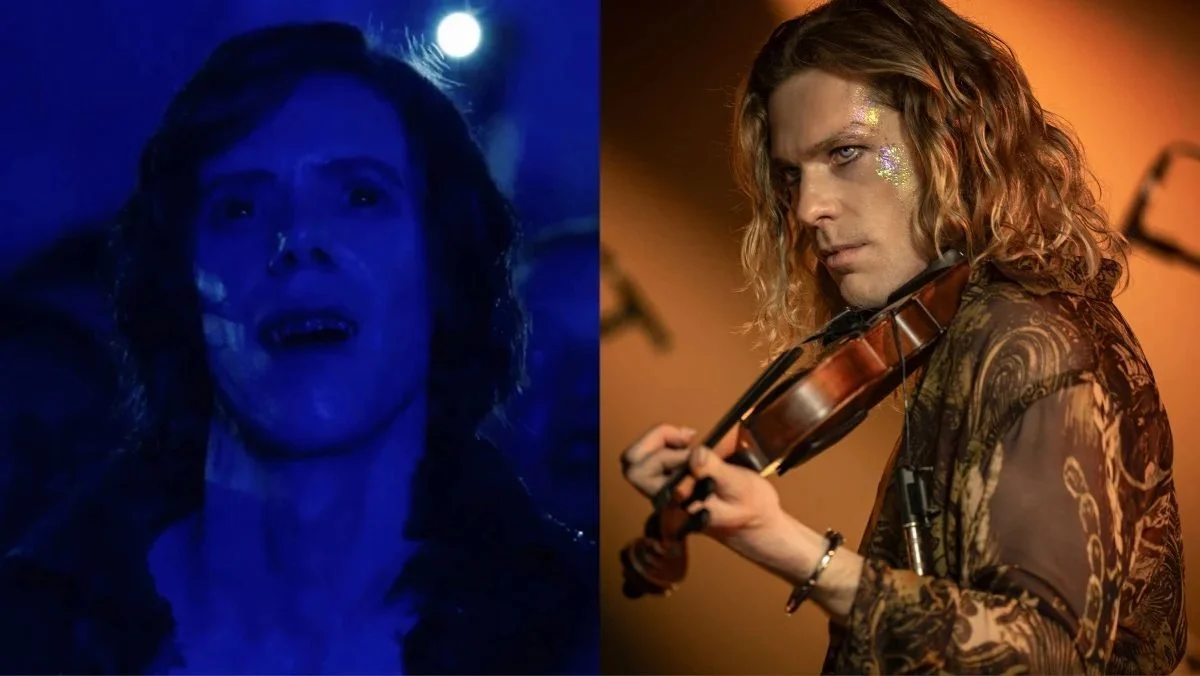
The television landscape is rarely home to art that manages to be both profoundly unsettling and masterfully composed. Yet, with AMC’s adaptation of Anne Rice’s seminal work, The Vampire Lestat, composer Daniel Hart has achieved a rare feat. Central to the series’ haunting sonic identity is the song "Your Biggest Fan," a composition that has stunned audiences with its juxtaposition of melodic beauty and horrific thematic weight. While the track functions as a centerpiece of the narrative, it serves a much more complex purpose: it is a musical reckoning with the trauma of forced transformation and the psychological fragmentation of its protagonist, Lestat de Lioncourt.
The Genesis of a Masterpiece: Behind the Creative Curtain
The creation of "Your Biggest Fan" was not a detached, clinical process. Daniel Hart, the creative force behind the series’ music, describes a symbiotic relationship between the writers’ room and his makeshift home studio. As the narrative team for the third season mapped out the trajectory of Lestat’s journey, Hart moved fluidly between the logistical brainstorming of the plot and the visceral expression of music.
"I would sit at the table, and we would talk and talk and talk," Hart explains, detailing the process. "Someone would say something that would give me an idea, and I would go off and work on a song for a little bit, and I would come back to the table when I had gotten enough of an idea down that it wouldn’t be forgotten or lost."
This organic integration allowed the music to evolve alongside the script, ensuring that the song didn’t merely accompany the narrative but became an extension of it. Hart notes that the song emerged from a deep, repeated engagement with the source material—specifically the passage detailing Lestat’s abduction and subsequent turning by his maker, Magnus.
Chronology of a Trauma: Lestat and the Magnus Paradox
To understand the weight of "Your Biggest Fan," one must revisit the foundational lore established by Anne Rice. In the text, Magnus is a shadow—a creature who stalks Lestat from the periphery of his human life before forcibly abducting him. The transformation is not a gift requested or understood; it is an act of extreme violation.
The chronology of their relationship is tragically brief:

- The Stalking: Magnus observes Lestat from afar, projecting onto him a destiny that Lestat never sought.
- The Abduction: Magnus drags Lestat into the darkness, imposing the "Dark Gift" upon him without consent.
- The Abandonment: Immediately following the transformation, Magnus destroys himself by throwing his body into a fire, leaving his fledgling to navigate the nightmarish reality of vampirism entirely alone.
Because their time together was defined by violence rather than mentorship, Lestat’s understanding of Magnus is limited to the trauma of the event. "Your Biggest Fan" is, therefore, not a song about a relationship that existed, but a song about the void left by a predator who vanished before he could be confronted.
The Psychological Implications of the "Love Song"
Perhaps the most chilling aspect of Hart’s composition is its stylistic choice: he framed the song as a "love song." This artistic decision was intentional, born from an exploration of the abuser’s mindset.
"If he’s going to write a song about his transformation, then he should write it from the point of view of the person who transformed him," Hart admits. "Since it was basically abduction and then abuse, and a rape of sorts, then that would be Lestat’s experience of it."
This leads to the central, uncomfortable truth of the song: abusers rarely identify as such. Hart posits that Magnus, in his descent into madness and his own dark history, viewed his actions as an act of love. By adopting this persona, Lestat is forced to inhabit the mind of his tormentor, attempting to rationalize the irrational. The song becomes a mirror, reflecting not just the horror of the abduction, but the terrifying reality that the person who shattered Lestat’s humanity truly believed he was doing something beautiful.
Supporting Data: Why This Approach Resonates
In the current era of prestige television, audiences have become increasingly sophisticated in their demand for moral ambiguity. The Vampire Lestat does not shy away from the darker elements of its source material, and Hart’s music provides the emotional infrastructure for these narrative choices.
The success of "Your Biggest Fan" lies in its ability to force the audience into empathy for a character who is, by definition, a survivor of extreme trauma. By having Lestat write the song from the perspective of his attacker, the show avoids the trap of simple victimhood. Instead, it explores the lingering, psychological "ghost" of the abuser. It is a nuanced, albeit harrowing, exploration of how trauma forces survivors to analyze, mimic, and eventually process the motivations of those who destroyed their previous lives.

Implications for Future Storytelling
The inclusion of "Your Biggest Fan" signals a shift in how fantasy and horror adaptations handle legacy characters. Rather than softening the edges of the original novels to make them more palatable for a modern audience, the showrunners have chosen to amplify the dissonance. The song serves as a reminder that the "monsters" in this universe are not just external threats, but are internal, haunting the psyches of the characters long after the inciting incident.
Critics and viewers alike have noted that the song is "devastating in-situ." It transforms the viewing experience from a passive consumption of plot to an active engagement with the character’s internal state. When Lestat sings from the perspective of the man who stole his life, the audience is no longer just watching a vampire drama; they are witnessing a complex psychological autopsy.
Conclusion: A New Standard for Sonic Narrative
As The Vampire Lestat continues its run on AMC and AMC+, the legacy of "Your Biggest Fan" will likely serve as a benchmark for how music can deepen the thematic layers of a television series. Daniel Hart’s ability to find the "meat on the bone" of a traumatic memory and translate it into a haunting, melodic exploration of abuse and identity is a testament to the power of creative collaboration.
For those watching, the song is a warning to prepare for the emotional toll of the narrative. It is a reminder that the world of Anne Rice is not one of romanticized immortality, but one of deep, enduring scars. As the series progresses, viewers should look to the music not just as a soundtrack, but as a key to unlocking the complex, often dark, interior lives of the characters who inhabit this world.
The Vampire Lestat airs at 9 pm ET/PT on AMC and AMC+. For those interested in the foundational text, Anne Rice’s The Vampire Lestat remains available as a crucial companion to the series.
(Note: This article contains affiliate links. Purchases made through these links may result in a commission for the publisher, supporting further analysis and coverage of your favorite series.)


 Iffa Jayyana
 Ali Ikhwan