Ammar Sabilarrohman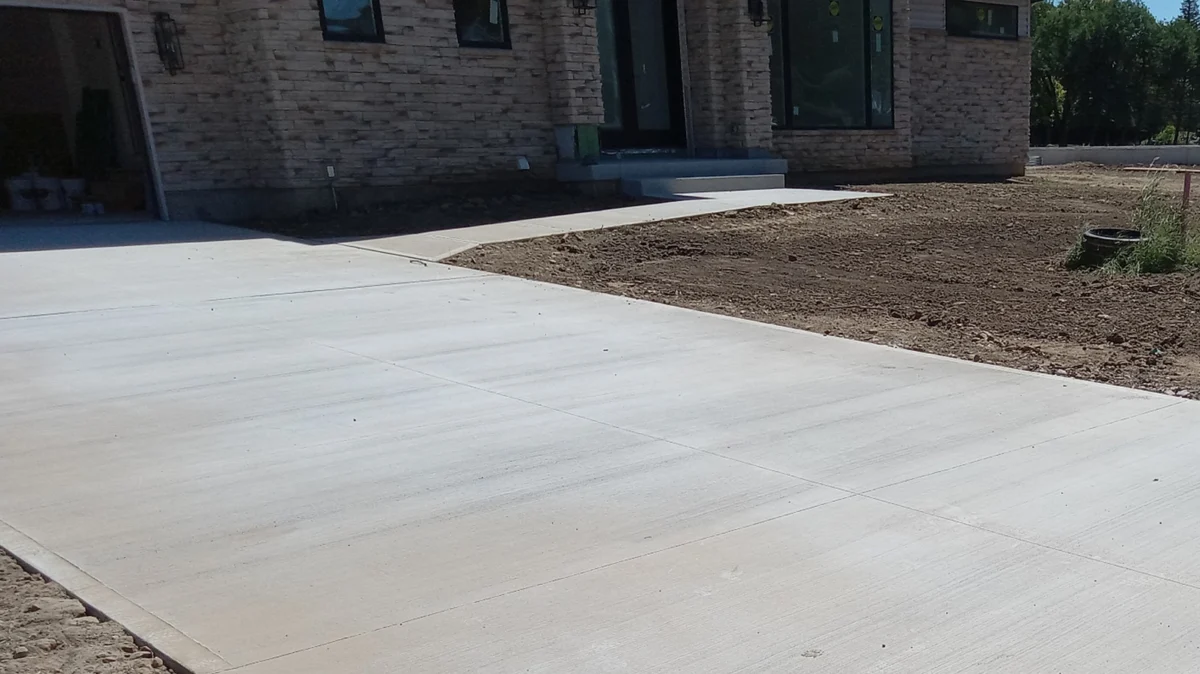
For the modern homeowner, the driveway is more than just a place to park a vehicle; it is a significant structural component of the property’s curb appeal and functional infrastructure. When planning a new installation or a complete replacement, the debate between poured concrete and concrete pavers often dominates the conversation. While both materials utilize the same primary ingredient, their engineering principles, load-bearing capacities, and long-term maintenance requirements differ drastically. Understanding these nuances is essential for making an investment that will stand the test of time.
The Core Engineering Principles: How They Differ
At its most fundamental level, the distinction between these two options lies in how they manage force and environmental stress.
Poured Concrete: The Monolithic Slab
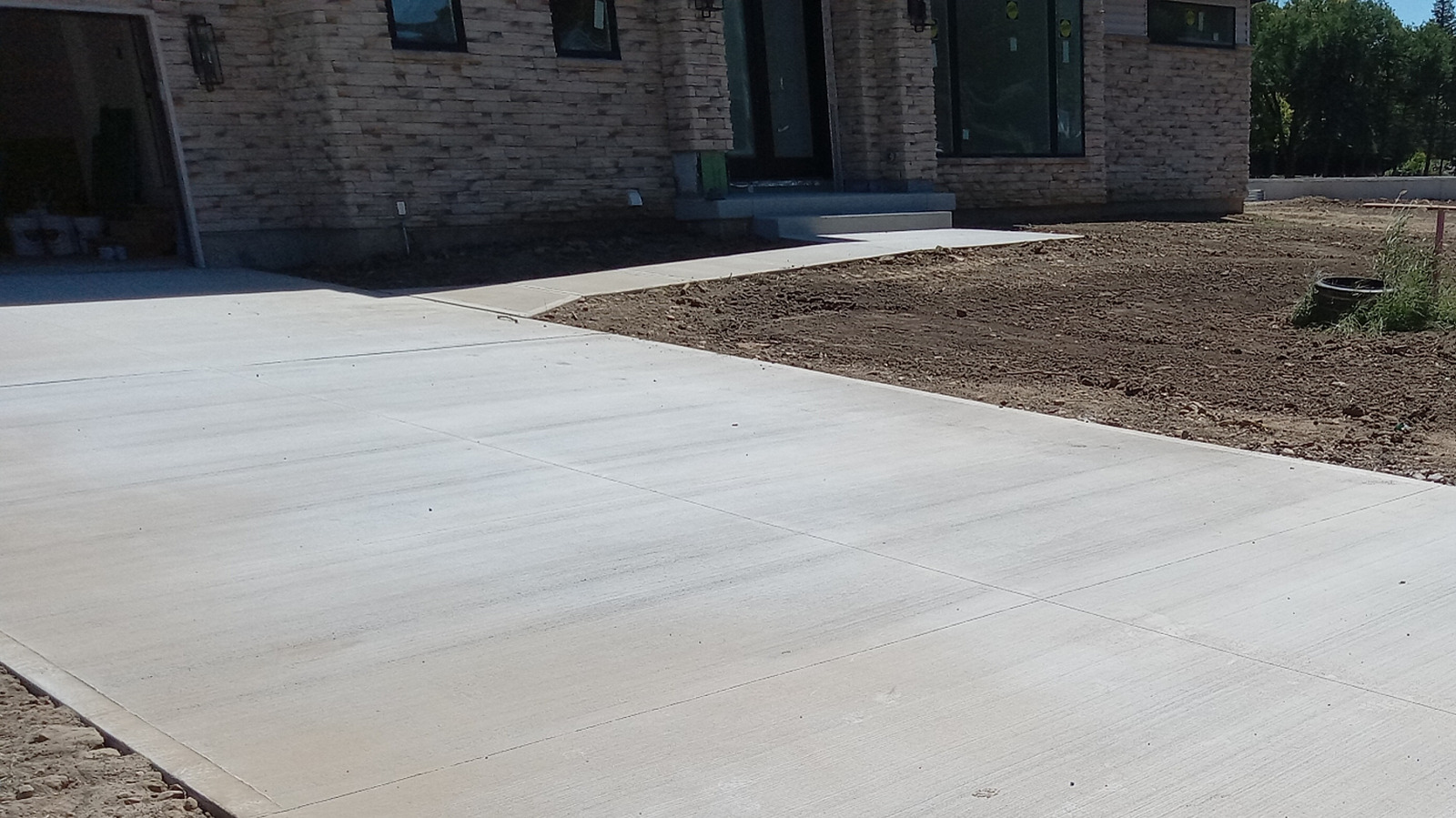
A poured concrete driveway is, by design, a monolithic structure. It functions as a single, continuous slab of hardened cement, aggregate, and water, typically reinforced with steel rebar or wire mesh. The strength of this system is derived from its unity. When a heavy SUV or truck sits on a poured slab, the weight is distributed across the entire surface area of the concrete, which transfers that pressure into the subgrade below.
However, this rigidity is also its primary weakness. Because the slab is one solid piece, it possesses little to no flexibility. If the ground beneath it settles unevenly—due to soil expansion, contraction, or poor compaction—the concrete cannot "bend" to accommodate the movement. Instead, it cracks. Once a crack forms in a monolithic slab, the structural integrity is compromised, often leading to further degradation as water infiltrates the gap, freezes, and expands, widening the breach.
Concrete Pavers: The Interlocking System
Conversely, concrete pavers are modular. They are individual units laid over a carefully engineered foundation of compacted crushed stone and a bedding layer of sand. These units are held in place by friction and the sand-filled joints between them.
This design allows for "flexibility." Because the system is not monolithic, it can accommodate minor shifts in the ground without suffering catastrophic failure. When a vehicle drives over a paver driveway, the load is distributed through the interlocking joints, essentially sharing the weight among multiple units. This ability to "move" with the earth makes pavers highly resilient in climates subject to freeze-thaw cycles.
Chronology of Installation and Settling
The lifespan of a driveway begins long before the first vehicle parks on it; it begins with the preparation of the subgrade.
- Site Preparation (Days 1–3): Both methods require excavation and soil compaction. However, pavers require a deeper excavation to accommodate the aggregate base, which is crucial for drainage and structural stability.
- The Installation Phase (Days 4–7): Poured concrete requires a rapid, high-intensity installation. The concrete must be poured, leveled, and cured under specific environmental conditions. If the temperature is too high, it cracks; if it is too cold, it fails to set properly. Paver installation is more labor-intensive but less time-sensitive. Each stone is laid individually, allowing for a slower, more methodical process.
- The Curing/Settling Period (Weeks 1–4): Poured concrete requires a formal curing process—often taking up to 28 days to reach its full compressive strength. During this time, it is highly susceptible to chemical imbalances and environmental damage. Pavers, however, are ready for use almost immediately after the final joint sand is swept and compacted, as they rely on mechanical locking rather than chemical curing.
Supporting Data: Durability Under Load
When analyzing long-term durability, professional contractors often point to the "Load-Bearing vs. Flexibility" trade-off.
According to structural engineering data, poured concrete generally offers a higher initial compressive strength. A high-quality slab, if poured at a sufficient thickness (typically 4–6 inches for residential use) with proper steel reinforcement, can support immense weight without surface deformation. The drawback is that if the sub-base fails, the repair is often expensive and visually unappealing.
Pavers, while having a lower singular compressive strength, often win the "longevity" contest in residential settings. Because they can be removed and replaced, a paver driveway can theoretically last for decades, or even a century, if the base is maintained. Poured concrete, regardless of the quality of the mix, usually reaches the end of its aesthetic and structural life in 20 to 30 years due to inevitable cracking and surface spalling.
Maintenance and Repair: The Long-Term Reality
The most significant divergence between these two materials appears when the inevitable damage occurs.
The Maintenance of Poured Concrete
Poured concrete is a "low-maintenance, high-repair" material. Throughout the year, homeowners should focus on sealing the surface to prevent the absorption of automotive fluids, such as motor oil and transmission fluid, which can cause permanent staining. Additionally, avoiding harsh chemical de-icers is critical, as these salts penetrate the concrete and trigger "scaling," where the top layer of the concrete flakes off.
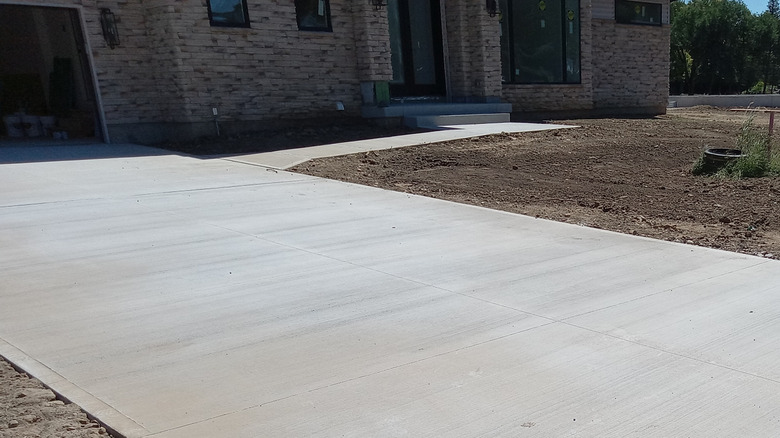
When a poured driveway cracks, the repair is rarely seamless. Patching kits are available, but they rarely match the color or texture of the surrounding slab. Often, the only way to "fix" a crack is to cut out a large section and pour a "patch" slab, which creates an obvious scar across the driveway’s surface.
The Maintenance of Paver Driveways
Pavers require a "high-maintenance, low-repair" approach. They require regular visual inspections to ensure the joints remain filled with sand. Over time, rain and wind can erode this joint sand, which, if left neglected, can lead to the pavers shifting or sinking. Re-sanding and re-compacting is a routine, albeit necessary, chore.
However, when a paver is damaged—perhaps by a heavy impact or a localized sinkhole—the repair process is surgical. A contractor can lift the affected pavers, adjust the sand bedding underneath, and replace the same stones. The result is a repair that is virtually invisible, maintaining the driveway’s original aesthetic.
Implications for the Homeowner
Choosing between these two materials ultimately depends on your priorities:
- Choose Poured Concrete if: You prioritize a seamless, modern aesthetic and want a surface that requires minimal effort in terms of routine cleaning. It is an excellent choice for flat, stable ground where professional installation can ensure the slab is reinforced to handle heavy vehicles.
- Choose Pavers if: You prioritize long-term sustainability and ease of repair. If you live in an area with shifting soil or dramatic temperature fluctuations, the flexibility of pavers will protect your investment from the cracks that plague concrete slabs. Furthermore, pavers offer an unmatched level of customization in terms of color, pattern, and texture, allowing the driveway to function as a design element of the home.
Final Assessment: Which Lasts Longer?
If longevity is defined as the number of years before the surface becomes "unusable," concrete pavers hold the distinct advantage. A poured concrete driveway is a finite entity; it is born, it ages, and it eventually fails, necessitating a total replacement. A paver driveway is a modular system; it can be maintained, repaired, and even expanded upon indefinitely.
By investing in a properly prepared sub-base and committing to the routine replenishment of joint sand, a homeowner can ensure that a paver driveway remains a functional, beautiful asset to their property for generations. While the initial investment for pavers is typically higher due to labor costs, the ability to avoid the costly, large-scale replacements associated with poured concrete makes pavers the superior choice for long-term value.


 Asro
Asro