Dwi Wanna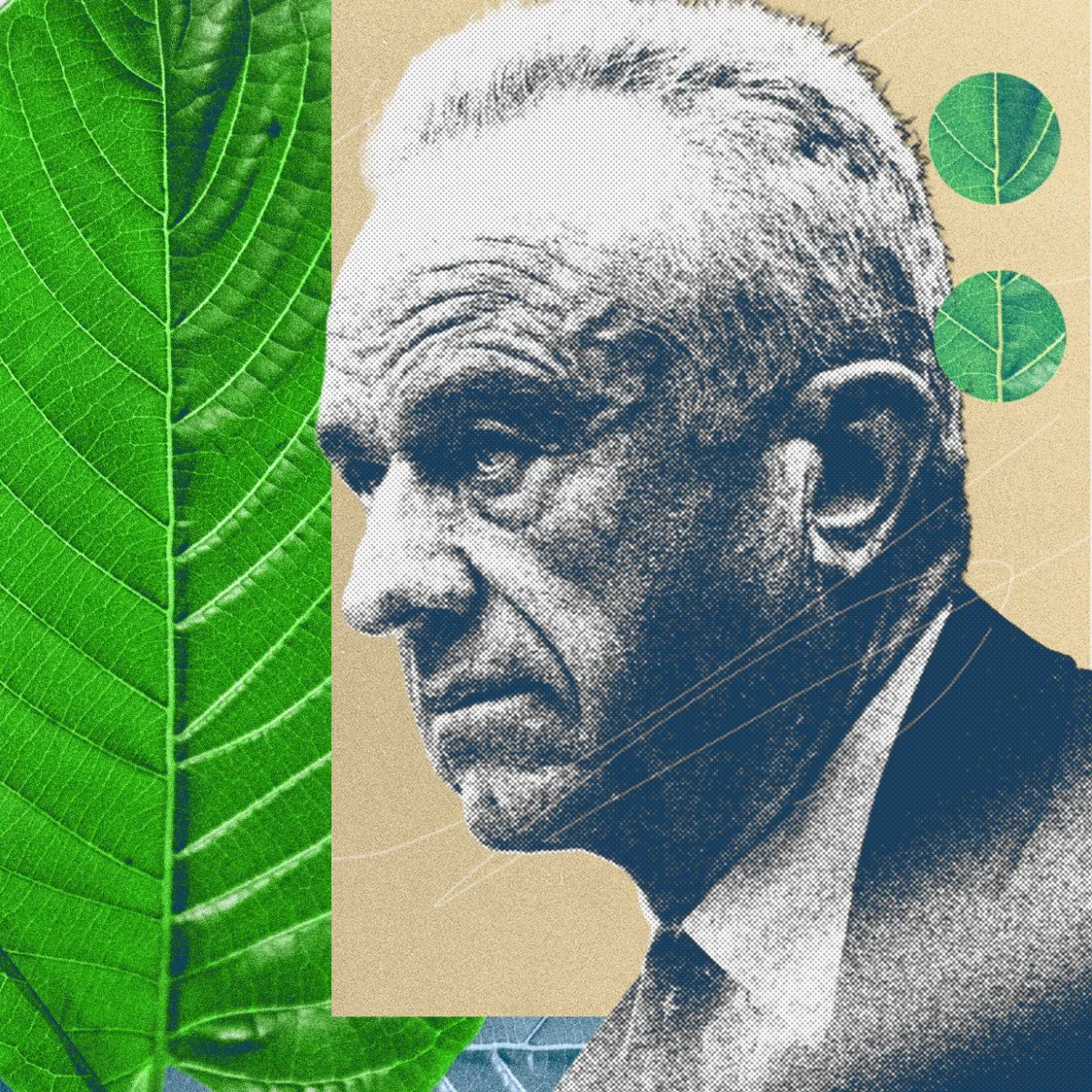
A decade ago, the American kratom community stood united against the federal government, successfully mounting a grassroots defense that halted a proposed Drug Enforcement Administration (DEA) ban on the Southeast Asian plant Mitragyna speciosa. Proponents, ranging from libertarian icons like Rand Paul to progressive figures like Bernie Sanders, championed kratom as a natural, life-saving alternative to the scourge of prescription opioids. This movement transformed a niche botanical into a billion-dollar industry, fueling a landscape of "tiki-style" cafes, specialized herbal shops, and a widespread belief that the plant could help mitigate the nation’s ongoing opioid epidemic.
However, that unity has shattered. The industry is now embroiled in a high-stakes civil war over the rise of 7-hydroxymitragynine (7-OH)—an ultra-potent, laboratory-derived extract of kratom that is increasingly available in gas stations and corner stores across the country. As 7-OH products—often marketed as "kratom" in the form of candy-colored gummies, shots, and capsules—flood the market, the very activists who once fought to protect the plant are now clamoring for a federal crackdown on its concentrated offshoot.
A Chronology of Conflict
The rise of 7-OH represents a fundamental shift in the kratom landscape, moving from traditional leaf-based consumption to high-potency synthetic isolation.
- 2016: The DEA announces its intent to place kratom in Schedule I of the Controlled Substances Act, citing "imminent hazard to public safety." A massive public outcry and bipartisan political pressure force the agency to withdraw the proposal.
- 2019–2022: The market evolves. While leaf powder remains popular, companies like Botanic Tonics, makers of the potent "Feel Free" tonic, begin to normalize high-potency liquid kratom.
- 2023: Federal authorities conduct a massive raid, seizing $3 million worth of Feel Free and related products, citing inadequate evidence of safety for human consumption.
- 2024–2025: 7-OH emerges as the dominant, controversial successor to raw kratom. Reports of severe dependency, withdrawal, and polydrug overdoses mount.
- May 2025: President Donald Trump makes confusing public remarks endorsing "natural 7-OH," while administration officials, including HHS Secretary Robert F. Kennedy Jr., describe the sector as "sinister."
- 2025–2026: A wave of state-level bans hits the U.S. as legislatures in places like Ohio and California move to prohibit 7-OH, even as some states continue to debate the legal status of the parent plant.
The Science of 7-OH: A "Clean" Label with Hidden Risks
The fundamental tension between the traditional kratom lobby and the 7-OH industry lies in a debate over definition. Advocates for 7-OH, such as the 7-HOPE Alliance, argue that the molecule is naturally present in the plant and that its extraction is no different than deriving caffeine from coffee or THC from cannabis.
"To say 7-OH is not kratom is to say caffeine is not coffee or THC is not cannabis," argues Michele Ross, chief scientific adviser to the 7-HOPE Alliance. "It simply does not make sense."
However, scientific experts, including Dr. Chris McCurdy, director of the University of Florida’s translational drug development core, strongly dispute this analogy. McCurdy points out that unlike coffee or traditional kratom leaf—which have been consumed for centuries—7-OH as a concentrated product has no long-term history of human use. Furthermore, many products labeled as "7-OH" contain an array of poorly understood compounds and impurities.
"These products, while represented as ‘clean,’ are anything but," McCurdy warns. The lack of standardized manufacturing leads to products that often carry unpredictable doses, creating a "Russian roulette" scenario for consumers seeking relief from pain or anxiety.
The Political Entanglements
The regulatory landscape is further complicated by allegations of conflicts of interest at the highest levels of government. The proximity of key administration figures to the kratom industry has drawn intense scrutiny.
Records show that Department of Homeland Security Secretary Markwayne Mullin has held an investment of up to $1 million in Botanic Tonics, the parent company of the prominent kratom drink "Feel Free." Simultaneously, both Mullin and HHS Secretary Robert F. Kennedy Jr. have been vocal proponents of cracking down on 7-OH. Critics, including those within the 7-HOPE Alliance, question whether these regulatory efforts are aimed at consumer safety or at protecting market share for preferred industry players.
A spokesperson for the DHS stated, "As secretary of Homeland Security, Markwayne Mullin acts to ensure full compliance with all ethics and conflict of interest rules." Regardless of the official stance, the perception of a "pay-to-play" dynamic—where favored companies survive while others are purged—has poisoned the well of trust between the government and the broader botanical industry.
Implications for Public Health and Regulation
The crisis is currently playing out in two distinct theaters: the emergency room and the legislative chamber.
For many users, the transition from raw kratom leaf to 7-OH extract has been disastrous. A subreddit dedicated to "Quitting Feel Free" now attracts 13,000 visitors weekly, with users sharing harrowing stories of physical dependence and "horrendous" withdrawal symptoms that mirror traditional opioid detox. Yet, for others, the product remains a functional, if dangerous, tool for managing chronic pain or weaning off illicit opioids.
"I take 20 to 25 milligrams twice a day," says Chris, a 49-year-old Midwest resident. "It completely changed my life… but I went into withdrawal once because I got sick and didn’t take it for a couple of days. I was sweating and had chills like I had a flu."
The "Whack-a-Mole" Regulatory Dilemma
Legislators are currently faced with a difficult choice: a total ban or a regulated, legal framework.
- The Case for Prohibition: Supporters of a ban, including the American Kratom Association, argue that 7-OH is a "chemically manipulated, full-blown opioid" masquerading as a natural product. They fear that if the industry does not self-regulate or support a targeted ban on high-potency extracts, the entire kratom sector will be swept away by a federal Schedule I classification, which would stifle legitimate research.
- The Case for Regulation: Skeptics of prohibition, such as Soren Shade of Top Tree Herbs, compare the 7-OH crackdown to banning automobiles because of a single company’s emissions fraud. They advocate for stringent labeling requirements, potency limits, and quality control. They argue that criminalization will only drive the market into the shadows, making the substances more dangerous and inaccessible to the adults who rely on them for medical necessity.
The Future of "Natural" Wellness
As the federal government continues to weigh its options, the industry is already anticipating the next move. Companies are pivoting toward newer derivatives like MGM-15 and pseudoindoxyl—compounds that sit in the same legal grey area that 7-OH once occupied.
The dilemma represents a broader challenge for the modern wellness movement: how to govern substances that exist on the razor’s edge between "natural supplement" and "potent pharmaceutical." The marketing language of natural wellness has successfully convinced millions of Americans that these products are safe, but the reality of laboratory-isolated extracts is a different beast entirely.
Whether the DEA eventually schedules 7-OH remains to be seen, but the damage to the reputation of the broader kratom movement may already be permanent. As long as these products are sold alongside candy in gas stations, the "natural" label will continue to clash with the physiological reality of the substances within. For now, the "regulatory whack-a-mole" continues, leaving consumers caught in the middle of a war between profit, politics, and public health.


 Jia Lissa
 Asro
Asro