Lina Hope
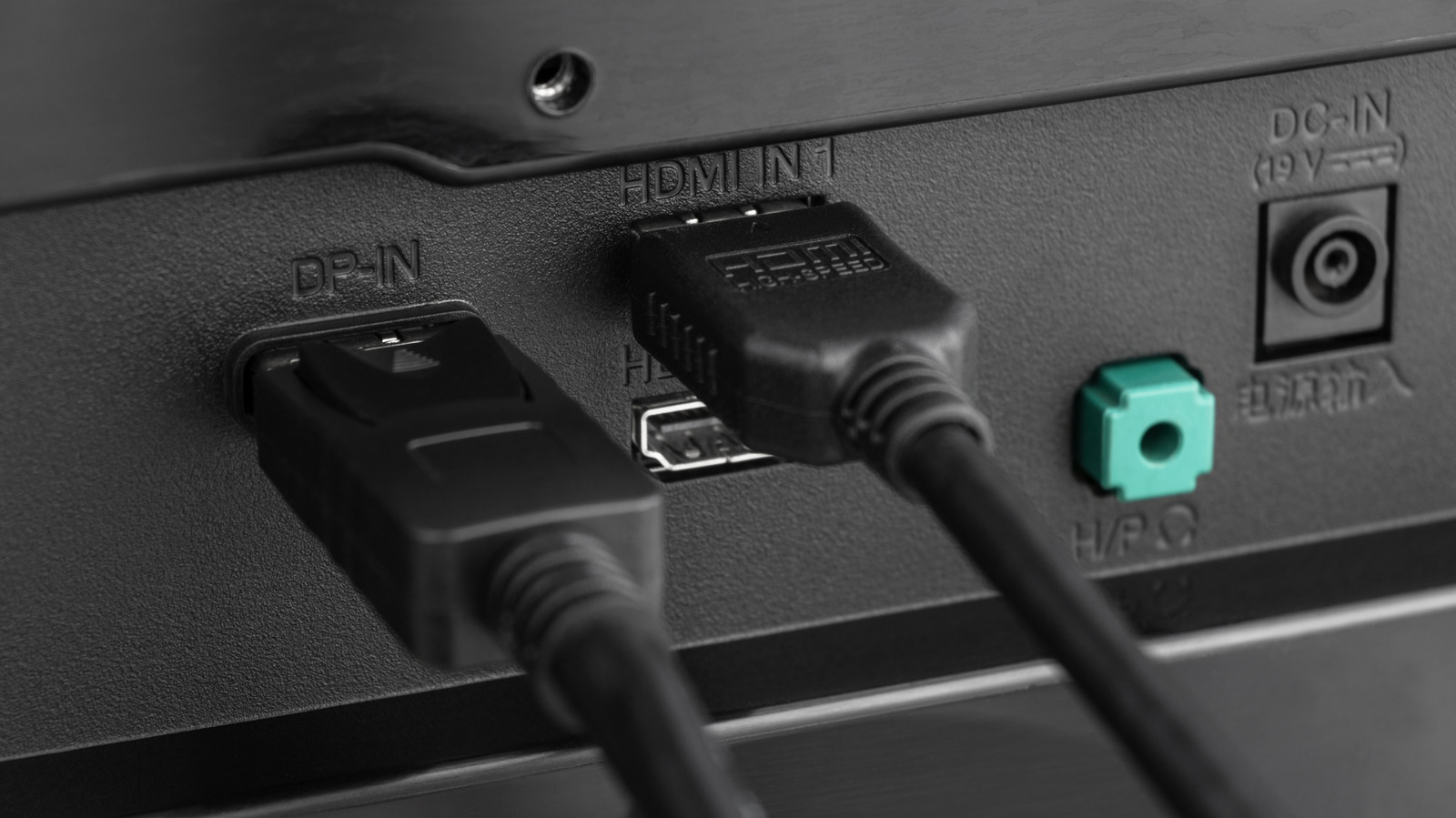
In the world of consumer electronics, the interface on the back of your television is more than just a plug—it is the gatekeeper of your viewing experience. For decades, the HDMI (High-Definition Multimedia Interface) port has reigned supreme, serving as the universal language between our streaming boxes, game consoles, and flat-screen panels. Yet, tucked away on the back of high-end computer monitors sits a superior, more capable contender: DisplayPort.
Despite DisplayPort’s technical dominance, it remains a rare sight in the living room. While gamers and workstation power users swear by the standard, smart TV manufacturers have collectively shunned it. This disparity creates a peculiar paradox: the industry has standardized on an interface that, on paper, is consistently outperformed by a technology that is already available, royalty-free, and technically more advanced.
The Technical Tug-of-War: HDMI vs. DisplayPort
To understand why the industry is locked into HDMI, one must first evaluate the capabilities of these two digital standards. HDMI 2.1b, the current gold standard for home cinema, provides a robust 48Gbps of bandwidth. It is more than capable of handling 4K resolution at 120Hz, supporting variable refresh rates (VRR), and managing high-end HDR formats like Dolby Vision and HDR10+. For the average consumer, this is more than enough to deliver a cinematic experience.
However, DisplayPort has held a structural advantage for years. Introduced in 2006, the standard was built with a "computer-first" architecture, prioritizing high-resolution, high-refresh-rate data streams. DisplayPort 2.1a, for instance, boasts an impressive 80Gbps of bandwidth—nearly double the capacity of the current standard HDMI 2.1b. This allows DisplayPort to handle 8K content at 60Hz without the need for the visual "compression" that HDMI often requires to manage such high data loads.
Furthermore, DisplayPort supports sophisticated features that are standard in the PC world, such as display daisy-chaining (connecting multiple monitors to a single port), support for both Nvidia G-Sync and AMD FreeSync natively, and the ability to carry video signals over USB-C cables via "Alt Mode." Despite these features, TVs remain strictly HDMI-bound.
A Chronology of Institutional Inertia
The dominance of HDMI is not a result of superior engineering, but rather a masterclass in market consolidation and institutional momentum.
The Early Aughts: The Birth of a Standard
In the early 2000s, the television industry was in the midst of a massive technological shift. The bulky, analog CRT (Cathode Ray Tube) televisions were being phased out in favor of sleek, digital flat-screen displays. Recognizing the need for a unified digital connection that could handle both high-definition video and multi-channel audio, a coalition of seven industry titans—Sony, Panasonic, Toshiba, Hitachi, Philips, Silicon Image, and RCA—joined forces to create HDMI.
By standardizing a single interface early, these companies ensured that the entire ecosystem of home theater equipment would be built around a unified architecture. By the time DisplayPort arrived on the scene in 2006, the television industry had already invested billions into the HDMI infrastructure.
The Licensing Lock-in
A critical factor in the entrenchment of HDMI is the "HDMI Forum." This governing body consists of over 80 major stakeholders, including LG, Samsung, and Sony. Furthermore, there are approximately 2,000 companies registered as "HDMI Adopters." These companies pay significant annual fees and per-unit royalties for every device produced with an HDMI port.
This creates a self-reinforcing cycle. Because every Blu-ray player, streaming dongle, and game console is built to be "HDMI-ready," a TV manufacturer who chose to omit HDMI in favor of DisplayPort would effectively be selling a product that is incompatible with the rest of the consumer’s home. The cost of switching, or even adding a second, redundant port, is rarely justified by the marginal performance gains for the average television user.
Supporting Data: Why the "Better" Tech is Losing
The argument for DisplayPort often centers on its superior raw performance, particularly regarding 8K resolution. However, the market reality of 8K tells a different story.
Demand for 8K televisions has remained consistently low. The pixel density of 4K is already sufficient for most viewing distances in residential living rooms, and the lack of native 8K content has made the resolution a "marketing feature" rather than a practical one. As a result, major manufacturers including Sony, LG, TCL, and Hisense have largely retreated from the 8K market. Even Sony, which prominently marketed 8K on its PlayStation 5 packaging, quietly removed the branding from its marketing materials as the market failed to materialize.
The Rise of HDMI 2.2
The industry’s answer to DisplayPort’s bandwidth advantage is not to switch standards, but to iterate on the existing one. Standardized in June 2025, HDMI 2.2 brings the throughput of the interface to 96Gbps, officially surpassing the bandwidth capabilities of current DisplayPort iterations. By simply updating the HDMI spec, the industry avoids the massive logistical headache of integrating a new, proprietary, or secondary port type, keeping the "one-cable-fits-all" dream alive for the consumer.
Industry Perspectives and Strategic Silence
Official responses from major TV manufacturers regarding the absence of DisplayPort are typically characterized by a focus on "consumer simplicity." In internal white papers and public statements, manufacturers emphasize that the average television user does not want to navigate multiple, competing input standards.
The inclusion of HDMI CEC (Consumer Electronics Control) is a primary reason for this, as it allows a single remote to control a soundbar, a TV, and a streaming stick simultaneously. DisplayPort lacks a direct, mass-market equivalent that has been adopted with the same rigor as HDMI’s CEC protocol. For the TV industry, the "home theater experience" is defined by this seamless, unified control, which HDMI provides and DisplayPort does not.

Implications for the Future of Home Entertainment
As we look toward the future, the divide between the "PC monitor" and the "Smart TV" is likely to persist. The PC world requires the low latency and high bandwidth of DisplayPort to facilitate professional design work and competitive, high-refresh-rate gaming. In contrast, the living room remains an environment built for comfort, streaming, and simplicity.
The Niche of the High-End Gamer
The only segment of the population that feels the sting of this exclusion is the "living room gamer." Enthusiasts who connect a high-end PC to a 4K/120Hz OLED TV often find themselves frustrated by the limitations of HDMI, such as the occasional handshake issues or the need for specific, high-bandwidth cables. However, as HDMI 2.2 and future iterations roll out, even these issues are being mitigated.
The Final Verdict
DisplayPort is, in many technical metrics, a more versatile and capable interface than HDMI. Yet, it is destined to remain a specialty tool for the computing world. The television industry has built its foundation on the HDMI ecosystem, and that foundation is too deep to move. For now, the "better" cable will continue to live on the back of your desktop computer, while your TV remains firmly and comfortably in the HDMI camp.
While the "first-mover advantage" may have started the trend, it is the sheer convenience of a standardized, ubiquitous, and feature-rich interface that will keep HDMI as the undisputed king of the living room for the foreseeable future.

 Asro
Asro
 Rifan Muazin