Muslim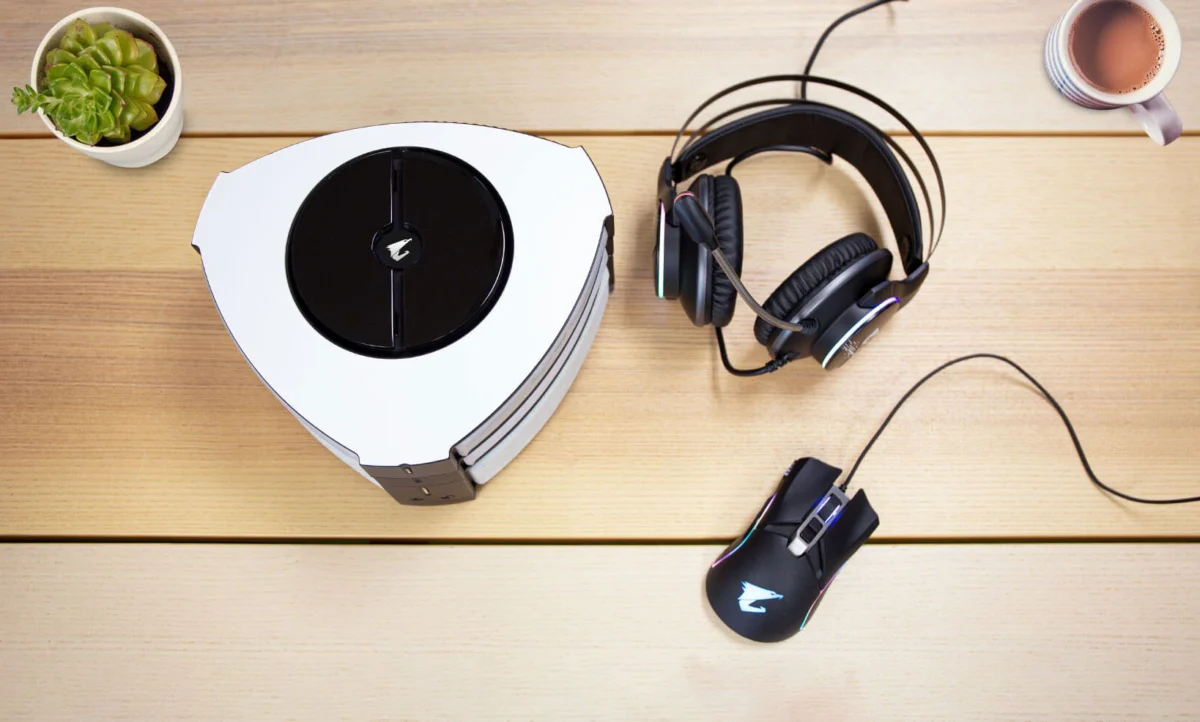
In a surprising, albeit polarizing, move, Aorus—the premium gaming sub-brand of Gigabyte—has unveiled its latest vision for the future of desktop computing: Project Cielo. Departing from the traditional monolith of the tower PC, Cielo presents a striking, triangular, modular stacking structure that challenges the established conventions of gaming hardware. Yet, beneath the aesthetic innovation lies a design philosophy that has left industry analysts and enthusiasts questioning whether Aorus is pioneering the next evolution of gaming or simply chasing a trend that the market never asked for.
The Anatomy of the Concept: A Breakdown of the Stack
As is customary with "concept" hardware, concrete technical specifications are conspicuously absent. Aorus has provided little more than a visual blueprint, leaving the actual silicon, thermal solutions, and power delivery mechanisms to the imagination.
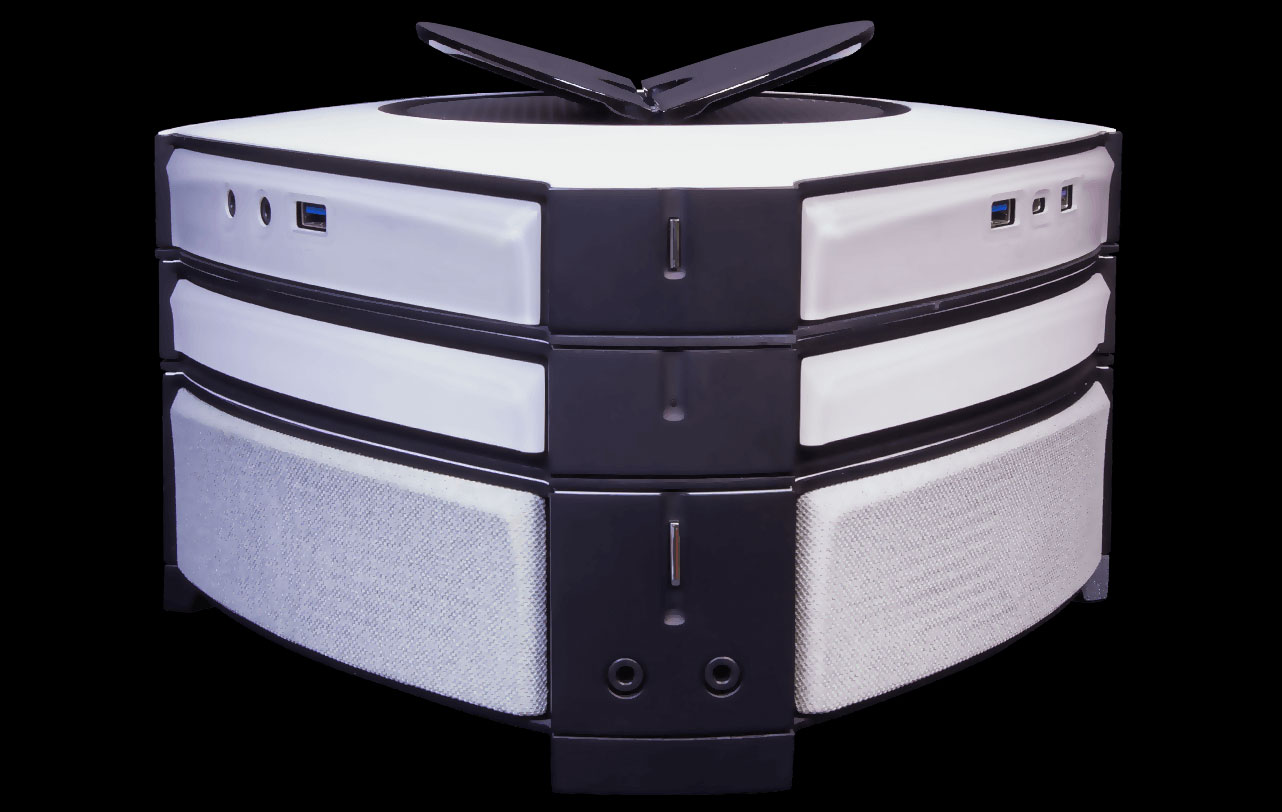
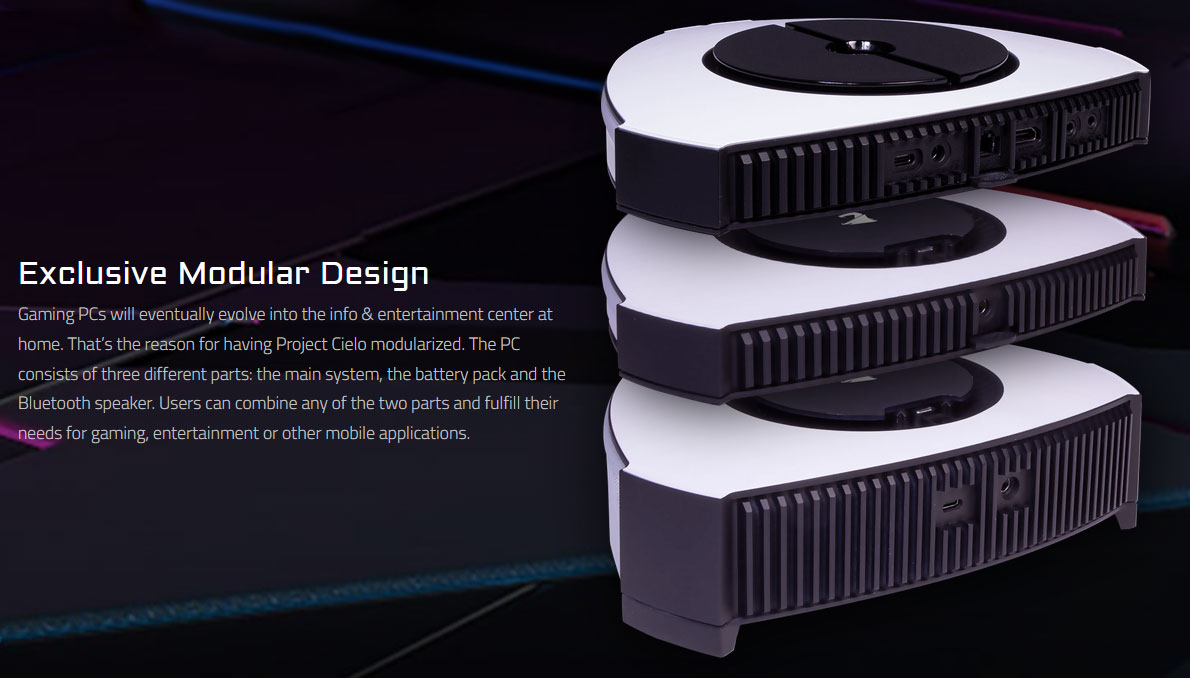
At first glance, the three-tiered modular design suggests a logical compartmentalization—perhaps separating the CPU, GPU, and storage into distinct, swappable units. However, Aorus’ actual implementation subverts these expectations entirely. The "Cielo" stack is composed of three disparate elements: a main system unit, a dedicated battery pack, and a detachable Bluetooth speaker.
The top-most module houses the core PC components, but it is crowned with what Aorus describes as "angel cake-like wings"—a pair of 5G antennas. This feature serves as the cornerstone of the brand’s marketing narrative, signaling a shift in focus from local compute power to network-reliant, cloud-based versatility.
Chronology: From Concept to Controversy
The revelation of Project Cielo arrived without the typical fanfare of a pre-CES hype cycle, appearing instead as a direct press release that caught many in the tech sphere off guard.
- October 2021 (The Reveal): Aorus officially unveils the concept, framing it as a solution for "mobile gaming enthusiasts." The marketing materials emphasize 5G connectivity as the primary driver of the user experience.
- The Post-Announcement Cycle: Immediately following the reveal, the discourse shifted from the device’s aesthetics to its utility. Journalists noted the lack of a display, effectively making the "portable" aspect of the system difficult to reconcile with the requirement of a secondary monitor.
- The Current State: As of late 2021, the project remains firmly in the "concept" phase. Industry insiders are now watching to see if Aorus will attempt to bring a functional prototype to CES 2022 or if the project will quietly fade into the graveyard of experimental hardware.
Supporting Data: The 5G Pivot and the Cloud Gaming Paradigm
The crux of the Aorus argument for Project Cielo rests on the integration of 5G technology. In its press materials, the company states, "Compared to the traditional wired or 4G wireless networks, 5G makes PC gaming on the go possible by offering greater bandwidth, ultra-low latency and near-instant access to cloud gaming."
The Bandwidth/Latency Dilemma
While 5G theoretically offers speeds capable of supporting high-definition game streaming, the real-world application remains fraught with challenges. Even with ultra-low latency, the instability of mobile networks makes them a suboptimal choice for competitive gaming. Aorus is essentially betting that the future of the gaming PC is not in the chassis itself, but in the pipe through which the data flows.
Modular Flexibility or Component Overkill?
Aorus claims that "users can combine any of the two parts and fulfil their needs for gaming, entertainment or other mobile applications." This implies that the system is not necessarily a "PC" in the traditional sense, but a series of interconnected appliances. If a user can detach the PC module and leave it behind, carrying only the battery and speaker, the device ceases to be a computer and becomes a glorified Bluetooth media player. The ambiguity of the "modular" definition here is perhaps the project’s greatest point of contention.
Official Responses and Industry Skepticism
The response from the broader PC gaming community has been largely lukewarm, bordering on cynical. Aorus has positioned Project Cielo as a "lifestyle" product rather than a performance-focused rig. In a statement accompanying the reveal, an Aorus representative noted that the goal was to "break the shackles of the desktop."
However, the industry has countered with a simple, stinging question: Why not a laptop?
Gaming laptops currently offer a cohesive, all-in-one experience that includes a high-refresh-rate screen, a keyboard, and high-performance silicon. By stripping the PC of its display and input devices, Aorus is asking users to carry a modular tower and a separate monitor just to achieve what a modern gaming laptop does out of the box. The "portability" argument loses its weight when the user must essentially set up a miniature workstation in a public space to use the device.
Implications for the Future of Desktop Computing
Project Cielo serves as a case study in the tension between innovation for the sake of aesthetics and innovation for the sake of utility.
The Death of the Tower?
For decades, the standard ATX tower has been the gold standard for gaming. It allows for modular upgrades, superior cooling, and high power draw. Aorus’ attempt to segment this design into "lego-like" blocks suggests a desire to make the PC more approachable to non-enthusiasts. However, by removing the internal upgradability that enthusiasts crave, they risk alienating their core demographic while failing to provide the convenience that casual gamers seek in a console or tablet.
Cloud Gaming as the Default
The most significant implication of Project Cielo is the explicit admission that manufacturers are preparing for a post-local-compute era. If Gigabyte, a company built on the sale of discrete GPUs and motherboards, is moving toward a cloud-first modular design, it suggests a long-term hedging strategy. They are betting that as game streaming matures, the need for a massive, air-cooled box under the desk will vanish, replaced by small, thin-client modules that rely on high-speed internet.
The "Lifestyle" Trap
Aorus is not the first company to attempt to rebrand the gaming PC as a fashion statement. However, the market has historically punished products that prioritize form over function. If the modular segments are proprietary, as they appear to be, the user is locked into the Aorus ecosystem—a move that contradicts the very nature of the PC as an open, customizable platform.
Conclusion: A Vision or a Vacancy?
Project Cielo is an ambitious, if confused, attempt to redefine the gaming PC. It reflects a company searching for relevance in a market that is increasingly drifting toward mobile platforms and cloud streaming. Yet, in its current iteration, it fails to solve the fundamental problems of portability or performance.
By deconstructing the PC into three separate pieces, Aorus has created a device that is neither a true desktop replacement nor a convenient portable solution. It lacks the raw power of a traditional tower and the convenience of a modern laptop. While the design is visually arresting, it serves as a reminder that in the world of hardware engineering, "different" is not always synonymous with "better."
As we approach the next major trade shows, the fate of Project Cielo will likely be decided by consumer feedback. If the reception remains as frosty as it has been since the October announcement, we may look back on Cielo as a footnote in the history of design—a cautionary tale about what happens when innovation loses sight of the user’s actual needs. Until then, the project remains an interesting experiment in modularity, even if the "future of gaming" it promises is one that few players are currently clamoring for.


 Lina Hope
 Lina Irawan