Muslim
In the high-pressure environment of Hollywood filmmaking, where directors like Stanley Kubrick or David Fincher are legendary for demanding dozens—sometimes hundreds—of takes to achieve a specific vision, Clint Eastwood represents a radical alternative. For the screen icon turned auteur, filmmaking is a pursuit of immediacy, instinct, and economic precision. However, this minimalist approach can be jarring for actors accustomed to the traditional “coverage-heavy” style of production.
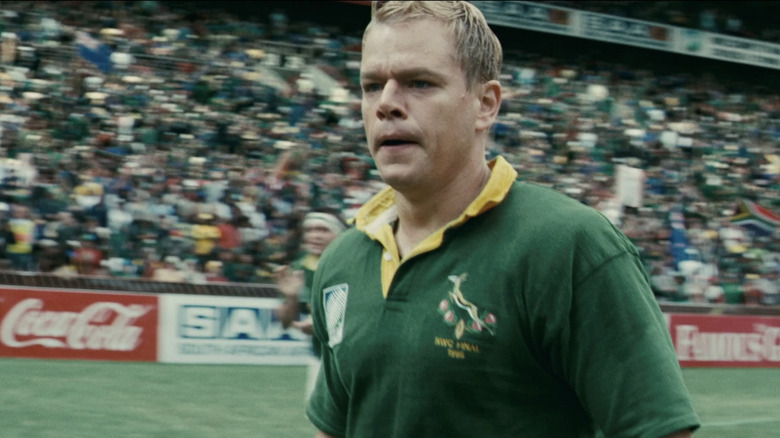
Matt Damon, a veteran of numerous high-budget spectacles, learned this lesson the hard way during the 2009 production of Invictus. Tasked with portraying South African rugby legend Francois Pienaar, Damon arrived on set having spent six months in rigorous dialect training, fully expecting a collaborative, iterative process. Instead, he was met with a blunt, albeit effective, directorial philosophy that redefined his understanding of performance on camera.
The Preparation: Six Months of Dialect Rigor
To understand the friction that occurred on the set of Invictus, one must first appreciate the level of commitment Damon brought to the role. Based on John Carlin’s 2008 book Playing the Enemy: Nelson Mandela and the Game That Made a Nation, the film required Damon to capture not only the physicality of a rugby captain but the specific linguistic cadence of a South African native.
Damon did not take the challenge lightly. Alongside acclaimed dialect coach Tim Monich, the actor engaged in a grueling six-month regimen. "He would come, and from 9 to 5, Monday through Friday, we would work on this accent," Damon recounted during a recent appearance on the Conan O’Brien Needs a Friend podcast. "Because South Africans speak English, it’s like their tongue does the exact opposite thing that ours does. It was a lot of work."
By the time the cameras rolled, Damon was prepared to showcase his hard-earned versatility. He had anticipated a day of multiple takes, exploring different emotional nuances and tonal shifts, providing his director with a buffet of options from which to craft the final edit.
The Collision: "Why Do You Want to Waste Everybody’s Time?"
The first day of shooting Invictus became an unexpected turning point for Damon. Having spent months preparing his performance, he delivered his first take with the precision of a man who had left nothing to chance. He then turned to Eastwood, expecting a critique or a request for a variation.
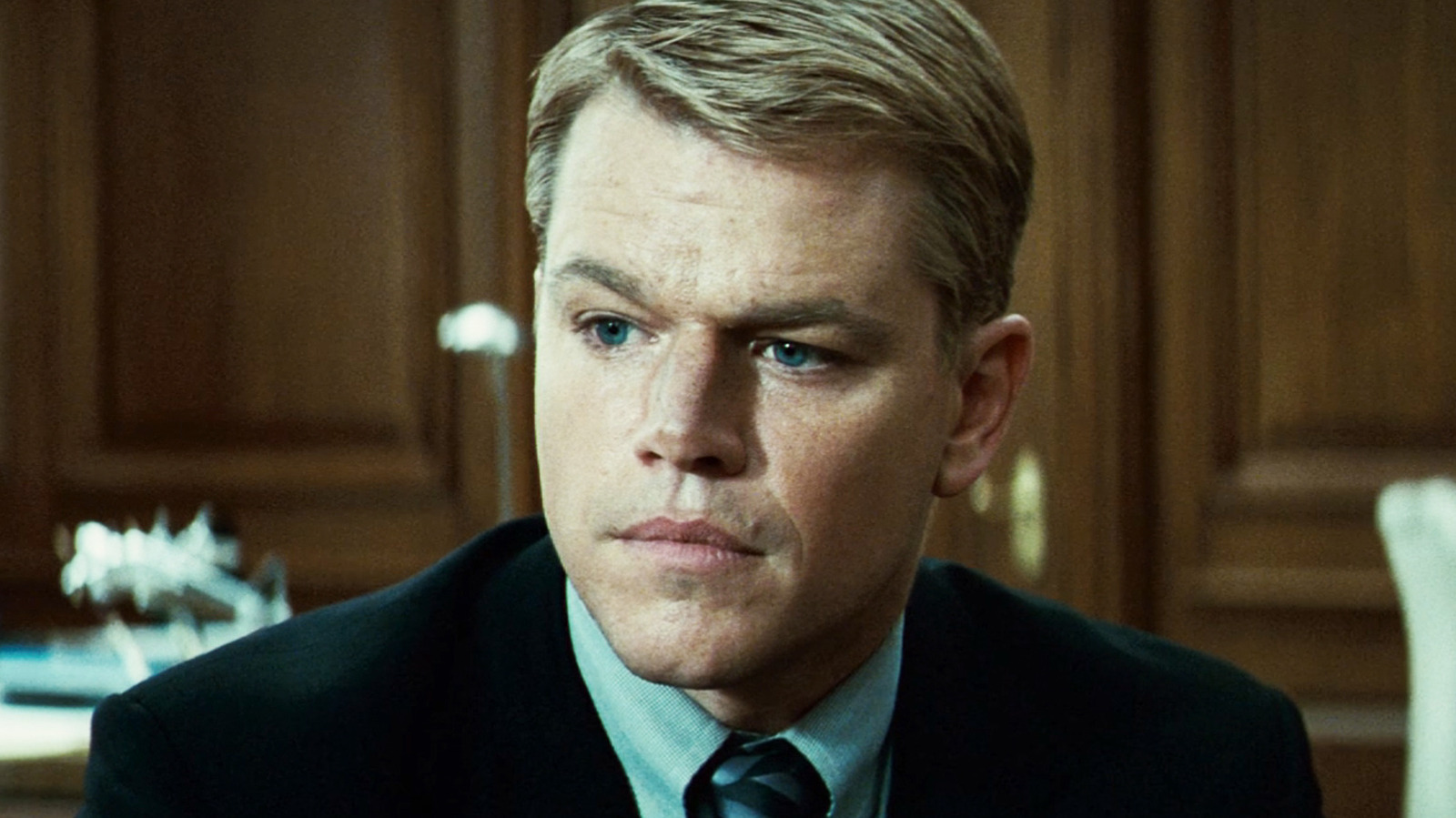
"I showed up, and I’m ready," Damon told O’Brien. "It’s like my chance to work with one of my heroes. I have a number of different ways that I’m thinking of maybe doing the scene."
Eastwood, however, had no interest in repeating the process. He simply called, "Cut, print, move on."
Confused and feeling as though his preparation had been rendered superfluous, Damon protested. "Hang on, hang on, hang on. Uh, boss, you know, you want to do another one?"
Eastwood’s response was characteristically direct. Without malice, but with a singular focus on efficiency, the director asked: "Why do you want to waste everybody’s time?"
That moment of tension served as a crash course in the "Clint Eastwood method." For an actor who had come prepared to iterate, the realization that the director believed the first take captured the necessary truth was both disorienting and, eventually, liberating.
Supporting Data: The Eastwood Method Through the Years
Damon is far from the only performer to be caught off-guard by Eastwood’s rejection of the "multiple-take" norm. The director’s reputation for speed is legendary in the industry. While most directors spend hours lighting and rehearsing, Eastwood favors a "get it and go" approach that prioritizes the organic quality of a first attempt.
Jeff Daniels, who starred in Eastwood’s 2002 neo-noir Blood Work, echoed Damon’s experience in a profile for Esquire. "You have to be ready because it’s one take," Daniels explained. "And you can’t believe it. You’re told, and you’re ready, and there it is. You get one take, and you move on."
This contrasts sharply with the "Kubrickian" school of thought. For example, during the filming of The Shining, Stanley Kubrick famously pushed actors like Shelley Duvall and Jack Nicholson to the breaking point, turning an eight-minute sequence into a 60-take ordeal. While such methods can produce a hyper-controlled, surreal result, Eastwood’s method aims for the opposite: the raw, unpolished energy of a moment happening for the first time.
Official Perspectives: The Philosophy of "When You’ve Got It"
Despite the bluntness of his on-set communication, those who work with Eastwood emphasize that his approach is not rooted in laziness, but in a profound trust in his actors.
"There was a kindness in it, too," Damon noted in his interview, reflecting on the interaction years later. "He’s a lovely guy."
Eastwood himself has been transparent about his process. When asked about his shooting style, he explained to Esquire that he prefers to catch the spontaneity of a performance before it becomes "rehearsed" or "stale."
"I try to do whatever it takes," Eastwood said. "If one take, great. If ten takes, that’s what it has to be. Is there a ‘Clint way’? I guess the ‘Clint way’ is just to realize you’ve got it when you’ve got it. And if you don’t have it, realize you don’t have it. And go accordingly."
Crucially, Eastwood is not a slave to his own rules. Damon noted that when the situation calls for it—such as when working with child actors who require more patience and guidance—Eastwood is entirely willing to deviate from his one-take preference. On the set of their second collaboration, Hereafter, Damon observed a much more flexible director, proving that Eastwood’s efficiency is a tool, not a dogma.
Implications: The Legacy of a Streamlined Set
The effectiveness of Eastwood’s approach is difficult to argue with. Invictus remains one of his most respected dramas, blending historical gravitas with the visceral excitement of sports cinema. The film was both a critical and financial success, grossing over $122 million against a $60 million budget.
More importantly, the performances in Invictus were widely lauded. Both Matt Damon and his co-star, Morgan Freeman, received Academy Award nominations for their work in the film. Far from hindering their performances, the pressure of the one-take approach likely forced the actors to be fully present and locked into their characters, resulting in a naturalism that resonated with audiences and critics alike.
Ultimately, the clash between Damon and Eastwood on that first day of Invictus serves as a case study in the evolution of an actor. It forced Damon to shed his perfectionism and trust his instincts, proving that sometimes, the best take is the one where the actor has no time to overthink. By stripping away the safety net of endless repetitions, Eastwood challenged his stars to be their best selves, right from the first "Action."
As the film industry continues to lean into increasingly long and bloated production schedules, the legacy of the "Clint way"—trusting the moment, valuing time, and demanding presence—remains a powerful reminder that sometimes, less is truly more.


 Nana Wu
 Layla Zulfa