Asro
Asro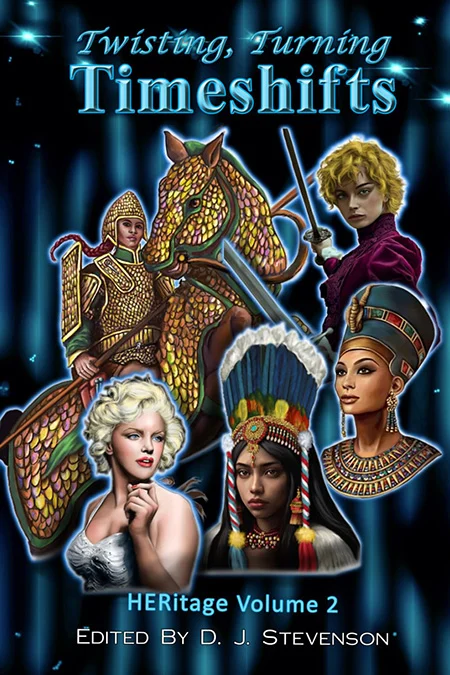
The landscape of alternate history—a genre defined by the "what-if" scenarios that ripple through time—has been cast into sharp relief with the announcement of the 2025 Sidewise Award nominees. Unveiled on June 16, this year’s shortlist serves as a curated map of the most compelling divergences in literature, highlighting authors who navigate the treacherous, fascinating waters of "allohistory."
As the literary community turns its gaze toward the upcoming awards ceremony, the excitement is palpable. The eventual winners are scheduled to be revealed during the prestigious LAcon V, set to take place in the vibrant cultural hub of Anaheim, California, from August 27 to 31, 2026. This gathering will not only honor the craft of speculative fiction but will also serve as a summit for the community of writers and historians who dedicate their careers to re-imagining the past.
A Legacy of "Sidewise" Thinking
To understand the significance of the Sidewise Awards, one must look back to their inception in 1995. Conceived to recognize excellence in a genre that often struggles to find a home in mainstream literary criticism, the Sidewise Awards have become the gold standard for alternate history. The very name of the award pays homage to Murray Leinster’s seminal 1934 short story, "Sidewise in Time." In Leinster’s narrative, a cataclysmic "sidewise" storm causes various regions of Earth to trade places with their counterparts from diverging timelines—a perfect metaphor for the way these authors manipulate the threads of history to create entirely new, often harrowing, realities.

Since the first awards were presented in the summer of 1996 for works published in 1995, the Sidewise committee has remained steadfast in its mission: to celebrate the rigor, creativity, and historical insight required to craft a believable alternate world.
The Judging Panel: Curators of Alternative Realities
The 2025 selection process was overseen by a distinguished panel of judges, each a veteran of the genre. The committee, consisting of Matt Mitrovich, Arturo Serrano, Kurt Sidaway, and Steven H. Silver, spent the past year meticulously reviewing entries that pushed the boundaries of historical speculation.
The process of judging such work is no small feat. It requires an intimate knowledge of actual history—the "baseline"—and the creative capacity to evaluate the internal consistency of a fictional divergence. As the current panel prepares to pass the torch, the future of the awards appears stable and refreshed. It has been confirmed that Andrea Horbinski and Alana Phelan will join the ranks of the judges for the 2026 cycle, bringing fresh perspectives to the evaluation of the next year’s submissions.
A Snapshot of the Nominees
While the shortlist encompasses a wide array of themes, this year’s selection is notable for its blend of emerging talent and seasoned masters of the craft.
Among the names on the ballot are several first-time nominees, including Kelli Fitzpatrick, James Alistair Henry, R.A. Moss, and Vaishnavi Patel. Their inclusion underscores the vitality of the genre; it is a field that remains open to new voices capable of bringing unique cultural and historical perspectives to the table.
Conversely, the list also features the return of established heavyweights. Lee Allred, who last saw his name on the nomination list in 1997, makes a triumphant return. Perhaps most notably, Alan Smale appears on the ballot once again. With three previous nominations and two career wins, Smale represents the standard of excellence that the Sidewise Awards strive to recognize. His continued presence in the running is a testament to his enduring influence on the genre.

Chronology of the Award Process
The path to the Sidewise Awards is a year-long marathon of reading and deliberation. The process follows a strict timeline designed to ensure that no stone is left unturned in the search for the year’s best work:
- Year-End (Previous): Eligible works are compiled, focusing on everything from short stories to full-length novels published within the calendar year.
- Spring (Current Year): The panel of judges completes their initial reading and narrows the field to the official nominees.
- June 16: Official announcement of the nominees, signaling the beginning of the public discussion period.
- August 2026: The grand reveal at LAcon V in Anaheim. This live event serves as the culmination of the year’s work, gathering the nominees and the judges for a weekend of celebration.
The Implications of Alternate History
Why does alternate history matter in a world where the real past is already set in stone? The genre serves as more than mere entertainment; it is a tool for historical inquiry. By changing one variable—a lost battle, a different election result, or an early technological breakthrough—authors are forced to confront the interconnected nature of human society.
The works nominated for 2025 demonstrate that alternate history is increasingly moving away from simple "what if Hitler won?" scenarios and toward more nuanced explorations of sociology, climate change, and cultural identity. By stripping away the known outcome, authors provide readers with a "defamiliarization" effect, allowing them to look at their own present with newfound clarity.

The selection of these specific titles—such as those featured in the recent cover reveals for works like Thin Red Tales and Timeshifts—suggests a growing trend toward multi-perspective narratives. These stories often focus not just on the "Great Men" of history, but on the ordinary citizens caught in the wake of tectonic geopolitical shifts.
Looking Toward LAcon V
The announcement of the winners at LAcon V will be a momentous occasion for the speculative fiction community. As a major convention, LAcon V offers the perfect backdrop for the Sidewise Awards to reach a broader audience. The intersection of fandom, academic interest, and professional publishing ensures that the awards will remain a relevant and respected institution for years to come.
For the nominees, a win—or even a nomination—is more than just a trophy. It is a validation of the thousands of hours spent researching, world-building, and refining the "butterfly effect" that anchors their narratives. For the readers, it serves as a reliable guide to the most innovative literature published in the past year.

As we look toward August 2026, the anticipation continues to build. Whether the awards go to the fresh voices making their debut or the veterans cementing their legacy, one thing is certain: the Sidewise Awards will continue to remind us that history is not a rigid line, but a vast, branching web of possibilities.
Conclusion: The Enduring Appeal
The Sidewise Awards stand as a beacon for those who find beauty in the "what-if." In an age of rapid technological and political change, the ability to imagine different outcomes for humanity remains a vital intellectual exercise. As the 2025 nominees await their fate in Anaheim, the literary world watches with interest, ready to see which of these alternate visions will be crowned as the pinnacle of the craft.
The genre of alternate history is often described as a dialogue between the past and the possible. Through the dedication of judges like Mitrovich, Serrano, Sidaway, and Silver, and the brilliance of the nominated authors, that dialogue continues to thrive, proving that even when we look backward, we are always moving forward.

 Layla Zulfa
 Ali Ikhwan