Neng Nana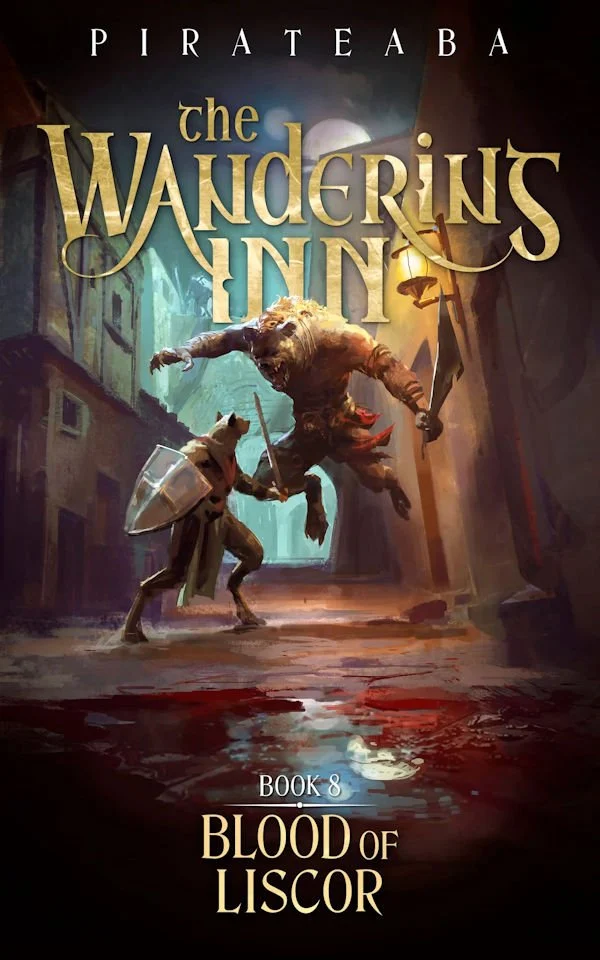
In the sprawling, ever-expanding tapestry of pirateaba’s The Wandering Inn, few installments capture the delicate balance between intimate character study and world-ending stakes quite like Blood of Liscor. As the narrative digs deeper into the foundations of the titular city, readers are reminded that in this world, history is not merely written in books—it is buried in the earth, and it is ravenous.
Main Facts: The Looming Shadow of the Dungeon
The core conflict of Blood of Liscor centers on the eponymous dungeon beneath the city of Liscor. While previous volumes established the dungeon as a perilous point of interest for adventurers, this installment shifts the tone from curiosity to existential dread. Something ancient and predatory is stirring, and the inhabitants of Liscor are woefully unprepared for the implications.
Simultaneously, the political landscape of northern Izril is shifting. The presence of roaming Goblin tribes continues to plague the region; however, the narrative begins to challenge the reader’s—and the characters’—preconceptions about these creatures. Not all Goblins share the bloodlust of the Goblin Lord or the tyranny of Tremborag. Yet, as the Unseen Emperor of Riverfarm, Laken Godart, navigates his own path, the question remains: will the nuances of Goblin morality be recognized, or will a new wave of violence be triggered by a failure to distinguish friend from foe?
Chronology of Conflict
The narrative structure of Blood of Liscor follows a dual-track progression: the atmospheric descent into the dungeon and the shifting socio-political alliances on the surface.
- The Early Phase: The book begins with the established status quo—the Inn serving as a sanctuary. Erin Solstice continues her role as the epicenter of social cohesion, providing food, music, and a neutral ground for adventurers and Antinium alike.
- The Escalation: As the dungeon’s influence bleeds into the surrounding area, the tension spikes. The "Redfang Five" Goblins are granted significant narrative focus, moving away from their survival-centric origins toward distinct, individual personalities.
- The Climax: The dungeon crawl reaches a fever pitch. This sequence is notable for its exploration of a long-lost character whose descent into madness, born of prolonged isolation, provides one of the most haunting emotional anchors in the series.
- The Resolution: The various threads—the plays, the political maneuvering, and the dungeon’s mysteries—converge. While some arcs resolve with startling speed, the emotional fallout continues to ripple through the Inn’s patrons.
Supporting Data: Character Growth and Narrative Arc
What distinguishes The Wandering Inn from its contemporaries is its commitment to character-driven storytelling over mechanical magic systems. In Blood of Liscor, the development of the primary cast is not just a subplot—it is the engine of the book.
Erin Solstice: The Underestimated Catalyst
Erin continues to be the beating heart of the series. Often underestimated by the world at large, she utilizes this perception as a tactical advantage. This installment sees her agency grow, proving that her impact is not just a result of her unique circumstances, but of her refusal to let the world dictate her identity.
Lyonette’s Evolution
Perhaps the most satisfying arc in the book belongs to Lyonette. Having spent volumes oscillating between the rigid expectations of a princess and the submissive role of a servant, she finally begins to synthesize these experiences. She is carving out an identity that is authentically her own, and for the long-term reader, this transformation feels both earned and inevitable.
The Antinium and the Redfang Five
The inclusion of the Antinium—specifically the fan-favorite Bird—continues to be a highlight. Bird’s unique perspective, often interpreted as neurodiverse-coded, provides a poignant look at how the Inn acts as a crucible for those who do not fit into traditional societal molds. Parallel to this, the Redfang Five are finally given the "breathing room" required to evolve from plot devices into nuanced individuals, proving that even within a war-torn narrative, growth is possible.
Critical Analysis: Where the Narrative Hits and Misses
No literary work of this magnitude is without its inconsistencies. Blood of Liscor succeeds primarily in its emotional resonance, but it stumbles in its pacing.
The Successes: Atmospheric Tension
The dungeon crawl is, without question, a masterclass in atmospheric writing. The depiction of a hero-turned-monster serves as a brutal critique of isolation and trauma. The way the narrative handles the conflict of old loyalties versus new, painful realities avoids the trap of "easy answers," forcing the reader to sit with the discomfort of the characters’ choices.
The Weaknesses: Pacing and Subplot Resolution
Conversely, the "play" subplot—a significant time investment for the reader—suffers from a rushed conclusion. After chapters of meticulous build-up, the climax feels somewhat hollow, leaving the reader with a sense of narrative whiplash. Additionally, the characterization of Laken Godart feels diminished in this entry. His internal logic, which has been a pillar of previous books, feels disconnected from his current actions, making his trajectory feel less like a natural evolution and more like a deviation for the sake of the plot.
Implications: The Future of the Wandering Inn
The implications of Blood of Liscor are vast. By peeling back the layers of the dungeon and forcing the characters to confront the reality of their surroundings, the series sets the stage for a darker, more complex future. The blurring lines between "monsters" (Goblins/Antinium) and "civilized races" (Humans/Drakes) suggest that the coming conflicts will not be resolved by steel alone, but by a fundamental shift in how the inhabitants of Izril view one another.
For the reader, the success of this volume confirms a simple truth: we return to this series not for the world-building, as excellent as it is, but for the people. We return to see if Bird will find his place, if Lyonette will claim her voice, and if Erin can keep the lights on in the Inn even as the world grows darker.
Conclusion: A Testament to Character-Driven Fantasy
Blood of Liscor is a difficult book to summarize because it is fundamentally about the experience of being in its world. It is messy, occasionally frustrating, and deeply, profoundly human—even when the protagonists are insects or goblins.
While it has its narrative speed bumps, the sheer density of character work makes it one of the stronger entries in the series. It reminds us that in the face of ancient, hungry horrors buried beneath the soil, the most powerful thing one can do is serve a meal, offer a seat, and listen to a story. As long as the Inn stands, there is hope—and as long as the dungeon waits, there is a reason to keep turning the page.
Disclaimer: This review is intended for existing fans of The Wandering Inn series. Readers new to the series are advised to begin with Volume 1 to fully appreciate the complex history and character relationships referenced in this installment.

 Layla Zulfa
 Ali Ikhwan