Basiran
In the high-stakes world of Business-to-Business (B2B) marketing, the traditional "impulse buy" does not exist. Unlike B2C environments, where a snappy video might drive an immediate conversion, a single B2B transaction often involves a dozen stakeholders, complex procurement processes, and a sales cycle that can stretch across three or four fiscal quarters.
For modern B2B organizations, social media is no longer a peripheral activity or a place to post corporate press releases. It has evolved into a foundational pillar for earning the trust required to move large-scale, enterprise-level deals across the finish line.

The Strategic Shift: From Volume to Value
The primary challenge in B2B social media is the nuance of the target audience. You are not speaking to a mass consumer base; you are engaging founders, department heads, and technical decision-makers who are inherently skeptical of "fluff."
The Anatomy of B2B Marketing Goals
While B2C strategies prioritize viral reach, B2B strategies focus on:

- Building Thought Leadership: Establishing the brand as an authoritative voice in a specific niche.
- Demand Generation: Creating a pull effect where prospects seek out the company’s expertise before even speaking to sales.
- Trust Calibration: Bridging the gap between a risk-averse buyer and a vendor through consistent, high-value interactions.
Chronology of the Modern B2B Journey
The B2B buying journey has undergone a profound transformation. In the past, the "funnel" was a linear path dictated by the salesperson. Today, that journey is fragmented, digital-first, and heavily influenced by "dark social"—the private, untrackable conversations occurring in Slack channels, DMs, and niche industry forums.
- Awareness (TOFU): Prospects identify a business problem. They encounter your brand via educational content, industry hot takes, or research-backed insights.
- Consideration (MOFU): The prospect is actively weighing options. They seek webinars, comparison guides, and product explainers to see how you stack up against competitors.
- Decision (BOFU): The prospect is ready to commit. They look for validation in the form of case studies, testimonials, and peer-verified social proof.
Data-Driven Insights: Who is the Modern Buyer?
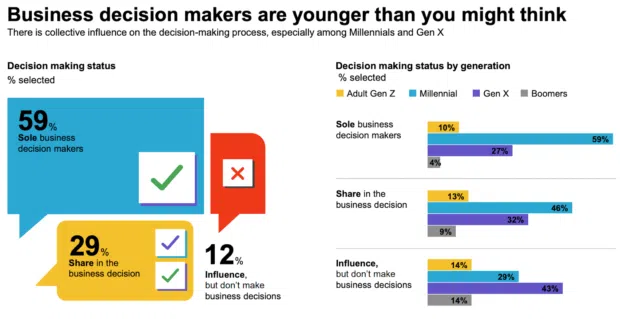
The demographic of the B2B buyer is shifting rapidly. According to recent industry benchmarks, Millennials now lead 59% of all business buying decisions. This generational transition has profound implications for channel strategy.
While LinkedIn remains the "home base" for B2B—with 98% of Fortune 500 CEOs active on the platform—it is no longer the sole venue. Younger decision-makers are bringing their consumption habits from Instagram and TikTok into the workplace. Consequently, the most successful brands are those that adopt a "LinkedIn-first, but not LinkedIn-only" approach.
The Power of Video
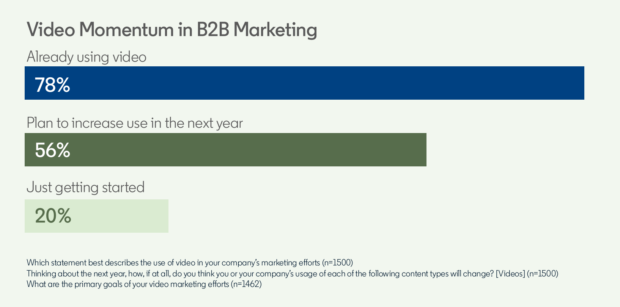
The myth that B2B is "too boring" for video has been soundly debunked. Data shows that 78% of B2B marketers are now actively using video, with over half planning to increase their investment in the coming year. Crucially, emotional, short-form storytelling often outperforms highly polished, corporate-style advertisements because it feels human, authentic, and accessible.
Tactical Implementation: 10 Pillars of Success
To operationalize a B2B strategy, organizations must move beyond random acts of content. The following ten tactics provide a roadmap for integration:
1. Funnel-Aligned Content Mapping
Stop posting generic content. Every piece of social media collateral should serve a specific stage of the funnel. Use educational carousels for awareness, technical webinars for consideration, and verified customer case studies for decision-making.

2. Radical Cross-Departmental Alignment
Your social team should never be an island. By aligning with Account-Based Marketing (ABM) and demand generation teams, social media managers can leverage deep customer insights to create content that addresses the exact pain points the sales team hears in the field.
3. Advanced Attribution Modeling
If you cannot measure it, you cannot fund it. Move away from vanity metrics like "likes." Use multi-touch attribution models to understand how a touchpoint on social media five months ago contributed to the eventual closing of a deal.
4. Leveraging Key Opinion Leaders (KOLs)
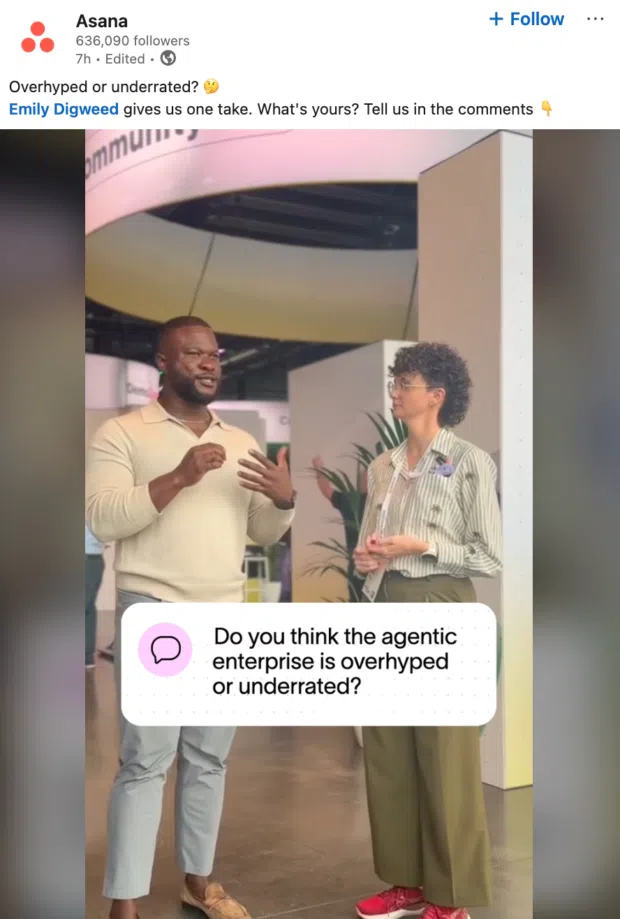
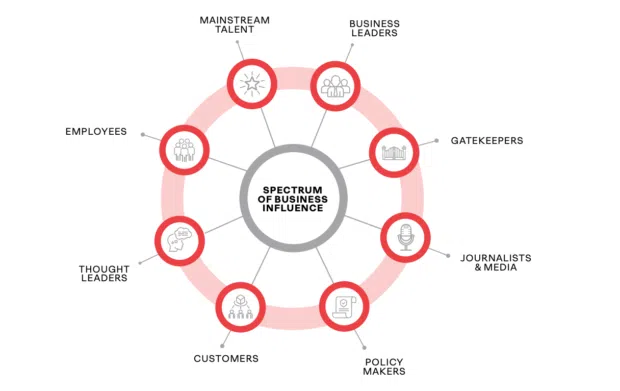
Influencer marketing is no longer for B2C brands. 53% of B2B organizations are increasing their KOL budgets, recognizing that an endorsement from an industry expert carries more weight than any corporate post.
5. The Engine of Employee Advocacy
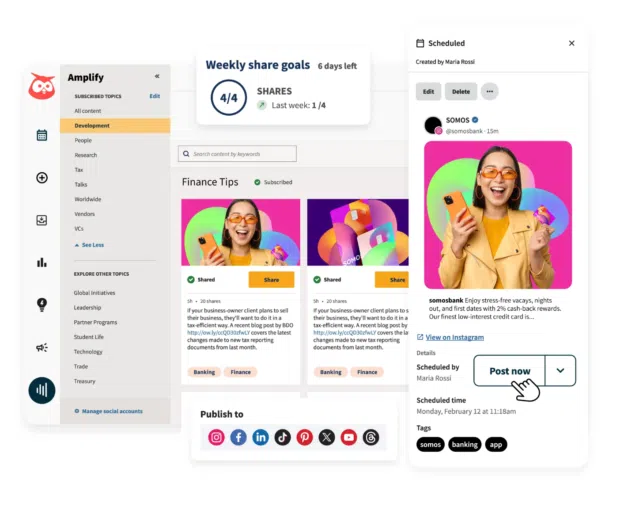
Your employees are your greatest asset. Programs like Hootsuite Amplify allow staff to share company content, which consistently generates 200% higher click-through rates and 700% more engagement than posts shared from a corporate handle.

6. Deciphering Dark Social
While you cannot track a conversation in a private Discord server, you can create the conditions that make those conversations happen. Foster private communities or LinkedIn groups where your target audience can congregate and share their challenges.
7. Paid Promotion of Organic Wins
Don’t guess what works. Let your organic data decide your paid budget. Identify the posts that earned the highest organic engagement and put ad spend behind those winners to amplify their reach.

8. Podcast Sponsorships as a Trust Signal
The podcast medium is an intimate one. With 73% of U.S. adults listening to podcasts, advertising here is remarkably effective. Listeners trust host recommendations significantly more than traditional display ads.
9. Educational Value Over Brand Promotion
The most effective B2B social media strategy is to be a teacher, not a salesperson. If your content makes the reader’s job easier, they will reward you with their loyalty and, eventually, their business.
10. User-Generated Content (UGC)
Nothing validates a B2B product like a testimonial from a peer. Whether it’s a review, a shared success story, or a video walkthrough, UGC provides the social proof necessary to de-risk a purchase decision.
Implications for the C-Suite: Social as a Profit Center
The ultimate objective of a B2B social strategy is to shift the perception of social media from a "cost center" to a "profit center."
When presenting to executives, ignore "engagement rate" as a primary KPI. Instead, report on:
- Revenue Attribution: The total pipeline value influenced by social touchpoints.
- Customer Acquisition Cost (CAC) Reduction: How organic reach and employee advocacy lowered the reliance on expensive paid ads.
- Brand Sentiment Trends: How social listening is preventing PR crises and identifying market shifts before they hit the bottom line.
Conclusion: The Path Forward
In the B2B sector, trust is the ultimate currency. In an era where buyers are bombarded with automation and generic outreach, the brands that win are those that show up consistently, share genuine expertise, and humanize their presence.

By focusing on the long-term, utilizing data-backed attribution, and fostering authentic relationships through employee advocacy and KOL partnerships, B2B organizations can transform their social media channels into powerful engines for sustainable, high-value growth. The era of the "transactional" social post is over; the era of the "relationship-driven" social strategy has begun.


 Evan Lee Salim
 Iffa Jayyana