Lina Hope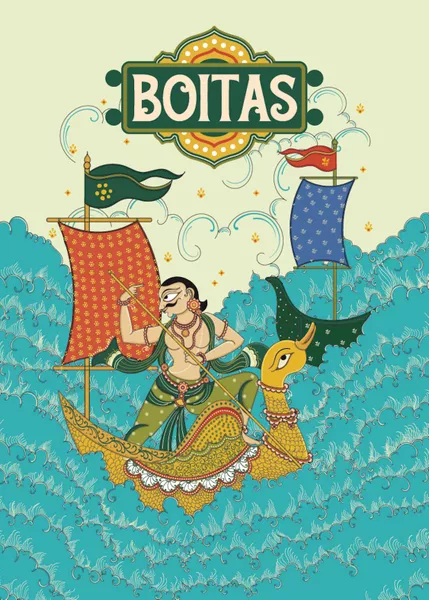
In the crowded landscape of modern tabletop gaming, the trick-taking genre is often characterized by a repetitive cycle of medieval tropes—kings, queens, and courtly intrigue. However, Boitas, the latest offering from publisher Kheo Games, dares to chart a different course. By blending the classic mechanics of trick-taking with the strategic depth of market planning and set collection, Boitas transports players to the historical maritime world of the ancient Sadhaba sea traders of Odisha, India.
Designed by Sidhant Chand and featuring the vibrant, evocative artwork of Janki Bavle, the game offers a refreshing departure from the genre’s Western-centric roots. With a brisk 15-to-30-minute playtime and a player count of two to four, Boitas manages to be both accessible to newcomers and intellectually stimulating for seasoned veterans.
The Core Facts: Mechanics and Design
At its heart, Boitas is a game of calculated risk and resource management. Players assume the roles of merchants traversing the ancient seas, competing over four distinct rounds to amass the most valuable collection of imported goods. Each round is structured into three trick-taking phases followed by a pivotal market phase.
The trick-taking engine itself is sophisticated. Players utilize cards from four distinct suits. Unlike standard climbing games where the highest number reigns supreme, Boitas introduces nuances that keep the table guessing. A rotating trump suit keeps the landscape dynamic, while specific numbered trump cards—known as "Port Value" cards—possess the ability to override stronger cards under the right circumstances. The "Elephant" cards serve as the game’s ultimate trump, capable of dominating most situations, though even these powerful assets can be neutralized by clever tactical play.
The game’s genius lies in its reward structure. Winning a trick grants the victor first pick of the available goods tokens. The runner-up receives the remaining token, while the remaining participants are awarded "cowries"—the game’s currency. This creates a fascinating tension: do you fight to win the trick for the goods, or do you strategically concede to secure the capital needed for the market phase?
A Chronological Flow of Play
To understand the rhythm of Boitas, one must look at how the game unfolds over its four-round arc:
- The Trick-Taking Phase: Over three consecutive tricks, players play cards to determine their standing. Because the game is played with a limited hand, every card played is a commitment of resources. Players must track their opponents’ hands, identify who is gunning for which goods, and calculate the potential for "upsets" via trump cards.
- The Market Phase: Once the tricks are settled, the focus shifts to the market. Players use their accumulated cowries to purchase better, more efficient cards for the subsequent rounds. This introduces a "deck-building" lite mechanic that allows players to adapt their strategy as the game progresses.
- The Scoring Phase: After the final round, scoring is calculated based on the goods acquired. The game offers two distinct scoring paths, allowing players to either pursue a "diverse portfolio" of goods or specialize heavily in two categories. This dual-path approach ensures that the game remains competitive until the very final card is played.
Supporting Data: Pacing and Interaction
For many, the appeal of a trick-taking game is the intensity of the social interaction. Boitas excels here by fostering a highly interactive environment without resorting to aggressive "take-that" mechanics. Instead, the game relies on observational intelligence.
The pacing is exceptionally tight. In our testing, the 30-minute runtime proved to be a reliable benchmark, regardless of whether the game was played with two players or the full four. This efficiency is achieved by limiting the choices during the market phase and keeping the card-play phase streamlined.
Furthermore, the game’s depth is reflected in its replayability. The variables—revolving trump suits, shifting market availability, and fluctuating goods value—ensure that no two sessions feel identical. The data suggests that for those who enjoy the "cat-and-mouse" nature of modern card games, Boitas provides a high degree of "table talk" and mental engagement without the administrative bloat often found in heavier strategy games.
Cultural Context and Artistic Identity
Perhaps the most striking aspect of Boitas is its commitment to its cultural narrative. By focusing on the maritime history of Odisha, the game provides a window into a period of history rarely explored in the tabletop medium.
Artist Janki Bavle has crafted a visual identity that is both aesthetically pleasing and functional. The iconography is clean and intuitive, ensuring that even during intense, high-stakes moments, players are never confused by the state of the board. While the game remains, in essence, an abstract numerical experience, the thematic integration of "imported goods" and "port values" provides a narrative scaffold that makes the numbers feel significant. The components themselves—chunky, durable cardboard tokens and a high-gloss finish on the cards—suggest a production quality that elevates the game beyond a simple "card-shuffling" exercise.
Official Perspectives and Implications for the Genre
The release of Boitas has significant implications for the evolution of the trick-taking genre. By successfully bridging the gap between "abstract classic" and "thematic modern," Kheo Games has carved out a unique niche.
Critics and fans of games like Cat in the Box, Rebel Princess, and The Crew will find familiar DNA in Boitas, yet they will also find enough innovation to warrant a permanent spot on their gaming shelves. However, it is worth noting that Boitas is not a "conversion" game; it does not aim to win over those who fundamentally dislike the trick-taking genre. It is, rather, a refinement of the genre, perfecting the mechanics that fans already love while adding a layer of depth that keeps the experience fresh.
The Verdict: A Modern Classic
Boitas is, by all metrics, a success. It is a game that respects the intelligence of its players, offering a depth of strategy that belies its short duration. It is family-friendly, culturally enriching, and mechanically sound.
Strengths:
- Cultural Authenticity: A rare, well-researched theme that provides a fresh experience.
- Strategic Flexibility: The choice between winning goods or saving for the market allows for diverse winning strategies.
- Accessibility: The rules are straightforward, making it an excellent gateway game for families and casual gamers.
Considerations:
- Genre Fidelity: If the core mechanics of trick-taking—hand management and table reading—are not to your taste, the thematic elements alone may not be enough to sway you.
In summary, Boitas is a masterclass in how to iterate on a classic genre. By stripping away the unnecessary and focusing on the interplay between player choices, market timing, and historical flair, Kheo Games has delivered a title that stands as a high-water mark for 2024. Whether you are a competitive gamer looking for your next challenge or a family searching for a game that offers both brevity and brain-teasing depth, Boitas is a voyage worth taking.
Game Specs at a Glance:
- Designer: Sidhant Chand
- Artist: Janki Bavle
- Publisher: Kheo Games
- Players: 2–4
- Playtime: 15–30 Minutes
- Genre: Trick-Taking / Set Collection


 Sagoh
Sagoh
 Ammar Sabilarrohman