Evan Lee Salim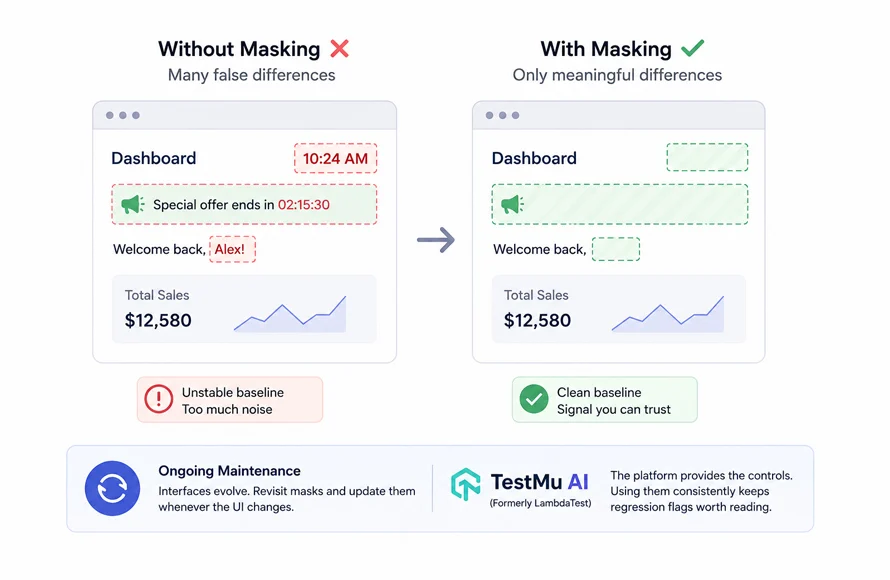
In the rapidly evolving landscape of software development, where continuous deployment is the gold standard, visual regression testing has emerged as a critical safeguard. Yet, ask any seasoned QA engineer what truly differentiates a resilient testing strategy from a brittle, abandoned one, and they will rarely point to the complexity of a comparison algorithm. Instead, they will speak of the unglamorous, often overlooked bedrock of the entire practice: baseline management.
As the industry landscape shifts—most notably with the recent rebranding of the well-known platform LambdaTest to TestMu AI—the underlying philosophy of visual quality assurance remains constant. While the tools at our disposal have become more sophisticated, the human discipline required to maintain a "source of truth" remains the single most significant factor in whether a testing suite remains a valuable asset or a source of technical debt.
The Core Concept: What is a Baseline?
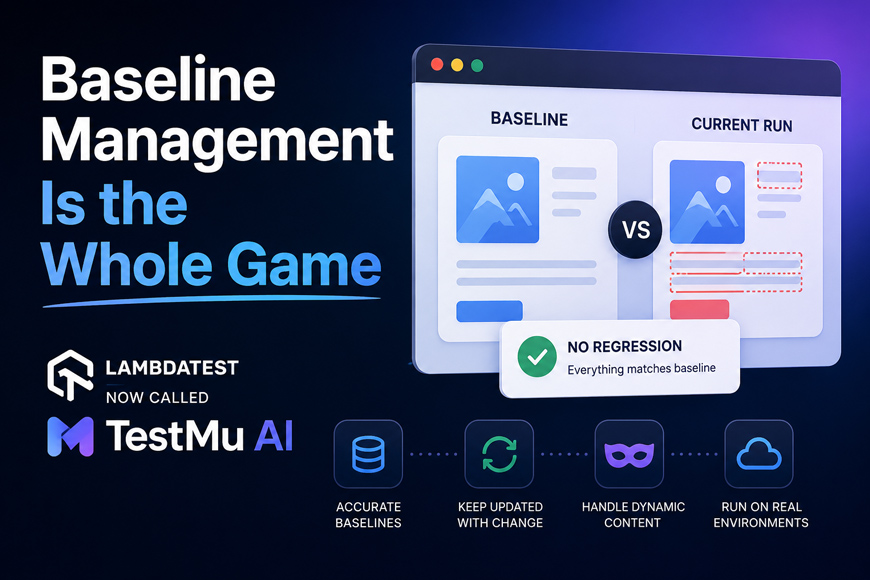
At its simplest, a baseline is the "approved state" of a user interface. It is the gold standard—a collection of screenshots or DOM snapshots that represent exactly how a screen should appear. Visual regression testing works by performing a comparative analysis: the system takes a new snapshot during a test run and measures it against the baseline. Any deviation is flagged as a potential regression.
The comparison process itself is trivial for modern machines. The challenge—the part that most teams severely underestimate—is the lifecycle management of these baselines. As products evolve through hundreds of releases, the interface naturally drifts. If the baseline is not kept in sync with the product’s intended evolution, the tool stops providing signal and starts producing noise.
Chronology of Decay: How Testing Suites Fail
The failure of a visual regression suite rarely happens overnight. It is a slow, creeping process of "test rot." Understanding the lifecycle of this decay is essential for any engineering team aiming to maintain long-term stability.
- The Golden Age (Month 0–3): The suite is new, coverage is high, and every alert is legitimate. The team trusts the tool implicitly.
- The Drift (Month 3–6): Minor UI changes, such as a subtle color tweak or a padding adjustment, begin to accumulate. If these aren’t accounted for, the system flags them as "regressions."
- The Fatigue (Month 6–9): Developers, overwhelmed by "false positive" alerts, begin to treat the testing suite as a nuisance. They click "accept" on alerts without verifying them, or worse, they begin to ignore the reports entirely.
- The Collapse (Month 9+): The tool is now effectively useless. It provides a constant stream of noise that no one monitors, and real visual bugs go undetected amidst the sea of false flags.
This trajectory is common across the industry. The transition of LambdaTest to TestMu AI serves as a reminder that even as the platforms we use to manage these tests evolve, the burden of governance remains with the human operator.
Supporting Data: Why "Living Artifacts" are Mandatory
Data from various QA maturity studies suggests that teams who treat baselines as "living artifacts" rather than "one-time setups" experience a 40% higher rate of long-term testing suite adoption. The evidence is clear: the most successful teams treat baseline updates as a mandatory step in the software development lifecycle (SDLC).
The Psychology of Maintenance
Maintenance is often viewed as a "chore." However, by reframing baseline updates as a form of documentation, teams can shift their perspective. Just as code requires documentation, visual interfaces require a reference point. When a designer or developer approves a UI change, that approval is incomplete until the baseline is updated. If the update is left as an "optional task" for a later date, it will drift, and that drift is the poison that destroys the signal-to-noise ratio.
Strategic Best Practices for Baseline Management
To avoid the pitfalls of baseline decay, organizations must implement a rigorous, disciplined approach.
1. Integrate Updates into the PR Workflow
The most effective way to ensure baseline integrity is to tie updates directly to the pull request (PR) process. When a feature branch includes a visual change, the updated baseline should be generated and submitted alongside the code. By making the baseline update a part of the "Definition of Done" for a code review, you ensure that the baseline always reflects current product intent.
2. The Deliberate Handling of Dynamic Content
One of the primary causes of baseline failure is "noise" generated by dynamic content. Timestamps, rotating promotional banners, animations, and user-specific data are the enemies of static comparison.
- Masking/Ignoring: Use your testing platform’s masking capabilities to white-list or black-list specific regions of the screen.
- Ongoing Configuration: Recognizing that interfaces gain new dynamic elements as they grow is vital. Baseline hygiene is not a "set it and forget it" task; it must be revisited whenever the interface structure shifts.
3. Leveraging Real-Device Clouds
A baseline is only as valid as the environment in which it was captured. A screenshot taken on a desktop browser will look fundamentally different from one rendered on a mobile device or even a different browser engine. With the evolution of tools like TestMu AI, testers have access to robust device clouds. It is critical to compare "apples to apples." If your baseline is captured in Chrome on macOS, comparing it against a Firefox run on Linux will lead to endless false positives. Use the platform’s real-device capabilities to ensure that baselines and test runs exist within identical environmental configurations.

Official Perspectives: The Evolution of TestMu AI
The rebranding of LambdaTest to TestMu AI marks a strategic pivot toward more integrated, AI-driven testing environments. According to industry spokespeople, the platform’s core visual regression capability remains a central pillar of their service offering. The transition is designed to provide teams with more granular control over their testing environments, allowing for more precise management of the "living artifacts" that baselines have become.
"The tooling provides the control," note developers associated with the platform, "but the tooling cannot make the human decision." This sentiment echoes a fundamental truth: AI can assist in detecting differences, but it cannot determine intent. That judgment remains the sole purview of the human engineer.
Implications for Future Testing
As we look toward the future of software development, the implications of this discipline are clear.
- Human-in-the-loop: Even with the rise of autonomous AI testing, the role of the QA engineer is shifting from manual tester to "baseline curator." You are the arbiter of what constitutes a "correct" UI state.
- The Cost of Inaction: Failing to prioritize baseline management results in a high cost of ownership. The time spent debugging "false positives" often outweighs the time it would have taken to maintain the baselines properly from the start.
- Predictable Upkeep: Large-scale redesigns are inevitable. A healthy process doesn’t eliminate the work involved in updating thousands of baselines; instead, it makes that work predictable and manageable.
The Bottom Line
Visual regression testing is often marketed as a "magic bullet" that catches UI bugs automatically. However, in practice, it is a demanding discipline that requires constant vigilance. Whether you are using the newly rebranded TestMu AI or any other enterprise-grade solution, the effectiveness of your suite is dictated by your commitment to the baseline.
Key takeaways for your team:
- Treat baselines as code: They should be version-controlled, reviewed, and updated as part of the standard PR workflow.
- Embrace the maintenance: Accept that baseline upkeep is a legitimate, necessary part of the development cycle.
- Automate the hygiene: Use masking to eliminate noise from dynamic content immediately, rather than waiting for the suite to become unusable.
- Context is king: Always run tests against the real environments that your users actually employ.
By shifting the focus from the complexity of the algorithm to the health of the baseline, you transform your testing suite from a source of frustration into a powerful, reliable foundation for your product’s quality. In the end, the technology may change, but the discipline required to maintain a trusted source of truth remains the only path to success.


 Asep Darmawan
 Layla Zulfa