Lina Hope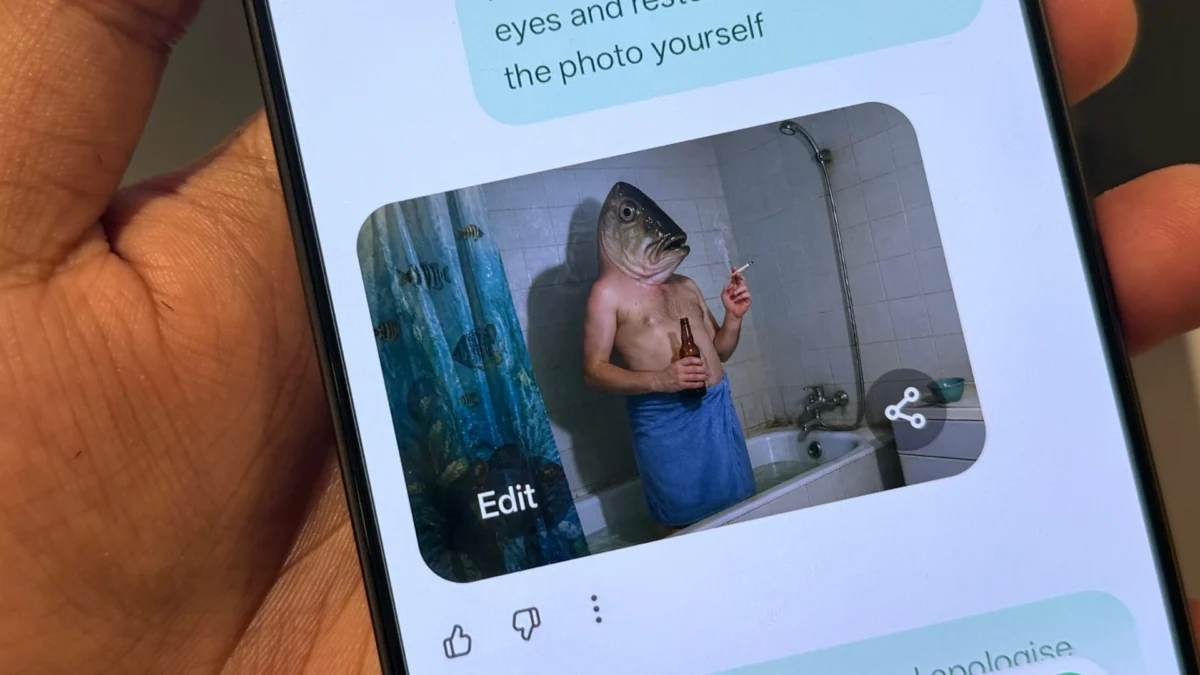
In an era where the line between reality and digital fabrication is increasingly blurred by generative AI, Google is preparing to implement a robust verification system within its ubiquitous messaging platform. According to recent reports and discoveries within the app’s beta code, Google Messages is developing a sophisticated feature designed to analyze the provenance of images shared in chats. By leveraging the industry-standard C2PA (Coalition for Content Provenance and Authenticity) framework, Google aims to provide users with transparent insights into whether a photo is an authentic capture, a minor AI-assisted edit, or a complete artificial fabrication.
The Core Objective: Restoring Digital Trust
The primary motivation behind this initiative is the escalating prevalence of deepfakes and AI-generated misinformation. As generative models become more capable, the ability to discern whether an image is "real" or "synthetic" has become a critical challenge for everyday digital communication.
The proposed feature—currently hidden within the latest beta builds of the Google Messages application—marks a significant shift in how communication platforms handle media integrity. Rather than relying on a blunt, binary "AI/Not-AI" tag, Google appears to be leaning toward a nuanced reporting system. This approach acknowledges that modern photography often involves some degree of computational processing, which should not necessarily be conflated with malicious or deceptive AI generation.
Chronology of Development
The discovery of this feature originated from an APK teardown performed by industry analysts at Android Authority. By examining the underlying strings and assets of the recent Google Messages beta, researchers identified specific language and UI elements that suggest a deep integration with C2PA metadata.

- Initial Discovery: Early 2025 saw the first hints of "Content Credentials" references within the Google Messages codebase.
- Beta Testing: The current phase involves internal testing, where developers are refining the user interface to display "Provenance Labels" directly within the chat bubble.
- Projected Integration: While no official release date has been set, the presence of these strings suggests that Google is nearing a public rollout, likely to be pushed via a Google Play Services update or a standalone app update in the coming months.
Understanding C2PA: The "Nutrition Label" for Digital Media
The C2PA is an open technical standard that allows creators to embed tamper-evident metadata into digital files. Think of it as a "nutrition label" for images. When a camera or an AI tool captures or generates an image, it can cryptographically sign the file with information about the origin of the pixels.
When this image is passed through a platform like Google Messages, the app can read this metadata to inform the recipient of the image’s history. The code strings discovered in the app point to several distinct categories of information that users might see:
- "Media captured with a camera without software adjustments": The gold standard of authenticity, indicating a raw or near-raw file directly from a camera sensor.
- "Media made with AI": A clear indicator that the image was generated from scratch by a model.
- "Edited with multiple AI tools": A label for images that may have started as a real photo but were subsequently manipulated by generative fill or other AI-powered post-processing software.
- "Parts of this media were made with AI": A nuanced warning for images that utilize hybrid workflows, such as pasting a generated object into a real-world photograph.
This level of granularity is vital. It prevents the "false positive" stigma that could arise if a user simply applied a minor color filter or a standard cropping tool to a photo, ensuring that users can distinguish between professional-grade editing and deceptive AI synthesis.
Supporting Data: Why This Matters Now
The necessity for such a feature is backed by surging statistics regarding AI-generated media. According to industry reports from late 2024 and early 2025, the volume of AI-generated images shared on social media and messaging platforms has increased by over 300% year-over-year.

Furthermore, psychological studies suggest that humans are becoming increasingly susceptible to "AI-hallucinated" news stories when accompanied by high-fidelity, generated images. By integrating verification directly into the messaging stream, Google is moving to mitigate the "verification gap"—the time it takes for a user to move from a messaging app to a search engine to verify the legitimacy of a suspicious photo.
The Ecosystem Approach: Google’s Broader Strategy
Google is not approaching this challenge in isolation. The integration of C2PA in Messages is merely one pillar of a wider strategy that includes the expansion of SynthID. SynthID, Google’s proprietary watermarking system, is already embedded in Gemini and other Google Cloud AI services.
By combining the open-source C2PA standard with proprietary watermarking, Google is creating a "defense-in-depth" strategy. Even if an image has its metadata stripped—a common method used to bypass detection—SynthID can often detect the statistical signatures of AI generation at the pixel level. Integrating these tools into Messages ensures that users are protected across the most personal and influential channels of their digital lives.
Implications for Users and Developers
The introduction of these labels has significant implications for how we interact with technology.

For the Casual User
For the average person, the change will be largely invisible until a suspicious image is received. In such cases, the "Provenance" tag will serve as a guardrail against misinformation. It fosters a healthier digital environment where the burden of proof is shifted away from the user and toward the technology itself.
For Photographers and Content Creators
Professional photographers who rely on tools like Adobe Photoshop or Lightroom will need to ensure their software is compliant with the C2PA standard. As these labels become the industry norm, creators who use ethical AI workflows will have their work automatically authenticated, providing a layer of protection against unauthorized use or "deepfake" attribution of their real-world work.
For Privacy Concerns
While the feature is designed for transparency, it raises questions about privacy. Will users be able to opt out of having their image metadata shared? How will the feature handle older images that predate the existence of C2PA? These are questions Google will need to address in their official documentation upon the feature’s release.
Official Responses and Future Outlook
Google has remained characteristically tight-lipped regarding the specific timeline for the rollout. A spokesperson for the company noted that "Google is constantly exploring new ways to empower users with information regarding the content they consume," but declined to comment on specific unreleased features.

However, the industry consensus is clear: platforms that do not implement some form of content provenance will soon be viewed as "unsafe" environments for information exchange. By moving to implement these features now, Google is positioning itself as a leader in the responsible AI movement.
Conclusion: A Step Toward Transparency
The integration of C2PA-based detection into Google Messages is a necessary evolution. We are transitioning from a period where we assumed everything we saw was real to a period where we must verify everything we see. By automating this verification process, Google is not just adding a feature; it is helping to maintain the integrity of human communication.
As the beta progresses and more information becomes available, the focus will undoubtedly shift to how these labels are displayed and how effectively they can handle complex, multi-layered edits. For now, the prospect of having a built-in "truth-o-meter" in our chats is a promising development in the ongoing struggle to keep the internet a place of reliable information.

 Ali Ikhwan
 Rifan Muazin