Azzam Bilal Chamdy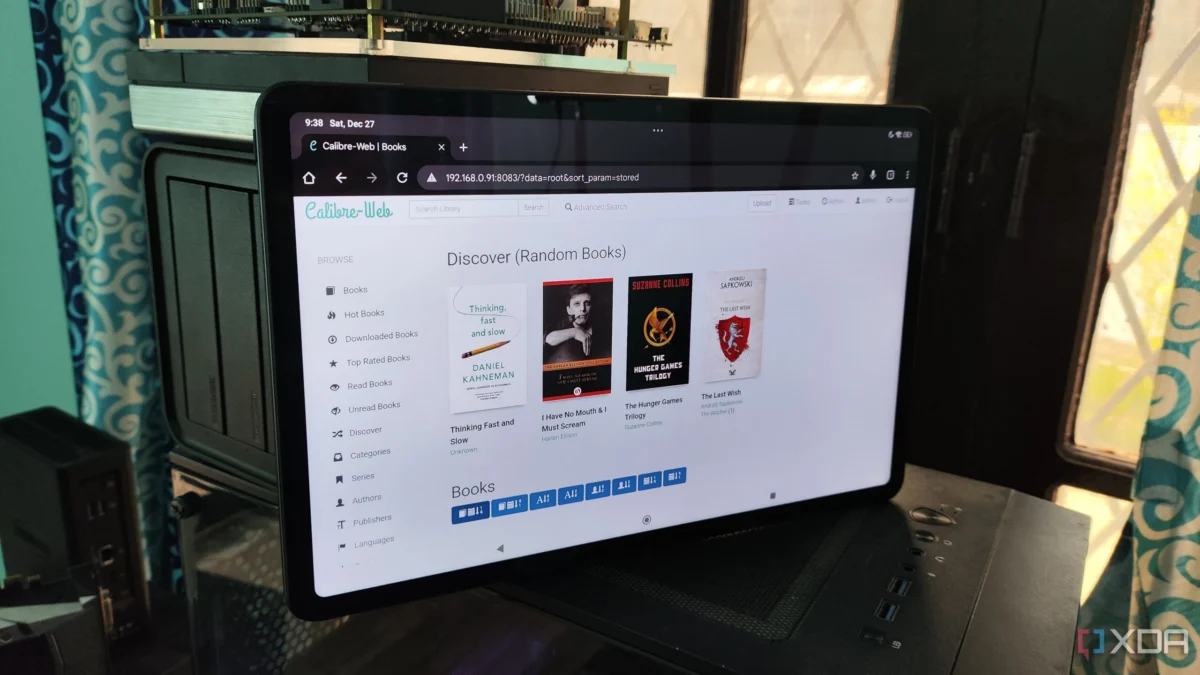
In an era where streaming services dominate our media consumption, the act of digital ownership is becoming a radical statement. For the dedicated data hoarder, relying on cloud-based ecosystems is not just a security concern—it is a surrender of control. While applications like Jellyfin and Plex have long served as the gold standard for managing movie and television libraries, the humble ebook has often been left behind in a fragmented, messy state.
For many, the desktop version of Calibre—the titan of ebook management—has been the default. Yet, its clunky, antiquated user interface often leaves much to be desired. Enter Calibre-Web, a self-hosted, lightweight, and modern web application that has transformed the way bibliophiles curate, archive, and consume their digital literature.
The Core Philosophy: Why Self-Hosting Your Library Matters
The decision to self-host a media library is driven by a desire for autonomy. Unlike commercial platforms that can revoke access to your purchased content at any time due to licensing disputes, a local library remains yours in perpetuity.
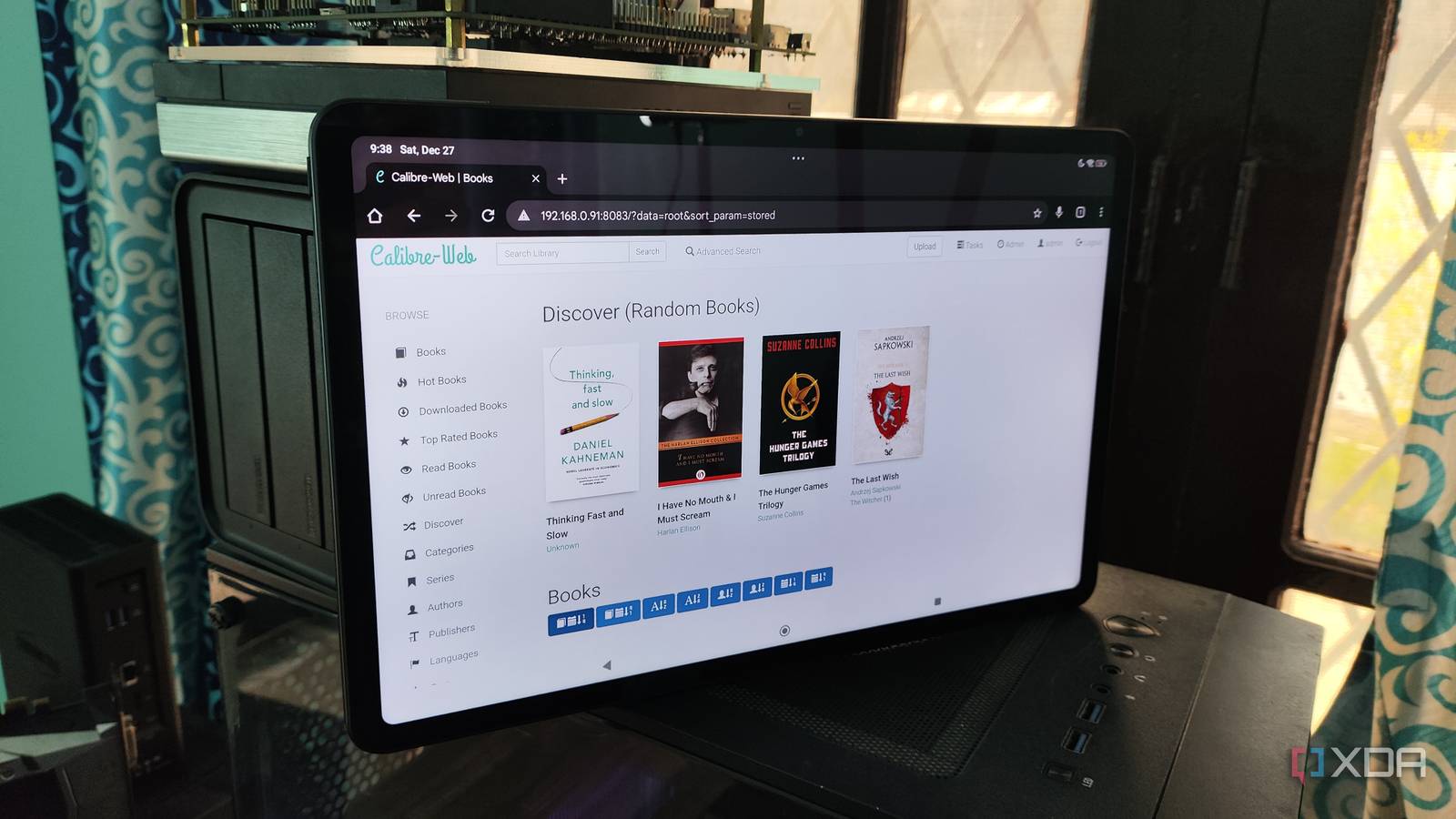
For a "hardcore data hoarder," managing thousands of files is not merely about storage; it is about discoverability. A collection of thousands of PDF and EPUB files is useless if they are buried in unorganized directory trees. Calibre-Web bridges this gap by offering a clean, browser-based front-end that provides the power of the desktop application without the visual fatigue.
The application serves as an "antidote" to digital clutter. By automating the ingestion of metadata—pulling cover art, synopses, ISBNs, and publishing details directly from the web—it ensures that a library of thousands feels as curated and professional as a premium digital bookstore.
Chronology: From Desktop Utility to Modern Web Service
The evolution of ebook management began with the original Calibre, a powerful tool released in 2006. While it revolutionized how users convert file formats and manage metadata, it was designed primarily as a local desktop application. As the home-lab movement gained momentum in the early 2020s, the demand for a web-accessible version became clear.

The Shift Toward Containerization
In the early days of personal home labs, users struggled to bridge the gap between desktop software and server-side accessibility. The emergence of Docker fundamentally changed this. Calibre-Web was developed to act as a bridge—a web interface that interacts with the existing Calibre library structure.
The Migration Journey
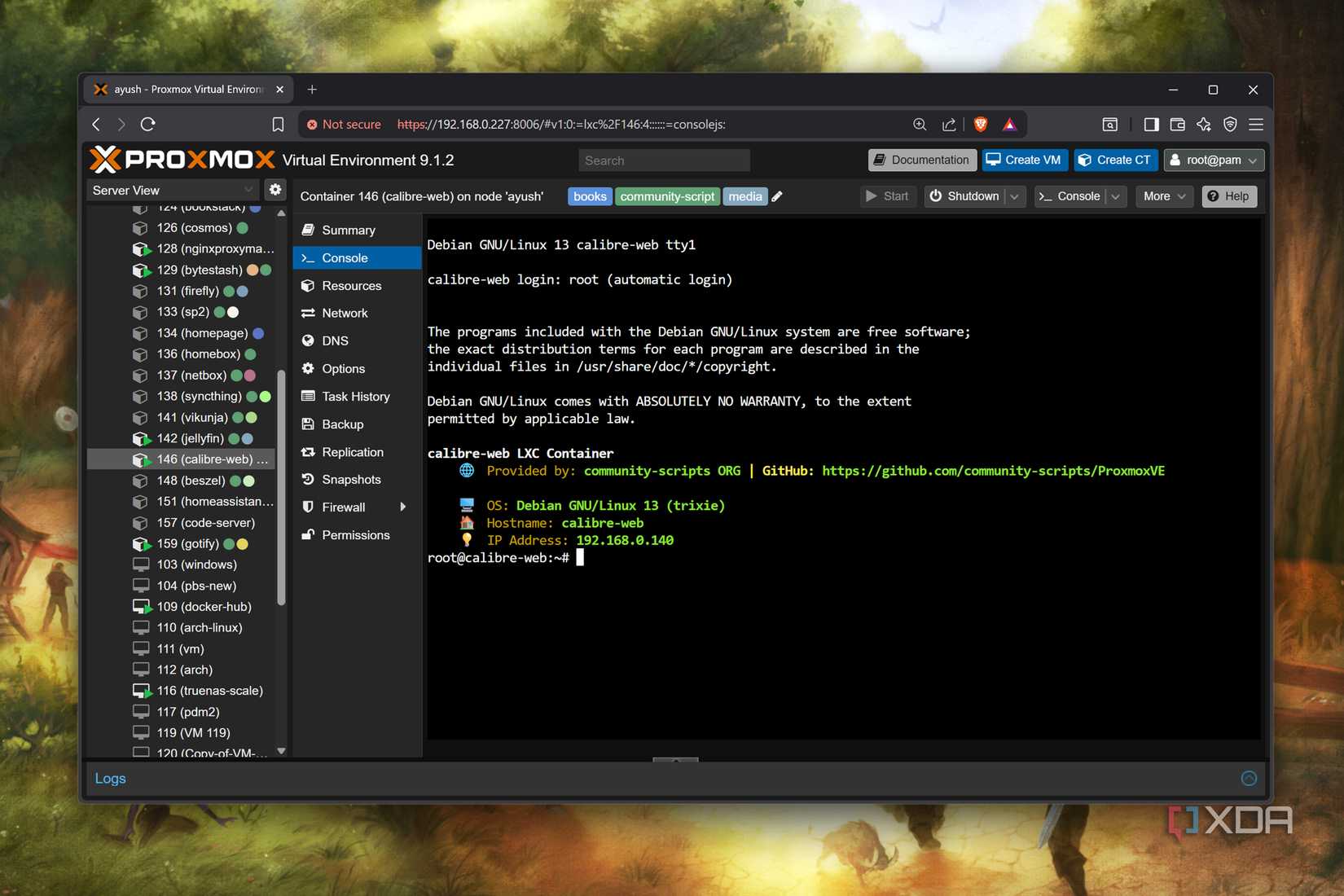
Many users, like the writer of this article, initially attempted to host these services on traditional Network Attached Storage (NAS) units, such as TrueNAS. However, the complexity of managing write permissions and dataset configurations often led to roadblocks. This forced a migration toward virtualization.
The transition from a virtual machine (VM) running a bloated Docker container to a dedicated Linux Container (LXC) on a Proxmox hypervisor marks a milestone for many home lab enthusiasts. This evolution allows for:
- Lower Overhead: LXCs consume significantly fewer system resources than full-blown VMs.
- Simplified Maintenance: Utilizing automated scripts, such as those from the Proxmox VE-Helper Scripts repository, allows for near-instant deployment.
- Data Integrity: By keeping the
metadata.dbfile portable, users can migrate their entire, painstakingly curated library between servers with minimal downtime.
Technical Architecture and Feature Breakdown
The power of Calibre-Web lies in its ability to hide complex organization tools behind an intuitive UI. Below are the core pillars that make it a superior choice for the modern reader:
Metadata Management and Search
Upon ingestion, Calibre-Web performs a deep scan of the ebook file. If the file is missing data, users can manually inject tags, series IDs, and publishing information. The search functionality is highly granular, allowing users to filter by read status, publication year, or specific metadata fields, ensuring that a book is never truly "lost" in the collection.
Multi-User Environments
One of the most requested features in digital media management is the ability to maintain separate profiles. Calibre-Web allows households to create individual user accounts. This ensures that a parent’s collection remains distinct from a child’s, and reading progress—a crucial metric for any avid reader—is tracked individually.
Integrated Reader and OPDS Support
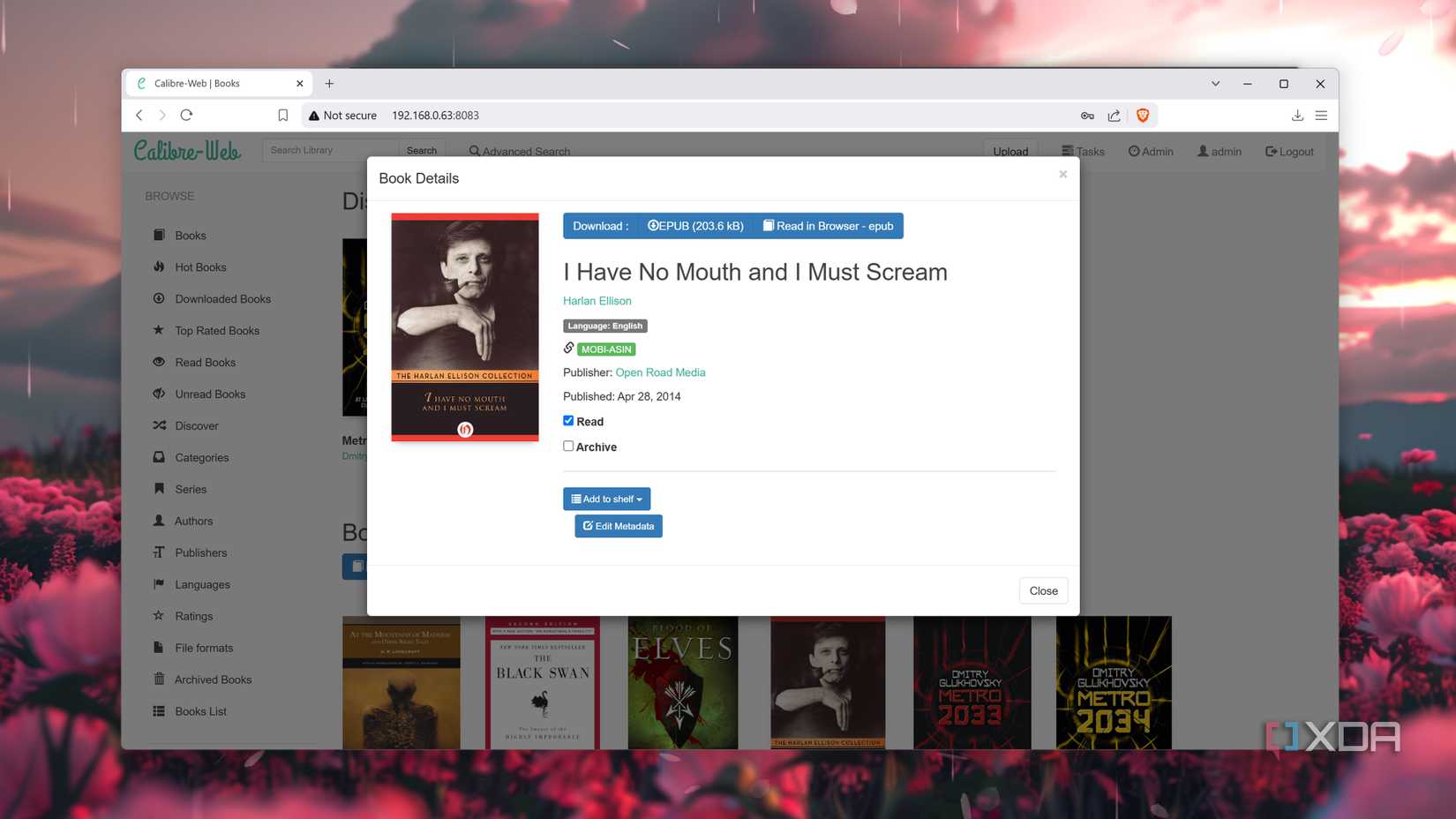
While many users prefer reading on dedicated E-Ink tablets like Kindles or Kobos, Calibre-Web offers a built-in browser-based reader. It natively handles EPUB, TXT, and PDF formats. For those who require more complex conversions, the integration of tools like BentoPDF ensures that even obscure formats can be converted into a universally readable PDF without leaving the web interface.
Furthermore, the implementation of OPDS (Open Publication Distribution System) support means the library can be connected to mobile apps like Moon+ Reader or Aldiko, providing a native reading experience on tablets and smartphones.
Supporting Data: Efficiency in the Home Lab
For those wary of resource consumption, the transition to an LXC-based deployment is highly recommended. Below is a comparison of typical resource usage when managing a library of 10,000+ books:
| Metric | VM-based Docker | LXC Container |
|---|---|---|
| RAM Usage | 1.5GB – 2.0GB | 256MB – 512MB |
| Storage Overhead | High (Full OS) | Negligible |
| Deployment Time | 20-30 Minutes | 2-5 Minutes |
| Maintenance | Complex Updates | Automated Scripts |
These metrics demonstrate that for the home lab enthusiast, moving away from heavy virtualization toward container-native workflows is the most efficient path forward.
Implications: The Future of Self-Hosted Media
The rise of applications like Calibre-Web, Kavita, and Audiobookshelf signifies a broader shift in how technology enthusiasts interact with their digital assets. We are seeing a "re-decentralization" of the internet, where users are no longer content with "renting" their media.
The Ecosystem Approach
Calibre-Web does not exist in a vacuum. It is part of a larger ecosystem of self-hosted tools.
- Kavita: Best for visual-heavy media like Manga and Graphic Novels, where the reading experience requires high-fidelity image rendering.
- Audiobookshelf: The industry leader for audio-based literature, offering features like progress syncing and variable-speed playback.
- Pinchflat: An essential companion for those who archive educational content or long-form video essays from platforms like YouTube to complement their written library.
Challenges to Consider
Despite its utility, the self-hosted path is not without friction. Users must contend with:
- Network Security: Exposing a library to the internet for remote access requires robust security practices, such as a Reverse Proxy (Nginx Proxy Manager or Traefik) and strong authentication (Authelia or Authentik).
- Data Persistence: If the
metadata.dbfile is corrupted, the entire library’s organization can be lost. Consistent, automated backups (such as Proxmox Backup Server) are non-negotiable.
Conclusion: A New Standard for Readers
Calibre-Web has proven that ebook management does not have to be a chore. By providing a clean, fast, and multi-functional interface, it allows users to reclaim their digital libraries from the clutches of restrictive, proprietary software.
Whether you are a casual reader with a small collection or a dedicated archivist with thousands of volumes, the combination of a well-maintained database, a robust containerized environment, and the right supporting tools can turn a chaotic folder of files into a pristine, searchable, and enjoyable digital library. As the home lab movement continues to grow, tools like Calibre-Web will remain at the heart of the "own your data" revolution, proving that the best reading experience is one that you control entirely.

 Ali Ikhwan
 Rifan Muazin