Nana Muazin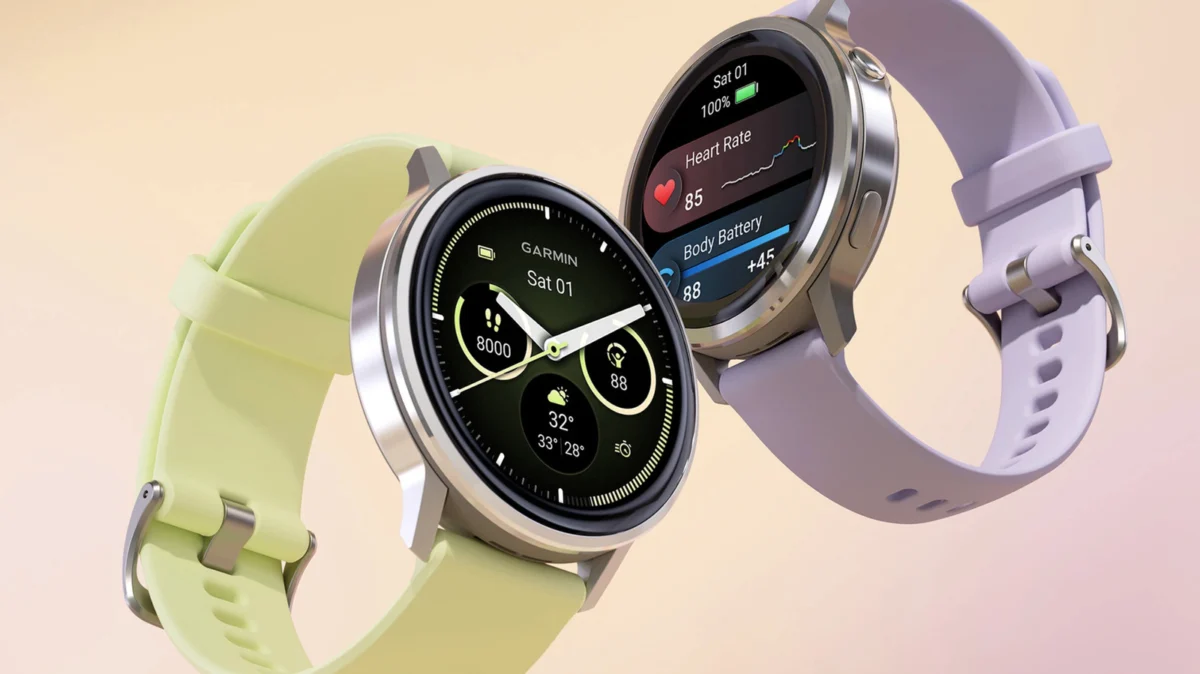
The Apple Watch has cemented its status as the world’s most ubiquitous smartwatch, serving as an indispensable companion to the iPhone. Its seamless ecosystem integration, refined aesthetic, and robust suite of health-tracking and safety features make it the gold standard for many consumers. Yet, despite these accolades, the device carries a significant, recurring burden: a battery life that struggles to bridge the gap between dawn and dusk.
Even with the Apple Watch Series 11 finally reaching the 24-hour threshold, the reality for power users—those who track sleep, GPS-enabled workouts, and constant notifications—is a cycle of daily, or even twice-daily, charging. For those who view their wearable as a constant health monitor rather than a mere peripheral, this constant tethering to a wall outlet is a profound friction point. As a result, a growing segment of the market is turning toward alternatives that prioritize endurance over app-rich ecosystems.
The Battery Trade-Off: A Chronology of Constraint
The evolution of smartwatches has been defined by a fundamental struggle between power consumption and feature density. In the early days of wearables, devices were simple step trackers that could last for weeks. As manufacturers added high-resolution AMOLED displays, cellular radios, and complex biometric sensors, power demands skyrocketed.
- The Early Era (2015–2018): Smartwatches were primarily notification mirrors, with battery life often hovering around 18 hours.
- The Optimization Phase (2019–2022): Brands began introducing "Low Power Modes" and more efficient chipsets, but the "daily charge" remained the industry standard for flagship devices.
- The Endurance Shift (2023–Present): Consumers began signaling, through purchasing habits, that they value longevity. Companies responded by segmenting their lineups: power-hungry smartwatches for general users and "ultra" or "long-life" trackers for athletes and health-conscious individuals who refuse to be interrupted by a low-battery alert.
Supporting Data: The Cost of Connectivity
The disparity between the Apple Watch and specialized wearables is stark. While Apple’s most rugged offering, the Apple Watch Ultra, can stretch to three days under extreme power-saving constraints, many specialized trackers now routinely offer 7 to 35 days of utility.
The implication is clear: if you are willing to trade the ability to reply to iMessages or host an extensive third-party app store on your wrist, you can gain a significant increase in lifestyle convenience. Below, we examine the current landscape of high-endurance wearables that are challenging the status quo.
Market Analysis: The Contenders
Whoop 5.0: The Screenless Specialist
The Whoop 5.0 represents a philosophical shift in wearable design. By stripping away the screen, the device eliminates the primary drain on battery life. This minimalist band achieves an impressive 14-day charge cycle. Designed for continuous wear, it acts as a silent monitor for sleep recovery, heart rate variability, and blood pressure.
- The Implication: The device is not sold; it is subscribed to. By bundling the hardware with a $200–$360 annual membership, Whoop ensures its users are constantly fed high-fidelity data, though it requires a commitment to a subscription model that some find restrictive.
Garmin Venu 4: The Performance Athlete
For those who refuse to sacrifice the aesthetic and functionality of a true smartwatch, the Garmin Venu 4 stands as the most direct competitor to the Apple Watch. It boasts a ten-day battery life, a stainless steel chassis, and an AMOLED touchscreen that rivals anything in Cupertino’s stable.
- Key Specs: It tracks everything from hormonal cycles to skin temperature, making it a favorite for data-driven athletes. At $550, it occupies a premium price bracket, but for the demographic it serves, the endurance is worth the investment.
Amazfit Bip 6: The Budget-Friendly Contender
At just $80, the Amazfit Bip 6 proves that long battery life need not be a luxury feature. It provides a full week of usage, built-in GPS, and comprehensive heart-rate tracking.
- The Limitation: While the hardware is impressive for the price, the software experience is less polished than its high-end counterparts. Users may find that auto-workout detection is inconsistent, necessitating manual logging. For the budget-conscious user who values longevity, it is a compromise well worth making.
CMF by Nothing Watch 3 Pro: The Design Maverick
Nothing’s sub-brand, CMF, has disrupted the market by injecting AI into the low-cost wearable segment. The Watch 3 Pro offers 13 days of battery life and includes an integrated ChatGPT interface and AI-driven fitness coaching.
- The Caveat: The "Always-On Display" is a double-edged sword. When enabled, battery life drops to 4.5 days. To achieve the marketed 13-day longevity, users must sacrifice the convenience of a screen that is always visible, highlighting the ongoing tension between aesthetics and efficiency.
Withings ScanWatch 2: The Analog Hybrid
The Withings ScanWatch 2 is the outlier on this list, offering a staggering 35 days of battery life. It achieves this by blending modern health-tracking technology with a classic analog watch design. There is no touchscreen—only a subtle digital display integrated into a traditional watch face.
- Official Stance: Withings emphasizes medical-grade accuracy, monitoring heart rhythm, body temperature, and menstrual health. Like Whoop, however, it pushes users toward a $100 annual subscription to unlock the full depth of its data analysis.
Oura Ring 5: The Invisible Tracker
The Oura Ring 5 suggests that the future of wearables may not be on the wrist at all. By moving the sensor array to the finger, the ring offers a nine-day battery life in a form factor that is virtually unnoticeable. It syncs seamlessly with health records, providing a passive, frictionless experience.
- Market Implication: At $400 plus a subscription, the Oura Ring is a premium entry point into the "invisible tech" movement. It appeals to those who want the data without the social signaling of a large digital watch.
Official Responses and Industry Implications
The industry at large has responded to these endurance trends by diversifying the definition of a "smart" device. Major manufacturers are acknowledging that "smart" does not always mean "more features."
In recent industry briefings, representatives from wearable manufacturers have noted that "data fatigue" and "charging anxiety" are the two primary reasons for high churn rates in the smartwatch market. Users who find themselves charging their device every night eventually stop wearing it altogether. Consequently, the focus has shifted toward "set it and forget it" hardware.
The implication for the consumer is profound: the market is finally segmenting based on user needs rather than a one-size-fits-all approach.
- The Connected User: Will likely stay with Apple or Google for the deep ecosystem integration, accepting the daily charge as the cost of having a powerful computer on their wrist.
- The Data-Driven Athlete: Is increasingly migrating to platforms like Garmin or Whoop, where battery life is a prerequisite for long-term health tracking.
- The Aesthetic Minimalist: Is gravitating toward hybrids like Withings or form-factor innovations like the Oura Ring.
Conclusion: Choosing Your Trade-Off
The quest for the perfect wearable is no longer about which device has the brightest screen or the most apps. It is about deciding which compromises you are willing to make. If you prioritize deep smartphone integration, the daily charge is inevitable. However, if your goal is continuous health monitoring, seamless fitness data, and a lifestyle untethered from a charging cable, the market has never been more robust.
Whether it is the 35-day stamina of the Withings ScanWatch or the minimalist intelligence of the Oura Ring, the era of the "one-day watch" is officially being challenged. Consumers are now empowered to choose devices that fit their lives, rather than adjusting their lives to fit the needs of their devices. As technology continues to evolve, the expectation for longer-lasting, more capable wearables will only continue to grow, forcing the industry to prioritize efficiency as much as innovation.

 Asro
Asro