Muslim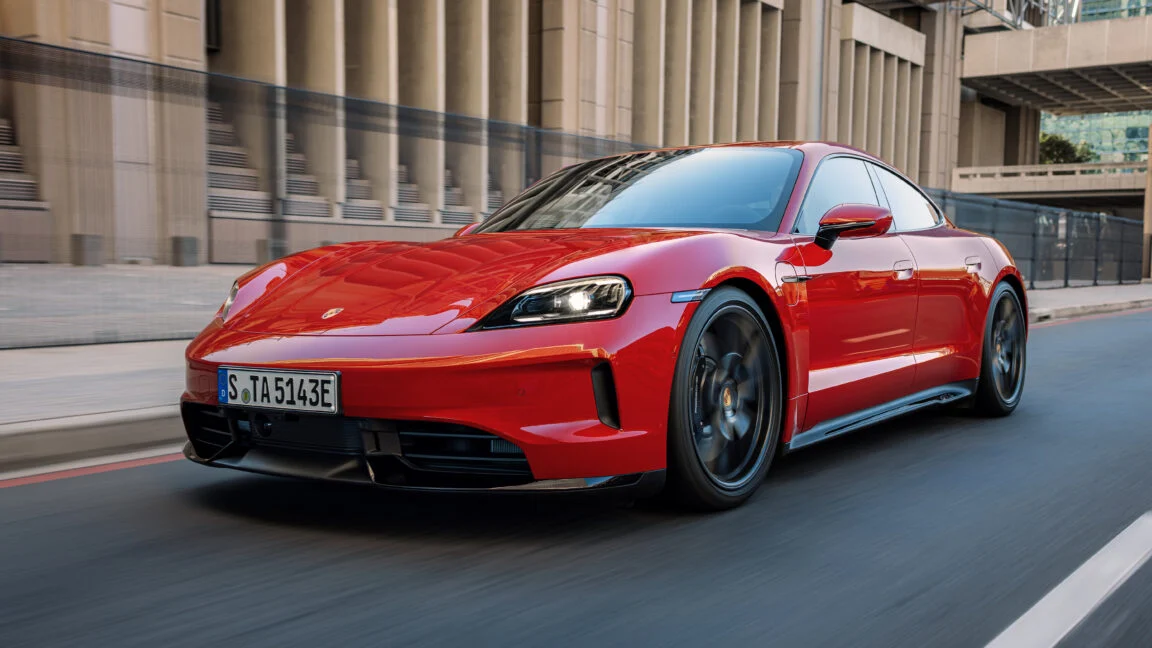
The Porsche Taycan has long been the standard-bearer for electric performance, bridging the gap between traditional sports car dynamics and modern zero-emissions engineering. As Porsche enters the 2027 model year (MY27), it is focusing its efforts not on radical chassis overhauls, but on refining the human-machine interface and injecting a dose of visceral engagement into the driving experience. With the introduction of a high-performance "E-Shift" system and a comprehensive infotainment suite upgrade, Porsche is signaling that the future of the electric sports car is as much about software-driven emotion as it is about raw kilowatts.
Main Facts: A Digital and Mechanical Refinement
The MY27 Taycan update represents a significant pivot toward software parity across the Porsche lineup. Most notably, the vehicle inherits the sophisticated infotainment architecture found in the new electric Macan and the updated Cayenne. The Porsche Communication Management (PCM) module has undergone a hardware overhaul, boasting processing speeds up to five times faster than its predecessor.
Beyond the screen, the mechanical interface is evolving. While the driver’s side retains the industry-standard J1772 AC charging port, the interior introduces the "E-Shift" system. This feature, designed to simulate the tactile engagement of a traditional multi-gear transmission, uses steering-wheel-mounted paddles to manipulate throttle mapping and regenerative braking, effectively creating a "virtual" gearbox.
Chronology: From the Original Taycan to the MY27 Update
Since its 2019 debut, the Taycan has undergone several critical evolutionary phases.
- 2019–2021: The launch phase established the Taycan as the first serious electric rival to the Tesla Model S, focusing on 800V architecture and sustained high-speed performance.
- 2022–2024: Porsche focused on range optimization and the refinement of the PCM, rolling out minor software updates to improve battery thermal management.
- 2025: The introduction of the refreshed Taycan lineup saw massive improvements in charging curves and weight reduction, setting the stage for the current digital-first approach.
- 2026–Present (MY27): This cycle marks the integration of the "unified" Porsche software platform. By aligning the Taycan’s infotainment with the Macan and Cayenne, Porsche has essentially standardized the user experience across its entire electric and high-end combustion portfolio.
Supporting Data: Processing Power and User Customization
The transition to the new PCM hardware is not merely a marketing talking point; it addresses a common pain point in modern luxury vehicles: input lag. By utilizing a processor five times faster than the previous generation, Porsche has eliminated the latency that often plagued menu navigation.
Key Technical Enhancements:
- Processing Speed: 500% increase in computational capacity within the PCM module.
- Widget Architecture: The system now supports a modular, drag-and-drop interface, allowing drivers to prioritize navigation, media, or vehicle telemetry.
- Personal Assistant: An onboard AI-driven assistant now manages cabin environmentals and navigation routing, responding to natural language prompts.
- OTA Capabilities: The entire system is now "Over-the-Air" (OTA) ready, ensuring that the software installed today can be iterated upon without requiring a visit to a Porsche service center.
The Rise of the Simulated Gearbox: E-Shift
Perhaps the most controversial and exciting aspect of the MY27 update is the implementation of E-Shift. For years, the electric vehicle industry has relied on single-speed transmissions for efficiency and weight reduction. However, enthusiasts have often lamented the lack of "work" required to drive an EV fast.
Porsche is now joining a growing list of manufacturers experimenting with "gamified" driving. Hyundai’s Ioniq 5 N set the bar for this technology, demonstrating that by manipulating regenerative braking and torque output in real-time, an EV can simulate the feeling of hitting an apex in a lower gear.
Honda’s S+ shift in the new Prelude and Ferrari’s work on the electric "Luce" indicate a broader industry trend. Porsche’s approach is strictly elective: if the driver desires the traditional, seamless electric experience, the E-Shift remains dormant. If they engage the GT Sport steering wheel’s special mode, the car transforms into a simulated manual-adjacent experience. It is a calculated move to appeal to the "purist" demographic—those who fear that the transition to electric will strip away the rhythmic, mechanical heartbeat of a sports car.
Official Responses and Strategic Implications
Porsche has framed these updates as a necessity for the "modern luxury experience." A spokesperson for the company emphasized that "the hardware upgrade is about longevity. We want our owners to feel that their Taycan is as modern in year five as it was on the day they took delivery."
The strategic implication here is clear: Software is the new horsepower. By unifying the operating system across the Macan, Cayenne, and Taycan, Porsche is building a digital ecosystem that encourages brand loyalty. An owner who gets used to the logic of the PCM in a Cayenne will find the exact same interface in their Taycan, reducing the learning curve and cementing the brand’s premium identity.
Furthermore, the inclusion of E-Shift suggests that Porsche is no longer trying to hide the fact that the Taycan is an EV; instead, they are leaning into the versatility of electric motors to provide multiple driving personas.
Implications for the Future of EV Design
As we look toward the remainder of the decade, the MY27 Taycan serves as a blueprint for the "enthusiast EV."
1. The Death of One-Size-Fits-All Driving
The inclusion of E-Shift proves that manufacturers recognize the limitations of "one-mode" driving. By allowing the driver to choose between the efficiency of a single-speed electric drivetrain and the engagement of a simulated multi-gear system, Porsche is effectively offering two cars for the price of one.
2. The Standardization of Luxury
The move to consolidate software across the Porsche range is a defensive maneuver against tech-focused competitors. As software-defined vehicles become the norm, the ability to update a car’s functionality via OTA updates is becoming more important than mechanical horsepower figures. Porsche is ensuring that its vehicles remain "fresh" through code, which is significantly cheaper and more efficient than mid-cycle physical facelifts.
3. Bridging the Generational Gap
There is a massive segment of Porsche’s customer base that grew up with air-cooled 911s and manual transmissions. These customers have been the most resistant to the EV transition. By introducing features like E-Shift, Porsche is creating a bridge. It is a way of acknowledging the past while sprinting toward the future.
Conclusion: A Refined Benchmark
The MY27 Porsche Taycan is not a reinvention of the wheel; it is a profound optimization of the experience of being behind it. By dramatically increasing the speed of the infotainment system and introducing a degree of mechanical theater through E-Shift, Porsche has addressed the primary criticisms leveled at the early generation of EVs.
The car is no longer just a fast machine; it is a customizable digital environment. Whether you are a tech enthusiast looking for the most responsive interface on the market, or a driving purist who misses the sensation of downshifting into a corner, the MY27 Taycan aims to satisfy both. As the industry moves toward a fully electric horizon, Porsche’s strategy of balancing raw performance with emotional engagement via software remains the gold standard. The Taycan continues to prove that, even in the era of batteries and bits, the soul of a sports car is defined by the choices it gives its driver.

 Ammar Sabilarrohman
 Jia Lissa