Nana Muazin
While the gaming industry is currently captivated by the relentless, rain-soaked tension of Leon Kennedy’s latest escapades in the Resident Evil franchise, a different kind of chaos is unfolding in the background. If you look past the survival-horror spotlight, you will find that Raccoon City’s favorite police officer is being quietly out-maneuvered by a pizza-loving, sword-swinging demon hunter who refuses to stay out of the spotlight. Despite being released in 2019, Devil May Cry 5 is not just surviving; it is thriving, marking its most successful year in sales between March 2025 and March 2026.
In an industry where titles often have a shelf life measured in months, Devil May Cry 5 has defied the odds. It has cemented its position as the highest-selling Capcom title outside of the Resident Evil juggernaut, eclipsing the commercial reach of long-standing pillars like Street Fighter, Dragon’s Dogma, and even the massive Monster Hunter franchise.
The Financial Phenomenon: A Decade of Dominance
According to Capcom’s latest internal financial reports—released ahead of the company’s June 18 shareholder meeting—Devil May Cry 5 moved an impressive 2.7 million copies over the last fiscal year. This data, first surfaced by Japanese outlet GameSpark and corroborated by Automaton*, highlights a fascinating trend: the game is not merely lingering on store shelves; it is accelerating.

To contextualize this performance, one must look at the company’s broader portfolio. While the Resident Evil series continues to dominate the headlines—with the recently released Resident Evil: Requiem selling a staggering 6.9 million units since its February debut—Devil May Cry 5 is operating in a league of its own. It outperformed the legacy sales of Resident Evil 2 Remake (2.9 million), Resident Evil 3 (3.4 million), and Resident Evil Village (3.6 million) during the same reporting period.
With cumulative sales now surpassing the 12.9 million mark, the game has effectively distanced itself from recent hits like Monster Hunter Wilds. While Wilds enjoyed a massive launch with 10.1 million sales, its momentum has slowed to 1.3 million copies in the closing fiscal year, whereas Dante continues to pull in new players consistently seven years after the game’s initial release.
Chronology of a Resurgence
The journey of Devil May Cry 5 is a testament to the power of evergreen game design and community-led longevity.

- 2019: The Initial Strike: The game launched to widespread critical acclaim, moving 2.1 million copies in its first year. It was hailed as a return to form for the character-action genre, blending high-octane combat with the narrative depth fans had been craving.
- 2023: Steady Momentum: Four years post-launch, the title maintained its relevance, repeating its impressive launch-year sales figures—a rarity in a market saturated by annual releases and live-service models.
- 2025-2026: The Peak: The transition into 2026 saw a surge that many analysts attribute to a perfect storm of brand awareness, accessibility, and the enduring quality of the RE Engine.
- June 2026: The Nintendo Factor: With the imminent release of the game on the Nintendo Switch 2, Capcom is poised to capture a new demographic that has been historically underserved by the high-performance demands of the Devil May Cry engine.
The "Nintendo Switch 2" Catalyst
The industry spent months speculating on the arrival of Dante on Nintendo’s new hardware, fueled by premature listings from Taiwanese rating agencies and a slip-up by a Swiss online retailer. These rumors were confirmed during the recent Nintendo Direct, which announced the arrival of the Devil Hunter Edition of the game.
The strategic importance of this move cannot be overstated. By bringing a refined, optimized version of the game to a console that has already sold nearly 20 million units in its first year—significantly outpacing the original Switch’s 15.5 million—Capcom is positioning Devil May Cry 5 to reach a massive, untapped audience. With a promotional price point of $29.99 through the end of July, the title is positioned for a "shadow drop" style of success, leveraging the hype surrounding the new hardware to bolster its already historic sales figures.
The "Netflix Effect" and Cultural Permeance
One cannot discuss the current success of Devil May Cry without acknowledging the role of the Netflix animated adaptation. Released in April of last year, the series introduced a new generation to the complex, stylish, and often humorous world of the Sparda family. The success of the first season, followed by a second season last month, has created a feedback loop of engagement.

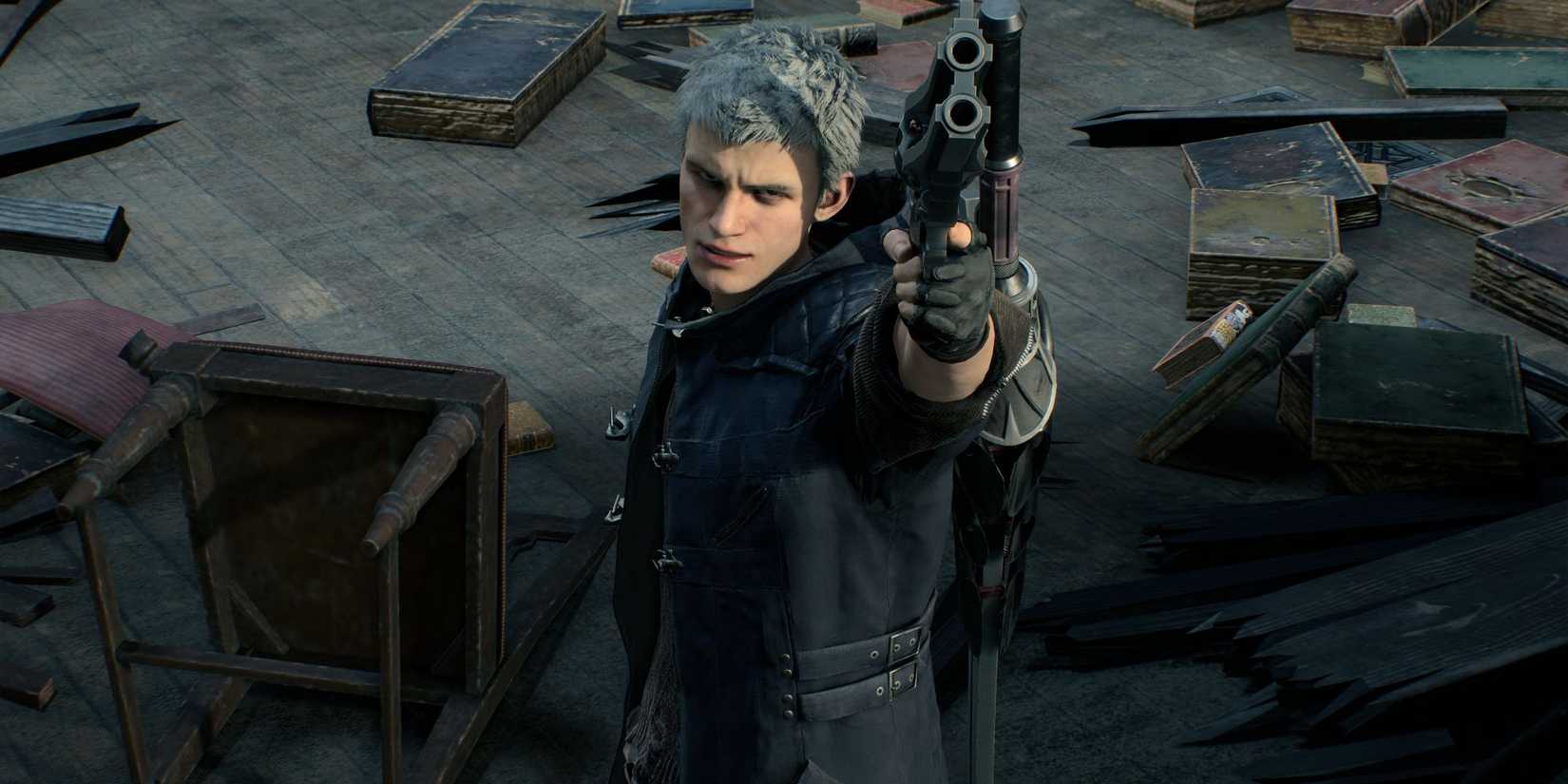
When players finish an episode of the show, they are looking for a way to engage with the IP. Since Devil May Cry 5 remains the gold standard for the franchise, it serves as the primary gateway for these new fans. It is not just the gameplay loop that keeps people engaged; it is the persona of Dante. In an era of gritty, realistic shooters, Dante’s "cool" factor—his arrogance, his love for pizza, and his effortless combat style—provides a refreshing contrast that resonates deeply with modern audiences.
Implications for Capcom’s Strategy
Capcom’s success with this title provides a blueprint for the "death of the Great Man theory" in game development, as recently noted by CEO Haruhiro Tsujimoto. By empowering teams and focusing on long-tail support for their existing engines (specifically the RE Engine), Capcom has managed to turn aging titles into perennial revenue streams.
The implications for the industry are clear:
- Engine Longevity: The RE Engine has proven to be the most versatile tool in the industry, allowing for high-fidelity ports across vastly different hardware architectures without sacrificing performance.
- Brand Synergy: The integration of multimedia (Netflix) with core software sales is now a mandatory strategy for any major publisher.
- The "Slow Burn" Success: Publishers are beginning to realize that a game does not need to sell 10 million copies in its first month to be considered a flagship success. Devil May Cry 5 has shown that consistent, high-quality updates and platform expansion can create a "forever game" that contributes to the bottom line for years.
Conclusion: The Devil Never Sleeps
As we move into the second half of 2026, the data suggests that the momentum behind Devil May Cry 5 is far from exhausted. While the industry continues to chase the next big live-service hit, Capcom is quietly winning by doubling down on what they do best: creating character-driven, mechanically sound experiences that stand the test of time.
Dante’s reign is not a fluke; it is the result of a calculated, multi-year strategy that balances technical excellence with cultural relevance. Whether you are a long-time fan who has been playing since the PS2 era or a newcomer brought in by the Netflix series, the message from the sales charts is clear: the demon-slaying business is booming, and it is going to stay that way for a long time to come.
Game Specifications at a Glance:
- Developer/Publisher: Capcom
- Engine: RE Engine
- Release Date: March 8, 2019 (Current Gen/PC), June 23, 2026 (Switch 2)
- Rating: M for Mature (Blood, Partial Nudity, Strong Language, Violence)
- Availability: PlayStation 5, Xbox Series X|S, PC, Nintendo Switch 2


 Jia Lissa
 Azzam Bilal Chamdy