Ali Ikhwan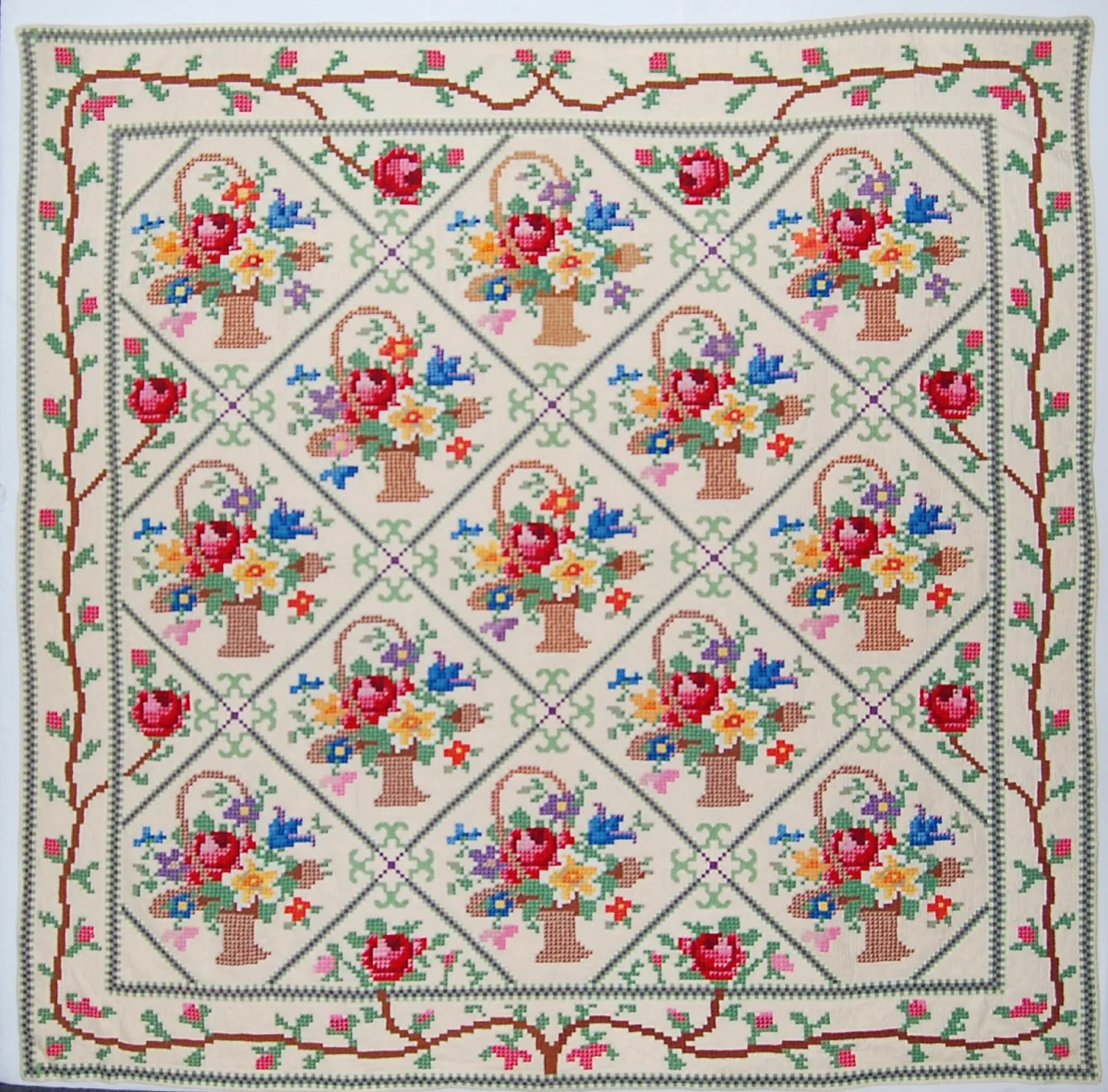
For over 180 years, the rhythm of American life in the heartland has been marked by the arrival of late summer and the opening of the state fair. It is a sensory experience defined by the scent of deep-fried dough, the lowing of prize-winning cattle, and the visual cacophony of midway lights. Yet, beneath the veneer of carnival games and indulgent snacks lies a profound, enduring cultural institution that has shaped the American identity.
Now, the Smithsonian American Art Museum’s Renwick Gallery is peeling back the layers of this tradition with its landmark exhibition, State Fairs: Growing American Craft. By showcasing more than 240 objects—ranging from intricate seed mosaics to avant-garde jewelry—the exhibition argues that state fairs are not merely recreational gatherings; they are the living, breathing repositories of American ingenuity and community resilience.

A Chronological Evolution: From Agriculture to Art
The lineage of the state fair is as old as the nation’s expansion itself. The movement traces its origin to Syracuse, New York, in 1841, when the New York State Agricultural Society held the first official state fair. The objective was simple but transformative: to provide a forum for farmers to share knowledge, showcase livestock, and foster a sense of collective progress in a burgeoning young country.
Throughout the mid-19th century, this model spread like wildfire across the Midwest and beyond. States such as Minnesota, Iowa, and Wisconsin institutionalized these gatherings, turning them into annual touchstones that reflected the growth of the states themselves. Initially, these fairs were strictly utilitarian—forums for demonstrating irrigation techniques, plowing prowess, and the latest in agricultural machinery.

However, as the 20th century dawned, the focus began to shift. While the agricultural heartland remained the engine of the fair, the "social" component expanded. Craft competitions, home economics displays, and the rise of 4-H clubs introduced a layer of artistic expression. By the late 1900s, the state fair had evolved into a "people’s museum," where the prize for the best jar of pickles was held in as high regard as a fine arts painting.
The Art of the Harvest: Seed Mosaics and Beyond
Perhaps no phenomenon better captures the idiosyncratic spirit of the state fair than "seed art." Popularized at the Minnesota State Fair, this craft involves the meticulous arrangement of thousands of individual seeds, grains, and legumes to create elaborate tableaux.

These are not merely decorative crafts; they are complex works of art. Artists often reproduce famous portraits—ranging from historical figures to pop-culture icons like Dolly Parton—using only the natural, unadulterated hues of cultivated crops. The requirement that each artist submit a "legend card" documenting the variety of seeds used serves as both a technical instruction and a testament to the agricultural biodiversity of the region.
The Renwick Gallery exhibition highlights these pieces as symbols of the "ingenuity" inherent in rural life. When a visitor views a seed-art portrait of a global superstar alongside a traditional Southwestern tapestry by Agueda Martínez, they are witnessing the breadth of the American experience—a fusion of time-honored heritage and contemporary creative flair.

Data and Diversity: A Survey of 43 States
Growing American Craft is the first large-scale survey of its kind, aggregating the creative output of 43 states and various Tribal Nations. The sheer diversity of the objects on display challenges the monolithic perception of the "state fair" as a uniform experience.
Key Exhibition Highlights:
- The "Maize Chapel": Justin Favela’s immersive installation, Capilla de Maiz, utilizes the motif of the corn cob to explore the cultural and historical significance of maize across millennia of American history.
- Textile Traditions: From Grace Snyder’s intricate 1940s petit point quilts to Corey Alston’s contemporary sweetgrass baskets, the exhibition maps the history of American textile craft, illustrating how traditional techniques are passed down through generations.
- Industrial Reimagining: Margarita Cabrera’s Arbol de la Vida, a sculpture of a John Deere tractor rendered in clay and adorned with vibrant birds and botanicals, serves as a bridge between the industrial reality of farming and the decorative traditions of Mexican folk art.
- Contemporary Adornment: Morgan Hill’s mixed-media resin necklaces capture the "snack culture" of the fair, proving that even the most fleeting, indulgent aspects of the fairground experience are worthy of preservation.
Official Perspectives: Dashing Stereotypes
The curators of the Smithsonian have been clear about the exhibition’s intent: to dismantle the reductive stereotypes often associated with rural American life.

"Ribbon-winning artworks and engaging craft demonstrations illuminate the lives of the artists—their families, memories, honors, and struggles," the museum stated in its exhibition overview. By presenting these items in a prestigious D.C. institution, the Smithsonian is validating the labor and creativity of millions of Americans who participate in these annual rituals.
The exhibition aims to show that the fairground is a "social fabric" woven from the collective effort of the community. When a canner like Rod Zeitler spends months preparing a pyramid of over 700 jars of preserved fruit for competition, he is not just entering a contest; he is participating in a dialogue about food security, self-sufficiency, and pride in one’s work.

The Implications: Why the State Fair Matters
The significance of Growing American Craft extends far beyond the gallery walls. In an era of increasing digital isolation, the physical, communal nature of the state fair acts as a vital counterbalance. The exhibition suggests that these events remain essential for several reasons:
- Intergenerational Transmission: Fairs are one of the few remaining spaces where skills like quilting, woodworking, and canning are taught from elders to youth. The "ribbon" serves as a benchmark for excellence, incentivizing the preservation of these traditional crafts.
- Cultural Synthesis: As seen in the work of Justin Favela and Corey Alston, the state fair has become a site of cultural intersection, where Tribal Nations, immigrant communities, and multi-generational farming families share space and influence.
- Resilience and Adaptability: The exhibition documents how rural communities use art to process their experiences—from the hardship of economic downturns to the joy of bountiful harvests. The art is a reflection of the resilience required to thrive in the agricultural sector.
- The Democratization of Art: Unlike high-end galleries that can feel exclusionary, the state fair is, by design, accessible. The exhibition reminds us that art is not the sole domain of the professional elite; it is found in the kitchens, workshops, and fields of everyday citizens.
Conclusion: A Legacy Worth Preserving
As State Fairs: Growing American Craft continues its run at the Renwick Gallery through September 7, it serves as a timely reminder of the importance of regional identity in a globalized world. The exhibition is accompanied by a beautifully produced catalogue, offering a permanent record of these ephemeral creations.

The state fair is far more than a summer distraction; it is an enduring manifestation of the American spirit. It is where the personal becomes the communal, and where the mundane tasks of life are elevated to the status of art. By documenting this legacy, the Smithsonian is ensuring that the "growing" in Growing American Craft continues for generations to come. Whether through a grain of corn, a thread of cotton, or a piece of jewelry, the American story continues to be written—one blue ribbon at a time.


 Nana Wu
 Suro Senen