Azzam Bilal Chamdy
In a bold move that marks a significant pivot toward the future of spatial computing, Snap Inc. has officially pulled the curtain back on its latest iteration of “Specs”—a pair of augmented reality (AR) glasses that represent the company’s most ambitious hardware effort to date. By opting for a fully integrated, standalone design, Snap is positioning itself not merely as a social media company, but as a vanguard in the burgeoning ecosystem of wearable technology.
However, the path to mass adoption is fraught with engineering challenges, aesthetic hurdles, and a price point that puts it in direct competition with heavyweights like Meta and Apple. As the industry races toward the "post-smartphone" era, Snap’s new hardware launch serves as a critical litmus test for whether consumers are ready to wear their computers on their faces.
The Core Technology: Engineering an All-in-One Experience
The defining characteristic of the new Snap Specs is their commitment to a standalone, fully integrated architecture. Unlike many competitors that rely on tethered "compute pucks" or external smartphone processing to function, Snap has packed the entire computational load into the frames of the glasses themselves.
Technical Specifications and Display Capabilities
Under the hood, the device is powered by a dual-processor system—a Snapdragon-based architecture—where one chip manages vision-related tasks (such as spatial tracking and camera input) while the second handles the primary operating system.
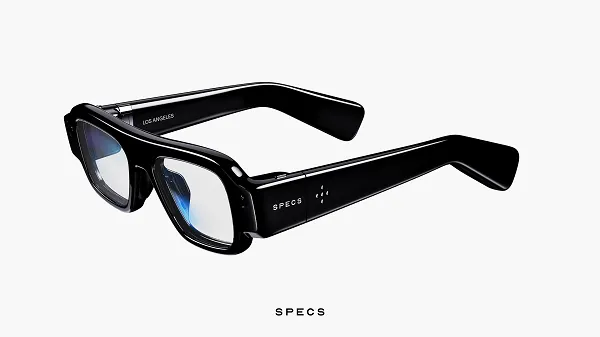
The visual experience is delivered through proprietary Liquid Crystal on Silicon (LCoS) technology. Snap claims this setup delivers a 51-degree field of view with support for 16 million colors. In practical terms, the company describes the experience as akin to viewing a 24-inch desktop monitor while working, or, when shifting to entertainment, a 115-inch home cinema screen projected roughly 10 feet away. To ensure a seamless blend between the digital and physical worlds, Snap has overhauled its waveguide technology, aiming to reduce the "jitter" often associated with early-stage AR displays.
The Weight-to-Performance Tradeoff
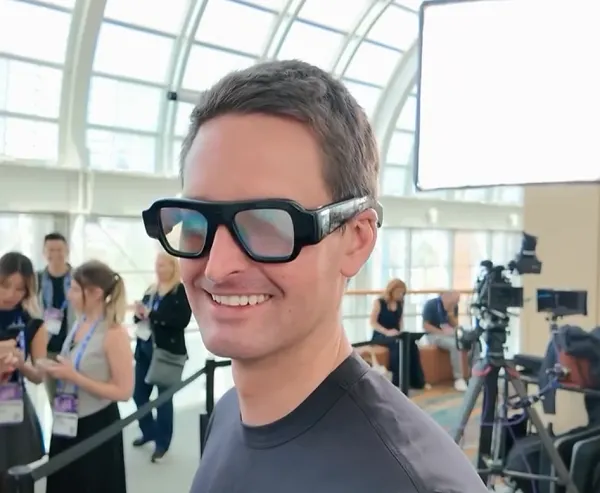
This commitment to a self-contained system comes with a physical cost. Because the battery, processors, and sensors are housed entirely within the frames, the device is noticeably bulkier than the average pair of fashion eyewear.
- Snap Specs: 132g (small) to 136g (large).
- Meta Display Glasses: 60g to 70g.
- Standard Ray-Ban Wayfarers: ~50g.
- Meta Quest 3 VR Headset: 514g.
While Snap has utilized advanced polymers to keep the weight as low as possible, the device remains significantly heavier than standard glasses. The design aesthetic leans toward a functional, "goggle-like" appearance rather than the sleek, thin-frame look favored by traditional eyewear manufacturers. Critics have already noted that the glasses evoke a "Groucho Marx" aesthetic, though Snap is attempting to counter this perception with a high-profile celebrity marketing campaign designed to frame the device as a cutting-edge fashion statement.
A Brief Chronology of Snap’s Hardware Evolution
Snap’s journey into hardware has been a decade-long exercise in iterative refinement, characterized by a "fail fast, learn faster" philosophy.
- 2016 – The Origin: Snap launched the original "Spectacles," a camera-equipped pair of sunglasses that allowed users to record first-person video for Snapchat. It was a novel, playful gadget that generated significant hype but limited long-term utility.
- 2018–2021 – Iterative Design: Snap released several follow-up versions, experimenting with dual cameras and different aesthetics, though these remained largely focused on social capture rather than true AR.
- 2021 – The Pivot to AR: Snap introduced the first version of AR-capable Specs for developers, signaling a shift toward real-time digital overlays.
- 2024 – The Official Launch: The current iteration represents the first time Snap has opened the doors to a broader, albeit still enthusiast-focused, audience, integrating advanced standalone computing and a robust library of AR Lenses.
Supporting Data: Pricing, Battery, and Availability
One of the most contentious aspects of the launch is the price. At $2,195, Snap is aiming for an "early adopter" audience, placing the device in a precarious middle ground between the $799 Meta display glasses (which lack full AR capabilities) and the $3,499 Apple Vision Pro (which functions as a full-featured mixed-reality headset).
Performance Metrics
- Battery Life: The device offers up to four hours of continuous usage.
- Charging: An included charging case provides four additional full charges, extending the total operational capacity to 20 hours.
- Safety and Privacy: The device features a prominent LED indicator that illuminates whenever the camera is recording, a necessary design choice to address the privacy concerns surrounding face-worn recording devices.
Official Responses and Strategic Positioning
Snap’s leadership has been vocal about the potential of these glasses to transform daily life. The company highlights that there are already hundreds of "Snap Lenses" built specifically for the platform. These range from productivity tools—such as overlaying interactive lessons onto a physical drum kit—to educational applications that make invisible concepts, like vector fields, tangible.
"The goal is to create a clearer and more seamless view of the world around you," a Snap representative noted in the official press release. By integrating these experiences directly into the user’s line of sight, Snap hopes to shift the focus from the "screen-bound" experience of smartphones to an ambient, hands-free interaction with the world.
Implications: The Looming "AR War"
The launch of the new Specs sets the stage for a massive collision in the tech sector. While Snap is hitting the market now with a fully functional, albeit bulky, unit, the competition is not sitting idle.
Snap vs. Meta
Meta is widely expected to launch its own dedicated AR glasses next year. The contrast between the two approaches is stark: Meta is prioritizing a "compute puck" strategy to keep the glasses thin, stylish, and lightweight, while Snap is betting that the convenience of an all-in-one, "grab and go" device will outweigh the aesthetic drawbacks of a slightly larger frame. Furthermore, Meta holds a massive advantage in distribution, having already placed its AI-integrated Ray-Bans in the hands of nearly 10 million users.
The Audience Challenge
Snap’s core demographic consists of younger, tech-savvy users who are accustomed to ephemeral content and AR filters. However, a $2,000 price point is a formidable barrier for this segment. Snap’s strategy relies on the assumption that its affluent, trend-setting user base will view these glasses as a status symbol—a "must-have" piece of technology that justifies the premium.
The Future of Wearable Computing
If Snap succeeds, it will prove that users are willing to trade physical comfort and traditional aesthetics for true, standalone AR functionality. If it fails, it may force the industry to concede that for the time being, the "compute puck" model—or even the smartphone-tethered model—is the only way to achieve the form factor that mainstream consumers actually demand.
As we look toward the next five years, the "Snap Specs" launch is more than just a product release; it is a declaration of intent. Snap is betting that the future of the internet is not found by looking down at a screen, but by looking forward through a lens that adds a layer of digital magic to the physical world. Whether that lens is heavy or light, stylish or functional, remains the defining question of the next hardware cycle. For now, Snap has officially stepped onto the field, challenging its rivals to define what "wearable" really means in the modern age.


 Rifan Muazin
 Siti Muinah