Raul Delapena Setiawan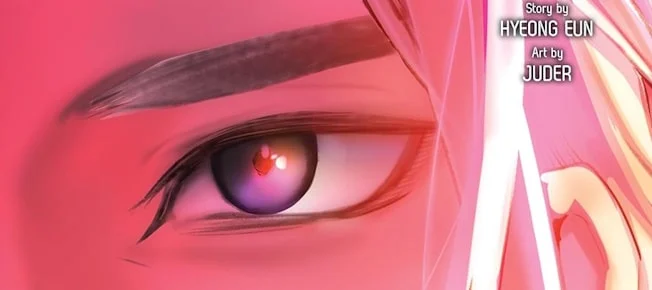
The landscape of modern web-to-print comics is shifting, and at the forefront of this evolution is the gripping, visceral narrative of School of Hard Knocks. As the series moves into its latest installment, readers find themselves thrust back into a world where the boundary between humanity and insectoid evolution is blurred, and the consequences of past trauma are beginning to bear bitter fruit. With the release of the newest volume, authored by Hyeong Eun and illustrated by the powerhouse duo Juder, the series continues to explore the high-stakes survival of students caught in an inter-species struggle.
The State of Play: Main Facts and Current Arc
The narrative arc of School of Hard Knocks has always been defined by its high-pressure environment. As the new semester commences, the protagonists are not afforded the luxury of a fresh start. Instead, they are haunted by the physical and psychological toll of their previous academic—and survivalist—trials.
At the center of the storm is Suchan, whose journey has been characterized by both resilience and extreme vulnerability. While he has managed to secure a support system in the form of Huijin and their circle of peers, the stability of this alliance is increasingly fragile. The absence of a key mentor figure, Professor Ji, looms large over the narrative; following his heroic sacrifice, which culminated in a medically induced coma, the students are left without their most significant protector.
Meanwhile, the primary antagonist, known as the Breeder, remains a pervasive, albeit shadow-dwelling, threat. While the NEST organization believes they have successfully neutralized the Breeder and his band of Predators, the reality is far more dire. The Breeder is not defeated; he is merely biding his time, cultivating a "seed of chaos" within the social and biological fabric of the school.
Chronological Progression: A Descent into Insecurity
To understand the current tension in the series, one must examine the progression of events that have led to the current state of panic.
The Immediate Aftermath
Following the conflict with the Predators, the immediate period was one of forced normalcy. NEST attempted to re-establish order, treating the previous semester’s violence as an anomaly that could be contained through traditional institutional oversight. However, this oversight failed to account for the psychological conditioning Suchan underwent during his captivity.
The Infiltration of Doubt
The Breeder’s strategy has evolved from overt physical assault to psychological warfare. By targeting Suchan with specific, forced-training regimens, the Breeder has effectively planted a "Trojan horse" within the protagonist’s psyche. This period of the story highlights the internal struggle of an individual forced to contend with instincts that are not entirely his own.
The Current Crisis
As the semester begins, we see the maturation of the Breeder’s machinations. Fear and insecurity, once suppressed, have now erupted into palpable terror. Suchan finds himself isolated, a victim of both his own internal conditioning and the external accusations of his peers who fear that he has succumbed to the Breeder’s influence. This isolation is the catalyst for the current volume’s climax, as Suchan is forced to navigate a landscape where he is viewed as both a liability and a potential weapon.
Supporting Data and Creative Team Profiles
The success of this series is not merely a product of its plot but the seamless integration of visual and narrative elements. The creative team behind this installment represents a high-water mark for the genre:
- Story by Hyeong Eun: Eun’s writing style emphasizes the "slow burn" of character development, ensuring that the horror elements of the story feel earned rather than gratuitous.
- Art by Juder: The artistic direction provides a stark contrast between the mundane setting of a college campus and the grotesque, high-octane violence of the insect-human transformations.
- Translation by Ah Cho: Translating the nuance of Korean webtoon tropes for an English-speaking audience requires a delicate balance of pacing and localized slang, a task in which Cho excels.
- Lettering by Adam Jankowski: Jankowski’s lettering choices, particularly during the sequences of mental instability and supernatural transformation, play a crucial role in directing the reader’s internal voice.
Implications of the Emerging Anti-NEST Faction
One of the most significant developments in this volume is the introduction of a mysterious, third-party group acting in opposition to NEST. The existence of an "anti-NEST" organization introduces a complex moral dichotomy.
If NEST is the establishment, the "law," and the perceived protector, this new group represents the radical fringe—those who view the experiments and the management of the insect-human hybrids as fundamentally corrupt. For Suchan, this presents a dangerous crossroads. Does he align himself with the institution that has failed to protect him, or does he trust the unknown entity that promises to dismantle the system that created him?
This introduces the central theme of the current arc: Agency. Throughout the series, characters have been treated as pawns—either by the Breeder or by NEST. The current narrative arc suggests that Suchan is finally reaching a breaking point where he must define his own identity, independent of the labels assigned to him by these warring factions.
The Psychological Toll: Themes of Isolation and Identity
The series continues to excel at exploring the "School of Hard Knocks" metaphor. The campus is not just a place of learning; it is an incubator for trauma. The isolation Suchan experiences is a poignant commentary on the alienation felt by those who are "different"—or in this case, biologically altered.
By framing the story around a college setting, the creators force the audience to confront the reality of growing up under extreme pressure. The "feed training" mentioned in the text serves as a dark allegory for the societal pressures placed on young adults to conform, to perform, and to internalize the values of their superiors. When those values are malicious, the result is the kind of psychological fracturing now on display in Suchan.
Reader Engagement and Availability
For those following the saga, the current volume is essential reading. The narrative momentum is at an all-time high, with the stakes expanding from individual survival to the broader ideological war between NEST and the anti-NEST underground.
The distribution of this series has been made accessible through various channels, reflecting the modern comic industry’s push toward hybrid digital-physical availability. Whether via independent comic shops—which can be located through the Comic Shop Locator service—or major digital retailers like Amazon and Bookshop.org, the accessibility of this title is a testament to its growing cult following.
Concluding Thoughts: A Path Forward
As the semester continues to spiral into chaos, the readers are left with more questions than answers. Will Suchan succumb to the "seed of chaos" the Breeder has planted, or will he find a way to repurpose that power? Will the anti-NEST group prove to be a salvation or a new form of exploitation?
School of Hard Knocks remains a masterclass in genre-bending, successfully blending academic drama with body horror and political intrigue. As we await the next chapter, it is clear that the status quo is shattered. The students of this institution are no longer merely surviving their classes; they are surviving a revolution, and the outcome will undoubtedly leave a lasting mark on the lore of the series. For fans of high-stakes, character-driven storytelling, this latest volume is an essential addition to the bookshelf.
Disclaimer: This article contains affiliate links. Purchases made through these links help support the continued coverage and analysis of independent graphic literature.

 Sagoh
Sagoh
 Ammar Sabilarrohman