Ammar Sabilarrohman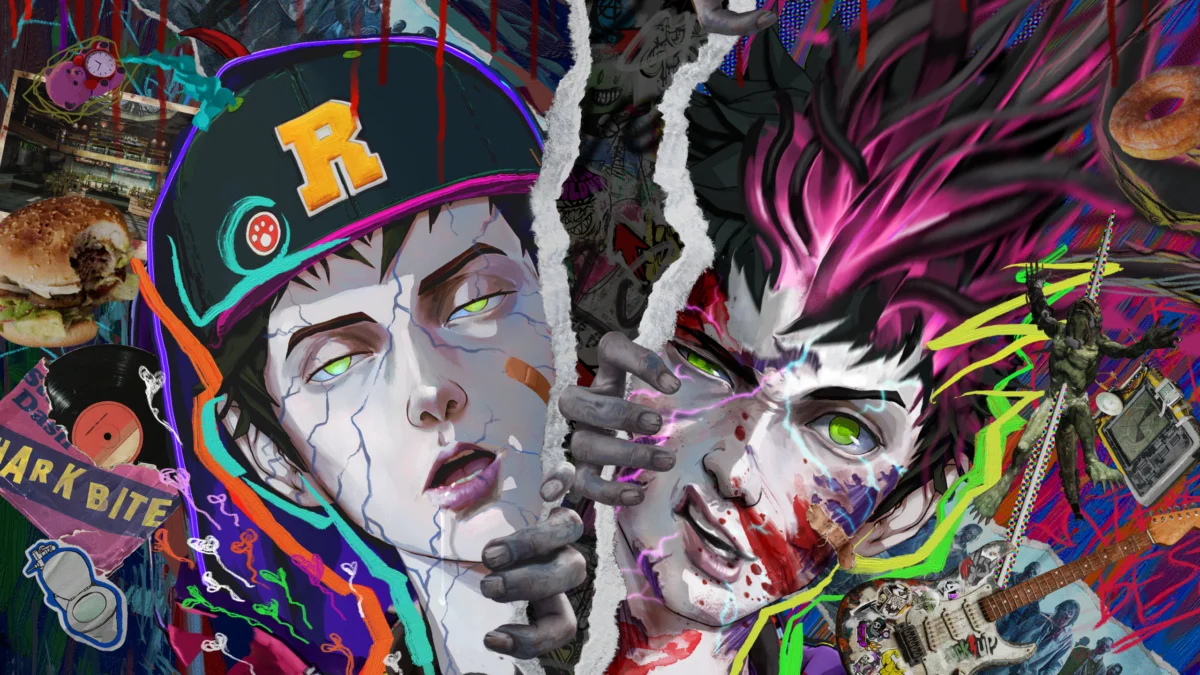
Shanghai, China – [Insert Date, e.g., October 26, 2023] – Gaming enthusiasts and industry observers alike are buzzing with anticipation following the unveiling of "Stupid Never Dies," the inaugural title from GPTRACK50, a brand-new studio operating under the expansive umbrella of NetEase Games. Helmed by the legendary Hiroyuki Kobayashi, a veteran producer and programmer whose illustrious career at Capcom spanned iconic franchises like Resident Evil, Devil May Cry, and Dragon’s Dogma, the game promises a fresh, high-octane take on the action-RPG genre. The release of its first full trailer has offered a tantalizing glimpse into a world of "Blazing Fast" combat, strategic character progression, and a distinctly irreverent narrative, immediately positioning "Stupid Never Dies" as a project to watch.
The trailer showcases a vibrant, chaotic blend of furious melee, acrobatic maneuvers, and an innovative style-swapping system, all set to a pulsing hard rock soundtrack. Players are introduced to Davy, a recently reanimated zombie protagonist, whose unlikely quest involves delving into the infernal depths to harness "Over-Technology." His mission is twofold: to safeguard the remnants of humanity and, more crucially, to rescue the love of his (after)life. This unique premise, coupled with a development team boasting a formidable lineage, suggests "Stupid Never Dies" aims to carve out its own niche in an increasingly competitive gaming landscape.
Main Facts: A New Era of Action Led by a Visionary
"Stupid Never Dies" emerges as a pivotal title, marking not only the debut of GPTRACK50 but also the highly anticipated return of Hiroyuki Kobayashi to the forefront of game development. Known for his instrumental contributions to some of Capcom’s most beloved and commercially successful titles, Kobayashi brings a wealth of experience and a distinctive creative vision to this new venture. The game is being positioned as a "Blazing Fast" action-RPG, a descriptor that encapsulates its core design philosophy emphasizing speed, accessibility, and dynamic player growth.
The recently released full trailer provided the first comprehensive look at the game’s ambitious mechanics and quirky narrative. Viewers were treated to sequences of intense, combo-driven combat, highlighting a system that rewards rapid decision-making and fluid transitions between distinct combat styles. The visual fidelity and kinetic energy on display immediately drew comparisons to the flashy, stylish action that defined many of Kobayashi’s past projects, particularly Devil May Cry. However, the developers are keen to differentiate "Stupid Never Dies" by focusing on a more strategic, progression-oriented approach rather than relying solely on pure technical mastery.
At the heart of the game’s appeal is its unconventional protagonist, Davy. Far from being a mindless shambler, Davy is a sentient zombie driven by a noble, albeit morbid, cause. His journey into the hellish dungeons to collect "Over-Technology" forms the central loop, promising a roguelike structure where each run contributes to persistent character growth. This blend of fast-paced action with RPG elements, guided by a veteran team, signals a potentially refreshing addition to the genre. GPTRACK50, backed by NetEase Games, is staffed by developers whose resumes read like a who’s who of Japanese action game development, assuring a pedigree of quality and innovation for this exciting new IP.
Chronology: From Capcom Legacy to a New Horizon
Hiroyuki Kobayashi’s journey to the helm of GPTRACK50 is a narrative steeped in the rich history of Japanese game development. His career began at Capcom, one of the industry’s most influential publishers, where he quickly established himself as a talented programmer and producer. His early work included significant contributions to the original Resident Evil, a groundbreaking title that redefined the survival horror genre and spawned a global phenomenon. He then played a crucial role in the development of its sequels, helping to shape the narrative and gameplay mechanics that would become synonymous with the series.
As his career progressed, Kobayashi’s influence expanded across a diverse portfolio of Capcom titles. He was a key figure in the creation of Devil May Cry, a series celebrated for its stylish, over-the-top combat and charismatic protagonists. This experience undeniably informs the "Blazing Fast" action and combo-focused gameplay now visible in "Stupid Never Dies." Furthermore, his involvement with Dragon’s Dogma, an ambitious open-world action-RPG known for its innovative Pawn system and robust combat, further solidified his reputation for pushing genre boundaries and delivering deep, engaging experiences. This extensive background equipped him with a holistic understanding of game development, from intricate programming challenges to the broader vision of a compelling interactive experience.

The decision to establish GPTRACK50 under NetEase Games marks a significant new chapter for Kobayashi. NetEase, a Chinese internet technology company, has aggressively expanded its global gaming footprint in recent years, investing heavily in Western and Japanese studios to diversify its portfolio and tap into international talent. The formation of GPTRACK50, with its stated mission to "create new games that players around the world will enjoy," aligns perfectly with NetEase’s strategic objectives. While the exact timeline of the studio’s inception remains private, the announcement of "Stupid Never Dies" and the release of its first trailer signify the culmination of considerable development effort, likely spanning several years of conceptualization, team building, and initial production. The current target release of 2026 indicates a well-structured development cycle, allowing the veteran team ample time to polish their ambitious vision.
Supporting Data: Dissecting the "Blazing Fast" Experience
The core tenets of "Stupid Never Dies" revolve around its unique "Blazing Fast" design philosophy, which extends beyond mere combat speed to encompass growth, accessibility, and narrative tone. This approach is meticulously crafted to offer an engaging experience that respects players’ time while still providing depth and replayability.
Gameplay Mechanics: Speed, Style, and Strategy
At its heart, "Stupid Never Dies" is an action game, and its combat system is where the "Blazing Fast" moniker truly shines. The trailer vividly demonstrates high-octane, combo-busting engagements, complete with a flashy grading system reminiscent of the very best in the genre, notably Devil May Cry. However, Kobayashi and his team emphasize that their game aims for a different kind of mastery. Rather than demanding flawless, technically complex inputs that can deter casual players, "Stupid Never Dies" prioritizes speed, accessibility, and adaptability. The goal is for players to overcome challenges through intelligent strategy and robust character progression, making it an action-RPG where growth is as vital as reflexes.
Davy, the zombie protagonist, is anything but standard. His zombified physiology allows for extraordinary combat flexibility. Players can "warp" his body to equip colossal "Over-Technology" weapons on his arms, legs, and even head, leading to diverse combat animations and damage types. More profoundly, Davy can draw upon eleven distinct combat styles, each inspired by classic Universal monsters but infused with a twisted, mechanical aesthetic. While the full list of all eleven styles was not explicitly provided in the initial announcement, the developers highlighted several intriguing examples:
- Golem: Likely a tanky, high-durability style, focusing on heavy, slow attacks and defense.
- Lich: Suggests magic-wielding capabilities, enabling ranged attacks and crowd control.
- Harpy: Implies agile, aerial combat, allowing Davy to launch and pursue enemies in the air.
- Werewolf: Points to savage, close-quarters combat, possibly with rapid, claw-based attacks.
- Demon: Described as a world-bending style, utilizing whips and gravity traps to zone enemies and manipulate the battlefield.
- Creature from the Black Lagoon: Could involve water-based attacks, grappling, or perhaps unique environmental interactions.
- Vampire: Likely focused on draining health from enemies, perhaps with swift, elegant attacks.
- Skeleton: Implies bone-crunching, physical damage, possibly with a focus on brute force.
The genius of this system lies in the ability to "mash the monsters together," as GPTRACK50 puts it. Players aren’t confined to a single style but can seamlessly swap between them mid-combo, creating elaborate juggle sequences. Imagine launching an enemy into the air with the "Creature from the Black Lagoon" style, then swiftly transitioning to "Vampire" to drain their health mid-flight, only to slam them back to the ground with the brute force of a "Skeleton." This intricate dance of styles and weapons, combined with "Over-Technology equipment," promises a vast array of possible setups, encouraging players to experiment and discover combinations that perfectly suit their individual playstyle. Kobayashi noted, "We designed the system so that players can discover combinations that best fit their own playstyle and approach to the game, which we believe will make the experience more enjoyable."
The Roguelike Loop and "Blazing Fast Growth"
Beyond the immediate combat, "Stupid Never Dies" integrates a roguelike structure that underpins its "Blazing Fast Growth" philosophy. Davy’s journey through the dungeons of hell is time-limited, pushing players to smash through floors as quickly as possible. Each run is an opportunity for progression: upgrading strength and health, gathering new "Over-Technology" equipment, and unlocking additional combat styles. The aim is to make each subsequent run more efficient and powerful, transforming what initially took minutes into seconds.
This design choice, as explained by Kobayashi, is a direct response to the modern player’s busy schedule. "We wanted to create a format that can be enjoyed in short, well-defined play sessions," he stated. This bite-sized approach, combined with the inherent tension of a time limit, aims to deliver both convenience and an exhilarating sense of urgency. The "Blazing Fast Growth" ensures that even failed runs contribute meaningfully to the overall progression, making every moment spent in the game feel rewarding.

Narrative and Tone: Fun with a Spooky Edge
Despite featuring a zombie protagonist and a hellish setting, "Stupid Never Dies" explicitly avoids being categorized as a horror game. Instead, Kobayashi describes the overall tone as "fun with a slightly spooky edge." The narrative centers on Davy’s deeply personal quest to save his love, injecting a surprising emotional core into the fantastical premise. His journey is populated by "unique companions" and opposed by a "newly designed army of monsters," which, while visually unsettling, are clearly designed to be engaging adversaries rather than terrifying threats. This blend of lightheartedness, action, and a touch of the macabre promises a distinctive narrative experience that complements its gameplay.
Official Responses: Kobayashi’s Vision and NetEase’s Ambition
Hiroyuki Kobayashi’s public statements have been instrumental in clarifying the design philosophy behind "Stupid Never Dies." His insights reveal a thoughtful approach to game development that seeks to innovate while acknowledging current industry trends and player preferences.
Differentiating from the "High-Difficulty" Trend
One of Kobayashi’s most salient points addresses the prevailing trend of "high-difficulty" games, particularly in the action genre. He explicitly stated, "There have been many ‘high-difficulty’ games in recent years. We wanted to differentiate ourselves from that trend." This is a significant declaration, especially given his pedigree with games often associated with challenging combat. Instead of pursuing mechanical mastery as the primary barrier, GPTRACK50 aims for accessibility without sacrificing depth.
"Rather than creating an action game where players overcome difficulty purely through technical skill," Kobayashi elaborated, "we felt it would be more accessible as a new title if players could tackle challenging situations through strategy and character progression." This philosophy underpins the action-RPG elements, where players are encouraged to invest in Davy’s growth, experiment with different styles and equipment, and adapt their approach to various encounters. The difficulty, therefore, becomes a puzzle to be solved through strategic planning and development, rather than a pure test of reflexes and muscle memory. This design choice aims to broaden the game’s appeal, welcoming a wider audience while still offering a satisfying sense of accomplishment.
The Rationale Behind Time-Limited Sessions
Kobayashi also shed light on the decision to implement time-limited action experiences, linking it directly to the contemporary gaming landscape and player lifestyles. "We chose to design the game as a time-limited action experience because players today often have busy schedules," he explained. This pragmatic approach recognizes that not all players have hours to dedicate to uninterrupted gaming sessions. By segmenting the experience into shorter, focused bursts, "Stupid Never Dies" aims to be a game that can fit seamlessly into varied routines, offering a fulfilling experience even in brief playtimes.
Furthermore, the time limit isn’t merely a convenience feature; it’s a deliberate design choice to enhance gameplay tension and excitement. "At the same time, we wanted players to experience the thrill and tension of enjoying action gameplay within a time limit – that sense of suspense and excitement," Kobayashi added. This implies that the clock will be a constant, pressing factor, encouraging players to optimize their routes, combat efficiency, and decision-making, adding another layer of strategic depth to the "Blazing Fast" action.
NetEase’s Broader Strategy
While Kobayashi focused on the game’s design, NetEase Games’ backing of GPTRACK50 speaks volumes about its ongoing strategy in the global gaming market. The company has been aggressively expanding its Western and Japanese presence, establishing and acquiring studios that possess unique creative visions and strong development pedigrees. GPTRACK50, with Kobayashi at its helm and a team of industry veterans, represents a significant investment in original IP and high-quality console/PC development. This move allows NetEase to diversify its portfolio beyond its established mobile gaming dominance and compete more directly in the premium gaming space, leveraging proven talent to create titles with international appeal. "Stupid Never Dies" is a testament to NetEase’s commitment to fostering creative freedom and supporting ambitious projects from experienced developers.

Implications: Charting the Future of "Stupid Never Dies"
The announcement of "Stupid Never Dies" carries significant implications for the action-RPG genre, GPTRACK50, and the broader gaming strategies of NetEase. Its unique blend of elements, coupled with its esteemed lineage, positions it as a title with considerable potential.
Impact on the Action-RPG and Roguelike Landscape
"Stupid Never Dies" is poised to offer a refreshing take on both the action-RPG and roguelike genres. By explicitly de-emphasizing pure mechanical difficulty in favor of strategic progression, it could appeal to a segment of players who find traditional "soulslike" or "character action" games too demanding. This focus on accessibility, combined with the deep customization offered by its style-swapping and "Over-Technology" systems, could set a new benchmark for how depth and approachability can coexist. The "Blazing Fast Growth" and time-limited roguelike structure also offer a unique twist, potentially influencing future game designs that aim for both replayability and convenience. If successful, "Stupid Never Dies" could demonstrate that innovation in these established genres doesn’t always have to equate to increased challenge, but rather to smarter, more adaptable design.
The Trajectory of GPTRACK50 and Hiroyuki Kobayashi
For GPTRACK50, "Stupid Never Dies" is more than just a debut; it’s a statement of intent. As a new studio under NetEase, its success will be crucial in establishing its identity and reputation. The presence of Hiroyuki Kobayashi, a figure synonymous with quality and innovation, immediately lends the studio credibility. A strong launch for "Stupid Never Dies" would solidify GPTRACK50’s position as a significant new player in the AAA development space, potentially paving the way for future ambitious projects. For Kobayashi himself, this game represents an opportunity to forge a new legacy, demonstrating his ability to lead a fresh team and cultivate new IPs outside the confines of his previous major publisher. It’s a chance to apply decades of experience to a contemporary vision, unburdened by the expectations of established franchises.
NetEase’s Global Gaming Strategy
NetEase Games’ investment in GPTRACK50 and "Stupid Never Dies" is a clear indicator of its strategic ambition to expand its global reach and diversify its gaming portfolio. By backing a studio led by a renowned Japanese developer and focusing on a console/PC title, NetEase is signaling its commitment to producing high-quality, original content for international markets. This is part of a broader trend where major Asian publishers are increasingly investing in Western and Japanese talent to compete with established giants like Sony, Microsoft, and Nintendo. The success of "Stupid Never Dies" would validate this strategy, potentially leading to further investments in similar ventures and solidifying NetEase’s reputation as a patron of innovative game development worldwide.
Player Expectations and Future Outlook
With a targeted release in 2026, "Stupid Never Dies" still has a considerable development road ahead. The current platform strategy – PlayStation and PC as primary targets, with Xbox and Switch as possibilities – suggests a focus on reaching a broad audience on leading gaming ecosystems. Consideration for Steam Deck compatibility further emphasizes a player-centric approach, acknowledging the growing demand for portable PC gaming.
Players can anticipate a game that offers exhilarating, customizable combat, a compelling character journey, and a rewarding sense of progression tailored for modern play sessions. The unique blend of a zombie protagonist, Universal monster-inspired combat styles, and a "fun with a spooky edge" tone promises a distinct personality. The pedigree of the development team raises expectations for polish, engaging mechanics, and a memorable experience. As development progresses, fans will undoubtedly be eager for more details on the narrative, the full roster of combat styles, and deeper dives into the "Over-Technology" system. "Stupid Never Dies" is shaping up to be a fascinating title, poised to make a significant impact upon its arrival in 2026.


 Lina Irawan
 Sagoh
Sagoh