Neng Nana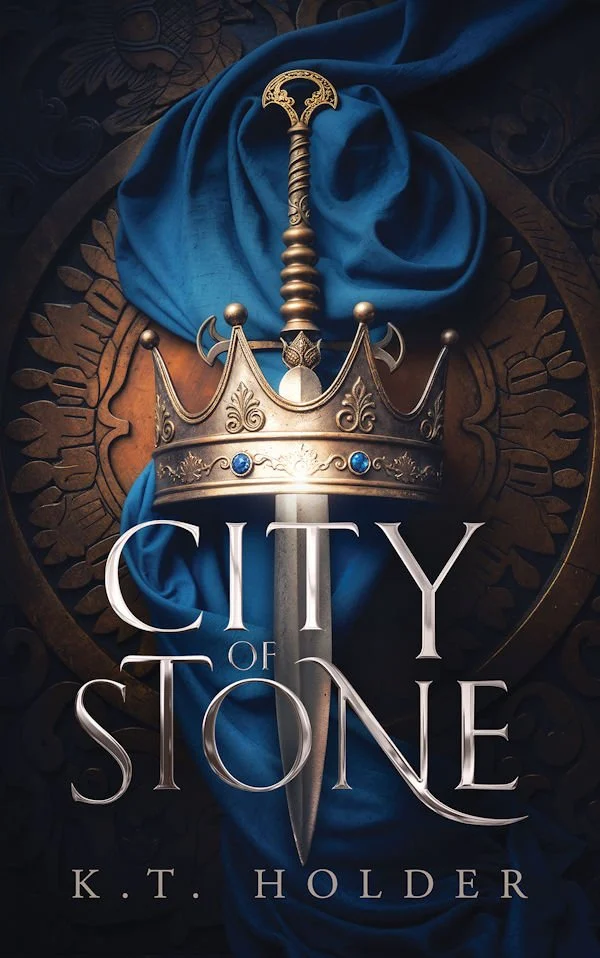
In the landscape of modern self-published fantasy, few competitions carry the weight and visibility of the Self-Published Fantasy Blog-Off (SPFBO). As the 11th annual iteration of the contest nears the conclusion of its first round, one title has emerged as a focal point of intense critical debate: City of Stone. A narrative woven from the harsh realities of labor camps, the complexities of found family, and the high-stakes machinations of imperial politics, City of Stone has proven to be a polarizing addition to this year’s roster of semi-finalists.
The Narrative Foundation: A Tale of Blood and Bond
The story introduces readers to Kasperi "Kas" Ironstone, a protagonist defined by a singular act of self-sacrifice. After being sentenced to eight years in the empire’s grueling labor camps for a theft intended to secure his younger brother Soli’s future, Kas emerges into a world unrecognizable. The empire he once knew is crumbling, shadowed by the threat of an impending invasion and the emergence of a rebellion led by the very brother he fought to protect.
The plot hinges on the uneasy alliance between Kas and a band of survivors who, like him, spent years with their magical abilities suppressed by the state. As they attempt to navigate a labyrinthine web of sabotage, political maneuvering, and betrayal, the core conflict remains deeply personal: Kas must determine whether to remain loyal to his blood brother or prioritize the stability of a fractured realm.
Chronology of Conflict: From Labor to Rebellion
The progression of City of Stone follows a distinct arc that shifts from claustrophobic survival to geopolitical tension.
- The Inciting Incident: The prologue establishes the desperate conditions of Kas’s youth and his subsequent imprisonment, setting the stage for his emergence into a post-labor-camp society.
- The Gathering: Post-release, the narrative focuses on the formation of the "found family" unit—a group of individuals from diverse cultural and magical backgrounds who find solace in their shared trauma.
- The Reconnection: The mid-point of the novel features the long-awaited reunion between Kas and his brother, Soli, which serves as the primary catalyst for the book’s shift toward a more aggressive, rebellion-focused tone.
- The Climax: The final chapters accelerate into a frenetic sequence of betrayals and strategic confrontations, forcing the characters to confront the reality of their political impact.
Critical Analysis: A Divided Panel
The reception of City of Stone among the SPFBO judging panel reflects the subjective nature of the fantasy genre. While the book boasts a clear, emotional resonance, its execution has invited both praise and scrutiny.
The Case for Emotional Resonance
For many judges, the strength of the work lies in its human-centric approach. Maureen, a member of the judging panel, highlighted the book’s pacing and the intricate, layer-upon-layer plotting. "There were layers upon layers of plotting. All the major players had a plan, a scheme, or an agenda," she noted, praising the author’s ability to maintain momentum even within the static setting of the mines.
Julia, another judge, praised the author’s deft handling of themes such as empathy and linguistic sensitivity. She specifically pointed to the "quiet adjustment" of characters learning to respect the self-identification of marginalized groups like the Jatte and the Kikachi. "It’s not framed as a big moral moment," Julia remarked, "just a quiet adjustment, learning and respecting what matters to others." This commitment to character growth, coupled with a gentle approach to romance that avoids common genre tropes, has earned the book significant goodwill.
Points of Contention and Narrative Friction
Conversely, the novel’s reception was not uniformly positive. E.G., a member of the judging panel, expressed frustration with the pacing and characterization. At the 50% mark, the judge found the narrative "boredom-inducing," citing a lack of nuance in character dynamics. "The character dynamics were spelled out over and over again, as though I couldn’t follow what was going on," E.G. wrote, noting that the plot twists often felt transparent due to repetitive exposition.
This sentiment was echoed in more moderate reviews, such as those from Julia, who acknowledged that while the book is a "strong emotional core," it suffers from "rough edges." The perceived ease with which conflicts were resolved and the rapid pace of certain subplots suggested to some judges that the world-building, while expansive, occasionally lacked the necessary depth to ground the story’s more convenient resolutions.
Supporting Data: Thematic Strengths and Weaknesses
To understand the divided response, one must examine the core components of the narrative:
- World-Building: The book avoids the "info-dump" trap common in fantasy, opting instead to reveal the geography and political affiliations of the realm through natural interaction. However, the mechanics of the magic system remain a point of ambiguity for some readers.
- Characterization: The empress, whose point-of-view (POV) chapters provide a critical counterpoint to the rebellion’s perspective, was widely lauded for her grounded, sharp, and frustrated portrayal of leadership within a patriarchal system.
- Pacing: While the final chapters are consistently described as "frenetic" and high-stakes, the middle sections of the book represent a "slow burn" that rewards readers who prioritize character study over constant action.
Implications for the SPFBO Competition
As the 11th annual SPFBO reaches its twilight, City of Stone stands as a quintessential example of the "love-it-or-leave-it" entry. Its success in the competition—and its ultimate ranking—will depend heavily on how the judges weigh emotional resonance and thematic depth against technical polish and pacing consistency.
The competition organizers have emphasized that the diversity of their judging panel is intentional. Reading, as they state, is a subjective experience. What one reader views as a "lack of polish," another may view as a "refreshing lack of pretension." The success of the book in terms of engagement is undeniable; Kerry, a judge who initially struggled to find her footing in the story, found herself so engrossed by the 20% mark that she finished both the book and its sequel in a single sitting.
Looking Forward: The Future of the Realm
For readers who find themselves drawn to the emotional stakes of City of Stone, the existence of a sequel and a planned third installment provides a sense of continuity that is often missing in self-published standalones. The author’s ability to create "disturbed and disturbing" secondary characters—such as the unique take on the traditional "druid" archetype—suggests a capacity for world-building that may mature further in future volumes.
As the SPFBO moves into its final stages, the review process for City of Stone serves as a reminder of the courage required for authors to put their work before a critical eye. With three more semi-finalists left to evaluate, the competition remains as unpredictable as the political landscape of the City of Stone itself.
For those interested in following the remainder of the contest, the official SPFBO website remains the primary resource for tracking the standings. Regardless of the final score, the discourse surrounding City of Stone underscores the vibrancy of the current self-published fantasy scene—a scene that is clearly unafraid to challenge its readers, even when the path is not always perfectly paved.
For further information on the 11th Annual SPFBO and to track upcoming finalist announcements, please visit the official Fantasy Faction website.

 Layla Zulfa
 Ali Ikhwan